Houseplant · Asparagaceae
Yucca
Yucca
Give it bright light and a pot that drains fast, then mostly leave it alone, and a yucca will outlast almost anything on your windowsill.
Full sun
Every 14–21 days
50–86°F · 10–30°C
USDA 7–11
Overview
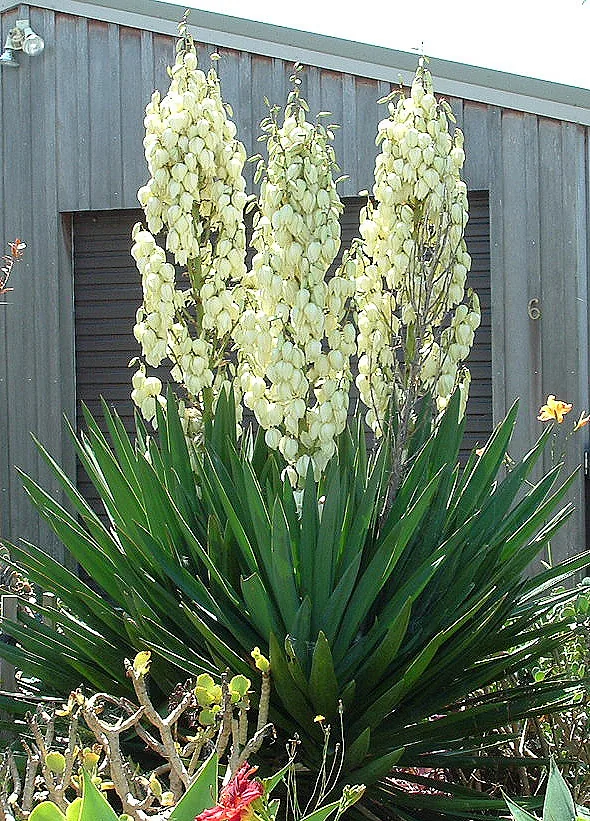
Yucca brings a bold, architectural shape indoors, with stiff sword-shaped leaves fanning out from a thick woody cane. It belongs to the asparagus family and comes from the hot, dry country of the Americas, which tells you most of what you need to know about caring for it. This is a plant that wants strong light and very little fuss.
The yucca you buy as a houseplant is almost always the spineless type, Yucca gigantea, grown for its soft leaf tips and tidy trunk. Other species carry genuinely sharp, bayonet-like points, so the name on the label matters if you have children or pets brushing past. Indoors a yucca grows at a steady, moderate pace and can climb well over head height given years and room.
What makes yucca easy is also what trips people up. It stores water and shrugs off neglect, but it has no patience for a wet pot, and overwatering is what kills most of them. Get the light and drainage right and you have a plant that asks for almost nothing.
Care
The short version: give it the brightest spot you have, plant it in a fast-draining gritty mix, and water only once the soil has dried out completely. Too much water, not too little, is the thing to guard against.
Light
Yucca wants the brightest spot in the house, ideally a south-facing window where it gets hours of direct sun. It will cope with bright indirect light, but a dim corner leaves it stretched and weak, leaning hard toward whatever light it can find.
Water
This is where yuccas live or die, so water only when the mix has dried out all the way through, which works out to roughly every 14 to 21 days. Soak it well, let the excess drain, then wait. In low light or cool rooms the plant rots fast if you keep it wet.
Soil
Plant in a gritty, fast-draining cactus or succulent mix that never holds water around the roots. A pH anywhere from 6.0 to 7.5 suits it, and a pot with proper drainage holes matters more than the exact blend.
Temperature
Normal room warmth is ideal, somewhere between 50°F and 86°F (10°C to 30°C). Keep it clear of cold drafts and unheated rooms in winter, since chill plus damp soil is what brings on rot.
Humidity
A yucca likes its air on the dry side and asks for nothing special here. Average household humidity is fine, and there's no need to mist or crowd it with other plants to raise the moisture.
Feeding
Feed lightly through spring and summer while the plant is growing, about once a month, using a diluted balanced liquid feed or a cactus food. Stop entirely in autumn and winter when growth slows, and don't overdo it, as excess fertilizer salts scorch the leaf tips.
Pruning
Pull or cut away dead and damaged leaves at the base to keep it tidy. If a yucca grows too tall, you can cut the cane back to the height you want, and it will push new growth from below the cut.
Repotting
Repot every 2 to 3 years, or sooner if roots circle the pot, the plant turns top-heavy and tips, or the soil dries out almost as fast as you water. Move it up just one pot size and refresh the gritty mix while you're at it.
Size & spacing
Indoors a yucca can run anywhere from 3 to 30 feet (90 cm to 9 m) tall over its lifetime, though most stay far short of that in a pot. Give it a clear spot with room to spread its leaf crown, since the foliage reaches 2 to 10 feet (60 cm to 3 m) wide on older plants.
Troubleshooting
Nearly every yucca problem traces back to water or air. A soft base means too much water at the roots, crispy tips mean too little or salty water, and spots and pests show up when the air sits damp and still. Match what you see below and fix the cause, not just the symptom.
Soft, mushy base and wilting leaves
A spongy cane and brown, mushy roots point straight to root and cane rot, almost always from too much water or soil that won't drain. Cut your watering back at once, then unpot the plant, slice away every rotted part, and repot into fresh gritty mix. Let it dry out fully before the next drink.
Fix:
- Reduce watering immediately
- Unpot and cut away all rotted tissue
- Repot into fresh gritty, well-drained mix
- Allow soil to dry fully before watering again
Spots and lesions spreading on the leaves
Defined spots that grow and run together are fungal leaf spot, which takes hold when the air is humid and the foliage stays wet. Pull off the marked leaves and bin them, open up the airflow around the plant, and keep water off the leaves when you water.
Fix:
- Remove and dispose of affected leaves
- Improve air circulation
- Avoid wetting foliage when watering
Sticky residue and white fluff on leaves and stems
Sticky honeydew, cottony tufts, or small raised bumps mean scale or mealybugs have moved in. Wipe them off with a cloth dipped in alcohol, then follow up with insecticidal soap or horticultural oil. Keep the plant away from your others until the pests are gone.
Fix:
- Wipe pests off with alcohol-dampened cloth
- Treat with insecticidal soap or horticultural oil
- Isolate the plant until controlled
Brown, crispy leaf tips
When the tips go dry and brown but the rest of the leaf stays firm, the plant is thirsty or stressed by dry air. A buildup of salts or fluoride from fertilizer or tap water does the same. Water well once the soil is fully dry, flush the pot now and then to wash out salts, and trim the brown edges if they bother you.
Fix:
- Water thoroughly when soil is fully dry
- Flush soil periodically to leach accumulated salts
- Trim browned tips for appearance
Toxicity
Keep this one away from animals. Every part of a yucca holds steroidal saponins that are toxic to cats, dogs, horses, and grazing livestock, bringing on vomiting, drooling, weakness, and a wobbly gait in larger amounts. People are essentially safe, and the cooked flowers even feature in some cuisines, but the raw leaves are not food and many species carry sharp tips that can injure on their own.
Toxic to
Cats · Dogs · Horses · Rabbits · Livestock · Birds · People
Cats Moderate
A cat that chews the leaves usually drools and vomits, then goes off its food. The saponins irritate the gut, so expect a sluggish, unhappy animal for a while.
Dogs Moderate
Dogs tend to drool and vomit after a nibble, and many lose interest in food for a day. A big mouthful can leave them weak and unsteady on their feet.
Horses Moderate
Horses get an upset stomach and turn dull after eating it. Grazing on a large amount can bring on real weakness and a wobbly, uncoordinated gait.
Rabbits Toxic
The saponin-laden foliage is not safe for rabbits and tends to upset the gut. Keep the plant well out of a house rabbit's reach.
Livestock Toxic
Cattle, sheep, and goats that graze yucca can suffer digestive upset, and a heavy feed leaves them weak and stumbling. Fence stock away from it.
Birds Caution
The saponins make this a poor choice around pet birds, and the effect on them isn't well documented. Treat it as off-limits and keep curious beaks away.
People Caution
People are essentially safe, and the cooked flowers and some parts turn up in a few cuisines. Even so, the raw foliage is not a food, so don't snack on the leaves and wash your hands after handling cut stems.
Many yuccas have stiff, sharp-pointed leaf tips that can cause eye or skin injury; the common indoor 'spineless yucca' (Y. gigantea/elephantipes) has softer tips that pose less risk.
Helpline numbers

United States
ASPCA Animal Poison Control: (888) 426-4435 (fee applies)
Poison Control: (800) 222-1222



Canada
Poison Centres: 1-844-764-7669
Varieties
A few yuccas turn up again and again, and they range from the soft-leaved indoor favorite to spine-tipped species best kept at arm's length. These are the ones worth telling apart.
Yucca gigantea (Y. elephantipes), spineless yucca
This is the yucca you'll see indoors most often, with a thick tree-like trunk and soft leaf tips that won't jab you.
Yucca aloifolia, Spanish bayonet
Its stiff leaves end in genuinely sharp, dangerous spines, so site it well away from where people pass.
Yucca filamentosa, Adam's needle
A stemless rosette edged with curly white threads, and tough enough to shrug off real cold.
How to propagate
Yucca is one of the simplest plants to copy. You can root a length of cane, pull off the pups it sends up around its base, divide a clump, or start from seed if you have the patience for the slow route.
Stem cuttingsEasy
Spring or summer during active growth · 3 to 8 weeks to root
Cane cuttings root with little fuss when taken in spring or summer during active growth. Let the cut end dry and callus over first, then pot it up, and roots usually form in 3 to 8 weeks.
Offsets & pupsEasy
Spring or summer · 4 to 8 weeks
In spring or summer, a yucca throws basal pups around its base. Lift one with a few roots attached and pot it on its own, and it settles in over the next 4 to 8 weeks.
DivisionModerate
Spring · Several weeks to a few months
Clumping yuccas can be split at the root crown in spring. It takes a firmer hand than taking a pup, and the divisions need anywhere from several weeks to a few months to take hold.
SeedModerate
Spring · Several weeks to germinate, then months to size up
Seed is the slow road and rarely used for named indoor types. Sown in spring, it takes several weeks to germinate and then long months to size up into a plant worth keeping.
Myths
All yuccas are safe houseplants because they look like harmless palms.
The palm-like look hides two real hazards. Yucca holds saponins that are toxic to pets, and many species carry stiff, spine-tipped leaves that can puncture skin or an eye. Place it with both risks in mind.
Yucca houseplants need frequent watering like tropical foliage plants.
A yucca is built for drought and resents a soggy pot. Far more yuccas die from overwatering and root rot than ever dry out, so wait until the mix is fully dry before you water again.