Shrub · Aquifoliaceae
Yaupon Holly
Ilex vomitoria
Tough, evergreen, and the one North American holly you can brew, yaupon shrugs off drought, salt, and shade alike.
Full sun
Every 7–14 days
USDA 7–9
10–25 ft · 3–7.6 m
Overview
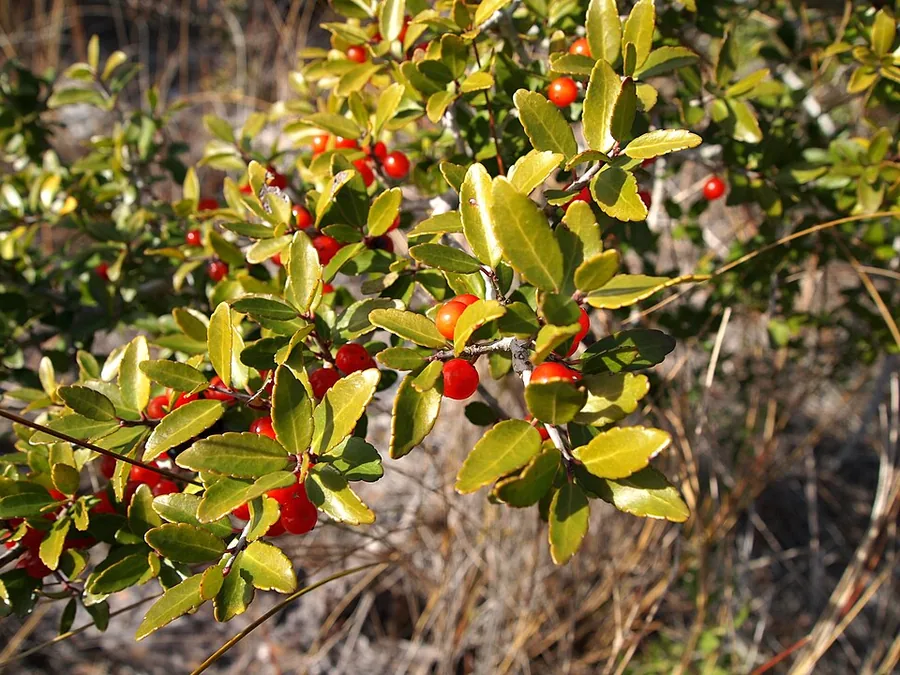
Yaupon holly is a tough, evergreen native of the southeastern United States, equally at home as a clipped hedge, a small multi-stemmed tree, or a loose screen. It carries small, smooth, round-toothed leaves with no prickle to them, so it handles without gloves. Hardy through zones 7 to 9, it takes full sun to deep shade and barely notices drought, salt spray, or a stretch of soggy ground.
It is the one holly with a secret. The leaves hold caffeine, the highest of any plant native to North America, and people have brewed them into a stimulating tea for centuries. The plant is dioecious, meaning male and female flowers grow on separate plants, and only the females set the translucent red berries that line the branches through winter.
Give it room and it earns its keep with very little fuss. The main task is keeping the root suckers in check, since an unattended plant will throw up shoots and creep into a thicket. Tend that one habit and you have a low-care, year-round backbone for the garden.
Care
The short version: plant in almost any well-drained soil from sun to shade, water through the first season and then mostly leave it alone, and remove root suckers two or three times a year to keep it from spreading.
Light
Yaupon takes full sun to full shade without complaint, which is rare for a fruiting shrub. It grows densest and berries best in 6 or more hours of sun, but a shaded plant still holds its leaves and shape.
Water
Water steadily through the first growing season to get the roots down, then let the top half of the soil dry between drinks. Once established it is strongly drought tolerant and only needs help in a long dry spell. It even shrugs off the odd flooding, so soggy ground is no deal-breaker.
Soil
Few shrubs are this forgiving about ground. Clay, loam, or sand all work as long as drainage is reasonable, and it tolerates everything from occasionally wet to dry soil. The pH range is wide, anywhere from 5.0 to 8.0.
Temperature
Yaupon is hardy from about 5°F to 100°F (-15°C to 38°C), covering hot southern summers and the cold of zone 7 winters. That broad range is why it works as a year-round evergreen across so much of the Southeast.
Humidity
Average outdoor humidity suits it fine, with no number to chase. Good airflow matters more than moisture in the air, since crowded, still conditions are what invite the occasional leaf spot.
Feeding
A balanced slow-release shrub or tree fertilizer in spring is plenty, fed only seasonally. An established plant in reasonable soil needs little to no feeding at all, so err on the light side.
Pruning
This is a shrub that loves the shears. It takes heavy pruning and shapes cleanly into hedges, screens, or topiary. The pruning that really matters is cutting the root suckers at ground level two or three times a year, or the plant spreads into a thicket.
Repotting
A container yaupon needs moving up every 2 to 3 years. Repot when roots circle the pot or grow out the drainage holes, water runs straight through, or growth slows and the plant wilts fast between waterings.
Size & spacing
118–299 in (300–760 cm) tall
When to plant
Yaupon goes in during spring or fall, when the soil is warm enough to root but the heat has eased. The greenish-white flowers come and go quietly in spring, around March to May, and the red berries that follow on female plants ripen in fall and hang on well into winter.
Northern hemisphere
Southern hemisphere
Typical months for a temperate climate: start earlier in warm zones, later where spring frosts linger.
- Plant: Spring or fall
- Harvest: Inconspicuous greenish-white flowers in spring (March-May); translucent red berries on female plants mature in fall and persist into winter
Hardiness
USDA hardiness zones: 7–9
Temperature: down to -18°C
Troubleshooting
Yaupon holly is one of the easiest shrubs to keep, and most of its quirks are cosmetic rather than serious. The questions that come up are usually about missing berries or a few marked leaves. Match what you see below and the fix is almost always simple.
A mature plant that never sets berries
Yaupon is dioecious, so only female plants fruit, and they need a male nearby to pollinate them. A male plant, a lone female with no pollinator in range, or a non-fruiting cultivar all explain bare branches. When you want berries, set out both a male and a known fruiting female such as 'Jewel' or 'Pride of Houston' that bloom at the same time.
Fix:
- Plant at least one male yaupon near female plants to ensure pollination
- Select a known fruiting female cultivar such as 'Jewel' or 'Pride of Houston'
Stippled, bronzed leaves with webbing or sticky residue
This points to sap-feeding pests such as spider mites, scale, or leaf miners, which leave behind sticky honeydew and the sooty mold that follows. Check leaf undersides and stems with a hand lens, or tap the foliage over white paper to flush out mites. Hose the plant down hard, treat with horticultural oil or insecticidal soap on the undersides, and prune out any badly hit stems. These pests rarely turn serious on yaupon.
Fix:
- Hose off foliage with a strong stream of water
- Treat with horticultural oil or insecticidal soap, covering leaf undersides
- Prune out heavily infested stems
Dark spots or blotches on the leaves with some leaf drop
Spots, dark tar-like patches, or a white powdery coating signal fungal leaf spot or powdery mildew, usually where damp, still air lingers. Rake up and bin the fallen infected leaves, thin and space the plants so air moves through, and water at the base instead of over the top. Good drainage and a vigorous plant keep these troubles to a minor, mostly cosmetic level.
Fix:
- Remove and dispose of fallen infected leaves
- Improve air circulation by thinning and spacing plants
- Avoid overhead watering and water at the base
Toxicity
Yaupon plays both sides. The caffeinated leaves brew into a safe, mild tea that people have drunk for generations, but the bright red berries hold saponins and are mildly toxic if eaten. Keep fallen fruit away from pets and small children, since the trouble is limited to the berries and clears up on its own.
Toxic to
Cats · Dogs · Horses · Rabbits · Livestock · Birds · People
Cats Mild
A cat that nibbles the red berries usually shows drooling, vomiting, and loose stool, along with a dip in energy. The leaves are the bigger draw, but the saponins are in the fruit, so the bright berries are what to watch.
Dogs Mild
Dogs that eat the berries tend to vomit and have diarrhea, sometimes with drooling and a quiet, off mood for a while. Signs are mild and pass, but a large mouthful warrants a call to the vet.
Horses Mild
Horses can react to the saponins in the fruit with diarrhea and a dull, listless mood. The amount most horses would eat keeps the trouble at the mild end.
Rabbits Mild
The saponins in the berries can unsettle a rabbit's sensitive gut, bringing soft stool and a loss of appetite. Keep fallen fruit out of reach and offer none of it.
Livestock Mild
Cattle, goats, and sheep are unlikely to seek out the bitter berries, but the saponins can cause mild stomach upset if they do graze the fruit. Browsing the foliage is not a notable concern.
Birds Caution
Many wild birds eat yaupon berries through winter with no harm and help spread the seed, so the fruit is a natural part of their diet. Treat caged pet birds with more care, since their smaller size makes any saponin dose count for more.
People Berries mildly toxic
The leaves are the one caffeinated North American holly and are brewed into a safe, mild tea, so the plant itself is not off limits to people. The bright red berries are a different story, holding saponins that bring on vomiting and diarrhea if eaten, so keep them away from young children.
Keep fallen berries away from pets and small children; toxicity is generally mild and limited to ingestion of the fruit.
Helpline numbers

United States
ASPCA Animal Poison Control: (888) 426-4435 (fee applies)
Poison Control: (800) 222-1222



Canada
Poison Centres: 1-844-764-7669
Varieties
Yaupon comes in everything from knee-high dwarfs to weeping trees, and the right pick depends on whether you want a hedge, a specimen, or a heavy crop of berries. A few names show up again and again.
'Nana' (Dwarf Yaupon)
A compact, mounding dwarf that stays roughly 3 to 5 feet tall and wide, a male, non-fruiting pick that makes a tidy low hedge.
'Pendula' (Weeping Yaupon)
A weeping form with cascading branches that reach 15 to 20 feet and carry heavy fruit when the plant is female.
'Folsom's Weeping'
Another weeping selection with a draping habit much like 'Pendula'.
'Jewel'
A female cultivar grown for its heavy crop of red berries.
'Pride of Houston'
A medium-sized female shrub that fruits heavily and reliably.
'Will Fleming'
A male cultivar with a narrow, columnar habit that grows straight up like a green exclamation point.
How to propagate
Because yaupon is dioecious, how you propagate it decides whether you can count on getting berries. Cuttings give you a known male or female, while seed leaves the sex a gamble.
Stem cuttingsModerate
Take semi-hardwood cuttings in summer · 6-12 weeks to root; one or more seasons to establish
Cuttings are the dependable route because yaupon is dioecious, and taking them from a known male and a known female gives you both sexes for fruit. Pull semi-hardwood cuttings in summer, and they root in about 6 to 12 weeks, then need a season or more to settle in. Remember that a male has to stand near the females for any berries to form.
SeedDemanding
Collect ripe fruit in fall · Often 1-3 years; seed has a hard, dormant coat and germinates slowly and erratically
Seed is the slow, uncertain path. Collect ripe fruit in fall, but expect the hard, dormant coat to drag germination out over 1 to 3 years, often in fits and starts. You also can't tell a seedling's sex until it flowers, so most growers stick with cuttings when they want a known male or female.
Myths
The name vomitoria means yaupon leaves make you vomit, so the plant is poisonous to brew.
Yaupon leaves are not emetic at all. They carry caffeine and were brewed for centuries into a stimulating tea, the ceremonial black drink, and the vomiting in those rituals came from downing huge volumes while fasting, not from the plant. The species name is a misnomer, and yaupon tea is safe in moderation.
All hollies have sharp, spiny leaves.
Yaupon breaks the rule with small, smooth, round-toothed leaves that don't prick. Unlike English or American holly, you can handle it without gloves.