Shrub · Caprifoliaceae
Old Fashioned Weigela
Weigela florida
Give it full sun and a well-timed prune, and weigela floods the late-spring garden with tubular blooms.
Full sun
Every 7–14 days
USDA 4–8
6–10 ft · 1.8–3 m
Overview
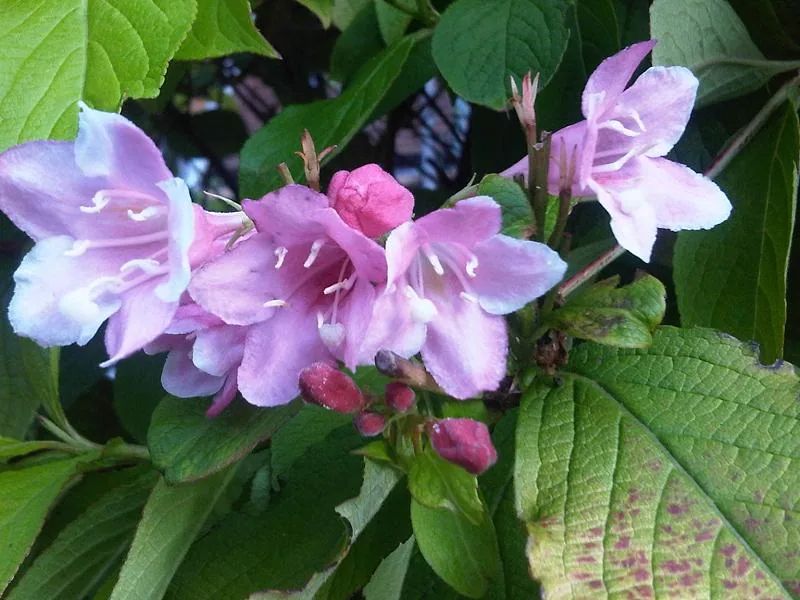
Old fashioned weigela is a hardy deciduous shrub from the honeysuckle family, prized for the wave of tubular flowers it pours out in late spring. The blooms run rose-pink to red and pull in hummingbirds and butterflies just as the garden is filling out. Left to its own shape, it grows into a broad, arching mound.
This is an easy plant that asks little once it settles in. It takes full sun to light shade, shrugs off a wide range of soils, and survives hard winters down to zone 4. The one habit worth knowing is that it flowers on old wood, which makes timing your pruning the difference between a heavy bloom and a bare year.
The species can reach a sizable spread, but breeders have given gardeners far more to choose from. Dwarf and reblooming cultivars now fit small beds and containers, some carrying purple or variegated leaves that hold interest long after the flowers fade.
Care
The short version: plant weigela in full sun and average, well-drained soil, water it through dry spells until it's established, and save any shaping cut for right after it blooms.
Light
Weigela blooms best in full sun, though it holds up in partial sun or light shade. Aim for 6 or more hours of direct sun a day, since too much shade is the quickest way to thin out the flowers.
Water
Keep a young shrub watered steadily through its first season, then ease off and water only during a drought. Let the top inch or so of soil dry between drinks, watering roughly every 7 to 14 days when rain is short. An established plant is fairly drought-tolerant.
Soil
Weigela takes most ground, from clay to loam to sandy soil, as long as it drains well and holds average, medium moisture. It tolerates a broad pH from 5.5 to 7.5, so there's rarely any need to amend the bed.
Temperature
This is a tough shrub, hardy from about -29°F to 90°F (-34°C to 32°C) across zones 4 through 8. In the coldest zones the branch tips can die back over winter, but the plant pushes out new growth from below come spring.
Humidity
Ordinary outdoor humidity suits weigela, so there's no number to track. Good airflow counts for more, keeping the foliage dry and the few pests that bother it in check.
Feeding
Weigela is a light feeder. A single application of slow-release shrub fertilizer in spring covers it for the season, and there's no need to feed unless growth looks weak.
Pruning
Timing is everything here. Shape the shrub right after the late-spring bloom, since the buds form on old wood and a later cut takes next year's flowers. In late winter, thin out a few of the oldest stems and any dead or winter-damaged wood to keep it vigorous.
Repotting
Weigela is rarely grown in a pot, and out in the ground it never needs repotting. If you keep a dwarf cultivar in a container, move it up a size once roots circle the pot or start poking through the drainage holes.
Size & spacing
The species grows into a large shrub, 6 to 10 feet (1.8 to 3 m) tall and even wider at 9 to 12 feet (2.7 to 3.7 m) across. Give it room to arch out, or pick a dwarf cultivar for tight spots and containers.
When to plant
Weigela is a woody shrub, so there's no seed-starting calendar to keep. Plant it out in spring or fall, watch for the flush of flowers from April into June, and do your shaping pruning in the short window just after the bloom fades.
Northern hemisphere
Southern hemisphere
Typical months for a temperate climate: start earlier in warm zones, later where spring frosts linger.
- Plant: Spring or fall
- Harvest: April to June, with sparse repeat bloom in mid to late summer on modern cultivars
Hardiness
USDA hardiness zones: 4–8
Temperature: down to -34°C
Troubleshooting
Most weigela problems trace back to pruning at the wrong time, a hard winter, or soil that's too wet or too dry. Read the early signs and you can usually set it right with a well-timed cut or a change in watering. Match what you see below, then act before it costs you a season of bloom.
Few or no flowers in spring
The usual cause is pruning at the wrong time, since weigela carries its flower buds on old wood and any cut made in late summer, fall, or winter takes next spring's bloom with it. Too little sun and winter dieback of the flowering wood can also leave the shrub bare. Prune only right after the late-spring bloom, give it 6 or more hours of direct sun, and leave the healthy old stems alone.
Fix:
- Prune only immediately after the late-spring bloom since flowers form on old wood
- Relocate or limb up surrounding plants so the shrub gets 6 or more hours of direct sun
- Remove only dead, winter-damaged wood and leave healthy old stems intact
Branch tips and stems brown and dead in spring
This is winter dieback, and it shows up most in colder zones or on a cultivar grown near the edge of its hardiness. Scratch the bark to confirm: dead wood is brown and dry with no green cambium underneath. Cut the dead stems back to live growth in late winter and let the shrub regrow from the healthy lower wood.
Fix:
- Prune out dead wood back to live, green growth in late winter or early spring
- Let the shrub regrow from healthy lower stems
Browning, wilting foliage and weak growth
When the whole shrub looks off, the trouble is usually water, either a drought or roots sitting in soggy, poorly drained ground. A nutrient shortage or salty soil can leave the same pale, struggling look. Feel the soil to read the moisture, water through dry spells, fix the drainage where it stays wet, and feed with a slow-release shrub fertilizer if growth still lags.
Fix:
- Provide regular water during dry spells and improve drainage in soggy sites
- Apply a slow-release shrub fertilizer if a deficiency is suspected
Sticky, stippled, or distorted leaves and shoots
Mealybugs are the likely culprit, leaving white cottony clusters at the stem junctions, though flea beetles can chew the foliage too. Check the leaf undersides and stem joints to be sure. A strong jet of water knocks back light infestations, and insecticidal soap or horticultural oil handles the stubborn ones.
Fix:
- Wash off light infestations with a strong stream of water
- Treat persistent mealybug infestations with insecticidal soap or horticultural oil per label
- Remove and dispose of heavily infested shoots
Toxicity
Weigela is safe to have around the home. It isn't on the ASPCA toxic-plant lists and counts as non-toxic to pets, livestock, and people, with no irritant in the sap. The worst a hungry pet might face is a brief stomach upset after eating a lot of leaves.
Safe for
People · Cats · Dogs · Horses · Rabbits · Livestock · Birds
Cats None
Weigela is safe for cats and isn't on the ASPCA toxic list. A curious nibble does no harm, though a big mouthful of any leaf can bring on a brief bout of stomach upset.
Dogs None
Dogs can chew the foliage without danger. The worst a greedy eater might get is some passing tummy trouble, the same as with most garden greenery.
Horses Safe
There's nothing in weigela that harms horses, so the shrub is fine to grow near a paddock or pasture.
Rabbits Safe
Rabbits can browse the leaves safely. None of the plant carries a toxin, so a stray bite is no cause for worry.
Livestock Safe
Cattle, goats, and sheep aren't poisoned by weigela. The shrub poses no toxic risk to grazing stock.
Birds Safe
Weigela is harmless to birds, and its tubular spring flowers actually draw in hummingbirds for the nectar.
People Safe
The plant is non-toxic to people, with no known irritant in the sap. It isn't grown to be eaten, so there's no edible part to seek out.
No special handling precautions; sap is not a known irritant.
Varieties
The plain species is lovely, but the named cultivars are what most gardeners plant now. These are the ones worth knowing by name.
'Alexandra' WINE AND ROSES
A compact 4 to 5 foot shrub grown for its dark purple leaves and a heavy flush of reddish-pink spring flowers.
'Verweig' MY MONET
A dwarf only 12 to 18 inches tall, carrying variegated pink, cream, and green foliage under soft pink blooms.
'Tango'
One of the smallest weigelas, a tidy 2 to 2.5 foot mound of purplish leaves that flowers freely in spring.
SONIC BLOOM
An upright rebloomer that opens lipstick-red flowers in May and keeps sending out fresh waves until frost.
How to propagate
Weigela is simple to multiply from cuttings, with a fast summer route and a slower dormant-season one for gardeners who want more plants for free.
Stem cuttingsEasy
Late spring to early summer (late May through early July) · Several weeks to root; a full season to establish
The easiest route is a softwood cutting taken from late May into early July, off the current season's growth. Pick a shoot that bends freely but is firm enough to snap when you bend it sharply. It strikes roots in a few weeks and needs a full growing season to settle in.
Stem cuttingsModerate
Dormant season (late fall to winter) · One growing season
You can also take hardwood cuttings from dormant stems through late fall and winter. This route is a touch slower and asks for a full growing season before the young plant is established.
Myths
Weigela is poisonous to dogs and cats.
Weigela never made the ASPCA toxic-plant lists and counts as non-toxic to both dogs and cats. A pet that eats a lot of leaves might get a mild, passing stomach upset, but nothing worse.
You can prune weigela anytime without losing flowers.
Weigela sets its buds on old wood, so a cut in late summer, fall, or winter strips off next spring's flowers. Shape it right after it finishes blooming and you keep the show coming.