Herb · Caprifoliaceae
Valerian
Valeriana officinalis
Give it full sun and steady moisture, and valerian rewards you with fragrant summer flowers and a sedative root cats can't resist.
Full sun
Every 3–7 days
USDA 4–9
3–5 ft · 0.9–1.5 m
Overview
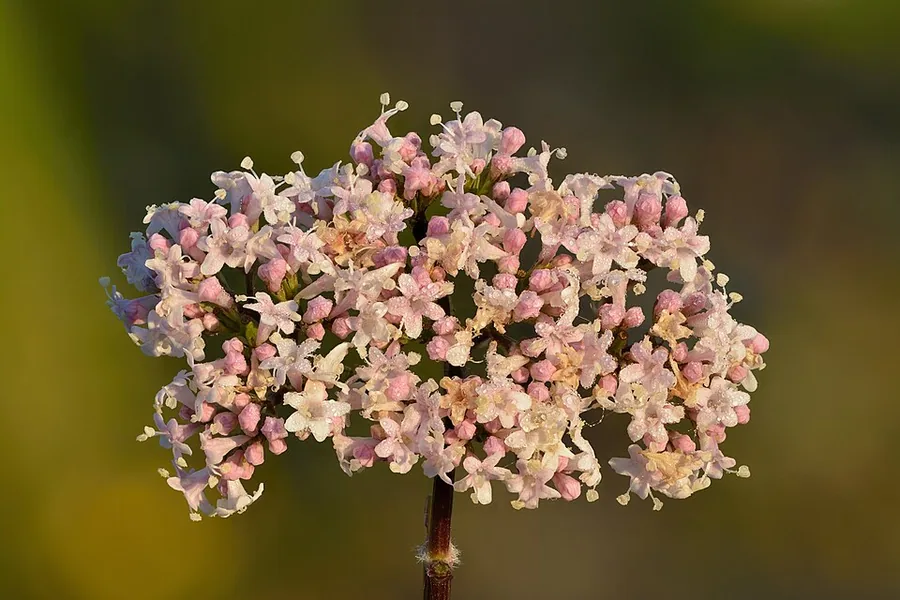
Valerian is an old cottage-garden perennial grown as much for its scented summer flowers as for the medicinal root beneath them. Tall stems lift airy, domed clusters of pale-pink to white bloom in early to midsummer, drawing pollinators and carrying a sweet fragrance across the bed. It's a tough, hardy plant that thrives in cool, moist conditions and asks very little once established.
The famous part is the root. Dried and steeped, it has been used for centuries as a herbal sedative to ease sleep and calm nerves, which is where the old name all-heal comes from. The same root holds compounds that act on cats much like catnip, so a planting can turn into a feline playground without doing the animals any harm.
Easy is the word for valerian in the garden, but it pays to plant it with open eyes. It grows fast, seeds itself with abandon, and spreads by rhizome, so in some regions it has escaped into the wild and earned an invasive listing. Give it a sunny, moist spot, deadhead before it sets seed, and it stays a well-behaved, generous plant.
Care
The short version: full sun, steady moisture in rich, fertile loam, and prompt deadheading to keep it from seeding everywhere. It tolerates a wide range of soils and shrugs off cold, so the main job is keeping it watered and contained.
Light
Valerian flowers best in full sun, which keeps the tall stems upright and sturdy. It will take partial shade, but plants grown out of the sun tend to stretch and flop, so give it an open spot if you can.
Water
Keep the soil consistently moist, since valerian leans toward damp, rich ground and dislikes drying out. Water roughly every 3 to 7 days, more in heat, and it will reward you with stronger growth. It tolerates the odd dry spell but never thrives on neglect.
Soil
Plant in fertile, moist, well-drained loam, the richer the better. It adapts happily to clay, loam, or sand and prefers a soil pH between 6.0 and 7.5, so most garden ground suits it without fuss.
Temperature
Valerian is remarkably cold-hardy, riding out winters down to about -31°F (-35°C) and handling summer warmth up to roughly 86°F (30°C). It does its best work in cool conditions and can struggle where summers turn long and hot.
Humidity
Average humidity, somewhere around 40% to 70%, suits valerian well. It's an outdoor perennial that takes whatever the air gives it, so there's no number to manage here.
Feeding
Feed lightly in spring as growth restarts, using a balanced fertilizer or compost worked into the soil. Once a season is plenty, and going heavier only encourages soft, floppy stems rather than more flowers.
Pruning
Deadhead spent flower clusters the moment they fade to stop the heavy self-seeding valerian is known for. Cut the stems back after bloom, and clear away the dead foliage as the plant dies down to the ground for winter.
Repotting
Valerian isn't usually a long-term container plant, but established clumps benefit from dividing every 2 to 3 years to keep them vigorous. Lift and split the crown when you see crowded growth, weaker flowering, or roots filling a pot.
Size & spacing
Plants reach about 3 to 5 feet (90 to 150 cm) tall, so they belong toward the back of a bed. Give each one 2 to 4 feet (60 to 120 cm) of room for air, light, and that airy flowering habit.
When to plant
Valerian runs on a cool-season rhythm. Start seed indoors in late winter to early spring, set plants out once hard frost has passed, and watch for fragrant flowers through early to midsummer. If you want it for medicine, lift the roots in the fall of the second year, when they carry the most strength.
Northern hemisphere
Southern hemisphere
Typical months for a temperate climate: start earlier in warm zones, later where spring frosts linger.
- Sow: Late winter to early spring, 6-8 weeks before last frost
- Plant: Spring after danger of hard frost
- Harvest: Fragrant pinkish-white flower clusters in early-to-mid summer (June-July); harvest roots in fall of the second year for medicinal use
Hardiness
USDA hardiness zones: 4–9
Temperature: down to -34°C
Troubleshooting
Valerian has few real troubles, and the two that come up most are about shape and spread rather than pests or disease. Match what you see below, then act before a small habit turns into a garden-wide problem.
Volunteer seedlings popping up all over the garden
Valerian is a prolific self-seeder that also creeps outward by rhizome, so one plant quickly becomes a colony. Watch for seedlings around the parent and in nearby beds, ditches, and wild edges. Deadhead the flowers before they set seed, pull young volunteers while they're easy to lift, and dig out any rhizomes that have wandered.
Fix:
- Deadhead before seed set
- Remove volunteer seedlings while young
- Dig and discard escaped rhizomes
Tall flower stems flopping or leaning over
Lanky, leaning stems usually mean too little sun. Grown in shade, or in soil that's too rich, valerian puts on soft, lax growth that can't hold its own height. Move it into full sun, ease off the nitrogen, and stake the tallest stems if they still need a hand.
Fix:
- Site in full sun
- Provide staking or grow-through support for tall stems
- Avoid excess nitrogen
Toxicity
Good news for households with animals: valerian is non-toxic and pet-safe. The root is well known for exciting cats the way catnip does, but that's a harmless bit of fun rather than poisoning, and the same root is used as a gentle calming herb for both people and pets.
Safe for
People · Cats · Dogs · Horses · Rabbits · Livestock · Birds
Cats None
Many cats are drawn to the root the way they are to catnip and may roll, rub, and turn playful around it. This is a harmless behavioral high, not poisoning, so let the fun run its course and tidy up afterward.
Dogs None
Safe for dogs. The plant carries no toxin that troubles them, and the root is even used as a gentle calming herb for anxious pets.
Horses Safe
No concern for horses. Grazing on the foliage causes no poisoning.
Rabbits Safe
Rabbits can nibble the leaves without harm, though as with any new green it's best offered in small amounts.
Livestock Safe
Grazing livestock are not poisoned by valerian; it is a benign forage plant rather than a toxic weed.
Birds Safe
Safe around birds, with no toxic parts to worry about if they peck at the foliage or seed heads.
People Safe
Long used as a herbal sedative, the dried root is taken by people as a sleep and calming aid. The plant is non-toxic, though anyone using it medicinally should follow sensible dosing.
The root acts as a catnip-like attractant: many cats become excited, playful or euphoric around it. This is a benign behavioral response, not toxicity. Store dried root away from cats if you do not want them disturbing it.
Varieties
Valerian is mostly grown as the wild species rather than as named cultivars, so there's really one form worth knowing.
Valeriana officinalis (species)
This is the standard medicinal garden valerian, carrying airy domed clusters of fragrant pale-pink to white flowers atop tall stems above the aromatic, sedative roots that give the plant its name.
How to propagate
Valerian is easy to multiply, whether you sow seed for a batch of new plants or split an established crown to copy one you already grow.
SeedEasy
Sow indoors late winter to early spring or direct sow in spring; self-sows readily · Germinates in roughly 2-3 weeks; establishes and flowers within the first to second season
Seed is the easy route. Start it indoors in late winter to early spring or sow it straight into the ground once spring arrives, and surface-sow the seed since light helps it sprout. Expect germination in about 2 to 3 weeks, with plants settling in and flowering during the first or second season. Leave the flowers to ripen and it will reseed itself freely, often more freely than you want.
DivisionEasy
Spring or early fall · Divisions re-establish within a few weeks to a single growing season
Division is the quickest way to copy a plant you already like. In spring or early fall, lift an established clump, split the crown into pieces, and replant them in moist, fertile soil. The divisions take hold within a few weeks to a single growing season.
Myths
Valerian excites cats like catnip, so it must be a drug that harms them.
The wild reaction looks dramatic, but it's the same harmless pull cats feel toward catnip, triggered by valerian's volatile compounds rather than any poison. The plant is regarded as non-toxic and is even used as a gentle calming aid for anxious pets. The catnip-style high is play, not poisoning.