Houseplant · Asparagaceae
Ti Plant
Cordyline fruticosa
Give it bright indirect light and clean water, and the ti plant pays you back with bold pink, red, and burgundy leaves.
Bright indirect
50–95°F · 10–35°C
USDA 10–12
3–15 ft · 0.9–4.6 m
Overview
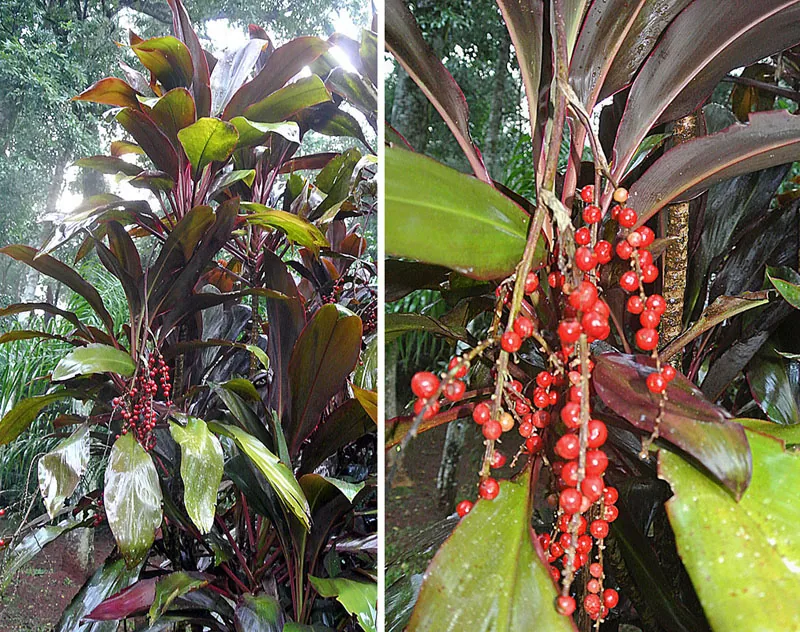
The ti plant is a tender evergreen grown for its strappy, brightly colored leaves in shades of pink, red, purple, and green. It comes from the tropical Pacific and Southeast Asia, where it carries deep cultural meaning as a good luck plant. Indoors it makes a striking, upright foliage piece that holds its color all year.
What sets it apart is the leaf color, and that color lives and dies by light. In a bright indirect spot the tones stay rich and saturated. Let the light drop too low and the plant slowly fades back toward plain green, which is the first sign it wants a brighter window.
It asks for a little care in return. The ti plant is fussy about water quality and high humidity, and the fluoride in ordinary tap water will brown its leaf tips. Get the water and the light right, though, and it is an easygoing, long-lived houseplant.
Care
The short version: bright indirect light, high humidity, and clean water free of fluoride. Keep the soil consistently moist through the growing season, ease off in winter, and feed a few times a year to hold the leaf color.
Light
Give the ti plant bright indirect light to keep its color rich. It will hang on in partial or even full shade, but the pinks and reds drain toward green there. Keep it out of harsh afternoon sun, which scorches the leaves.
Water
Keep the soil consistently moist from spring through fall, letting the top dry out a little between drinks, then water less from late fall into winter. The bigger issue is water quality: fluoride and salts in tap water brown the leaf tips, so use distilled water or rainwater.
Soil
Plant in a well drained, peaty mix, either a fertile peaty loam or a peat-based potting soil. A pH between 5.5 and 7.0 suits it, and good drainage keeps the roots from sitting wet.
Temperature
The ti plant likes it warm and runs best from 50°F to 95°F (10°C to 35°C). Keep it away from cold drafts and chilly windows in winter, since it has no tolerance for a real chill.
Humidity
This plant wants high humidity, more than most homes offer on their own. Run a humidifier or stand the pot on a pebble tray, because dry air is a common cause of those browning leaf tips.
Feeding
Feed with a balanced houseplant fertilizer during the spring-through-fall growing season. A few feedings across the year are enough, and they help the plant hold its bright leaf color.
Pruning
Cut back any leggy canes to push fresh, bushier growth lower down. Pull off faded or damaged lower leaves too, which the plant sheds on its own as it ages.
Repotting
Repot every 2 to 3 years, or sooner once it turns rootbound, working in spring. The signs to watch for are roots circling or poking out the drainage holes, water running straight through, and growth that stalls.
Size & spacing
Grown on, a ti plant can reach 3 to 15 feet (90 cm to 4.6 m) tall with a spread of 3 to 8 feet (90 to 240 cm), though it stays far smaller in a pot indoors. Give it room to show off its arching leaves.
Troubleshooting
Most ti plant trouble shows up first in the leaves, whether it's browning tips, fading color, or a pest moving in. Read those signs early and the fix is usually simple. Match what you see below, then act before it spreads.
Sticky residue, speckling, or bugs on the leaves
Sticky leaves and fine speckling point to sap-sucking pests such as aphids, scale, mealybugs, or spider mites. Check the undersides for scale bumps, cottony mealybugs, webbing, or clustered aphids, then wipe or rinse the foliage and treat with insecticidal soap or horticultural oil. Better airflow keeps them from coming back.
Fix:
- Wipe down or rinse foliage
- Treat with insecticidal soap or horticultural oil
- Improve air circulation
Brown, crispy tips on the leaves
Ti plants are touchy about fluoride and salts in tap water, which build up in the leaf tissue and burn the tips brown. Dry indoor air makes it worse. Switch to distilled water or rainwater, flush the pot now and then to wash out the salts, and lift the humidity around the plant.
Fix:
- Water with distilled water or rainwater instead of fluoridated tap water
- Flush the pot periodically to leach out accumulated salts
- Raise humidity with a humidifier or pebble tray
- Trim damaged tips for appearance
Bright leaf color fading back toward green
When a ti plant sits in too little light, the pink, red, and purple drain away and the foliage drifts back to plain green. Move it somewhere with bright indirect light to bring the color back, but keep it out of harsh afternoon sun, which scorches the leaves instead.
Fix:
- Move to a spot with bright indirect light
- Avoid harsh direct afternoon sun, which can scorch leaves
Toxicity
This is a plant to keep away from pets. Every part of the ti plant holds saponins, and a cat or dog that chews the leaves can vomit, sometimes with blood, drool, and turn dull and off its food. People are essentially safe since no part is eaten, but the cut sap can irritate skin, so wear gloves when you prune it.
Toxic to
Cats · Dogs · Horses · Rabbits · Livestock · Birds · People
Cats Moderate
A cat that chews the leaves can vomit, sometimes with blood, and drool heavily. Watch too for a flat mood, a refusal to eat, and pupils that stay wide.
Dogs Moderate
Dogs react to the same saponins with vomiting, sometimes streaked with blood, along with drooling, a poor appetite, and a dull, depressed mood.
Horses Moderate
Horses are listed as susceptible as well, with the green parts bringing on stomach upset and general discomfort.
Rabbits Caution
Saponins are the kind of toxin that troubles small grazers, so treat the foliage as off-limits and keep a rabbit from nibbling it.
Livestock Caution
Cattle, goats, and sheep aren't likely to meet a potted ti plant, but the saponins in the leaves make it an unsafe browse if one gets the chance.
Birds Caution
There's no clear all-clear for pet birds here, so keep a curious bird away from the leaves rather than risk it.
People Caution
The ti plant isn't a food plant, and handling the cut sap can leave some people with an itchy rash. Wear gloves when you prune it and keep small children from chewing the leaves.
Sap can cause contact dermatitis; wear gloves when handling or cutting the plant.
Helpline numbers

United States
ASPCA Animal Poison Control: (888) 426-4435 (fee applies)
Poison Control: (800) 222-1222



Canada
Poison Centres: 1-844-764-7669
Varieties
Ti plants come in dozens of named selections, sorted mostly by leaf color and size. These three turn up most often as houseplants.
'Baby Doll'
A compact, low-growing form with small pink-and-green strappy leaves that suit it well to life as a houseplant.
'Kiwi'
Its green leaves are striped with yellow and edged in a band of red and pink.
'Red Sister'
Grown for color above all, it pushes out vivid pink-to-burgundy new growth.
How to propagate
The ti plant is easy to multiply, either from cane cuttings or by splitting a plant you already have.
Stem cuttingsEasy
Spring to summer during active growth · Roots typically appear within a few weeks on moist media
The easiest route is from cane sections, the same 'ti logs' sold in shops. Take cuttings in spring or summer while the plant is growing, lay them on moist gravel or moist media, and roots and shoots push out within a few weeks.
DivisionEasy
Spring, at repotting · Several weeks to establish in fresh soil
You can also split the plant when you repot it in spring. Tease apart the rooted clumps or offsets, pot them on their own, and give them several weeks to settle into fresh soil.
Myths
The ti plant is safe around cats and dogs because it is just a colorful foliage houseplant.
Pretty leaves say nothing about safety. The ASPCA lists this plant as toxic to cats and dogs, and the saponins it carries can bring on vomiting, sometimes with blood, along with drooling, a poor appetite, and a low, depressed mood. Keep it out of reach of pets.