Bulb · Asparagaceae
Star of Bethlehem
Ornithogalum umbellatum
An easy spring bulb with white star flowers that nap at noon and a toxic streak you can't ignore.
Full sun
Every 5–10 days
USDA 4–9
6–12 in · 15–30 cm
Overview
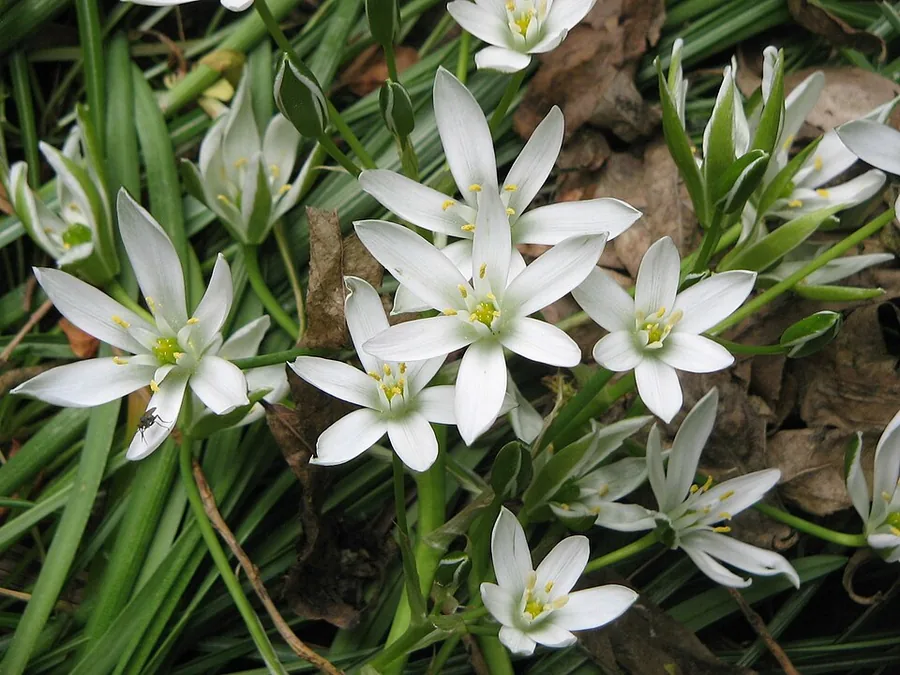
Star of Bethlehem is a small spring bulb that opens white, star-shaped flowers striped green on the back. The blooms have an odd habit: they open around midday and close again by late afternoon or under cloud, which is where the old name nap-at-noon comes from. Grassy leaves push up first, then the flowers ride low over them in late spring.
It belongs to the asparagus family and grows from a bulb that throws off offset bulblets with abandon. That makes it almost foolproof to keep alive, but it also means a tidy clump can creep into the lawn and beyond if you let it. Across much of the northern United States it has slipped out of gardens and into pastures and turf, where it counts as a weed.
The catch is that the whole plant is poisonous. Every part carries cardiac glycosides, the bulb most of all, and they can harm pets, livestock, and people alike. Grow it for the flowers if you like, but site it where children and animals can't reach it, and wear gloves whenever you dig.
Care
The short version: plant the bulbs in fall in moist, well-drained soil and full sun to part shade, keep them watered through spring growth, then let them dry out and die back over summer.
Light
Give it full sun for the best flowering, though it copes with partial sun and even light shade, tolerating about 25 percent shade without much complaint. A spot under deciduous trees works, since the bulb does its growing before the canopy fills in.
Water
Keep the soil evenly moist through spring growth and bloom, watering roughly every 5 to 10 days when rain falls short. Once the plant is established it shrugs off summer drought, and it actively dislikes wet ground after the foliage goes dormant in late summer.
Soil
Plant in moist, fertile, well-drained loam with plenty of organic matter worked in. It isn't fussy about pH and runs happily anywhere from 6.0 to 7.5, but drainage matters far more than richness, because standing water rots the bulb.
Temperature
This is a tough, cold-hardy bulb that handles winter down to about 5°F (-15°C) and summer heat up to roughly 86°F (30°C). The bulb sits out the cold underground and pushes growth once spring warms the soil.
Humidity
Ordinary outdoor humidity suits it fine, so there's no figure to chase. What matters far more is drainage at the root, not moisture in the air.
Feeding
It barely needs feeding. Work some balanced bulb fertilizer or compost into the bed at planting, give a light feed in early spring as growth emerges, and leave it at that, since fertile ground only encourages it to spread faster.
Pruning
Let the foliage die back on its own after bloom so the bulb can recharge for next year. Snip off the spent flower stalks to cut down on self-seeding, and pull on gloves first, because the sap can irritate skin.
Repotting
Lift and divide the clumps every 3 to 4 years once they grow crowded. Tell-tale signs that it's time include weaker flowering, bulbs heaving up to the surface, and a crush of small bulblets jostling the parent.
Size & spacing
Plants stay low, reaching only 6 to 12 inches (15 to 30 cm) tall, but each clump spreads 12 to 24 inches (30 to 60 cm) wide and keeps widening. Give it room, or better yet a contained bed, so it doesn't crowd its neighbors.
When to plant
This is a fall-planted bulb that flowers the following year. Set the dormant bulbs out in September or October, let them sit through winter, and they push up leaves and then white flowers from May into June. After bloom the foliage yellows and the plant rests through summer.
Northern hemisphere
Southern hemisphere
Typical months for a temperate climate: start earlier in warm zones, later where spring frosts linger.
- Sow: not typically started indoors; plant dormant bulbs directly
- Plant: fall (September to October)
- Harvest: late spring to early summer (May to June)
Hardiness
USDA hardiness zones: 4–9
Temperature: down to -34°C
Troubleshooting
Star of Bethlehem is hard to kill, so its two real problems pull in opposite directions: it rots in soggy ground, yet spreads too well everywhere else. Match what you're seeing below and deal with it early, before a wet bulb spoils or a stray bulblet starts a colony.
Soft, mushy bulbs that fail to come up
This is bulb rot, and it sets in when the soil stays too wet. Waterlogged ground or heavy moisture during the bulb's summer dormancy is almost always the cause. Lift any suspect bulb to check for soft, foul-smelling tissue, toss the ones that have turned, and replant the firm white bulbs in better-drained ground.
Fix:
- Lift and discard affected bulbs
- Improve drainage by amending with grit or organic matter or move to a raised, better-drained site
- Replant healthy firm bulbs in well-drained soil
Dense green patches creeping into the lawn and beds
Star of Bethlehem spreads on its own by pumping out offset bulblets around each parent bulb, and it readily escapes a bed to colonize lawns and pastures. Dig the whole clump and pick out every small bulblet before it breaks free, then bag the lot rather than composting it. You'll need to repeat the dig over a few seasons, because the ones you miss come right back.
Fix:
- Dig out clumps removing all bulblets before they detach
- Bag and dispose of dug bulbs rather than composting
- Repeat removal over several seasons as missed bulblets resprout
Toxicity
Treat this plant as a poison, not a pretty wildflower. Every part holds cardiac glycosides, concentrated hardest in the bulb, and they can sicken cats, dogs, horses, and livestock and harm people too. No part is edible, even the vase water from cut stems has been linked to poisoning, so keep it away from anyone who might taste it.
Toxic to
Cats · Dogs · Horses · Rabbits · Livestock · Birds · People
Cats Severe
A cat that chews any part will usually start drooling and vomiting, go off its food, and develop diarrhea. The real danger is the bulb, where the glycosides run highest and a larger bite can throw off the heart rhythm, leaving the cat weak or collapsed.
Dogs Severe
Dogs that dig up and gnaw the bulbs are most at risk. Watch for drooling, a lost appetite, vomiting, and diarrhea, and treat any stagger, weakness, or irregular heartbeat as an emergency.
Horses Severe
A grazing horse may salivate heavily and show colic-like belly pain, diarrhea, and muscle tremors. As the toxin builds, the heartbeat turns fast and erratic, which is where the danger lies.
Rabbits Severe
The same cardiac glycosides make this no safe forage for a rabbit. Expect gut upset and a refusal to eat, and know that enough of the bulb can disrupt the heart, so keep the plant well out of reach.
Livestock Severe
Cattle, sheep, and goats often show signs within hours, starting with salivation, diarrhea, and abdominal pain. Once the heart rate and rhythm falter the case turns serious, and grazing enough bulbs can be deadly.
Birds Severe
Birds aren't spared the cardiac toxins either. A poultry flock or pet bird that pecks at the foliage or bulbs can suffer gut distress and the same dangerous strain on the heart, so fence them away from any patch.
People Caution
No part of this plant is food, and children are the ones to guard. Swallowing leaves, flowers, or especially a bulb can bring on vomiting and, in quantity, the same heart-rhythm trouble seen in pets, so handle it as a poison and wash up after touching the sap.
Keep bulbs and plants away from pets and children; wear gloves when handling as the sap can irritate skin. Even vase water from cut stems has been implicated in poisoning.
Helpline numbers

United States
ASPCA Animal Poison Control: (888) 426-4435 (fee applies)
Poison Control: (800) 222-1222



Canada
Poison Centres: 1-844-764-7669
Varieties
There isn't a long list of named cultivars here. The plant grown in gardens is essentially the wild species itself.
Ornithogalum umbellatum (species)
The wild species carries white star-shaped flowers striped green on the back that open near midday and shut by late afternoon or in cloudy weather, which is how it earned the name nap-at-noon.
How to propagate
Multiplying star of Bethlehem takes almost no effort, since the bulb does most of the work for you by splitting off offsets every year.
Offsets & pupsEasy
After foliage dies back in summer or in early fall when dormant · Blooms the following spring once replanted
The easiest way to make more is to lift a clump once the foliage has died back in summer or early fall. Twist the small offset bulblets off the parent and replant them about 2 to 3 inches deep, and each one flowers the next spring.
DivisionEasy
Summer dormancy after foliage yellows · One growing season
Wait until the leaves yellow in summer dormancy, then dig and split any crowded clump to both thin it and propagate it. The divisions settle in within a single growing season, and the plant spreads readily on its own besides.
SeedModerate
Sow ripe seed in fall · Several years to flowering
Seed is the slow road. Sow ripe seed in fall if you want to try it, but seedlings creep along and take several years to flower, which is why almost all spread comes from bulblets rather than seed.
Myths
Star of Bethlehem is only mildly toxic and causes nothing worse than an upset stomach.
Every part of the plant holds cardiac glycosides, with the bulb by far the strongest. A small nibble may stop at gut upset, but a real dose can throw the heart into the same dangerous rhythm trouble caused by foxglove. Treat it as genuinely poisonous, not a minor stomachache.
It is a harmless naturalizing wildflower that is safe to plant anywhere.
It throws off offset bulblets fast, slips out of the garden, and turns into a weed of lawns, pastures, and turf. Alabama even lists it as a Class C noxious weed. Plant it only where you can contain it, if at all.