Shrub · Hypericaceae
Shrubby St. John's Wort
Hypericum frondosum
Tough, drought-proof, and topped with bright yellow summer flowers, this native shrub asks for almost nothing.
Full sun
Every 7–14 days
730–1095 days
USDA 5–8
Overview
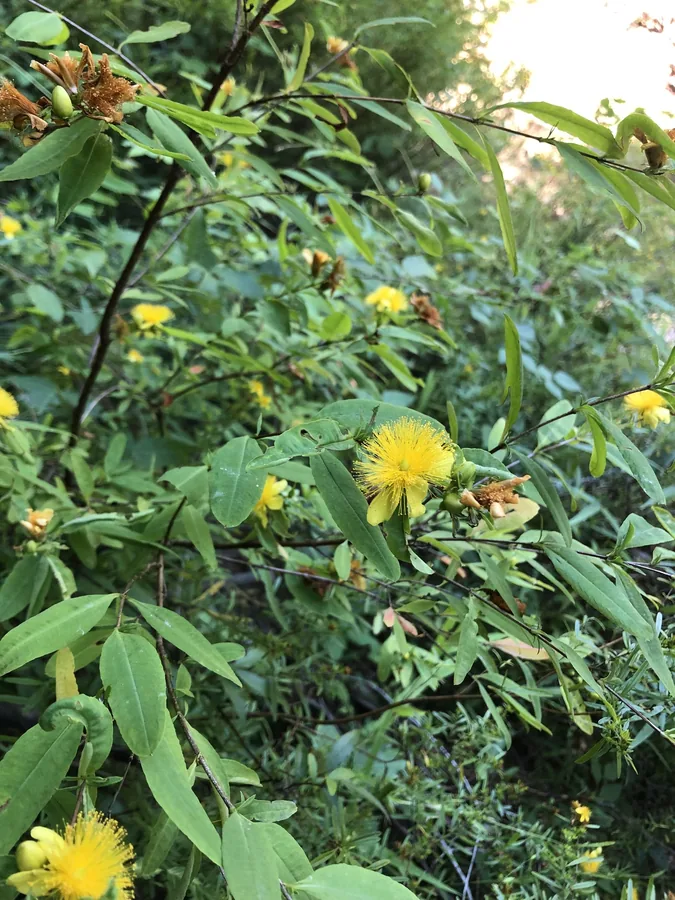
Shrubby St. John's wort is a compact native shrub grown for one thing above all: a long show of bright yellow flowers in early summer, each one centered on a thick boss of golden stamens. It reaches 3 to 4 feet tall and about as wide, with cool blue-green leaves and bark that peels to reddish-brown on older stems. The look is neat and rounded, easy to slot into a border or a mass planting.
What makes it a gardener's friend is how little it asks. It shrugs off poor, rocky, dry soil, handles full sun or a bit of shade, and goes drought tolerant once its roots take hold. Hardy through zones 5 to 8, it takes winters down to -20°F (-29°C) without complaint.
One caution rides along with the name. The plant holds hypericin, a compound that makes animals and people more sensitive to sunlight, so it is toxic to pets and grazing livestock and warrants care around medication in people. Keep that in mind when you decide where to plant it.
Care
The short version: full sun and sharp drainage are all this shrub really wants. Water it while it settles in, then ease off once it's established, prune in late winter for the best summer bloom, and skip the feeding most years.
Light
Plant it in full sun for the heaviest bloom, though it takes partial sun or light shade without much complaint. The more sun it gets, the denser the shrub and the brighter the flowers.
Water
Water steadily while the plant is getting established, then back off, because it turns drought tolerant once the roots are down. Let the top half of the soil dry between drinks, and never leave it sitting in wet, poorly drained ground, which invites root rot.
Soil
This shrub is easy to please on soil. It does best in average, well-drained ground and prefers a rich sandy loam, but it adapts happily to dry, rocky, and poor sites where fussier plants give up.
Temperature
Hardy across zones 5 to 8, it handles a wide swing from -20°F to 95°F (-29°C to 35°C). That cold tolerance lets it sail through hard winters that would finish off less rugged shrubs.
Humidity
Ordinary outdoor humidity suits it fine, so there's no level to manage. What matters more is air movement, since still, muggy air around crowded foliage is what brings on leaf diseases.
Feeding
Feeding is mostly optional with this adaptable native. A light dose of balanced fertilizer or a little compost in spring is plenty, and many plants do well with no feeding at all.
Pruning
It blooms on new wood, so prune in late winter or early spring before growth starts and you won't lose any summer flowers. You can even cut it back hard to reshape the shrub or clear winter-damaged tips.
Repotting
Grown in the ground, it almost never needs repotting. In a container, move it up only when roots circle the pot or push through the drainage holes, or when water runs straight through without soaking in.
Size & spacing
Expect a rounded shrub 3 to 4 feet (91 to 122 cm) tall and about as wide. Give each plant roughly that much room so air moves freely and the leaves stay dry.
When to plant
This shrub follows the seasons. Sow seed in late winter, set young plants out in spring once frost has passed, and the bright yellow flowers arrive in June and July before the show winds down.
Northern hemisphere
Southern hemisphere
Typical months for a temperate climate: start earlier in warm zones, later where spring frosts linger.
- Sow: Late winter to early spring; seed benefits from cold stratification and surface sowing as it needs light to germinate.
- Plant: Spring after last frost, or early fall in milder zones.
- Harvest: June to July (summer), with showy bright yellow flowers bearing a prominent boss of golden stamens.
Hardiness
USDA hardiness zones: 5–8
Temperature: down to -29°C
Troubleshooting
A healthy shrubby St. John's wort rarely gives trouble, and the few problems it does run into trace back to wet soil or crowded, damp leaves. Match what you see below, then fix the conditions rather than reaching for a spray.
Wilting and branch dieback even though the soil stays wet
When a plant fades in spite of watering, the culprit is almost always root rot from soggy, poorly drained ground, and it gets worse in hot, humid weather. Root-knot nematodes can do the same damage from below. Lift the plant and check the roots for browning, mush, or knotty galls, then move it to the raised, rocky, well-drained spot this shrub actually prefers.
Fix:
- Improve drainage and reduce watering frequency
- Remove and destroy severely affected plants and avoid replanting susceptible species in nematode-infested soil
- Plant in raised or rocky, well-drained sites the species naturally prefers
Spotted, powdery, or rust-flecked leaves
Crowded, damp foliage invites a few fungal diseases at once. Dark blotches point to leaf spot, a white film means powdery mildew, and raised orange-brown bumps on the leaf undersides are rust. None of them kill the shrub, so strip off the marked leaves, open the plant up with a little pruning, and water at the base to keep the foliage dry.
Fix:
- Remove and dispose of affected foliage
- Improve air circulation by spacing and selective pruning
- Avoid wetting foliage when irrigating
Toxicity
This is not a plant to treat as harmless. It holds hypericin, which makes skin react to sunlight and brings on poisoning when animals eat it. Keep it away from pets and grazing livestock, and remember that even the medicinal form people take carries real risks.
Toxic to
Cats · Dogs · Horses · Rabbits · Livestock · Birds · People
Cats Mild
The hypericin in the leaves can leave a cat queasy, off its food, and low in spirits. The bigger worry is photosensitization, where sun exposure raises sore, sunburn-like patches on thin-furred skin and around the mouth.
Dogs Mild
A dog that chews the foliage may drool, vomit, or pass loose stools. After that, sunlight can blister the lightly furred skin on the belly, nose, and ears as the hypericin makes the skin react.
Horses Moderate
Grazing horses develop photosensitization that turns to ulcerated, weeping dermatitis across any pale or unpigmented skin, and the damage worsens the longer they stay in the sun.
Rabbits Moderate
The same hypericin that troubles other grazers makes this an unsafe nibble for rabbits, bringing on digestive upset and the typical sunburn-like skin reaction on exposed, thin-furred areas.
Livestock Severe
Cattle, sheep, and goats that eat a lot show the worst of it: blistered, itching skin on unpigmented areas, a rising temperature, and fast breathing and pulse as the photosensitization takes hold.
Birds Moderate
Treat this plant as off-limits for birds. The hypericin carries the same poisoning and light-triggered skin trouble, so keep it away from pet and poultry flocks.
People Caution
People take St. John's wort medicinally, but it still drives photosensitivity that makes skin burn faster in the sun. The sharper danger is how strongly it interacts with many prescription drugs, so anyone on medication should check with a doctor first.
No special handling needed for routine gardening; keep pets and grazing livestock from consuming large quantities of foliage.
Helpline numbers

United States
ASPCA Animal Poison Control: (888) 426-4435 (fee applies)
Poison Control: (800) 222-1222



Canada
Poison Centres: 1-844-764-7669
Varieties
Only a couple of forms turn up in gardens, but the difference between them is worth knowing before you buy.
Sunburst
A popular compact cultivar that tops out near 3 feet (91 cm) and carries slightly larger flowers up to 2 inches (5 cm) across.
Hypericum frondosum (species)
The straight native species grows 3 to 4 feet (91 to 122 cm) tall and wide, with blue-green foliage and reddish-brown bark that peels on older stems.
How to propagate
You can multiply this shrub three ways, from quick clumps to slow seed, depending on how soon you want flowers.
Stem cuttingsEasy
Late spring to summer using softwood cuttings · 4 to 8 weeks to root
Cuttings are the surest way to copy a named cultivar like Sunburst true to form. Take softwood tip cuttings during active growth in late spring or summer, and they root in about 4 to 8 weeks.
DivisionEasy
Early spring before new growth emerges · One growing season
Splitting an established clump is quick and forgiving. Lift and divide the crown in early spring before new growth breaks, and each piece settles in over a single growing season.
SeedModerate
Late winter to spring · Germination in a few weeks; flowering plants in 2 to 3 years
Seed takes the most patience. Surface sow in late winter or spring since the seed needs light to sprout, and a spell of cold stratification lifts your odds. Seedlings show in a few weeks, but expect to wait 2 to 3 years for the first flowers.
Myths
Every St. John's wort is a dangerous invasive weed that should never be planted.
The plant with the bad reputation is common St. John's wort, Hypericum perforatum, a noxious invader of western rangelands that poisons grazing livestock. The ornamental shrubby St. John's wort grown in gardens is a different plant, Hypericum frondosum, and this well-behaved native shrub carries no noxious-weed listing at all.