Houseplant · Asparagaceae
Spider Plant
Chlorophytum comosum
Give it bright indirect light and a drink when the soil dries, and the spider plant grows fast and stays safe around your pets.
Bright indirect
Every 7–10 days
55–75°F · 13–24°C
USDA 9–11
Overview
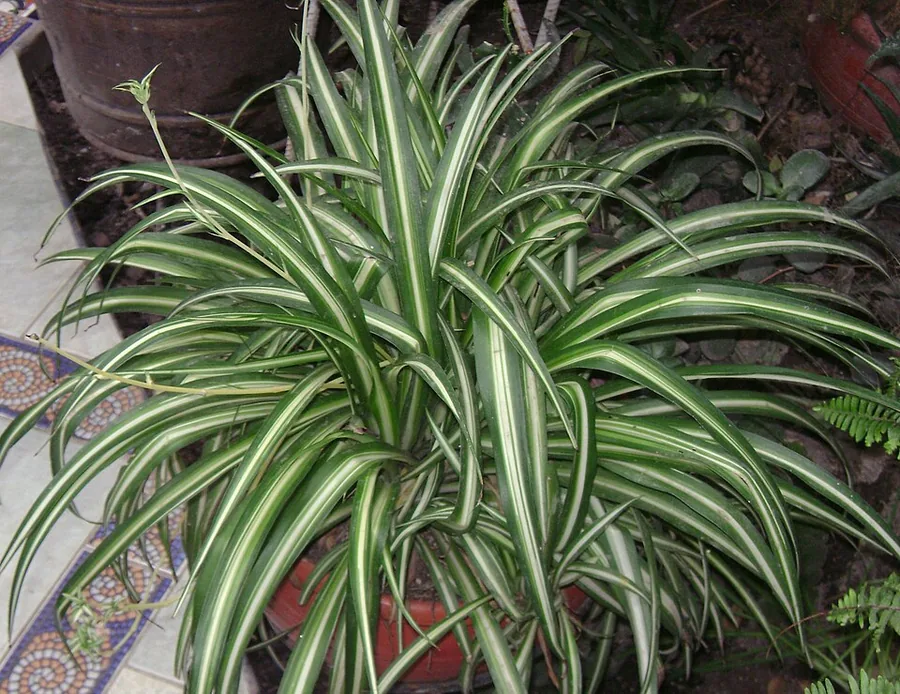
Few houseplants are as easy to live with as the spider plant. It comes from the woodlands of southern Africa, where it grows in dappled shade, and that history is why it shrugs off a dim corner indoors. The arching, ribbon-like leaves spill over the edge of a pot, which makes it a favorite for a shelf or a hanging basket.
What sets it apart is the babies. A mature plant sends out long, wiry stems tipped with small plantlets, sometimes called spiderettes, that dangle in the air like little spiders on a thread. Each one roots in no time, so a single plant turns into a whole shelf of free plants you can share around.
The biggest draw for many homes is safety. The spider plant is non-toxic to cats and dogs, so a pet that bats at the dangling leaves comes to no harm. Give it indirect light and a drink when the soil dries, and it grows fast and forgives almost every beginner mistake.
Care
The short version: bright indirect light with no direct sun, water every 7 to 10 days once the top half of the soil dries, plant in a well-draining potting mix, and keep it in a room between 55°F and 75°F (13°C to 24°C).
Light
Give the spider plant bright indirect light and keep it out of direct sun, which bleaches and scorches the leaves. It also gets by in medium light, shade, and even a low-light corner, though the colors stay richest in bright, filtered light. A spot near a window with a sheer curtain is about perfect.
Water
Let the top half of the soil dry out before you water again, which usually works out to every 7 to 10 days. Cut back in winter when growth slows and the soil stays damp longer. The fleshy roots store water, so this plant handles a missed drink far better than a soggy pot.
Soil
Plant it in a well-draining general-purpose potting mix so water runs through instead of pooling around the roots. It is not fussy about acidity and grows well anywhere from a pH of 6.0 to 8.0. The main thing the mix has to do is drain, since standing water leads to root rot.
Temperature
Ordinary room warmth suits it, with a sweet spot between 55°F and 75°F (13°C to 24°C). Keep it away from cold drafts and any spot that drops near freezing, since this is a tender plant at heart. Steady indoor temperatures are all it asks for.
Humidity
Average household humidity is fine, so there is no number to chase. Dry winter air can crisp the leaf tips, and that is when a spider mite is most likely to settle in. A quick rinse of the leaves or a nearby tray of water helps if your air runs very dry.
Feeding
Feed only during the spring and summer growing season, and skip it in fall and winter. A half-strength balanced houseplant fertilizer once in a while is plenty. Go easy here, because too much feed burns the leaf tips brown and cuts down on the plantlets you want.
Pruning
There is little to prune on a spider plant beyond tidying. Trim browned leaf tips at an angle to keep the natural leaf shape, and cut spent flower stems back once they fade. You can also remove plantlets to pot up or to keep a plant looking neat.
Repotting
Plan to repot every 1 to 2 years, or whenever the plant turns rootbound. You will know it is time when the roots crowd or crack the pot, the fleshy tubers push the soil up, or the plant dries out fast and slows its plantlets. Move it up one pot size and refresh the mix.
Size & spacing
A spider plant stands about 12 to 24 inches (30 to 60 cm) tall and spreads from 12 to 35 inches (30 to 90 cm) once the leaves arch over and the babies dangle down. Give it room to spill, since a shelf edge or a hanging basket shows it off best. It grows fast, so it fills out a pot in a single season.
Troubleshooting
Most spider plant trouble shows up first in the leaves, and brown tips lead the list. Learn to read these early signs and you can fix a small issue before it spreads. Match what you see below, then act while it still helps.
Yellow leaves above soft, mushy roots
Yellow leaves sitting over soggy soil are a sign of root rot from overwatering, and this one turns serious fast. Tip the plant out, cut away any brown mushy roots, and repot in fresh, fast-draining mix. Then water less and make sure the pot can drain.
Fix:
- Unpot and trim rotten roots
- Repot in fresh well-draining mix
- Reduce watering
Washed-out, bleached patches on the leaves
Pale, scorched leaves point to too much direct sun hitting the foliage. A spider plant wants bright indirect light and burns on a hot windowsill. Move it back from the glass or behind a sheer curtain so the midday sun never lands on the leaves.
Fix:
- Move to bright indirect light
- Shield from midday sun
Small brown bumps stuck to leaves and stems
Those fixed brown bumps are scale insects, and the sticky residue near them is the honeydew they leave behind. Wipe the bumps off with a cloth, then treat the plant with horticultural oil or insecticidal soap. Check any new plant before it joins the rest.
Fix:
- Wipe off scales
- Apply horticultural oil or insecticidal soap
White cottony fluff tucked into the leaf joints
White, cottony clusters in the crooks of the leaves are mealybugs, another sap feeder that leaves a sticky film. Dab each cluster with a cotton swab soaked in rubbing alcohol, then follow up with insecticidal soap. Keep new arrivals apart until you know they are clean.
Fix:
- Dab with rubbing alcohol
- Apply insecticidal soap
Fine webbing and a dusty, speckled look on the leaves
Fine webbing with tiny speckled leaves means spider mites, and dry indoor air is what they love. Rinse the foliage under the tap, treat with insecticidal soap or a miticide, and raise the humidity around the plant. Damp air makes the leaves a poor home for them.
Fix:
- Rinse foliage
- Apply insecticidal soap or miticide
- Raise humidity
Crispy brown tips on the ends of the leaves
This is the classic spider plant complaint, and it almost never means a sick plant. The cause is usually fluoride, chlorine, and salt building up from tap water, sometimes paired with dry air or too much feed. Switch to distilled or rainwater, flush the pot now and then, and snip the brown ends off at an angle.
Fix:
- Water with distilled or rainwater
- Flush pot to leach salts
- Trim browned tips
- Ease off fertilizer
Clusters of tiny insects on the soft new growth
Soft-bodied bugs gathered on fresh growth, along with a sticky film, are aphids. A sharp rinse under the tap knocks most of them off in one go. Follow with insecticidal soap if they come back, and keep an eye on new growth where they tend to land.
Fix:
- Rinse off with water
- Apply insecticidal soap
A healthy plant that never sends out babies
A strong plant with no plantlets is often just too young or too comfortable in its pot. Spider plants tend to throw babies once they fill out and grow a little potbound. Ease off the feed, let it mature, and give it short days with long, dark nights for about 3 weeks to trigger the show.
Fix:
- Let plant mature and become slightly potbound
- Reduce fertilizer
- Give short days and long uninterrupted nights ~3 weeks
Toxicity
Good news here, since this is one houseplant you can relax about. The spider plant is non-toxic to cats, dogs, and people, so there is nothing to keep up high or out of reach. A pet that chews a leaf is in no danger, which is a big part of why so many homes keep one.
Safe for
People · Cats · Dogs · Horses · Rabbits · Livestock · Birds
Cats Safe
Cats may bat at and nibble the arching leaves with no harm. A big binge can bring a little stomach upset, nothing more.
Dogs Safe
Dogs can chew the leaves without trouble. It is one of the safest leafy plants to keep around a curious pup.
Horses Safe
Not toxic to horses. A curious muzzle can take a taste with no harm done.
Rabbits Safe
Safe for rabbits to nibble, though leafy greens should always be a small part of their diet.
Livestock Safe
Not toxic to grazing animals. It poses no poisoning risk to cattle, goats, or sheep.
Birds Safe
Safe around pet birds and poultry. The leaves are harmless if pecked.
People Safe
Non-toxic and safe around children, which makes it a top pick for homes with curious toddlers.
Varieties
Spider plants come in a handful of named cultivars, set apart by how their leaves are striped or curled. These are the ones you are most likely to find by name.
'Vittatum'
This is the one most people picture, with a creamy white stripe running down the middle of each green leaf.
'Variegatum'
This cultivar flips the pattern, edging its green leaves with clean white margins instead of a central stripe.
'Bonnie'
A compact pick whose variegated leaves curl and kink into loose ringlets rather than arching straight.
'Milky Way'
This type carries a broad white-to-cream center with only a thin band of green left at the edges.
'Mandaianum'
A dwarf form with dark green leaves striped in yellow, small enough for a tight spot or a shelf.
How to propagate
Spider plants are among the easiest plants to multiply, and the dangling babies do most of the work for you. You can root those plantlets, split a crowded clump, or start from seed if you have the patience.
Offsets & pupsEasy
Anytime plantlets present · 2-4 weeks
This is the fun part, and the easiest way to make more plants. Set a plantlet, sometimes called a spiderette, onto a pot of moist soil while it is still attached to the parent, or stand it in water until roots form and then pot it up. Either way it roots in about 2 to 4 weeks, and then you snip it free as its own plant.
DivisionEasy
At repotting or spring · Few weeks
When a big clump fills its pot, you can split it instead. At repotting time or in spring, slide the plant out and pull the fleshy, tuberous root mass into sections, each with leaves and roots. Pot the pieces up on their own and they settle in within a few weeks.
SeedModerate
Spring · Several weeks
Growing from seed is the slow road and far less common. Sow in spring and give the seedlings several weeks to take hold. Keep in mind that seed-grown plants can drift from the parent, so a variegated mother may hand you plain green babies.
Myths
Spider plants clean indoor air enough to matter.
The famous air-cleaning idea comes from a sealed-chamber test, not a real room. A peer-reviewed review found the amount a potted plant pulls from your air is tiny next to a cracked window. Open a window to clear the air, and keep the plant because you like it.
Brown leaf tips mean the plant is dying.
Brown tips look alarming but the plant underneath is usually fine. The cause is almost always fluoride, chlorine, and salts in tap water, or dry air, not a failing plant. Switch to distilled or rainwater and the new growth comes in clean.
Spider plants need bright direct sun.
Direct sun is the one thing this plant cannot take, and it bleaches the leaves. A spider plant wants bright indirect light and will get by in shade and low light too. Keep it off a baking windowsill and it stays a deep, even green.
Spider plants are toxic to cats and dogs.
This worry keeps a great plant out of pet homes for no reason. The ASPCA lists the spider plant as non-toxic to both cats and dogs, which is its biggest selling point. A pet that nibbles the leaves is in no danger at all.
Heavy feeding makes more plantlet babies.
Pouring on fertilizer does the opposite of what you want here. Over-feeding cuts down on plantlets and burns the leaf tips brown. A little balanced feed in spring and summer, with a potbound plant, is what brings the babies on.
Tap water is fine for spider plants.
Plain tap water is the usual reason those leaf tips turn crispy. The fluoride and chlorine in it build up and scorch the ends over time. Water with distilled or rainwater instead, and flush the pot now and then to wash the salts out.
Sources
- ASPCA
- NC State Extension Gardener Plant Toolbox
- University of Wisconsin-Madison Horticulture Extension
- Clemson Cooperative Extension HGIC
- Missouri Botanical Garden Plant Finder
- South Dakota State University Extension
- Royal Horticultural Society
- Journal of Exposure Science & Environmental Epidemiology (Cummings & Waring 2020)
- Drexel University