Shrub · Adoxaceae
Snowball Bush
Viburnum opulus
Give it full sun and room to spread, and the snowball bush crowns itself in white globes every spring.
Full sun
Every 5–10 days
USDA 3–8
10–12 ft · 3–3.7 m
Overview
The snowball bush earns its name in mid spring, when it covers itself in round white flower clusters that look like fresh snowballs hung on bare branches. It's a deciduous shrub in the viburnum family, grown for those sterile, fruitless blooms rather than for any berry. The flowers open white and slowly flush pink as they age.
This is a big, easygoing shrub. It reaches 10 to 12 feet (3 to 3.7 m) tall and spreads even wider, settling into a rounded mound that needs little fussing once it's rooted in. It shrugs off cold down to brutal winter lows and takes a wide range of soils, which is part of why it has stayed a dooryard favorite for generations.
Plant it where it has space and sun. Crowd it into a tight corner and you trade fewer flowers for more mildew, but give it open ground and good air, and it rewards you with a heavy show every May and almost no other demands.
Care
The short version: full sun to light shade, evenly moist but well-drained soil, and plenty of elbow room. Prune it right after it blooms, since next year's flowers form on this year's old wood.
Light
Give the snowball bush full sun for the heaviest bloom, though it takes partial shade without much complaint. The trade-off in a shady spot is fewer flowers and a higher chance of powdery mildew, so the open, sunny position always wins.
Water
Keep the soil evenly moist while the shrub is young, watering it every 5 to 10 days and more often through a dry stretch. Once it's established, it gets far tougher and rides out a wide range of conditions, but it never likes to bake bone dry for long.
Soil
It isn't fussy about ground, growing happily in clay, loam, or sand as long as the drainage is decent. A well-drained loam holds the sweet spot, and the shrub tolerates a broad pH window from 5.5 to 8.0, so most garden soils suit it as is.
Temperature
This is a cold-hardy shrub, taking winter lows to -40°F (-40°C) and summer heat up to 100°F (38°C). That range covers a long stretch of the country, which is why it turns up in so many old gardens.
Humidity
Outdoor humidity is whatever the weather brings, so there's no number to chase. Air movement matters more than moisture in the air, since still, damp pockets are where powdery mildew gets its foothold.
Feeding
A single feed in early spring is plenty. Use a balanced slow-release shrub fertilizer or a layer of compost, and skip the heavy nitrogen, which only pushes soft growth that aphids love.
Pruning
Time your cuts for right after the flowers fade, because the blooms form on old wood and a late trim removes next spring's display. Take out any dead, damaged, or crossing stems to keep the rounded shape, and leave the rest alone.
Repotting
This shrub belongs in the ground and rarely needs a pot at all. If you're holding a young plant in a container, move it up before the roots start circling, but the goal is to get it planted out where it has room to grow.
Size & spacing
Plan for a large shrub, 10 to 12 feet (3 to 3.7 m) tall and 12 to 15 feet (3.7 to 4.5 m) wide. Give it that full footprint at planting so air can move through it and you're never fighting it back with the shears.
When to plant
The snowball bush blooms in mid to late spring, around May, and that single window shapes the whole year of care. Plant it in spring or fall while the soil is still workable, and do any pruning right after the flowers fade so you don't cut off next season's show.
Northern hemisphere
Southern hemisphere
Typical months for a temperate climate: start earlier in warm zones, later where spring frosts linger.
- Plant: Spring or fall while soil is workable
- Harvest: Mid to late spring (May); sterile snowball flower clusters, no fruit
Hardiness
USDA hardiness zones: 3–8
Temperature: down to -40°C
Troubleshooting
The snowball bush stays remarkably trouble-free, and most of what does show up lands on the new leaves. Learn to read a curled tip or a spotted leaf and you can step in early. Match what you see below, then act while it still helps.
Leaf spots, white film, or dying stems
A few different troubles look alike here. Water-soaked angular spots point to bacterial leaf spot, a white film on the leaves means powdery mildew in a shady, still corner, and holes with frass at a dying stem's base flag a borer. Prune out what's affected, open the plant up so air moves through it, and water at the base instead of over the top.
Fix:
- Prune out and dispose of affected stems
- Improve air circulation by thinning and proper spacing
- Avoid overhead watering to keep foliage dry
New tip leaves twisted, curled, and cupped
This is the snowball aphid, which feeds on the soft new growth and curls it as it goes. Turn a distorted leaf over and you'll find clusters of bluish-gray insects dusted with white. The damage is mostly cosmetic, so a hard blast of water or a little patience while predators move in usually settles it, and insecticidal soap handles a heavy run.
Fix:
- Knock aphids off with a strong stream of water
- Tolerate light infestations since natural predators often control them and damage is mostly cosmetic
- Treat heavy infestations with insecticidal soap, neem oil, or a labeled systemic such as imidacloprid
Toxicity
Good news for households with pets and children. The ASPCA lists viburnum as non-toxic to cats, dogs, and horses, and the sterile snowball form sets no fruit at all, so there's nothing tempting to eat. A stray nibble might cause mild stomach upset, as any plant can, but nothing here is poisonous.
Safe for
People · Cats · Dogs · Horses · Rabbits · Livestock · Birds
Cats None
Safe around cats. The ASPCA lists viburnum as non-toxic, so a curious nibble won't poison them.
Dogs None
No worries with dogs. Chewing a leaf or two does no harm beyond the mild stomach upset any plant material can cause.
Horses None
Horses can graze near it without trouble, since the shrub carries no toxins that affect them.
Rabbits Safe
Rabbits are fine around the foliage. It holds nothing poisonous, though it isn't a staple food.
Livestock Safe
Cattle, goats, and sheep face no poisoning risk from this shrub and can browse it without concern.
Birds Safe
Backyard birds are in no danger here. The sterile snowball form sets no fruit anyway, so there's nothing for them to eat.
People Safe
Safe to have around children. Nothing on the plant is poisonous, so a stray bite during play is no cause for alarm.
No special handling precautions are required; sap may occasionally irritate sensitive skin as with any plant.
Varieties
Several shrubs go by the name snowball, and they're easy to mix up. These are the ones you're most likely to meet, and how to tell them apart.
Viburnum opulus 'Roseum' (also sold as 'Sterile')
This is the classic European snowball, carrying 3 to 4 inch round clusters of sterile white florets that flush pink with age and set no fruit at all.
Viburnum macrocephalum (Chinese Snowball)
A separate species often mistaken for the European snowball, it pushes much larger blooms up to 8 inches across on semi-evergreen growth.
Viburnum plicatum (Japanese Snowball)
Easy to tell apart by its horizontally tiered branches and strongly pleated leaves, it carries rounded sterile snowball clusters all its own.
How to propagate
Because the snowball bush makes no seed, you copy it the way gardeners always have, by rooting a piece of the plant itself.
Stem cuttingsModerate
Late spring to early summer · Several weeks to root, one or more seasons to establish
Take softwood cuttings in late spring or early summer, when the new wood is still pliable. They root over several weeks and then need a season or more to settle in. Because the sterile 'Roseum' makes no seed, cuttings are the only way to copy it true.
LayeringEasy
Spring through summer · One growing season or more to root before severing
Layering is the simplest route. Pin a low, flexible branch down against the soil any time from spring through summer and let it root in place over a full growing season before you cut it free. It's a reliable way to multiply this fruitless cultivar.
Myths
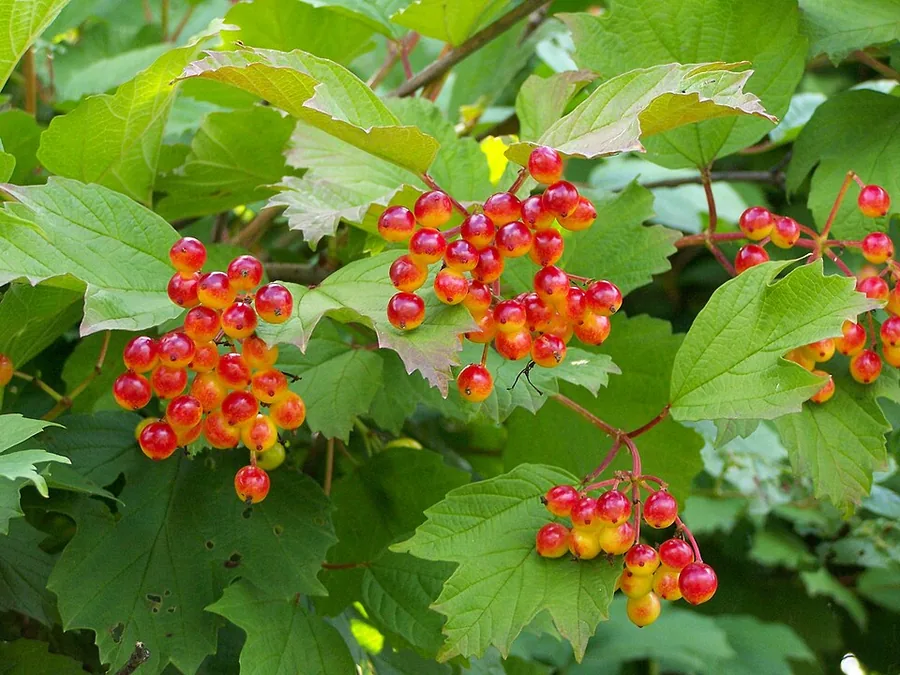
The snowball bush will spread invasively by seed like the wild European cranberrybush.
The 'Roseum' cultivar carries entirely sterile flowers and sets no fruit or viable seed, so it has no way to spread on its own. Only the fertile species, Viburnum opulus, has naturalized and turned invasive in parts of the US and Canada.
The snowball bush is the same plant as the fragrant Chinese snowball viburnum.
These are different species that only look alike. The common European snowball is Viburnum opulus 'Roseum', while the Chinese snowball is Viburnum macrocephalum with its larger blooms, and the Japanese snowball is Viburnum plicatum.