Shrub · Adoxaceae
Elderberry
Sambucus canadensis
Give it sun, steady moisture, and a second cultivar nearby, and elderberry hands you heavy clusters of dark fruit.
Full sun
Every 3–7 days
USDA 3–9
5–12 ft · 1.5–3.7 m
Overview
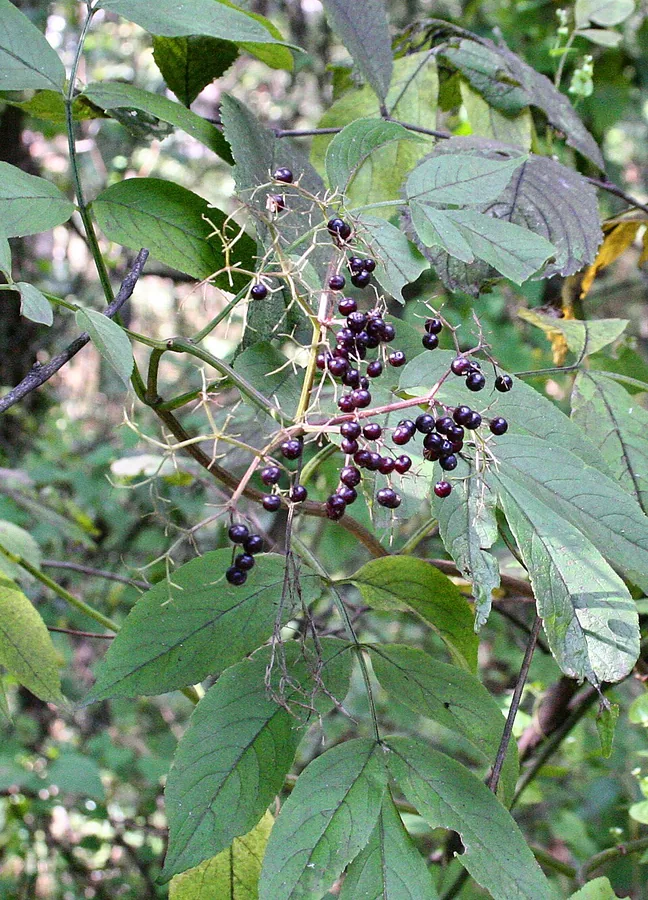
Elderberry is a fast, easygoing shrub that earns its keep twice over, with broad creamy flower heads in June and dark berry clusters that ripen from August into September. It belongs to the genus Sambucus and grows wild across much of North America, often along damp ground and field edges. Left alone it climbs to 5 to 12 feet (1.5 to 3.7 m) and spreads just as wide into a multi-stemmed thicket.
The plant is hardy and unfussy, taking cold down to zones 3 through 9 and shrugging off poor soil, wet ground, and partial shade. It does have one firm rule worth knowing up front: only the fully ripe berries, and only after cooking, are safe to eat. The leaves, stems, bark, roots, and any raw or unripe fruit carry cyanogenic compounds that will make people and animals sick.
Grow it for the harvest and you'll want a second cultivar within reach, since one plant on its own sets a thin crop. Two different cultivars that bloom together pollinate each other and load the canes with fruit. Give it room, keep it watered, and prune it back each winter, and an elderberry repays you fast.
Care
The short version: full sun to part shade in rich, evenly moist soil, with a balanced spring feed, a hard dormant-season pruning each winter, and a second cultivar nearby for a full crop.
Light
Elderberry fruits best in full sun, where the heavy flower heads and berry clusters develop fully. It tolerates partial sun and even partial shade, but the shadier the spot, the lighter the crop you can expect.
Water
Keep the soil evenly moist, because the shallow, fibrous roots dry out fast and the plant feels it most while flowering and fruiting. Water deeply through any dry spell, every 3 to 7 days as the weather demands, but don't let the ground stay waterlogged.
Soil
Plant in rich, moist, well-drained loam, though elderberry is forgiving and adapts to clay, sand, and ground that runs wet or dry. It handles a wide pH band from 5.5 to 7.5, so most garden soil suits it.
Temperature
This is a genuinely hardy shrub, taking winter cold down to -29°F (-34°C) and summer heat up to 95°F (35°C). That range covers most temperate gardens without any special care.
Humidity
Average humidity around 40% to 70% is all it needs, and outdoor air rarely falls short. Crowded, still air does invite powdery mildew, so airflow matters more than the moisture in the air.
Feeding
Feed once in early spring as growth wakes up, using a balanced or nitrogen-rich mix such as 10-10-10 or composted manure. One seasonal feeding is plenty for a plant this vigorous.
Pruning
Prune in the dormant season, in late winter. On established plants, cut dead, weak, and 3-plus-year-old canes back to the base to push the vigorous 1 to 2 year wood, and some growers simply mow the whole plant to the ground each year. Pull root suckers as you go to keep it from running.
Repotting
Elderberry belongs in the ground, not a pot, so there's little repotting to do. If you must hold one in a container, move it on before the roots circle or it stalls and wilts soon after each watering.
Size & spacing
A mature plant stands 5 to 12 feet (1.5 to 3.7 m) tall and spreads about as wide, 6 to 12 feet (1.8 to 3.7 m). Give each shrub plenty of elbow room so air moves freely and mildew stays away.
When to plant
Elderberry runs on the seasons. Set out dormant bare-root plants or cuttings in early spring once the hard frosts have passed, wait for the creamy flower heads in June, and pick the dark, ripe berries from August into September.
Northern hemisphere
Southern hemisphere
Typical months for a temperate climate: start earlier in warm zones, later where spring frosts linger.
- Sow: Late winter, only after 60-90 days of cold-moist stratification; seed is slow and erratic, so cuttings are preferred
- Plant: Early spring after the last hard frost, using dormant bare-root plants or cuttings
- Harvest: Flowers in June; dark berry clusters ripen August to September
Hardiness
USDA hardiness zones: 3–9
Temperature: down to -40°C
Troubleshooting
Elderberry is tough, and most of what troubles it is mild. Powdery mildew and aphids spoil the look more than the plant, while cane dieback and hungry birds need a quicker response. Match what you see below and act before a small problem spreads.
A single cane wilts and dies while its neighbors thrive
When one cane fails on its own, suspect cane borers or fungal dieback in old or damaged wood. Cut the affected cane out at the base and destroy it. Renewing the plant with yearly dormant pruning, clearing out canes over 3 years old, keeps this from taking hold.
Fix:
- Cut out and destroy affected canes at the base
- Remove old (3-plus-year) and damaged canes during dormant pruning
White powdery film coating the leaves
This is powdery mildew, a fungus that settles on crowded, shaded growth where the air sits still. Thin and prune the canes to open the plant up, strip off the worst leaves, and reach for a labeled fungicide or horticultural oil only if it spreads. It rarely hurts a healthy shrub beyond looks.
Fix:
- Thin and prune canes to improve air flow
- Remove and dispose of badly affected leaves
- Apply a labeled fungicide or horticultural oil if severe
Sticky, curling shoot tips crawling with tiny insects
Those are aphids, drawn to the soft new growth a heavy nitrogen feed encourages. Blast them off with a sharp jet of water, then follow up with insecticidal soap or horticultural oil if they hang on. Lady beetles and lacewings will clear the rest if you let them work.
Fix:
- Spray off with a strong jet of water
- Apply insecticidal soap or horticultural oil
- Encourage lady beetles and lacewings
Berry clusters vanishing just as they color up
Birds find ripe elderberries before you do and can strip a cluster in hours. Drape netting over the plant as the fruit starts to darken and pick whole cymes the moment they ripen. The cultivar Bob Gordon helps too, since its clusters droop and hang out of easy reach.
Fix:
- Net plants as fruit begins to ripen
- Harvest whole cymes promptly when berries darken
- Grow cultivars with drooping clusters such as Bob Gordon
Toxicity
This is where elderberry demands respect. The leaves, stems, bark, roots, and any raw or unripe berries hold cyanogenic glycosides that release cyanide and turn the stomach, and they are toxic to people and animals alike. Only fully ripe berries that have been cooked are safe to eat, so keep children, pets, and livestock away from every green part of the plant.
Toxic to
Cats · Dogs · Horses · Rabbits · Livestock · Birds
Safe for
People
Cats Moderate
A cat that chews the leaves, stems, or raw berries usually drools and then vomits, with diarrhea and a flat, listless mood to follow. A big mouthful of green plant carries the real risk, since the cyanide it releases can bring on weakness.
Dogs Moderate
Watch for vomiting, diarrhea, and a dog that goes off its food and turns sluggish after raiding the plant. Most cases are an upset gut, but a large helping of raw berries or foliage can push the signs further.
Horses Toxic
The leaves and woody parts are dangerous to a horse, and the cyanide they free up can show as drooling, colicky pain, labored breathing, and staggering. Fence elder out of any pasture or paddock a horse can reach.
Rabbits Toxic
Don't offer the foliage, stems, or raw berries to a rabbit. Even a small amount of the green plant can trigger gut stasis and rapid decline, so keep the whole shrub out of their reach.
Livestock Toxic
Cattle, goats, and sheep that browse the leaves or unripe fruit can suffer cyanide poisoning, with bloat, trembling, and collapse in the worst cases. Wilted prunings tossed over a fence are an easy way for stock to get poisoned.
Birds Caution
Wild birds eat the ripe berries with no trouble and help spread the seed, which is part of why the plant fruits so heavily. The green parts and raw, unripe fruit still hold cyanide, so cage birds should not be given any of it.
People Cooked ripe fruit safe
Fully ripe berries that have been cooked are a safe and popular kitchen ingredient, and cooked or processed flowers are fine too. Eaten raw, the berries plus any leaves, stems, bark, or roots cause nausea, vomiting, and diarrhea, so cook the fruit and throw out the green parts.
Keep children and pets from chewing leaves, stems, bark, or unripe berries. Never eat raw berries or any green parts; always cook ripe berries and discard stems and leaves before eating.
Helpline numbers

United States
ASPCA Animal Poison Control: (888) 426-4435 (fee applies)
Poison Control: (800) 222-1222



Canada
Poison Centres: 1-844-764-7669
Varieties
Most home growers reach for a handful of proven cultivars, and because the plant needs a pollination partner, they are usually planted in pairs. These are the ones worth knowing by name.
Adams
A vigorous old American selection that carries large fruit clusters and is usually planted alongside York so the two can cross-pollinate.
York
York sets some of the largest berries you can grow and makes a reliable pollinizer partner for Adams.
Bob Gordon
A heavy-cropping Missouri cultivar whose clusters flip over and droop as they ripen, which keeps a good share of the fruit out of reach of birds.
Sambucus nigra (European black elder)
The European species, treated here as an alias, grows taller and more tree-like and stands behind many of the ornamental and medicinal forms.
Companions
Elderberry's most useful neighbor is another elderberry. A second cultivar that blooms at the same time is what turns a light crop into a heavy one.
Plant near
A second, different elderberry cultivar (for example Adams with York): Cross-pollination between two cultivars that bloom at the same time increases fruit set and yield.
How to propagate
Elderberry is one of the simplest shrubs to multiply, and three of the four routes are nearly foolproof. Most growers skip seed and take free copies of a plant they already have.
Stem cuttingsEasy
Hardwood cuttings in late winter while dormant; softwood cuttings in early summer · Roots in a few weeks; transplantable within one season
This is the easiest way to start an elderberry. Take pencil-thick cuttings with 2 or 3 nodes, keep them evenly moist, and they root within a few weeks. A cutting taken this year is ready to move to its place by the end of the same season.
DivisionEasy
Dormant season, late winter to early spring · Establishes within one growing season
Since elderberry throws up rooted suckers around the parent clump, you can simply lift and split them while the plant is dormant. Each piece comes with its own roots and settles in over a single growing season.
LayeringEasy
Spring to summer · Roots over one season before severing
Layering works well with the plant's long, flexible canes. Pin a low cane down against the soil from spring through summer, give it a full season to root where it touches the ground, then cut it free as a new plant.
SeedDemanding
Sow after 60-90 days of cold-moist stratification · Slow and erratic; 1-2 or more years to a plantable shrub
Seed is the slow road. The seed needs 60 to 90 days of cold, moist stratification before it will sprout, germination is patchy, and you wait 1 to 2 years or more for a plantable shrub. Seedlings also vary, so cuttings are the better choice when you want to keep a named cultivar true.
Myths
Every part of an elderberry is deadly poison, so none of it can be eaten.
Fully ripe berries and flowers are widely eaten once they are cooked, and they have a long kitchen and medicinal history. Only the leaves, stems, bark, roots, and raw or unripe berries are toxic, and cooking the ripe fruit clears the problem.
Ripe elderberries are fine to eat straight off the bush.
Raw and unripe berries carry cyanogenic glycosides that can leave you nauseous, vomiting, and with diarrhea. They are safe only after cooking, which is why no one eats them fresh by the handful.
One elderberry bush is enough for a full crop.
A lone plant is only partly self-fruitful, so it sets a thin crop on its own. Plant two or more cultivars that bloom at the same time and the fruit set and yield climb sharply.