Houseplant · Asparagaceae
Snake Plant
Dracaena trifasciata
Hard to kill and easy to ignore, the snake plant asks for bright light, dry soil, and not much else.
Bright indirect
Every 14–42 days
55–84°F · 13–29°C
USDA 10–12
Overview
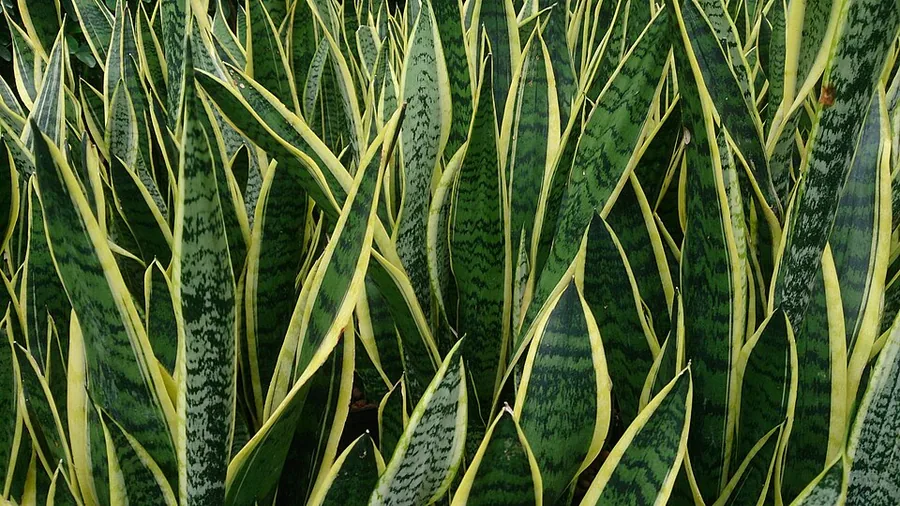
The snake plant is the houseplant for people who forget to water. Its stiff, upright leaves rise straight from the soil in bold green bands, and it shrugs off the kind of neglect that finishes off fussier plants. Botanists moved it from Sansevieria into the genus Dracaena a few years back, but most gardeners still know it by its old name.
What makes it so forgiving is how it handles water and light. The thick leaves store moisture like a succulent, so the plant cruises through long dry spells, and it puts up with everything from a bright window to a dim corner. Growth is slow, so a plant holds its shape for a long time and rarely needs fussing over.
Two things are worth knowing before you bring one home. The leaves hold saponins that upset cats and dogs, so it's a poor choice for a home with curious pets. And while it stays tidy in a pot indoors, planted outside in a warm climate it can spread hard by underground rhizomes.
Care
The short version: bright indirect light, a gritty fast-draining mix, and water only once the soil has dried out completely. Keep it above 55°F (13°C) and feed lightly in the growing season.
Light
A snake plant grows best in bright indirect light, but it tolerates low light, partial shade, and partial sun better than almost any houseplant. The trade-off is speed: the dimmer the spot, the slower it grows. Keep it out of harsh, direct afternoon sun, which scorches the leaves.
Water
This is where most snake plants die, so err on the dry side. Let the soil dry out completely between drinks, which usually means watering every 2 to 4 weeks in the growing season and only every 4 to 6 weeks in winter. When in doubt, wait.
Soil
Plant it in a well-drained sandy or cactus mix that lets water rush through rather than linger. It isn't fussy about pH, taking anything from 6.0 to 8.0. A pot with a drainage hole matters more than the exact blend.
Temperature
Ordinary room warmth suits it, anywhere from 55°F to 84°F (13°C to 29°C). The plant is tropical at heart, so keep it above 55°F and away from cold drafts and frosty windows in winter.
Humidity
Average household air is fine, and dry rooms don't bother it at all. There's no need to mist or run a humidifier. The leaves store their own moisture, so they handle dry winter air without complaint.
Feeding
A snake plant barely needs feeding. Give a balanced all-purpose fertilizer at half strength, monthly through spring and summer, and stop entirely once growth slows for winter. Too much feed does more harm than going without.
Pruning
There's almost nothing to prune. Just cut damaged or dead leaves off at the soil line with a clean blade and the plant tidies itself. A leaf removed this way won't regrow from the cut, so take whole leaves rather than trimming tips.
Repotting
Snake plants like to be a little crowded, so repot only every 3 to 5 years or once the pot is bursting. Signs it's time: roots pushing out the drainage holes, a cracked or bulging pot, or rhizomes and pups crowding the surface. Move up just one pot size in fresh gritty mix.
Size & spacing
Indoors it reaches 2 to 4 feet (60 to 120 cm) tall with a spread of about 12 to 24 inches (30 to 60 cm). Give a clump room to widen, since it slowly fills its pot with new upright leaves.
Troubleshooting
Almost every snake plant problem traces back to one thing: too much water. Learn to read the leaves and the base, and you'll catch trouble early. Match what you see below, then fix the cause before it spreads to the roots.
Soft, mushy leaf bases sitting in soggy soil
This is root rot, and it almost always traces back to too much water. When the mix stays wet, the roots suffocate and turn black, mushy, and foul-smelling. Tip the plant out, cut away every soft root, repot in a dry gritty mix, and water far less from then on.
Fix:
- Unpot and inspect roots
- Cut away rotted tissue
- Repot in dry, gritty mix
- Reduce watering
Leaves flopping open instead of standing upright
Snake plant leaves splay when the base has gone soft from overwatering or when the plant has been sitting too long in dim light. Check the soil and feel the base first. If it's firm, move the plant somewhere brighter; if it's mushy, treat the rot at the roots before anything else.
Fix:
- Correct watering and check roots
- Move to brighter indirect light
White cottony tufts tucked into the leaf bases
Those fuzzy white clumps are mealybugs, sap-sucking insects that gather in the crevices where leaves meet the soil. Dab each one with an alcohol-dipped swab, follow up with insecticidal soap, and keep the plant away from your others until it's clean.
Fix:
- Wipe with alcohol-dipped swab
- Treat with insecticidal soap
- Isolate plant
Speckled, dull leaves laced with fine webbing
Fine webbing and a dusty, stippled look point to spider mites, which move in when the air stays dry. Rinse the foliage to knock them back, then treat with insecticidal soap or horticultural oil. Wiping the leaves clean now and then keeps them from settling in again.
Fix:
- Rinse foliage
- Apply insecticidal soap or horticultural oil
Soft, see-through patches following a cold spell
Snake plants are tropical and resent the cold, so mushy translucent scarring shows up after a chill below 55°F (13°C) or a stint pressed against a frosty window. Move the plant somewhere warm, trim off the ruined leaves, and keep it clear of cold drafts through winter.
Fix:
- Move to warm spot above 13°C / 55°F
- Remove damaged leaves
Pale, bleached patches on the sun-facing side
Dry, washed-out patches that face the window are sun scorch from too much hot, direct light. A snake plant takes bright indirect light happily but burns in harsh afternoon sun. Shift it back from the glass into steady indirect light and the new growth comes in clean.
Fix:
- Move out of hot direct sun to bright indirect light
Barely any new growth and a stretched, leggy look
A snake plant that sits still is usually starved of light, though it also rests through winter. Move it to a brighter indirect spot and growth picks back up once the days lengthen. In a dim corner it survives, but it won't put on much at all.
Fix:
- Move to bright indirect light
Flat leaves gone dull under a film of dust
The broad, flat leaves of a snake plant collect dust that dulls their color and blocks a little light. It's harmless and easy to fix. Wipe each leaf down with a damp cloth every so often and the deep green sheen comes right back.
Fix:
- Wipe leaves with a damp cloth
Toxicity
The snake plant is not a safe plant around pets. Its leaves carry natural compounds called saponins that bring on drooling, vomiting, and diarrhea in cats and dogs. People shrug them off, but the leaves are bitter and never meant to be eaten, so keep the pot out of reach of animals and small children.
Toxic to
Cats · Dogs · Horses · Rabbits · Livestock · Birds
Safe for
People
Cats Moderate
A cat that chews the leaves usually starts drooling and then vomits, often with diarrhea close behind. The saponins are bitter, so most cats stop at a nibble.
Dogs Moderate
Dogs react much the same way, with drooling, vomiting, and loose stools after a mouthful of leaf. It rarely turns serious, but a big chew is worth a call to the vet.
Horses Caution
The same saponins upset a horse's stomach, though a snake plant on a windowsill is well out of a horse's way.
Rabbits Caution
Those bitter saponins make the leaves a poor and risky snack for a rabbit, so keep the plant where it can't reach.
Livestock Caution
Goats, sheep, and cattle can get an upset gut from the saponins if they browse the foliage, but as a houseplant it seldom crosses their path.
Birds Caution
A curious pet bird may peck at a leaf and pick up the same stomach trouble, so set the pot somewhere it can't perch.
People Caution
People shrug off the saponins, but the leaves are bitter and not food, and the sap can leave sensitive skin a little itchy. Keep small children from chewing on them.
Sap/saponins may irritate skin; keep leaves out of reach
Helpline numbers

United States
ASPCA Animal Poison Control: (888) 426-4435 (fee applies)

United Kingdom
Animal PoisonLine: 01202 509000 (fee applies)

Australia
Animal Poisons Helpline: 1300 869 738
Varieties
Snake plants come in a surprising range of shapes and colors, from tall striped blades to low rosettes. These are the ones you'll run into most often.
'Moonshine'
Stands out for its broad, silvery pale-green leaves that carry almost no banding or pattern.
'Laurentii'
The familiar classic edged in bright yellow margins, though it loses that gold and reverts to plain green when grown from leaf cuttings.
'Hahnii' (Bird's Nest)
A dwarf form that packs 6 to 12 leaves into a low, funnel-shaped rosette instead of tall blades.
'Black Gold'
Pairs deep, near-black green leaves with a crisp golden-yellow edge.
'Bantel's Sensation'
Carries narrow, strongly upright leaves streaked with vertical white striping.
How to propagate
Snake plants are easy to multiply, and you've really got two routes: split a mature plant at the roots, or root sections of a single leaf. One keeps the leaf color true, the other doesn't.
DivisionEasy
Anytime; best at spring repotting · A few weeks
The simplest way to make more plants is to split one you already have. You can do it any time, but spring repotting is the natural moment. Pull the clump apart, separate the rhizomes and pups so each piece keeps roots, and pot them up; they settle in within a few weeks. Because you're dividing the plant rather than rooting a leaf, the variegated kinds come back true to type.
Leaf cuttingsModerate
Spring to summer · Roots in about 2-3 months
You can also grow a new plant from a single leaf. Cut a healthy leaf into sections, stand them upright in moist mix through spring or summer, and roots form slowly over about 2 to 3 months. The one catch is color: variegated cultivars like 'Laurentii' lose their stripes this way and grow back plain green, so divide instead if you want to keep the pattern.
Myths
A snake plant purifies your indoor air and pulls out toxins.
This one comes from an old NASA chamber test that doesn't match a real room. Peer-reviewed work since then shows a few potted plants make no real dent in indoor pollutants. Opening a window clears the air far better than any houseplant.
Snake plants are basically unkillable.
They are tough, but they do have a weak spot. Overwatering rots the roots and is the fastest way to kill one, and a hard chill will damage the leaves too. Treat them mean on water and they last for years.
They can go months on end without any water.
A snake plant handles drought better than almost any houseplant, but it isn't a cactus. It can coast for a month, not forever, and eventually it needs a proper drink to stay healthy.
They thrive in a pitch-dark room.
Low light and no light are two different things. A snake plant tolerates a dim corner, but it still needs light to grow, and in true darkness it just sits there and slowly fades.
Leaf cuttings from a variegated snake plant come back variegated.
The color in cultivars like 'Laurentii' comes from a chimera that a single leaf can't pass on. Root a leaf cutting and the new plant grows back plain green. To keep the stripes, divide the plant at the roots instead.
Because they release oxygen at night, they freshen bedroom air and help you sleep.
The oxygen claim leans on the plant's CAM photosynthesis, but the amounts are tiny. A pot or two won't change the air in your bedroom, and there's no evidence it improves sleep.
Sources
- ASPCA Animal Poison Control
- NC State Extension Plant Toolbox
- Missouri Botanical Garden Plant Finder
- Penn State Extension
- Iowa State University Extension
- Clemson Cooperative Extension HGIC
- Cummings & Waring, J Expo Sci Environ Epidemiol (2020)
- UF/IFAS Extension Sarasota County
- University of Connecticut Home & Garden Education
- University of Arkansas Cooperative Extension (UADA)