Bulb · Ranunculaceae
Persian Buttercup
Ranunculus asiaticus
Plant the little claws in cool spring soil and ranunculus answers with layer on layer of papery petals.
Full sun
Every 3–7 days
90–120 days
USDA 8–10
Overview
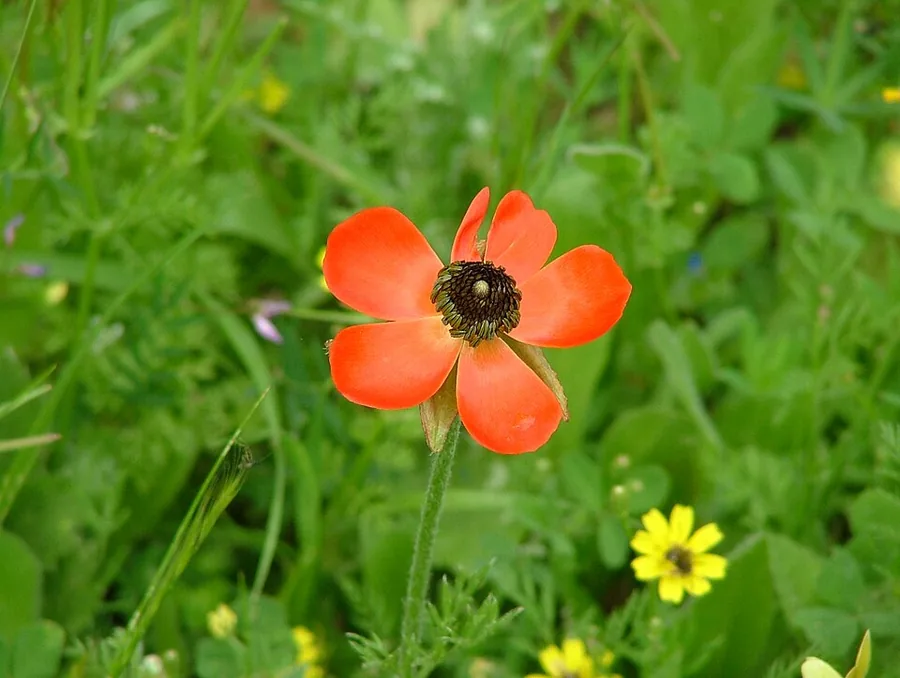
Persian buttercup is a cool-season flower grown for blooms so packed with thin, papery petals they look almost unreal. It comes up from small, claw-shaped tuberous roots rather than a true bulb, and it belongs to the same family as the wild buttercups you see in meadows. Florists love it for the long, straight stems and the wide run of colors.
It is a plant with a short, bright season. Set out in cool spring weather, it flowers heavily from late spring into early summer, then winds down as the heat comes on and slips into dormancy. In mild-winter regions it returns year after year, but where winters bite, most gardeners treat it as an annual or lift the roots to store.
Give it full sun, soil that drains freely, and steady but never soggy moisture, and ranunculus is not hard to please. The one thing it won't forgive is wet feet, which rots the tuberous roots fast. Get the drainage right and the rest mostly takes care of itself.
Care
The short version: full sun and cool spring weather, rich soil that drains fast, and even moisture that never leaves the roots sitting wet, with the plant easing into dormancy once summer heat arrives.
Light
Give ranunculus full sun, which means 6 or more hours of direct light a day. It will take a little light shade, but blooming drops off without strong sun, especially in the cool spring weather it prefers.
Water
Keep the soil evenly moist without ever letting it stay soggy, since the tuberous roots rot in wet ground. Water roughly every 3 to 7 days depending on weather, then ease off as the plant goes dormant in summer heat.
Soil
Plant in rich, fast-draining soil worked full of organic matter, ideally a loam or sandy loam. A pH between 6.0 and 7.0 suits it, and heavy clay is the one thing to avoid, because it holds the water that kills the roots.
Temperature
This is a cool-weather plant that thrives roughly between 28°F and 75°F (-2°C to 24°C). It handles a light frost but fades fast once summer heat sets in, which is what ends the bloom season.
Humidity
Average outdoor humidity is all it needs, so there's no number to chase. Airflow matters more than the moisture in the air, since crowded, damp foliage invites rot.
Feeding
Feed during the active spring growth with a balanced liquid or slow-release fertilizer, about once a month. There's no point feeding once the plant slows down and heads into summer dormancy.
Pruning
Deadhead the spent flowers as they fade and you'll coax out more blooms over the season. Once the foliage yellows and the plant goes dormant, cut it back and let the roots rest.
Repotting
Where winters are too cold for it to stay in the ground, lift and divide the tuberous roots each year and replant them in fall or spring. Crowded clumps, fewer flowers, and smaller blooms are the signs it's time.
Size & spacing
Plants reach about 12 to 24 inches (30 to 61 cm) tall and spread roughly the same. Give each one 12 to 24 inches (30 to 61 cm) of room so air can move and the foliage stays dry.
When to plant
Ranunculus runs on the cool end of the year and has no use for summer heat. Presprout the tuberous roots indoors in late winter, plant them out in spring a few weeks before your last frost, and the flowers come in from late spring into early summer before the heat shuts them down.
Northern hemisphere
Southern hemisphere
Typical months for a temperate climate: start earlier in warm zones, later where spring frosts linger.
- Sow: Presprout tuberous roots indoors in late winter, several weeks before last frost
- Plant: Plant tuberous roots outdoors in spring several weeks before the last frost date (mild-winter areas may plant in fall)
- Harvest: Late spring to early summer (May to June)
Hardiness
USDA hardiness zones: 8–10
Temperature: down to -12°C
Troubleshooting
Most ranunculus trouble starts underground or arrives with the heat. Catch the early signs and you can step in while it still helps. Match what you see below, then act before a small problem spreads.
Mushy roots and a plant that wilts and collapses
This is root rot, and it almost always traces back to soil that stays too wet. Tuberous roots sitting in heavy clay or soggy ground turn brown, soft, and foul-smelling, and the top of the plant follows them down. Pull and bin the affected roots, fix the drainage, and replant only the firm, healthy ones in amended soil.
Fix:
- Stop overwatering and improve drainage
- Remove and discard affected plants and rotted roots
- Replant healthy tuberous roots in amended, well-drained soil
Blackened, sunken patches on the roots
This is black root rot, a fungal disease that blackens and decays sections of root and stalls growth above ground. There's no saving an infected plant, so dig it up and destroy it rather than replanting susceptible flowers in the same spot. Clean stock and well-drained soil are what keep it out.
Fix:
- Remove and destroy infected plants
- Avoid replanting susceptible plants in the same soil
- Improve soil drainage and sanitation
Flowers that fade fast as the weather warms
This is heat stress, not a disease. Ranunculus is built for cool spring weather, so the blooms wind down quickly once the May and June heat sets in. Plant in full sun, deadhead spent flowers to stretch the season, and let the plant go dormant on its own as summer arrives.
Fix:
- Plant in full sun in cool spring weather
- Deadhead spent flowers to prolong blooming
- Allow plants to go dormant naturally as summer heat arrives
Toxicity
This is a flower to enjoy with your eyes, not your mouth. Every part of ranunculus holds ranunculin, which turns into the irritant protoanemonin once the plant is chewed or crushed, burning the mouth and gut. Keep the plants and cut stems away from cats, dogs, horses, rabbits, livestock, birds, and children, and wear gloves when you handle the cut sap.
Toxic to
Cats · Dogs · Horses · Rabbits · Livestock · Birds · People
Cats Mild
A cat that bites the leaves usually drools and may vomit or get diarrhea, with sore mouth ulcers, low energy, and a lost appetite to match. The bitter, burning sap tends to stop most cats after a nibble or two.
Dogs Mild
Watch for heavy drooling, vomiting, and loose stool after a dog chews on a plant, often alongside mouth ulcers and a flat, off-food mood. As with cats, the harsh taste usually keeps the dose small.
Horses Moderate
Horses get it worse, with blistering and irritation around the mouth, streaming saliva, colic, and diarrhea. A heavy feed can even leave a horse unsteady and wobbly on its feet.
Rabbits Toxic
The same protoanemonin that burns other animals irritates a rabbit's mouth and gut, so keep the plants and cut stems well away. Don't offer any part as forage.
Livestock Toxic
Grazing cattle, sheep, and goats can suffer mouth blistering, drooling, and digestive upset from the fresh plant. Most stock leave it alone because of the acrid taste, but hungry animals on poor pasture are the ones at risk.
Birds Toxic
The irritant sap is no safer for birds, so keep pet and backyard birds away from the foliage and flowers. Treat every part as off limits.
People Caution
No part of the plant is meant to be eaten, and chewing it burns the mouth and can raise blisters on the lips and tongue. Handling crushed stems or sap can also irritate bare skin, so wear gloves and keep it away from children.
Wear gloves when handling crushed foliage or sap, which can cause skin and mucous-membrane irritation.
Helpline numbers

United States
ASPCA Animal Poison Control: (888) 426-4435 (fee applies)
Poison Control: (800) 222-1222



Canada
Poison Centres: 1-844-764-7669
Varieties
Breeders have given ranunculus plenty of options, from giant double cut-flowers to tidy dwarfs for pots. These are the ones worth knowing by name.
Tecolote (Giant Tecolote)
A florist favorite grown for big, fully double blooms in a wide range of colors, which makes it a top pick for cutting.
Bloomingdale
A compact dwarf strain bred to stay small enough for containers and tidy bedding displays.
Picotee types
These carry petals edged in a contrasting color, a detail that makes them prized in cut-flower arrangements.
How to propagate
Ranunculus is easiest to multiply from its tuberous roots, though you can also divide an established clump or grow it from seed if you don't mind waiting.
Bulbs & cormsEasy
Plant tuberous roots in spring several weeks before last frost (or fall in mild-winter areas) · 2 to 3 weeks to sprout; blooms in spring
The easy way to grow ranunculus is straight from tuberous roots. Set them 2 inches deep and 6 to 8 inches apart with the claws pointing down, and a presoak before planting wakes them up faster. Sprouts push through in 2 to 3 weeks, and the plants flower that spring.
DivisionModerate
When dormant, after foliage dies back · One growing season
Once the foliage has died back and the plant is dormant, you can dig up the clusters of tuberous roots and pull them apart. Give every division at least one growing point before you replant it, and expect it to take a full growing season to settle in and flower.
SeedModerate
Sow in late summer to fall for bloom the following spring · One to two seasons to flowering size
Starting from seed takes patience. Sow in late summer or fall for flowers the following spring, and know that seedlings need one to two seasons to reach flowering size, far longer than planting tuberous roots.
Myths
Ranunculus is a hardy perennial bulb that survives winter everywhere.
It grows from tuberous roots, not a true bulb, and only comes back reliably in about USDA Zones 8 to 10. Anywhere colder, you grow it as an annual or lift and store the roots over winter.
Buttercups are common garden flowers, so they must be harmless to pets.
Familiar does not mean safe. The ASPCA lists buttercup and ranunculus as toxic to cats, dogs, and horses because of protoanemonin, which irritates the mouth and gut.