Houseplant · Asparagaceae
Ponytail Palm
Beaucarnea recurvata
Give it bright light and a long dry spell between drinks, and the ponytail palm asks for almost nothing else.
Full sun
50–86°F · 10–30°C
USDA 10–11
6–8 ft · 1.8–2.4 m
Overview
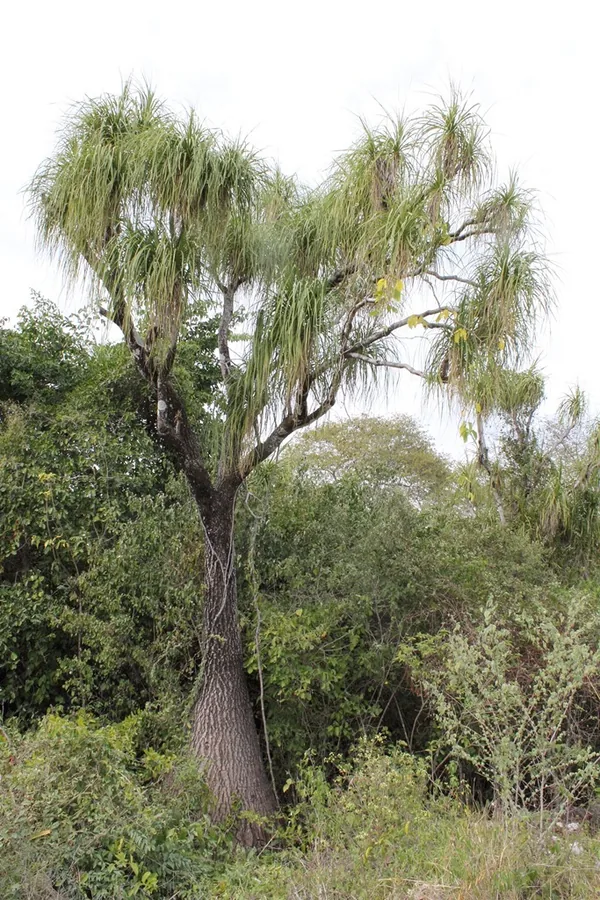
The ponytail palm is one of the most forgiving houseplants you can keep, and it isn't a palm at all. It's a slow-growing succulent from the dry country of eastern Mexico, with a swollen, flask-shaped base that stores water and a spray of long, curling leaves on top. That base, called a caudex, is what gives the plant its other names, elephant foot and bottle palm.
What makes it so easy is that it expects neglect. The fat caudex holds its own water reserve, so the plant rides out a missed watering far better than a missed drenching. Indoors it stays a manageable size for years, since it grows slowly and rarely needs a bigger pot. Give it a sunny window and let it dry out, and it will live for decades.
The one thing it won't forgive is too much water. Sit the roots in soggy soil and the base turns soft and rots, which is the fault behind most ponytail palms that fail. Treat it like the desert plant it is and that risk all but disappears.
Care
The short version: as much bright light as you can give it, a gritty fast-draining mix, and a deep watering only once the soil has dried out completely, with far less in winter.
Light
Give the ponytail palm as much light as you can, ideally full sun at a bright window. It will get by in bright indirect light, but the more sun it gets, the fuller and healthier the crown of leaves stays.
Water
This is where most plants are lost, so water deeply but let the soil dry out completely before the next drink. The swollen base banks its own water, so it would far rather be too dry than too wet. Cut watering right back through the winter.
Soil
Plant it in a gritty, fast-draining mix made for cactus or succulents, or a sandy blend you've cut with extra grit. The whole point is to let water rush through so the base never sits damp.
Temperature
Normal room warmth suits it well, anywhere from 50°F to 86°F (10°C to 30°C). Keep it above its low end and away from cold drafts, since it has no tolerance for frost.
Humidity
Low humidity is no problem at all, which is part of why it thrives in dry indoor air. There's no number to chase and no need to mist it.
Feeding
Feed lightly and only in spring and summer, when the plant is actually growing. A diluted balanced or cactus fertilizer once or twice over the season is plenty, and overfeeding only browns the leaf tips.
Pruning
There's almost nothing to do here. Snip off dried or browned leaf tips and pull away any dead lower leaves to tidy it up, and otherwise leave it be.
Repotting
This plant likes to be snug in its pot and can go many years between repottings. Keep it in a relatively small container with sharp drainage, and only move it up when the roots and caudex have clearly filled the space.
Size & spacing
Grown indoors it reaches about 6 to 8 feet (183 to 244 cm) tall over many years, spreading 3 to 5 feet (91 to 152 cm) across at the crown. Its slow pace means it stays a comfortable size for a room for a long time.
Troubleshooting
A healthy ponytail palm asks for so little that trouble nearly always traces back to watering. The two things to watch are the firmness of the base and the color of the leaf tips. Catch a soft caudex early and you can still save the plant.
A soft, spongy base instead of a firm one
A mushy caudex points to root and stem rot, almost always from overwatering. Stop watering and let the mix dry out, then cut away any soft, rotted tissue and repot into dry, gritty soil. Move the plant somewhere warm and bright, and water only sparingly until it recovers.
Fix:
- Stop watering and allow the soil to dry out completely
- Cut away soft, rotted tissue and repot into dry, gritty fast-draining mix
- Move to a warm spot with bright light and water only sparingly once recovered
Brown, crispy tips on otherwise green leaves
Dry brown tips usually come from watering extremes, too much fertilizer, or salt buildup in the pot. Settle into deep but infrequent watering, ease off on feeding, and flush the soil now and then to wash out salts. The crispy tips won't turn green again, so trim them off for looks.
Fix:
- Adjust to deep but infrequent watering, letting soil dry between waterings
- Flush the soil periodically to leach out accumulated salts
- Reduce fertilizer frequency and strength
- Trim browned tips for appearance
Toxicity
Good news for pet owners and parents: the ponytail palm is safe all around. The ASPCA lists it as non-toxic to cats, dogs, and horses, and it carries no compounds that threaten other animals or people. You can set it anywhere in the home without worrying about a curious nibble.
Safe for
People · Cats · Dogs · Horses · Rabbits · Livestock · Birds
Cats None
The ASPCA lists the ponytail palm as non-toxic to cats, so a curious nibble on the strappy leaves won't poison your cat.
Dogs None
Dogs are in the clear here too. The ASPCA rates this plant non-toxic to dogs, though a big mouthful of fibrous leaves could still upset any pet's stomach.
Horses None
Horses can graze near it without harm, since the ASPCA places it on the non-toxic list for horses as well.
Rabbits None
No toxin in this plant troubles rabbits. The tough, stringy foliage isn't a natural rabbit food, but a chewed leaf poses no poisoning risk.
Livestock None
Goats, sheep, and cattle face no toxic threat from the ponytail palm, which carries none of the compounds that make other ornamentals dangerous to grazing animals.
Birds None
The plant holds nothing harmful to birds, so a pet bird that pecks at the leaves is safe.
People None
It's safe to keep around children, with no toxic parts to worry about. The plant isn't grown for eating, so there's no edible part to seek out, but accidental contact or a stray nibble does no harm.
Varieties
There isn't much to choose from here. The species grown as a houseplant is the one worth knowing.
Beaucarnea recurvata
This is the standard species grown as a houseplant, marked by a single swollen flask-shaped base topped with a fountain of strappy, curling leaves, and it's one of about seven species in the genus.
How to propagate
Making more ponytail palms takes patience more than skill, and you have two routes: rooting the pups that form at the base, or starting fresh from seed.
Offsets & pupsModerate
Spring · Several months to a year or more to root and grow on
In spring you can lift the offsets, or pups, that form around the base of the caudex and pot them up to root on their own. Be patient, since they take several months to a year or more to settle in, and some growers warn that these basal pups don't always strike roots.
SeedModerate
Spring · Germinates readily at about 18-21°C (64-70°F); seedlings grow slowly over years
Sow seed in spring and keep it warm, around 64°F to 70°F (18°C to 21°C), and it sprouts on its own with no special treatment. The catch is the wait, because the seedlings creep along slowly and take years to fill out into a recognizable plant.
Myths
The ponytail palm is a true palm.
Despite the name, it isn't a palm at all. Beaucarnea recurvata is a caudex-forming succulent in the family Asparagaceae, a closer relative of Dracaena and Agave, and it only looks palm-like from a distance.