Houseplant · Araceae
Philodendron Birkin
Philodendron 'Birkin'
Give it bright, filtered light and steady moisture, and this pinstriped philodendron keeps unfurling clean white-on-green leaves.
Bright indirect
64–84°F · 18–29°C
USDA 10–12
0–3 ft · 0.2–0.9 m
Overview
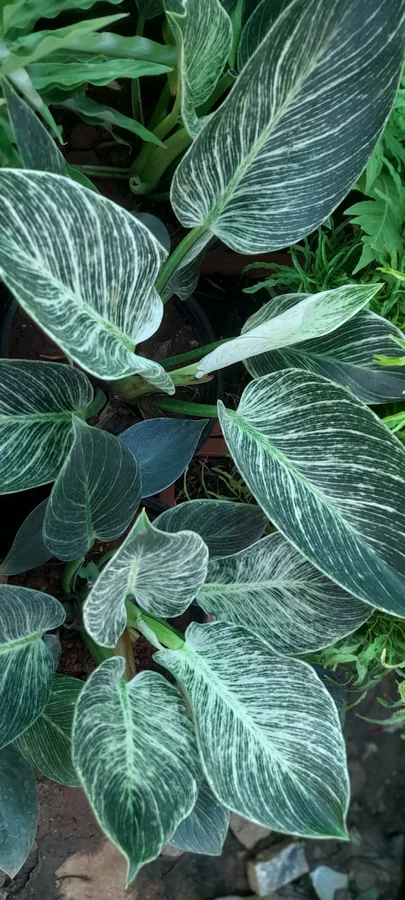
The Philodendron Birkin is an easygoing houseplant grown for its striking leaves, each one painted with fine white pinstripes over deep green. It came about as a chance sport of 'Rojo Congo' rather than a wild species, which gives it a compact, upright habit that fits a shelf or desk. Indoors it stays small and slow, topping out around 3 feet (91 cm) over a long time.
Part of the aroid family, the Birkin asks for the same things most tropical foliage plants want: warmth, bright but indirect light, and air that isn't bone dry. The pinstriping is the whole appeal, and it depends on good light. Park the plant in a dim spot and the pattern fades while the stems stretch and thin.
It earns its easy reputation by forgiving the odd missed watering and growing slowly enough that it rarely outgrows its pot in a hurry. The main thing to watch is the roots, which rot fast in soggy soil. Get the light and the watering right and the rest takes care of itself.
Care
The short version: bright, indirect light to hold the pinstripes, soil kept lightly moist but never soggy, warmth above 64°F (18°C), and humidity around 50% to 60%.
Light
Give the Birkin bright, indirect light to keep its pinstripes crisp; it gets by in medium indirect light but the pattern softens. Keep it out of harsh direct sun, which scorches the leaves, and turn the pot now and then so it grows evenly toward the window.
Water
Keep the soil lightly moist but never waterlogged, letting the top inch dry before you water again. This plant is far more likely to die from too much water than too little, so empty the saucer and don't let the roots sit in it.
Soil
Plant it in a well-drained, organic-rich mix of loam and sand that holds some moisture without staying soggy. A slightly acidic to neutral pH of 6.0 to 7.0 suits it, and a pot with drainage holes does most of the work of keeping the roots healthy.
Temperature
Normal room warmth is ideal, somewhere between 64°F and 84°F (18°C to 29°C). Keep it away from cold drafts, frosty windows, and the dry blast of a heat vent, none of which it tolerates well.
Humidity
The Birkin likes it humid, ideally around 50% to 60%. In dry indoor air the leaf tips brown, so group it with other plants, set it over a tray of pebbles and water, or run a small humidifier nearby.
Feeding
Feed monthly through the growing season and skip it in the darker months when growth slows. A regular houseplant fertilizer at the rate on the label is plenty, since this is a slow grower with modest appetite.
Pruning
There's little pruning to do beyond tidying the plant's shape. Snip off any yellowed or damaged leaves at the base, and trim a stray stem if you want a fuller, more compact look.
Repotting
Repot in spring only once the plant is genuinely root-bound, with roots crowding the pot or pushing out the drainage holes. Move it up just one pot size, since too large a pot holds extra wet soil that invites root rot.
Size & spacing
Indoors the Birkin stays small and slow, reaching roughly 6 to 36 inches (15 to 91 cm) tall and about as wide. Its tidy, upright habit means it needs little elbow room, fitting a shelf, desk, or windowsill with ease.
Troubleshooting
Most Birkin trouble starts at the roots or shows up in the leaves, and the cause is usually watering, light, or dry air. Read the early signs and you can fix things before a plant slides downhill. Match what you see below, then act.
Yellowing leaves and soft, mushy roots
This is root rot, and it almost always traces back to a pot that stays too wet. When the soil never dries and water sits around the roots, they suffocate and turn to mush, and the leaves yellow as a result. Ease off the watering, switch to a mix that drains fast, and repot into fresh soil if the roots already feel slimy.
Fix:
- Reduce watering
- Improve drainage
- Repot in fresh mix
Fading stripes and stretched, leggy stems
When the white pinstripes wash out and the stems reach with long gaps between leaves, the plant is starved for light. A Birkin in a dim corner trades its variegation for plain green and grows lanky chasing the window. Move it somewhere with bright, filtered light and the new leaves come back patterned and tight.
Fix:
- Move to bright filtered light
Webbing, sticky residue, or tiny insects on the leaves
Sap-sucking pests such as spider mites, mealybugs, aphids, scale, and thrips all leave telltale signs, from fine webbing to a sticky film. Wipe the leaves down and treat the plant with insecticidal soap, repeating until the bugs are gone. Check new leaves and the undersides often, since catching them early keeps a small problem from spreading.
Fix:
- Wipe leaves
- Treat with insecticidal soap
Crispy brown tips on the leaves
Dry, brown leaf edges usually mean the air is too dry for a plant that likes things humid. Raise the humidity around it toward 50% to 60%, whether with a nearby tray of water, a grouping of plants, or a small humidifier. The damaged tips won't recover, but fresh leaves will come in clean.
Fix:
- Raise humidity to 50-60%
Toxicity
This is a plant to keep out of reach. Like other philodendrons, every part holds insoluble calcium oxalate crystals that cause burning, drooling, and swelling in the mouth if chewed. No part is edible, and the sap can irritate bare skin, so handle it carefully and keep it away from pets and small children.
Toxic to
Cats · Dogs · Horses · Rabbits · Livestock · Birds · People
Cats Toxic
A cat that bites a leaf gets a mouthful of sharp crystals right away. Expect heavy drooling, pawing at the mouth, vomiting, and a sore, swollen mouth and throat.
Dogs Toxic
Chewing brings on intense oral burning, so look for drooling, foaming, and a dog that suddenly won't eat. Vomiting and a swollen muzzle can follow.
Horses Toxic
The same crystals irritate a horse's mouth and gut, leaving it drooling, off its feed, and uncomfortable. Keep the plant well out of reach in any barn or paddock.
Rabbits Toxic
This is not safe browse for a rabbit. A nibble irritates the mouth and stomach, so keep the plant somewhere a loose or curious rabbit can never reach it.
Livestock Toxic
Goats, sheep, and cattle react to the oxalate crystals with mouth pain, drooling, and digestive upset. Keep cuttings and discarded leaves away from where they graze.
Birds Caution
A pet bird that chews the foliage can get the same mouth irritation and drooling, so treat it as off-limits and offer safe greens instead.
People Caution
No part of this plant is edible. A bite causes burning lips, a swollen tongue, and drooling, and the sap can sting bare skin, so wash your hands and keep it away from small children.
Keep away from pets and children; wash hands after handling sap
Helpline numbers

United States
ASPCA Animal Poison Control: (888) 426-4435 (fee applies)
Poison Control: (800) 222-1222



Canada
Poison Centres: 1-844-764-7669
How to propagate
A Birkin is simple to multiply at home, and spring or summer is the time to do it while the plant is putting out new growth.
Stem cuttingsEasy
Spring to summer · Several weeks to root
The easiest way to make more Birkins is from stem cuttings taken in spring or summer, while the plant is actively growing. Cut a healthy section with a node or two, stand it in water or push it into a moist potting mix, and give it a few weeks to put out roots before you treat it as its own plant.
LayeringModerate
Spring to summer · Several weeks
You can also air layer a stem in spring or summer, a method that suits philodendrons across the genus. Wrap moist medium around a node on a stem still attached to the parent, wait the few weeks it takes roots to form, then cut the new plant free below the roots.
Myths
The Birkin is its own distinct species of philodendron.
It started as a chance sport of 'Rojo Congo' rather than a true species, which is why its white pinstriping is never fully fixed. A Birkin can revert, throwing out solid green or even deep red leaves, and low light makes that more likely. Give it bright, filtered light to hold the pattern.