Houseplant · Araceae
Swiss Cheese Vine
Monstera adansonii
Give it bright indirect light and something to climb, and the Swiss cheese vine fills out fast with its hole-punched leaves.
Bright indirect
60–85°F · 16–29°C
USDA 10–12
3–8 ft · 0.9–2.4 m
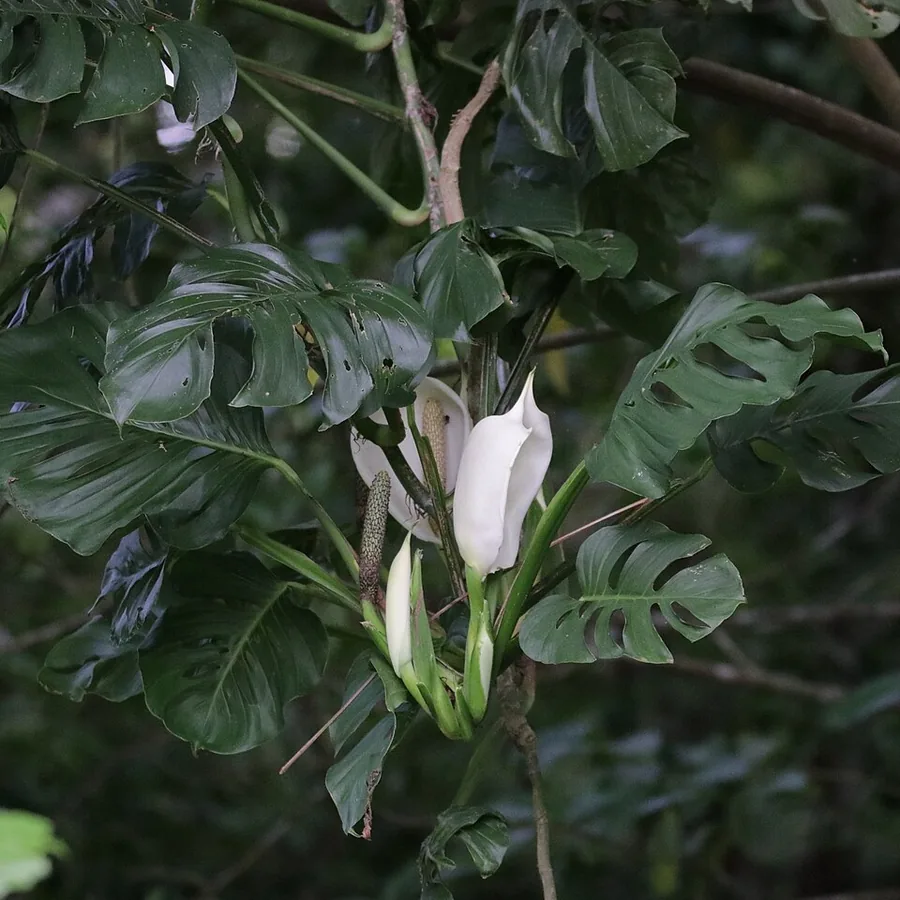
Overview
The Swiss cheese vine earns its name from the rows of holes that open across its leaves as it matures. It's a climbing aroid from the tropical forests of Central and South America, where it scrambles up tree trunks toward the light. Indoors it keeps that climbing habit, so it does its best work trained up a moss pole or trailing from a high shelf.
It belongs to the arum family alongside philodendrons and pothos, and like its relatives it asks for very little. Bright indirect light, a chunky pot mix that drains well, and watering only when the top of the soil dries are most of the job. The holes, known as fenestrations, are the payoff, and they widen as each leaf grows up.
People often mix it up with the bigger Monstera deliciosa, but this is a smaller, faster vine with a finer texture. Give it warmth, humidity, and room to climb and it grows quickly. The one thing to keep in mind is that every part of it is toxic if a pet or child decides to chew on it.
Care
The short version: bright indirect light, a well-draining pot mix, and water only once the top inch or two has dried out. Keep it warm and humid, give it something to climb, and it grows fast.
Light
Give it bright indirect light for the fullest leaves and the most holes. It will get by in medium light or partial shade, but growth slows and the leaves stay smaller and more solid. Keep it out of harsh direct sun, which scorches the foliage.
Water
Water only after the top 1 to 2 inches (2.5 to 5 cm) of soil has dried out, then water thoroughly and let it drain. Soggy soil is the fastest way to rot the roots, so err on the dry side. The plant tells you when it's thirsty before the soil ever stays wet too long.
Soil
Use a well-draining, organic-rich potting mix, ideally loosened with bark or perlite so water runs through. It isn't fussy about pH and takes anything from 6.0 to 8.0. The priority is drainage, not the exact recipe.
Temperature
Keep it in the range of 60°F to 85°F (15.6°C to 29.4°C), which lines up with most warm homes. It has no frost tolerance and sulks in a cold draft, so keep it away from chilly windows and air conditioning vents in winter.
Humidity
This is a tropical vine that likes the air above 50% humidity. It survives in average room air but rewards extra moisture with bigger, healthier leaves. A pebble tray, a humidifier, or a spot in a bright bathroom all help.
Feeding
During spring and summer, feed every two weeks with a balanced houseplant fertilizer at the usual strength. Ease off in fall and winter when growth slows. Steady feeding through the warm months is what drives the fast growth.
Pruning
Trim back leggy vines to keep the plant full and cut off any damaged leaves at the base. Pruning in the growing season also hands you cuttings to root. Pinching the tips encourages bushier growth rather than one long bare stem.
Repotting
Repot every 1 to 2 years in spring, moving up one pot size when roots push through the drainage holes, circle the pot, or growth stalls. Fresh mix and a little more room keep this fast grower moving. Adding a stake or pole at the same time gives it support to climb.
Size & spacing
Trained up a support indoors it reaches about 3 to 8 feet (91 to 244 cm) tall, with a spread of roughly 1 to 3 feet (30 to 91 cm). Give it room to climb or trail and the vines fill the space quickly.
Troubleshooting
Most trouble with this vine comes back to watering and the air around it. Catch the early signs on the leaves and roots and you can turn things around before they spread. Match what you see below, then act while it still helps.
Mushy roots and a wilting plant
Root rot sets in when the roots sit wet and start to suffocate, and you'll find them brown and soft when you tip the plant out. Unpot it, cut away every rotten root, and replant in a fresh draining mix. The fix only holds if you stop overwatering from then on.
Fix:
- Unpot plant
- Cut away rotten roots
- Repot in fresh draining mix
Leaves turning yellow
Yellow leaves almost always trace back to overwatering and a pot that holds too much water. Check whether the soil sits soggy and the base of the stem feels soft. Ease off the watering, make sure the pot drains freely, and let the soil dry out before you water again.
Fix:
- Reduce watering
- Ensure pot drains freely
- Let soil dry before next watering
Dark spots on the leaves
Brown or dark leaf spots show up where water sits on the foliage and the air stays still. Pull off the marked leaves, keep water off the leaves when you do water, and give the plant more room for air to move. Dry foliage and good airflow keep new spots from forming.
Fix:
- Remove affected leaves
- Avoid wetting foliage
- Improve air circulation
Fine webbing and speckled leaves
Spider mites move in when the air turns dry, leaving faint webbing and a stippled, dusty look across the leaves. Rinse the foliage, wipe the leaves down, and treat with insecticidal soap if they hang on. Checking the undersides often and keeping the humidity up is your best defense.
Fix:
- Rinse foliage
- Wipe leaves
- Apply insecticidal soap
Brown bumps stuck to the stems
Scale insects look like small brown bumps glued along the stems and leaves, and they don't brush off easily. Dab them with alcohol, scrape the rest off by hand, and follow up with horticultural oil. Inspecting and isolating any new plant keeps them from spreading to the rest of your collection.
Fix:
- Wipe with alcohol
- Remove scale by hand
- Apply horticultural oil
New leaves come in solid with no holes
Solid leaves are usually a sign of a young plant or too little light, not anything wrong. The signature holes arrive as the plant matures and climbs. Move it somewhere bright but out of direct sun, give it a support to climb, and let it grow into its split leaves.
Fix:
- Provide bright indirect light
- Allow plant to mature
- Add climbing support
Toxicity
This is a toxic plant from leaf to stem. Every part holds insoluble calcium oxalate crystals that burn the mouth and throat the moment they're chewed, causing drooling, pain, and swelling. Keep it out of reach of pets and children, and wear gloves when you prune, since the sap can irritate skin.
Toxic to
Cats · Dogs · Horses · Rabbits · Livestock · Birds · People
Cats Moderate
A curious cat that bites a leaf gets a mouthful of sharp calcium oxalate crystals. Watch for drooling, pawing at the mouth, vomiting, and trouble swallowing.
Dogs Moderate
Dogs that chew the foliage react with intense oral burning, heavy drooling, and an upset stomach. The sting usually stops them before they swallow much.
Horses Toxic
The same crystals irritate a horse's mouth and gut, bringing on drooling, mouth pain, and colicky discomfort. Keep the plant well out of reach.
Rabbits Toxic
This is not safe browse for rabbits. A nibble brings mouth irritation, drooling, and digestive upset, so keep the vine somewhere they can't reach.
Livestock Toxic
Grazing animals like goats and sheep can suffer painful mouth and gut irritation from the oxalate crystals. There's no reason to let them near it.
Birds Toxic
Pet birds that shred a leaf get the same burning irritation in the beak and throat. Keep cages and perches clear of the foliage.
People Caution
No part of this plant is meant to be eaten. Chewing it burns the mouth and swells the lips and throat, and the sap can leave skin itchy or raw, so wear gloves when you prune.
Wear gloves; sap can cause contact dermatitis
Helpline numbers

United States
ASPCA Animal Poison Control: (888) 426-4435 (fee applies)
Poison Control: (800) 222-1222



Canada
Poison Centres: 1-844-764-7669
Varieties
Only a couple of named forms of this vine turn up in cultivation. These are the ones worth knowing.
subsp. laniata
An accepted subspecies that absorbs the old name Monstera friedrichsthalii, now treated as a synonym of it.
'Mint' (variegated)
A variegated cultivar recognized by the RHS, with leaves marbled in pale mint green.
How to propagate
This vine is one of the easier houseplants to copy, and a single healthy stem can give you a whole new plant.
Stem cuttingsEasy
Spring to summer · Several weeks to root
Stem cuttings are the easy way to multiply this vine. Take them in spring or summer, cutting just below a node that already carries an aerial root, then stand the cutting in water or moist mix. Give it a few weeks and roots take hold for a new plant.
Air layeringModerate
Growing season · Few weeks to form roots
Air layering roots a stem while it's still attached to the parent, which makes it more reliable on a tricky vine. Wrap a node in damp moss during the growing season and wait the few weeks it takes for roots to form, then cut the new plant free.
Myths
The holes appear because the plant is underfed.
Feeding has nothing to do with it. The holes, called fenestrations, open up as each leaf matures, and a young or shaded plant simply hasn't reached that stage yet.
Adansonii is just a baby Monstera deliciosa.
The two are often confused, but they are not the same plant. Monstera adansonii Schott is its own accepted species, not a juvenile form that grows up into deliciosa.