Tree · Cupressaceae
Leyland Cypress
Cupressus × leylandii
Plant it with room to breathe and steady water, and this fast evergreen throws up a privacy wall in just a few years.
Full sun
Every 7–14 days
USDA 6–10
40–70 ft · 12.2–21.3 m
Overview
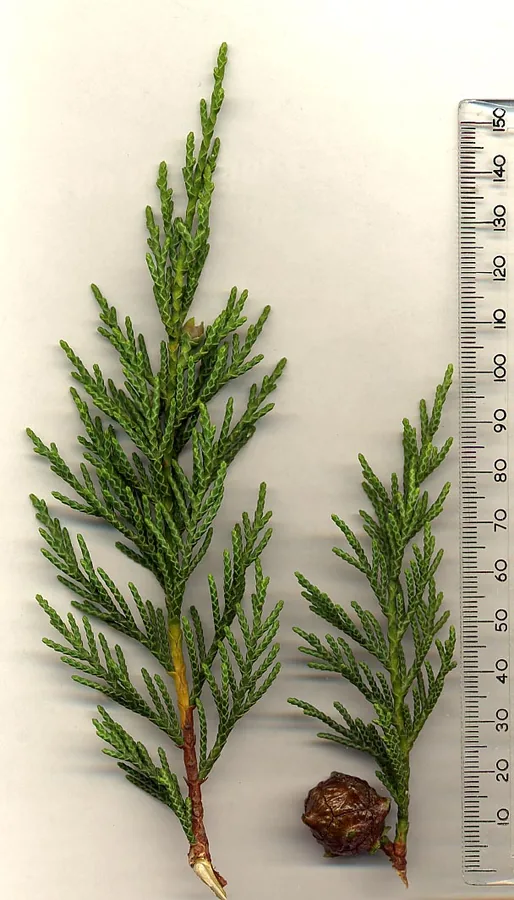
Leyland cypress is the tree people reach for when they want a green wall and they want it soon. It is a fast-growing evergreen, an accidental cross between Monterey cypress and Nootka cypress, and it can climb several feet a year into a dense, feathery column. That speed is the whole appeal, and it is also the source of most of its trouble.
The catch is that this is a short-lived, disease-prone tree, and the way most people plant it makes things worse. Packed in a tight row as a single-species hedge, the trees crowd each other, airflow drops, and cankers and root rot move in. Give each one real space and it lives far longer than a neglected screen ever will.
Treat it as a true landscape tree rather than a quick fix and it rewards you. It shrugs off a wide range of soils, takes shearing into a formal shape, and asks for little once it settles in. Spacing, drainage, and steady water in dry spells are what separate a thriving screen from a thinning one.
Care
The short version: full sun, well-drained soil, and plenty of room between plants. Water deeply in dry spells, prune only when the weather is dry, and resist the urge to cram the trees together.
Light
Leyland cypress grows best in full sun, which keeps the canopy dense and even. It will take partial sun or light shade, but a shaded side thins out and browns sooner, and that is exactly where needle blight likes to start.
Water
Once established it handles drought, yet drought stress is what triggers deadly canker, so don't let it run bone dry. During dry spells, water deeply every 7 to 14 days, paying special attention to young trees and any plant that's crowded or already struggling.
Soil
This tree adapts to loam, clay, or sand and a wide pH of 5.0 to 8.0. The one thing it won't forgive is poor drainage, since soggy ground invites root rot, so amend heavy clay before you plant.
Temperature
It is cold-hardy and heat-tolerant, holding up from about -9°F to 100°F (-23°C to 38°C). That range covers a lot of climates, though ice and freeze injury can crack the bark and open the door to canker.
Humidity
Ordinary outdoor humidity suits it, so there's no level to manage. What matters far more is air moving through the canopy, because still, damp air around crowded plants is what fuels the foliar diseases.
Feeding
Feed lightly in spring if at all, using a balanced complete fertilizer. Established trees rarely need any, and pushing soft, fast growth with extra nitrogen does the tree no favors.
Pruning
Prune only in dry weather, since wet cuts spread disease, and the tree takes shearing well for a formal screen. When you cut out cankered or diseased branches, go several inches below the damage and wipe your tools with 10 percent bleach or alcohol between cuts.
Repotting
This is a landscape tree, not a container plant, so it's rarely potted up. If you're holding a young one in a nursery pot, move it on before the roots start circling and growth stalls, then get it into the ground.
Size & spacing
Left to grow, it reaches a towering 40 to 70 feet (12 to 21 m) tall and spreads 10 to 20 feet (3 to 6 m) wide. Those numbers are the reason spacing matters so much: give each tree real distance from the next so air can move and disease stays down.
When to plant
Leyland cypress isn't fussy about the season, since you set out a nursery tree rather than sow it. Plant in spring or fall while the soil is workable and the weather is mild, and give the roots time to settle before the next stretch of heat or hard cold.
Northern hemisphere
Southern hemisphere
Typical months for a temperate climate: start earlier in warm zones, later where spring frosts linger.
- Plant: spring or fall
Hardiness
USDA hardiness zones: 6–10
Temperature: down to -23°C
Troubleshooting
Almost every Leyland cypress problem traces back to one thing: trees planted too close in the wrong spot. Watch the lower and inner branches, where canker, blight, and root rot all tend to show first. Match what you see below, then act early, because the serious diseases have no cure once they spread.
Whole branches turning rust-brown with sunken, oozing patches on the bark
This is Seiridium or Botryosphaeria canker, the disease that kills more Leyland cypress than anything else. The fungi slip in through bark wounds and take hold fastest on trees stressed by drought or crowding. There is no spray that cures it, so prune well below each canker, disinfect your tools between cuts, and keep the tree watered and well spaced.
Fix:
- Prune out infected branches several inches below the canker and destroy them
- Disinfect pruning tools with 10 percent bleach or alcohol between every cut
- Reduce stress by deep watering during drought and mulching beyond the lowest limbs
- Remove severely declined trees as there is no chemical cure
A stunted, off-color tree fading in soggy ground
Foliage that turns yellow, purple, or tan while the tree thins and the roots rot points to Phytophthora root rot, a problem of wet, compacted soils. Young plants suffer most. There is no rescue once roots decay, so dig and destroy the tree, fix the drainage, and never replant a Leyland cypress in the same spot.
Fix:
- Remove and destroy infected plants and do not replant Leyland cypress in the same spot
- Improve drainage and amend heavy clay with organic matter
- Avoid overwatering and waterlogged sites
Browning that starts deep inside the canopy and creeps outward
When the dieback begins low and inside the plant and leaves only the tips green, suspect Passalora needle blight. The fungus rides on splashing rain and lingers wherever the foliage stays wet, so it hits crowded, shaded plants hardest. Thin the planting for airflow, water at the roots instead of overhead, and cut out the worst branches.
Fix:
- Space and thin plantings to improve airflow and reduce leaf wetness
- Switch to drip irrigation or water early in the morning, avoiding overhead watering
- Prune out and destroy diseased branches
- Apply a labeled fungicide (e.g., thiophanate-methyl or myclobutanil) preventively from late spring through summer if needed
Small spindle-shaped bags dangling from thinning branches
Those 1 to 2 inch (2.5 to 5 cm) silk bags dressed in bits of foliage are bagworms, and the caterpillars inside can strip a branch bare. Pick the bags off through winter and early spring before the eggs hatch. If you catch the larvae young, a spray of Bt clears them out.
Fix:
- Hand-pick and destroy bags in winter and early spring
- Apply Bacillus thuringiensis (Bt) when larvae are small in spring
- Use a labeled contact insecticide for heavy mature infestations
Needles speckled yellow and bronzing under fine webbing
Fine yellow speckling that fades to a bronze cast, often with faint webbing, is the work of spruce spider mites. They feed in the cool of spring and fall, not the heat of summer. Blast them off with a hard spray of water or treat with insecticidal soap or horticultural oil, and skip the broad insecticides that wipe out the mites' natural predators.
Fix:
- Spray plants forcefully with water to dislodge mites
- Apply insecticidal soap, horticultural oil, or neem oil
- Avoid broad-spectrum insecticides that kill predatory mites
Toxicity
Good news for pet owners and parents alike: Leyland cypress is not toxic. No part of the tree poisons cats, dogs, horses, or people, so it's a safe choice for a yard with animals and children. The one real caution is for your hands, since the foliage can irritate skin, so wear gloves when you prune.
Safe for
People · Cats · Dogs · Horses · Rabbits · Livestock · Birds
Cats Safe
Leyland cypress is not toxic to cats, and a curious nibble of the foliage won't poison one. A cat that gulps a lot of any plant may cough it back up or have a brief upset stomach, which is true of almost anything green.
Dogs Safe
Dogs can be around this tree without risk, since it carries no known toxin. The only thing to watch is a dog that chews and swallows large amounts of woody foliage, which can lead to mild, passing tummy trouble.
Horses Safe
Horses graze near Leyland cypress with nothing to fear. Unlike some true poisonous evergreens, this hybrid carries no toxin that harms them.
Rabbits Safe
Rabbits are safe around the foliage, and a stray bite does no harm. It isn't a food plant for them, so they rarely bother with it in the first place.
Livestock Safe
Cattle, goats, and sheep can share a pasture edge with this tree, which holds no poison for them. Animals tend to leave the resinous foliage alone and graze the grass instead.
Birds Safe
Birds nest and shelter in the dense canopy with no danger at all. The foliage and any bark they peck carry nothing harmful.
People Safe
No part of the tree poisons people, so it is safe to grow around children. The one catch is the skin, not the stomach: handling the foliage can cause contact dermatitis in some people, so wear gloves when you prune.
Wear gloves when pruning or handling foliage to avoid skin irritation.
Varieties
Most Leyland cypress sold for screens is one of a few named selections, set apart mainly by color and habit. These are the ones you're likely to meet at the nursery.
Leighton Green
The long-standing standard, a tall, dense, columnar tree with dark green foliage that southern growers reach for when they want a fast screen or a homegrown Christmas tree.
Castlewellan
A more compact selection whose gold-tipped foliage shows its brightest yellow through fall, winter, and spring.
Naylor's Blue
A looser, more openly branched column carrying blue-gray foliage on a slightly slower-growing frame.
Murray
A vigorous dark green type grown much like the standard for putting up a quick privacy wall.
How to propagate
Because it's a sterile hybrid, you can't grow this tree true from seed, so every new plant is a copy taken from an existing one.
Stem cuttingsModerate
Late summer to fall (semi-hardwood cuttings) · Several weeks to months to root
This is a sterile hybrid, so seed won't give you the same tree, which leaves cuttings as the usual route. Take semi-hardwood cuttings from late summer into fall and be patient, because they can take several weeks to a few months to put down roots.
GraftingDemanding
Dormant season · Weeks to months
Some growers graft it during the dormant season, with the union taking hold over weeks to months. It's a demanding job, though, and far less common than rooted cuttings for landscape stock.
Myths
Leyland cypress is a maintenance-free, plant-it-and-forget-it instant hedge.
It grows fast, but it is short-lived and prone to disease, and it suffers most when it's packed in tight as a single-species wall. Crowding and drought stress invite Seiridium and Botryosphaeria cankers, needle blight, and root rot, while the shallow roots leave big trees ready to topple in a storm. Give it real room and steady water, or it turns into a high-maintenance screen, not a carefree one.
Cankers and needle blight can be cured by spraying the tree with fungicide.
Once canker takes hold there is no spray that cures it. The only real management is cultural: prune out the diseased wood, ease the tree's stress, space the planting properly, and keep your tools clean.