Bulb · Liliaceae
Crown Imperial
Fritillaria imperialis
Stately spring bulbs crowned with drooping bells and a defiant skunky scent that voles learn to avoid.
Full sun
Every 7–14 days
USDA 5–8
3–4 ft · 0.9–1.2 m
Overview
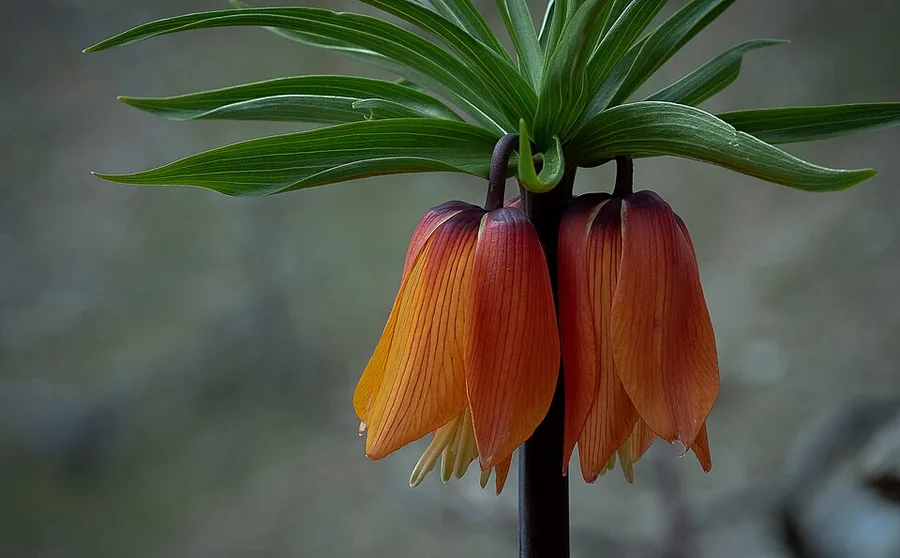
Crown imperial stands head and shoulders above most spring bulbs, sending up a stout stalk 3 to 4 feet (91 to 122 cm) tall topped by a ring of drooping bells and a tuft of leaves like a pineapple. It belongs to the lily family and hails from the rocky hillsides of the Middle East and the Himalayas. Plant it where the early-spring color earns its place at the back of a border.
The whole plant gives off a strong skunky, musky smell, and that turns out to be a feature rather than a flaw. The scent keeps voles, mice, and other diggers from bothering the bulbs. It also means you'll want to plant it a step back from a path or doorway where you brush past it daily.
This is a bulb that likes to be left alone. It settles in slowly, blooms for years once established, and resents being lifted, so pick the spot with care. Get the drainage right and set the bulb properly, and a crown imperial becomes one of those plants that quietly returns every spring with no fuss.
Care
The short version: full sun and deep, rich, sharply drained soil. Keep it evenly moist through spring growth, then let it dry out once the foliage fades, and resist the urge to dig it up.
Light
Crown imperial flowers best in full sun, though it takes a bit of afternoon shade where springs turn warm. Too much shade and you get tall, leaning stalks and fewer bells.
Water
Keep the soil evenly moist through spring growth, watering every 7 to 14 days when rain falls short. Once the foliage dies back in early summer, stop watering and let the bulb dry out, because soggy soil is what rots the bulb.
Soil
Give it deep, rich, well-drained loam or clay loam with plenty of organic matter dug in. A pH between 6.0 and 7.5 suits it, and sharp drainage matters more than anything, since standing water is fatal to the bulb.
Temperature
This is a tough, cold-hardy bulb that handles -20°F to 75°F (-29°C to 24°C). It needs the winter chill to bloom and shrugs off hard frost, but it dislikes the heat and humidity of warm summers.
Humidity
Ordinary outdoor air is fine, so there's no figure to aim for. Air movement around the leaves matters more here, since crowded, damp foliage invites leaf spot and rust.
Feeding
Work in a balanced bulb fertilizer or compost at planting in fall, then feed again in early spring as the shoots break ground. That seasonal boost is all the feeding it needs to flower well.
Pruning
Cut off the spent flower stalk once the bloom is done, but leave the foliage standing until it yellows and dies back on its own. Those fading leaves are feeding next year's flower back into the bulb.
Repotting
Crown imperial wants to be left undisturbed. Lift and divide a clump only every 3 to 5 years, and only if the flowering starts to fall off or the bulbs grow crowded.
Size & spacing
Each stalk reaches 3 to 4 feet (91 to 122 cm) tall with a spread of about 12 to 18 inches (30 to 46 cm). Set the bulbs 9 to 12 inches apart so the clumps have room and air can move between them.
When to plant
Crown imperial runs on the bulb's own clock. Plant in fall while the soil is still workable, watch the shoots push up early, and enjoy the bells through mid to late spring before the whole plant dies back and rests underground for summer.
Northern hemisphere
Southern hemisphere
Typical months for a temperate climate: start earlier in warm zones, later where spring frosts linger.
- Plant: Plant bulbs in fall, 6 inches deep and 9-12 inches apart, positioned sideways to prevent water collecting in the stem cavity
- Harvest: Mid to late spring, April to June
Hardiness
USDA hardiness zones: 5–8
Temperature: down to -29°C
Troubleshooting
Most crown imperial trouble starts underground at the bulb or shows up on the leaves once growth gets going. Catch the early signs and you can act before a small problem spreads. Match what you see below, then step in while it still helps.
A soft, mushy bulb and a plant that never comes up
This is bulb rot, and it almost always traces back to wet ground or a bulb set upright so water pools in the stem cavity. Lift a suspect bulb and you'll find brown, foul-smelling tissue around the central hole. Throw out anything badly gone, replant the firm bulbs on their side in sharply drained soil, and dig in grit to keep water moving.
Fix:
- Discard severely rotted bulbs
- Replant healthy bulbs on their side in sharply drained, raised soil
- Improve drainage with grit or organic matter
Mottled, streaked leaves and a plant losing vigor
Patchy light-and-dark mottling that won't wash off points to mosaic virus, usually carried in by aphids. There's no cure once a plant has it. Dig out and destroy the infected ones, keep sap-sucking insects in check, and wipe down your tools between plants so you don't pass it along.
Fix:
- Remove and destroy infected plants to limit spread
- Control aphid vectors
- Disinfect tools between plants
Spots and rusty pustules on the leaves
These are leaf spot and rust, fungal troubles that take hold when the foliage stays damp and crowded. Check the undersides for raised, rust-colored bumps and pull off any marked leaves. Give the plants more room and keep water off the foliage, and the spread stalls.
Fix:
- Remove and destroy affected foliage
- Improve air circulation
- Avoid overhead watering
Toxicity
Take this one seriously. Every part of crown imperial carries steroidal alkaloids, and the bulb is the most dangerous, holding imperialine and related compounds. Eating it brings on vomiting and stomach pain, and a large amount can throw off the heartbeat, so keep the bulbs away from pets, livestock, and children. The strong skunky smell puts most animals off, but it isn't a guarantee.
Toxic to
Cats · Dogs · Horses · Rabbits · Livestock · Birds · People
Cats Toxic
A cat that bites into a bulb usually starts drooling, then vomits and has diarrhea. A larger dose of the alkaloids can leave it weak and listless.
Dogs Toxic
Dogs dig at the bulbs more than they should. Eating one brings on drooling, an upset stomach, and vomiting, and a big helping can push the heartbeat out of rhythm.
Horses Toxic
The alkaloids in the bulb upset a horse's gut and, in quantity, can disturb the heart. Keep crown imperial well clear of grazing.
Rabbits Toxic
Not safe to nibble. Even a small taste of bulb or foliage can leave a rabbit drooling and off its feed, with diarrhea to follow.
Livestock Toxic
Cattle, goats, and sheep that get into the bulbs can suffer digestive upset and, with enough of the alkaloids, heart-rhythm trouble.
Birds Toxic
Treat the bulbs and foliage as off-limits, since the same alkaloids that poison mammals can sicken birds that peck at them.
People Caution
No part of the plant is food. Eating a fresh bulb causes vomiting and stomach pain, and a large amount of the alkaloids can affect the heart, so keep bulbs away from children.
All parts of the plant have a strong skunky or musky odor, which usually discourages tasting; wash hands after handling bulbs.
Helpline numbers

United States
ASPCA Animal Poison Control: (888) 426-4435 (fee applies)
Poison Control: (800) 222-1222



Canada
Poison Centres: 1-844-764-7669
Varieties
A few named forms of crown imperial show up most often, along with one much smaller cousin worth knowing. These are the ones to look for.
Rubra
The classic crown imperial, carrying a ring of drooping bells in burnt orange to deep vermilion red.
Lutea
The yellow-flowered form, lighting up a spring border with clear gold bells instead of orange.
Fritillaria meleagris (Checkered Lily)
A much shorter cousin at 8 to 12 inches, hanging nodding bells checkered in purple, red-brown, and white like a guinea hen's feathers.
How to propagate
Crown imperial multiplies slowly, and the patient routes pay off far better than seed. Here is how each method works and how long it takes.
Offsets & pupsModerate
Lift and separate offset bulblets in late summer to fall when foliage has died back · 1-3 years to reach flowering size
The surest way to make more is to lift the clump in late summer or fall, once the foliage has died back, and pull away the small offset bulbs. Handle them gently, because they bruise easily and a damaged bulb rots, and expect 1 to 3 years before an offset is big enough to flower. The bulbs and foliage carry a strong skunky, musky smell that comes with the territory.
DivisionModerate
Divide established clumps in fall every few years · 1-2 seasons
When a clump gets crowded, dig it up in fall and split it every few years. Replant each division right away at the proper depth and set it on its side so water can't pool in the bulb, and it settles back into flowering within 1 to 2 seasons.
SeedDemanding
Sow fresh seed in fall · Slow; 4-6 years or more from seed to first bloom
Growing from seed is a test of patience. Sow fresh seed in fall and you'll wait 4 to 6 years, sometimes longer, before the first bloom, which is why most gardeners stick with offsets or division instead.
Myths
Crown imperial bulbs are edible because people say they can be eaten after cooking.
Fresh bulbs are poisonous and carry steroidal alkaloids, even though extension sources rate the poison severity as low. This is not a food plant, so treat the bulbs as toxic and keep them away from pets and children.