Shrub · Hamamelidaceae
Dwarf Fothergilla
Fothergilla gardenii
Honey-scented spring flowers and blazing fall color on a tough, low-care native shrub.
Full sun
Every 5–10 days
USDA 5–8
2–6 ft · 0.5–1.8 m
Overview
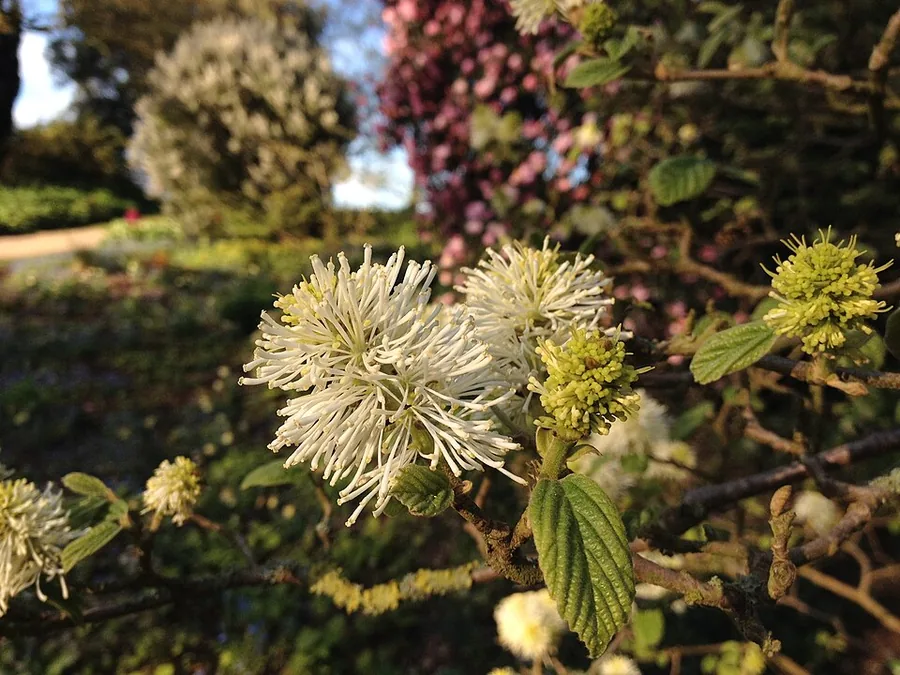
Dwarf fothergilla is a slow-growing native shrub from the southeastern United States, related to witch hazel and just as easygoing once it's settled. In early spring, before the leaves open, it covers itself in fragrant white bottlebrush flowers that smell faintly of honey. It stays modest in size, reaching 1.5 to 6 feet (46 to 183 cm) tall, which makes it a good fit for a mixed border or a small yard.
The real payoff comes twice a year. Spring brings those honey-scented blooms and the pollinators that follow them, and autumn sets the leaves alight in yellow, orange, and red, often all on the same plant. It's a clean, low-maintenance shrub with no serious pests, and deer tend to leave it alone.
Get the soil right and the rest is simple. Fothergilla insists on acidic, moist, well-drained ground and sulks in anything limed or alkaline, but give it that and a spot with plenty of sun, and it asks for almost nothing else.
Care
The short version: plant it in acidic, moist, well-drained soil and give it full sun for the best flowers and fall color. Keep it watered while it establishes, mulch to hold moisture and acidity, and prune only right after it blooms.
Light
Plant fothergilla in full sun for the heaviest bloom and the brightest fall color. It tolerates partial sun or light shade, but a plant in deep shade flowers poorly and the autumn color turns muted. In hot climates, a little afternoon shade is welcome.
Water
Keep the soil consistently moist, especially while the shrub is getting established and through hot, dry stretches. Water roughly weekly during that first season, every 5 to 10 days as a rule. Established plants handle some drought, but the flowers and fall color are always better with steady moisture.
Soil
This is the make-or-break factor. Fothergilla needs acidic, rich, well-drained loam or sandy loam, ideally a pH of 5.0 to 6.0, and it will not tolerate limed or alkaline ground. Work in plenty of organic matter and steer clear of any spot where lime has been applied.
Temperature
The shrub is cold-hardy and heat-tolerant, taking temperatures from -20°F to 95°F (-29°C to 35°C). That range covers zones 5 through 8 comfortably, so winter cold is rarely a concern.
Humidity
Ordinary outdoor humidity suits it fine, with no target to hit. Good airflow matters more than any moisture level, since crowded, damp foliage is what invites leaf spot.
Feeding
Fothergilla is a light feeder. A single spring application of an acidic, slow-release shrub fertilizer is plenty, and even that is optional. Amending the soil with organic matter does more good than heavy feeding ever will.
Pruning
Prune only if you need to, and only right after the flowers fade in late spring. The buds form on old wood from the previous season, so cutting later in the year removes next spring's flowers. Pull off suckers if you want to keep the colony in check.
Repotting
Fothergilla rarely needs repotting and is happiest planted out in the ground. If you do grow one in a container, watch for roots circling the pot or water running straight through, which signal it has outgrown its home.
Size & spacing
Mature plants reach 1.5 to 6 feet (46 to 183 cm) tall and spread 2 to 6 feet (61 to 183 cm) wide. Give each shrub room to fill out, both for its rounded shape and for the air movement that keeps leaf spot at bay.
When to plant
Fothergilla is a hardy shrub for USDA zones 5 to 8 and goes in the ground in spring or fall, when the soil is cool and moist. It blooms early, in April and May before the leaves appear, so plant it where you'll catch that show.
Northern hemisphere
Southern hemisphere
Typical months for a temperate climate: start earlier in warm zones, later where spring frosts linger.
- Plant: Spring or fall
- Harvest: Early to mid spring (April to May), before leaves emerge
Hardiness
USDA hardiness zones: 5–8
Temperature: down to -29°C
Troubleshooting
Fothergilla has few real problems, and most of what goes wrong traces back to the wrong soil or the wrong site. Match what you see below to the cause, then fix it at the root rather than chasing symptoms.
Yellow leaves with green veins and stalled growth
Green veins on a yellowing leaf point to iron chlorosis, which shows up when the soil runs too alkaline for this acid-lover and locks the iron away. Test the soil and bring the pH down with elemental sulfur or an acidic amendment, then mulch with pine bark or leaf mold. Keep lime well away from the planting.
Fix:
- Test and lower soil pH using elemental sulfur or an acidic soil amendment
- Mulch with acidic organic matter such as pine bark or leaf mold
- Avoid liming the area around the plant
Brown blotches spreading across the leaves
This is Pseudocercospora leaf spot, a fungus that takes hold when the leaves stay wet and the plant is already stressed. Rake up and bin the fallen leaves so the spores can't carry over, switch to drip watering or water early so the foliage dries fast, and open up the spacing for better airflow. A labeled fungicide helps only in a bad year.
Fix:
- Rake up and remove fallen infected foliage to reduce spore carryover
- Switch to drip irrigation or water early morning so leaves dry quickly
- Improve spacing and air movement around the plant
- If severe, apply a labeled fungicide such as chlorothalonil, myclobutanil, or propiconazole on the recommended interval
Few flowers and washed-out fall color
Two things usually rob a fothergilla of its show: too much shade and pruning at the wrong time. The plant blooms and colors best in full sun, so move it somewhere brighter if it sits in deep shade. Flower buds form on old wood, so prune only right after the spring blooms fade, or you'll cut off next year's flowers.
Fix:
- Site or transplant where the shrub receives more sun, ideally full sun with some afternoon shade in hot climates
- Prune only immediately after flowering so flower buds on old wood are preserved
Toxicity
Good news for pet owners and parents: fothergilla is not toxic. It isn't on the ASPCA's list of harmful plants, and no poisoning risk is documented for animals or people. As with any shrub, a pet that gorges on the foliage might get a mild, passing stomachache, but there's nothing dangerous here.
Safe for
People · Cats · Dogs · Horses · Rabbits · Livestock · Birds
Cats None
Fothergilla is not on the ASPCA toxic list, so a curious cat that nibbles a leaf is in no real danger. A mouthful of any plant can still cause a little drooling or a brief upset stomach.
Dogs None
Dogs can be around this shrub without worry, since none of its parts carry a known toxin. At worst, a dog that chews and swallows a lot of foliage might get a passing stomachache.
Horses Safe
No toxicity to horses is documented, and the shrub is safe to plant near a paddock. As with any unfamiliar plant, a horse grazing large amounts could get mild digestive upset.
Rabbits Safe
Rabbits face no poisoning risk from fothergilla. The woody stems and leaves simply aren't part of a healthy rabbit diet, so it's best kept as a treat rather than a staple.
Livestock Safe
Cattle, goats, and sheep can share a pasture with this shrub safely, as no livestock toxicity is on record. Heavy browsing of any single plant is never ideal, but there's no specific hazard here.
Birds Safe
Birds are not harmed by fothergilla, and pollinators visit the spring flowers. Backyard fowl can forage around it without trouble.
People Safe
The plant poses no poisoning risk to people, including children. It isn't grown to be eaten, though, so there's no need to taste any part of it.
No special handling precautions for toxicity; as with any plant, discourage pets from chewing foliage to avoid mild stomach upset.
Varieties
A few named selections stand out for their flowers, foliage, or fall color. These are the ones worth seeking by name.
'Mount Airy'
A vigorous hybrid that carries the most fragrant white bottlebrush flowers and turns a dependable yellow, orange, and red in fall.
'Blue Mist'
Grown for its unusual powdery blue-green summer leaves, though it gives up some of the fiery autumn color other selections deliver.
'Jane Platt'
A compact plant whose narrow flower spikes carry a pink tint, finishing the year with rich multicolored fall foliage.
'Suzanne'
A dwarf, tidy form that fits a small garden and lights up with strong orange-red color in autumn.
How to propagate
You can make new fothergillas from cuttings, suckers, or layered stems, all of which beat the slow, frustrating route of seed.
Stem cuttingsModerate
Early to mid summer (June to mid August) · Several weeks to root, then grow on for a season or more
Softwood cuttings are the most reliable way to make new plants, and June is the sweet spot. Dip them in rooting hormone, set them in a moist 1:1 mix of peat and perlite, and they root over several weeks before you grow them on for a season or more.
DivisionModerate
Late winter to early spring while dormant · One growing season to establish
Fothergilla gardenii spreads by suckers into a loose colony, which gives you a ready supply of new plants. While the shrub is dormant in late winter or early spring, lift a rooted sucker or root piece and replant it, and it settles in over one growing season.
SeedDemanding
Sow fresh; germination is slow · 9 to 15 months to germinate, plus further growing time
Seed is the least reliable route and tries your patience. The seeds carry a deep double dormancy that needs warm then cold moist stratification, and even then they take 9 to 15 months to germinate before any real growing time begins.
LayeringModerate
Spring · One to two growing seasons
Layering works well because the shrub carries low, bendable stems. In spring, pin one down into moist acidic soil and let it root over one to two growing seasons before you cut it free from the parent.
Myths
Fothergilla grows easily from seed like most shrubs.
The seeds carry a deep double dormancy and take a slow 9 to 15 months to sprout, even with the right warm-then-cold treatment. Most gardeners skip seed entirely and start new plants from softwood cuttings or rooted suckers instead.
Fothergilla will thrive in any garden soil.
It needs acidic, moist, rich, well-drained ground and turns chlorotic and weak in alkaline or limed soil. Acid soil is not optional for this shrub, so test your site before you plant and keep lime away from it.