Bulb · Iridaceae
Dutch Iris
Iris × hollandica
Plant the bulbs in fall and Dutch iris answers with tall, sleek blooms the following spring.
Full sun
Every 5–7 days
USDA 6–9
15–24 in · 38–61 cm
Overview
Dutch iris is the slim, upright iris you see in spring borders and florist bouquets. Unlike its bearded cousins, it grows from a true bulb rather than a creeping rhizome, and that bulb sits underground all winter before sending up narrow blue-green leaves and a single elegant flower on a straight stem.
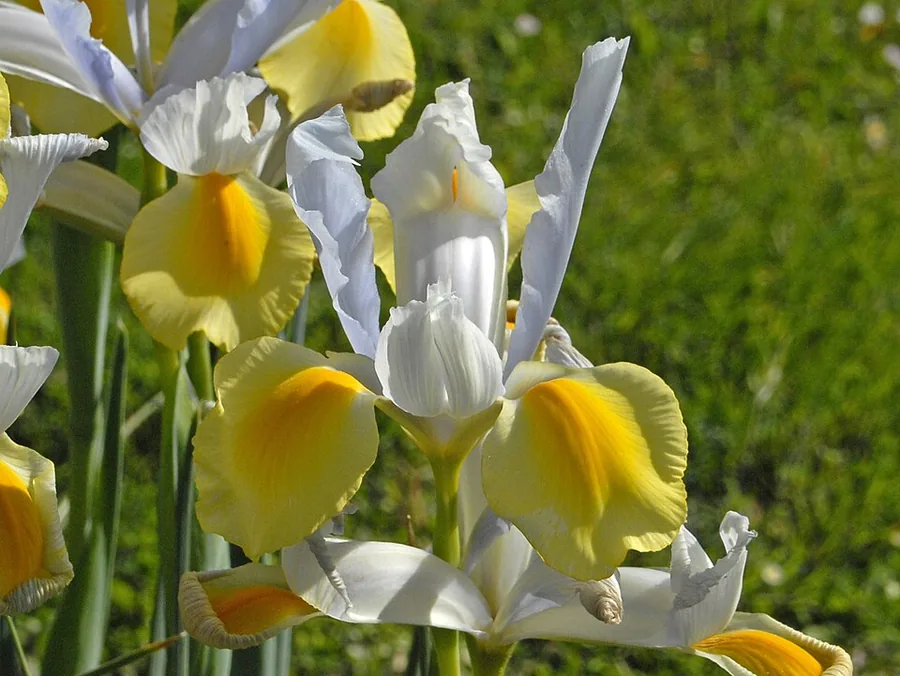
The plant is built around a short, bright season. It blooms from mid to late spring, then the foliage yellows and the bulb slips into a dry summer rest. Colors run from deep violet-blue through white and yellow, often with a contrasting blotch on the falls, and the stems are long enough to cut for a vase.
It asks for little. Give it full sun and soil that drains freely, plant the bulbs in fall, and keep water off them once they go dormant. The bulbs are short-lived, so many gardeners treat them almost as annuals and set out fresh ones each autumn.
Care
The short version: full sun and fast-draining soil, with steady moisture through the spring growing season and a dry rest once the foliage yellows in summer.
Light
Plant Dutch iris in full sun for the strongest stems and the most flowers. It will take a little afternoon shade in hot regions, but too much shade leaves the plants leaning and shy to bloom.
Water
Keep the soil evenly moist through spring while the plant is growing and flowering, watering roughly every 5 to 7 days if the weather is dry. Once the bloom is over and the leaves yellow, ease off and let the bulb dry out for its summer rest.
Soil
Drainage is everything here. Use sandy loam or any average soil that drains fast, since a bulb sitting in wet ground rots. Heavy clay is the main thing to avoid.
Temperature
The plant handles a wide range, from about 39°F to 86°F (4°C to 30°C). The bulbs need a cold winter to set buds, then mild spring weather brings them into bloom.
Humidity
Ordinary outdoor air suits Dutch iris fine, so there's no humidity target to hit. Airflow matters more than moisture in the air, since crowded, damp leaves invite fungal spots.
Feeding
Work a balanced bulb fertilizer into the soil at planting time in fall, then give a second feeding in early spring as growth starts. That's all the feeding the bulbs need for the season.
Pruning
Leave the foliage standing after the flowers fade, even when it looks tired, because that's how the bulb recharges for next year. Cut the leaves off only once they have yellowed and died back, and snip off spent blooms as they go.
Repotting
Dutch iris doesn't need repotting so much as periodic renewal. Lift and divide the clumps every few years after bloom when flowering starts to drop off, or simply plant fresh bulbs each fall since the old ones are short-lived.
Size & spacing
Expect slender plants reaching 15 to 24 inches (38 to 61 cm) tall with a narrow footprint of just 3 to 6 inches (8 to 15 cm) across. Their slim shape lets you tuck them into tight spots or plant them in close drifts.
When to plant
Dutch iris runs on a fall-to-spring rhythm. Plant the bulbs in autumn, around October to November, so they settle in before the cold, then watch for blooms from mid to late spring. After the flowers fade, the plant pulls back into the bulb for a dry summer.
Northern hemisphere
Southern hemisphere
Typical months for a temperate climate: start earlier in warm zones, later where spring frosts linger.
- Plant: Plant bulbs in fall, roughly October to November, 3-6 inches deep
- Harvest: Mid to late spring, April to June
Hardiness
USDA hardiness zones: 6–9
Temperature: down to -23°C
Troubleshooting
Most Dutch iris trouble starts underground or shows up on the leaves. Catch it early and you can usually save the rest of the planting. Match what you see below, then act before it spreads through the bed.
Soft, foul-smelling rot at the base of the leaves and bulb
This is bulb rot, and it almost always traces back to soil that stays wet. Waterlogged ground, or watering through the summer dormancy, lets the bulb turn to mush. Lift the bulbs, throw out any that are soft or smell sour, and replant only firm ones in a sandy bed that drains fast.
Fix:
- Discard affected bulbs
- Replant healthy firm bulbs in a sandy, well-drained site
- Withhold water once foliage has died back for dormancy
Hollowed-out bulbs and plants that wilt or topple
The likely culprit is the iris borer, a larva that tunnels straight through the bulb and stem. Bulb mites and narcissus bulb fly maggots do the same kind of damage. Cut a suspect bulb open, and if you find tunnels or grubs inside, destroy it, clear away the old foliage where these pests hide, and start over with clean bulbs.
Fix:
- Remove and destroy infested bulbs and larvae
- Clean up plant debris where pests overwinter
- Replant clean, firm bulbs
Spotted leaves or mottled, distorted growth
Clean, defined spots usually mean fungal leaf spot taking hold where the leaves stay wet too long. Mottling and stunted, twisted growth points to mosaic virus instead, which aphids carry from plant to plant. Pull the marked leaves, water at the base so the foliage dries, and dig out any virus-struck plant before it spreads.
Fix:
- Remove affected leaves
- Improve air circulation and avoid overhead watering
- Destroy virus-infected plants and control aphids
Toxicity
Dutch iris is toxic, and the bulb is the dangerous part. It holds irisin and terpenoids that bring on drooling, vomiting, and diarrhea in cats, dogs, horses, and other animals that chew on it. No part of the plant is food, so keep the bulbs away from pets and children, and wear gloves when you handle them.
Toxic to
Cats · Dogs · Horses · Rabbits · Livestock · Birds · People
Cats Mild
A cat that nibbles the leaves or digs up a bulb tends to drool and vomit soon after. Loose stools and a sluggish, off mood usually follow, and the bulb is the part that hits hardest.
Dogs Mild
Dogs react with heavy drooling, an upset stomach, and diarrhea, especially after chewing on a dug-up bulb. Expect a tired, listless dog until it passes.
Horses Mild
Horses that graze the foliage or roots can drool, go off their feed, and develop diarrhea. The terpenoids in the plant leave them dull and uncomfortable.
Rabbits Mild
The same irisin and terpenoids upset a rabbit's gut, bringing drooling and loose droppings. Keep the bulbs and foliage out of any run or hutch.
Livestock Mild
Cattle, goats, and sheep mostly leave iris alone, but a hungry animal that eats it gets a sore stomach and the runs. Fence off any beds near a paddock.
Birds Caution
There's little record of birds eating iris, so treat it as a likely irritant rather than a known safe plant. Keep pet birds away from the bulbs to be safe.
People Caution
No part of this plant is meant to be eaten, and the bulb in particular can cause stomach upset if swallowed. The sap can also irritate skin, so wear gloves and keep children away from the bulbs.
Wear gloves when handling bulbs, and wash hands after to avoid skin irritation from the sap.
Helpline numbers

United States
ASPCA Animal Poison Control: (888) 426-4435 (fee applies)
Poison Control: (800) 222-1222



Canada
Poison Centres: 1-844-764-7669
Varieties
Dutch iris comes in a clear set of named colors, and a few cultivars turn up again and again in catalogs and bouquets.
Blue Magic
A popular cultivar with deep violet-blue flowers that holds up well as a cut flower.
Casablanca
Carries large white flowers marked with a yellow blotch on the falls.
Symphony
Shows off bicolor blooms with crisp white standards above yellow falls.
How to propagate
Dutch iris is easiest to start from bought bulbs, though you can also split the offsets from an established clump or, with patience, grow it from seed.
Bulbs & cormsEasy
Plant bulbs in fall, October to November · Blooms the following spring after fall planting
The simplest route is to plant fresh bulbs in autumn, roughly October to November, and let them bloom the next spring. Dutch iris grows from a true bulb, not a rhizome, and because the bulbs are short-lived many gardeners just buy and plant new ones each fall.
DivisionEasy
After bloom, when foliage yellows in summer · Offset bulblets take several years to reach flowering size
Once the foliage yellows in summer, lift a clump and pull apart the small offset bulblets clinging to the parent, then replant them. It costs nothing, but be patient, since those offsets take several years to grow big enough to flower.
SeedModerate
Sow ripe seed · Several years to reach flowering size
You can sow ripe seed, but it's the slow road and rarely worth it. Seedlings need several years to reach blooming size, and the named hybrids won't come true, so the flowers you get won't match the parent.
Myths
Dutch iris grows from a rhizome like bearded and Siberian iris.
Dutch iris grows from a true bulb that makes small offset bulblets, not the creeping rhizome you find on bearded or Siberian types. You plant the bulbs in fall, like daffodils, rather than setting a rhizome at the surface in summer.