Shrub · Thymelaeaceae
Winter Daphne
Daphne odora
Few shrubs scent a winter garden like daphne, but every part of it is poisonous.
Partial shade
Every 5–10 days
USDA 7–9
3–6 ft · 0.9–2 m
Overview
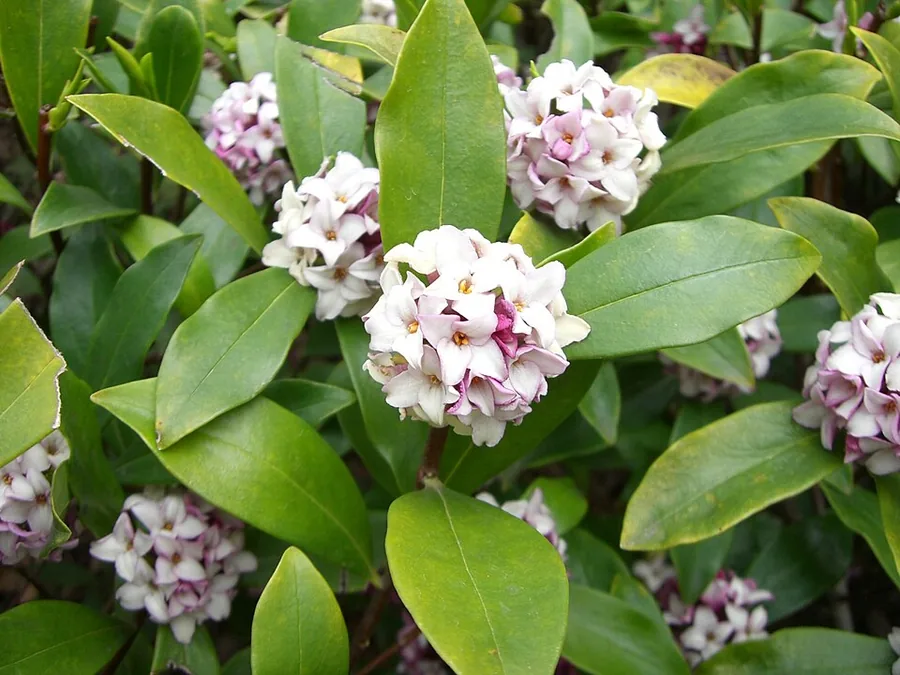
Winter daphne earns its place with scent alone. In the bleakest stretch of the year it opens clusters of pink-and-white flowers that perfume a whole corner of the garden, and the glossy evergreen leaves carry the show the rest of the year. It comes from China and Japan and settles best in zones 7 to 9, where winters stay mild enough for it to bloom.
It is a slow, fussy shrub that rewards the right spot and sulks in the wrong one. Daphne wants part shade, soil that drains sharply, and to be left alone once planted, since it deeply resents having its roots moved. Get the site right the first time and a healthy plant can give you years of midwinter scent.
One thing colors everything else about this plant: it is seriously poisonous. Leaves, bark, sap, and above all the bright berries can burn the mouth and gut of anyone who chews them, and even the sap blisters bare skin. It is a beautiful shrub for the right garden, but think hard before planting it where children or pets roam.
Care
The short version: give winter daphne part shade and sharply drained soil on a slight mound, water carefully so the roots never sit wet, and pick its permanent spot from the start, because it hates being moved.
Light
Winter daphne does best in part shade, though it will take part sun or even full sun where summers stay mild. Too much harsh afternoon sun stresses it, while deep shade thins the flowering, so dappled light or a spot with morning sun is the sweet spot.
Water
Keep the soil moist but never soggy, watering only when the top inch or so has dried, which usually works out to every 5 to 10 days. Daphne is touchy at both ends, hurt by drought yet far more often killed by overwatering, so err on the dry side and make sure water drains away fast.
Soil
Plant in rich, sandy, humus-filled loam that drains sharply, since wet feet are this shrub's quickest path to death. A pH around 6.0 to 7.0 suits it, and setting the plant on a slight mound keeps the crown clear of standing water.
Temperature
Daphne handles a range from about 10°F to 90°F (-12°C to 32°C), which puts it firmly in zones 7 to 9. It shrugs off normal winter cold once established but resents both hard freezes and long stretches of extreme heat.
Humidity
Ordinary outdoor humidity is fine, so there's no figure to aim for. Air movement matters far more than moisture in the air, because still, damp conditions are what bring on the leaf spot and blight daphne is prone to.
Feeding
Daphne is a light feeder. Give it one helping of balanced fertilizer in spring after the flowers fade, and leave it at that. Heavy or frequent feeding does more harm than good on a shrub this slow and particular.
Pruning
Daphne rarely needs the knife. Tip prune lightly right after flowering to keep it from going leggy, and stop there. The plant tolerates harder cutting but seldom calls for it, and every cut is a chance to meet its irritant sap, so wear gloves.
Repotting
Plan to almost never move it. Daphne resents root disturbance and most plants don't survive transplanting, so choose the permanent spot before you plant. In a container, declining vigor, roots circling the drainage holes, and fast-drying soil are the signs it has outgrown its pot.
Size & spacing
Winter daphne grows slowly to about 3 to 6.5 feet (91 to 198 cm) tall with a spread of 2 to 4 feet (61 to 122 cm). Give each plant room for that mature spread and for air to move freely around it, which helps hold disease at bay.
When to plant
Daphne sets its own clock, blooming in the cold months when little else does, from midwinter into early spring depending on your zone. Plant it in spring or fall in a sheltered, partly shaded spot, and once it's in the ground, leave it there for good.
Northern hemisphere
Southern hemisphere
Typical months for a temperate climate: start earlier in warm zones, later where spring frosts linger.
- Plant: spring or fall in a sheltered, partly shaded site
- Harvest: intensely fragrant pink-and-white flowers in mid to late winter and early spring (January-April depending on zone)
Hardiness
USDA hardiness zones: 7–9
Temperature: down to -18°C
Troubleshooting
Most daphne trouble starts underground or in damp, crowded growth, and the worst of it gives little warning. Watch the base of the plant and the look of the leaves, and act on the first sign rather than waiting. The faster you read these symptoms, the better your odds of saving the shrub.
A healthy plant suddenly wilts and dies
The usual culprit is Phytophthora root and crown rot, which sets in when the soil stays wet and chokes the roots from below. A daphne rarely recovers once the crown turns mushy, so dig it out, bin it, and never replant a daphne in that same soggy spot. Fix the drainage first, because a virus or root disturbance can trigger the same fast collapse.
Fix:
- Improve drainage immediately; daphne cannot be reliably saved once crown rot is advanced
- Remove and discard severely affected plants to limit spread
- Do not replant daphne in the same poorly drained spot
Yellow leaves marked with spots, blight, or canker
Damp air and crowded growth invite fungal leaf spot, botrytis, twig blight, and canker, which show as spotted foliage or sunken lesions on the stems. Snip off the marked leaves and stems and get rid of them. Open the plant up to better airflow and keep water off the leaves, and the trouble usually fades.
Fix:
- Remove and dispose of affected leaves and stems
- Improve air circulation and avoid wetting foliage
- Reduce overhead watering
Sticky residue and small bumps on stems and leaves
Sticky honeydew and twisted new growth point to aphids, mealybugs, or scale feeding on the sap. Hose off a light run of them with a sharp jet of water. If they hang on, treat with insecticidal soap or horticultural oil and check back every week or two until they clear.
Fix:
- Wash off light infestations with a strong spray of water
- Treat with insecticidal soap or horticultural oil as labeled
- Repeat treatment as needed and monitor
Toxicity
This is a plant to respect. Every part of winter daphne is poisonous, from the leaves and bark to the sap and especially the bright, candy-colored berries, all of them loaded with the irritant compounds mezerein and daphnin. Keep it well away from cats, dogs, horses, livestock, and children, and wear gloves whenever you prune.
Toxic to
Cats · Dogs · Horses · Rabbits · Livestock · Birds · People
Cats Severe
A cat that chews any part burns its mouth and throat almost at once, with drooling, blistering, and hard vomiting that follows. The bright berries are the worst of it, and a few can bring on bloody diarrhea, internal bleeding, convulsions, and death.
Dogs Severe
The bark, leaves, and berries blister a dog's mouth and gut and set off heavy drooling, retching, and bloody diarrhea. Larger mouthfuls turn dangerous fast, with internal bleeding, weakness, and seizures, so call a vet without waiting.
Horses Severe
Browsing the foliage or stems scalds the mouth and digestive tract and brings drooling, colic, and bloody diarrhea. A horse rarely eats much of something this acrid, but even a small taste leaves it sick and weak.
Rabbits Severe
The same mezerein and daphnin that poison other animals burn a rabbit's mouth and gut just as badly, and a small body has little margin. Keep the plant well out of reach of any rabbit that roams the garden.
Livestock Severe
Cattle, goats, and sheep that strip the leaves or bark suffer severe mouth and gut irritation, drooling, and bloody scouring. Fence daphne off from any grazing animal, since a hungry one may eat enough to kill it.
Birds Severe
The toxic berries tempt birds yet carry the same irritant diterpenoids that harm everything else. Treat the plant as unsafe around pet birds and don't count on wild ones to leave the fruit alone.
People Caution
No part of winter daphne is food, and the sap alone can blister bare skin, so prune in gloves and wash up after. The candy-bright berries are the real hazard, since just a few have poisoned children with burning mouths, vomiting, and serious illness.
Wear gloves when pruning or handling; the sap can cause skin irritation and blistering (contact dermatitis). Keep the attractive berries away from children and pets.
Helpline numbers

United States
ASPCA Animal Poison Control: (888) 426-4435 (fee applies)
Poison Control: (800) 222-1222



Canada
Poison Centres: 1-844-764-7669
Varieties
Winter daphne comes in a couple of variegated forms worth knowing, each prized for leaf color on top of the species' famous scent.
'Aureomarginata'
Its leaves carry a thin yellow edge, and it tends to take the cold a little better than the plain species.
'Marginata'
This one trims its leaves in creamy margins while keeping the same heavy winter scent the species is known for.
How to propagate
Daphne is slow to multiply and impatient about its roots, so both routes ask for a gentle hand and some waiting.
Stem cuttingsModerate
Summer, from semi-hardwood cuttings of the current season's growth · Several weeks to a few months to root
Take semi-hardwood cuttings in summer from this season's growth. They are slow, needing anywhere from several weeks to a few months to root, so be patient. Because daphne hates having its roots touched, pot the rooted cuttings up gently and only once.
LayeringModerate
Spring to summer · A season or more to root before separating
Layering is the gentler route. Pin a low branch down into the soil in spring or summer and leave it to root in place, which takes a season or more, then cut the new plant free once it stands on its own roots.
Myths
Winter daphne is a harmless, charming cottage shrub thanks to its sweet flowers and pretty berries.
It is one of the more dangerous shrubs you can plant. Every part holds irritant diterpenoids, the sap can blister bare skin, and the bright berries may be fatal if eaten, so site it well away from children and pets.