Ornamental · Amaranthaceae
Celosia
Celosia argentea
Give it full sun and warm, well-drained soil, and celosia throws up flame-bright plumes from summer to frost.
Full sun
USDA 2–11
0–3 ft · 0.2–0.9 m
Overview
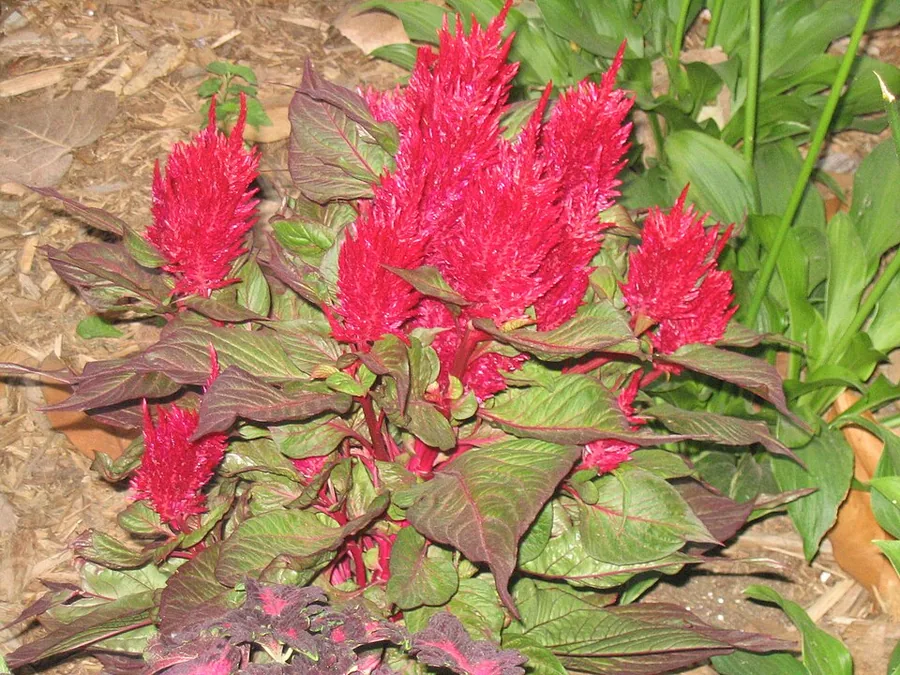
Few annuals carry as much color as celosia. The flower heads come in three looks depending on the type, from soft feathery plumes to velvety folded crests that really do resemble a rooster's comb, all of it in hot reds, golds, oranges, and pinks. It belongs to the amaranth family and grows fast, going from a spring sowing to full bloom in a single season.
This is a plant for heat and sun. Native to warm regions, celosia takes drought and dry soil in stride and asks mainly for warm, well-drained ground and a spot in the open where the light is full. What it won't forgive is cold or a soggy root run, both of which stall it or rot it out.
It earns its keep twice over. The blooms hold their color cut for a vase or hung to dry, and the same species is grown as a leafy green called Lagos spinach in much of Africa and Asia. The whole plant is non-toxic, so it's an easy pick for a garden shared with pets and children.
Care
The short version: full sun and warm, well-drained soil, even moisture while young and a drier hand once established, a light monthly feed, and a quick deadheading to keep the plumes coming.
Light
Celosia wants full sun, the more direct light the better. Give it an open spot with at least 6 hours of sun, since shade leaves you with leggy plants and washed-out, sparse plumes.
Water
Keep the soil evenly moist while the plants are young, then ease off and water only when the top inch or so has dried out. It takes heat and drought well once established, but it resents wet feet, which rot the roots, so always plant it in well-drained ground.
Soil
Plant in moderately fertile, humus-rich soil that drains freely. Rich ground feeds the bloom, but the drainage matters more, since soggy or cold wet soil is what brings on root and stem rot.
Humidity
Ordinary outdoor air suits it, so there's no number to hit. Airflow counts for more than humidity here, because crowded, damp foliage in muggy weather is how leaf spot and flower rot get started.
Feeding
Celosia is a light feeder, so a monthly feed through the growing season is plenty. Go easy, since over-rich, soggy conditions invite root rot rather than bigger blooms.
Pruning
Deadhead the spent flower heads to keep new plumes coming through the season. Pull off any damaged or diseased growth as you spot it to keep the plant clean and open.
Size & spacing
Plants run from 6 to 36 inches (15 to 91 cm) tall depending on the type, from dwarf crested forms to tall cutting varieties. Each one spreads about 6 to 18 inches (15 to 46 cm), so give them that much room for air to move and disease to stay down.
When to plant
Celosia runs on warmth and has no tolerance for frost. Start seeds indoors in early spring, then set the plants out small once the cold has passed and the soil has warmed, and the plumes carry from early summer to the first fall frost.
Northern hemisphere
Southern hemisphere
Typical months for a temperate climate: start earlier in warm zones, later where spring frosts linger.
- Sow: Start indoors about 6 to 8 weeks before the last spring frost.
- Plant: Set out or direct sow after the last spring frost once soil has warmed.
- Harvest: Early summer to the first fall frost.
Hardiness
USDA hardiness zones: 2–11
Temperature: down to -46°C
Troubleshooting
Most celosia trouble traces back to two things: too much wet and too much cold. Watch the leaves and the base of the plant for the first signs, then match what you see below and act before it spreads.
Wilting and a dark, rotted base in soggy soil
When a celosia wilts and collapses with a blackened stem base, the cause is usually root and stem rot taking hold in cold, waterlogged ground. There's no saving a plant once the roots turn to mush, so pull it and bin it. The fix is in the soil: ease off the water, improve drainage, and replant only where the ground is warm and well drained.
Fix:
- Remove and discard affected plants
- Stop overwatering and improve soil drainage
- Replant only in warm, well-drained soil
Stippled, bronzing leaves with fine webbing
Hot, dry, dusty air is the calling card of spider mites, which drink the green out of the leaves until they bronze and fade. Turn a leaf over and you may catch tiny specks moving in a thin web. Blast them off with water, follow up with insecticidal soap or horticultural oil, and keep the plant watered so drought stress doesn't invite them back.
Fix:
- Rinse foliage with a strong spray of water to dislodge mites
- Treat with insecticidal soap or horticultural oil, repeating as directed
- Remove and discard heavily infested leaves
Spotted leaves and rotting flower heads
Distinct spots on the leaves, sometimes with flower heads going soft, point to fungal leaf spot that thrives in humid, rainy weather and crowded beds. Strip off the marked leaves and any rotted blooms so the spores have less to spread to. Give plants room for air to move and water at the base, since dry foliage is the best defense.
Fix:
- Remove and discard spotted leaves and rotted flower heads
- Improve air circulation by spacing or thinning plants
- Water at the base to keep foliage dry
Stunted plants that flower early on short stems
Celosia hates a setback, and a cold spell or rough transplanting causes a growth check that locks the plant small and pushes it into early bloom on stubby stems. A badly checked plant rarely recovers its size, so it's often quicker to replace it with a fresh young transplant. Sow in warm soil, keep seedlings warm and on the dry side, and move them out small and untroubled.
Fix:
- Replace severely checked plants with fresh young transplants
- Keep new plantings warm and unstressed to encourage recovery
Soft insects and sticky residue on new growth
Those clustered specks on the shoot tips are aphids, and the shine they leave behind is honeydew. A few do little harm, but a colony curls the new leaves and leaves the plant looking grimy. Wash them off with a firm spray, treat the worst spots with insecticidal soap, and let lady beetles do the rest.
Fix:
- Knock aphids off with a strong water spray
- Apply insecticidal soap to affected growth
- Encourage or release natural predators such as lady beetles
Toxicity
Good news for a household with animals: celosia is non-toxic to cats, dogs, and horses, and the ASPCA backs that up. The same plant is even grown as an edible green, so there's nothing here to keep away from pets, livestock, or children.
Safe for
People · Cats · Dogs · Horses · Rabbits · Livestock · Birds
Cats None
The ASPCA lists celosia as non-toxic to cats, so a nibbled plume or leaf is no cause for alarm. A cat that gorges on any plant might still throw up from the roughage alone.
Dogs None
Celosia is non-toxic to dogs, and a curious chew on the foliage or flowers does no harm. Eating a big mouthful could pass with a mildly upset stomach, as it would with any plant.
Horses None
The ASPCA rates celosia safe for horses, so it poses no poisoning risk in or near a paddock. There's nothing here that calls for special fencing.
Rabbits Safe
Rabbits can graze celosia without danger, and the leaves are eaten as a cooked green in many places. Introduce any new fresh plant slowly to keep their digestion settled.
Livestock Safe
Cattle, goats, and sheep face no toxic threat from celosia, and the species is grown as a leaf vegetable for people in parts of Africa and Asia. Browsing it causes no poisoning.
Birds Safe
Both pet and backyard birds can peck at the seeds and foliage safely. The plant carries no toxins that would trouble them.
People Safe
Celosia is safe around children, and the young leaves and shoots are a common cooked green known as Lagos spinach. There is no part of the plant to worry about.
Varieties
Celosia splits into three groups by the shape of its flower head, and a handful of named series turn up most often. These are the ones worth knowing.
'Century' and 'Fresh Look' (Plumosa Group)
These plume types carry upright, densely packed feathery heads in red, gold, orange, and pink that hold their color whether you use them fresh or dried.
'New Look' (Plumosa Group)
It sets feathery red plumes against bronze-purple foliage on neat, compact plants.
Jewel Box Series (Cristata Group)
A dwarf crested cockscomb standing only about 6 to 8 inches tall, topped with dense brain-like crests.
Big Chief Series (Cristata Group)
A tall crested cockscomb that reaches about 36 inches, making it a strong pick for cutting.
'Flamingo Feather' (Spicata Group)
A wheat celosia that throws slender, upright spikes shading from pink to white like heads of grain.
How to propagate
Celosia is grown from seed and almost nothing else, and it sprouts quickly once the soil is warm enough.
SeedEasy
Start indoors about 6 to 8 weeks before the last spring frost, or direct sow after frost once soil is warm (70 to 75°F). · Germinates in about 1 week at 70 to 75°F and blooms the same season.
Celosia grows readily from seed. Start it indoors about 6 to 8 weeks before your last spring frost, or sow it straight into the garden once the soil has warmed to 70°F to 75°F (21°C to 24°C), and the seedlings break ground in roughly a week. Keep them warm and on the dry side, and move them out while they are young and small, since a chill or a late transplant stunts the plant and tips it into early bloom. From a spring sowing it flowers the same season.
Myths
Celosia is poisonous to pets.
The ASPCA lists celosia as non-toxic to cats, dogs, and horses, so a curious nibble won't poison your animals. The plant is safe to grow around the whole household. Some growers even raise the species as a leafy green for the table.
Celosia can be transplanted at any size, any time.
It hates cold and transplant shock, and a chilled or jostled plant stalls and rushes into bloom on short, stunted stems. Sow in warm soil and set the plants out young and small after the last frost. Move it too late or too rough and you lock in a runt.
Celosia needs constantly wet, rich soil to thrive.
It shrugs off heat and drought and asks only for warm, well-drained ground. Soggy or cold wet soil is what brings on root and stem rot. Keep the soil on the lean and dry side once the plant is established.