Bulb · Araceae
Calla Lily
Zantedeschia aethiopica
Give it rich, moist ground and plenty of sun, and the calla rewards you with tall, sculptural blooms.
Full sun
Every 2–4 days
USDA 8–10
2–3 ft · 0.6–1 m
Overview
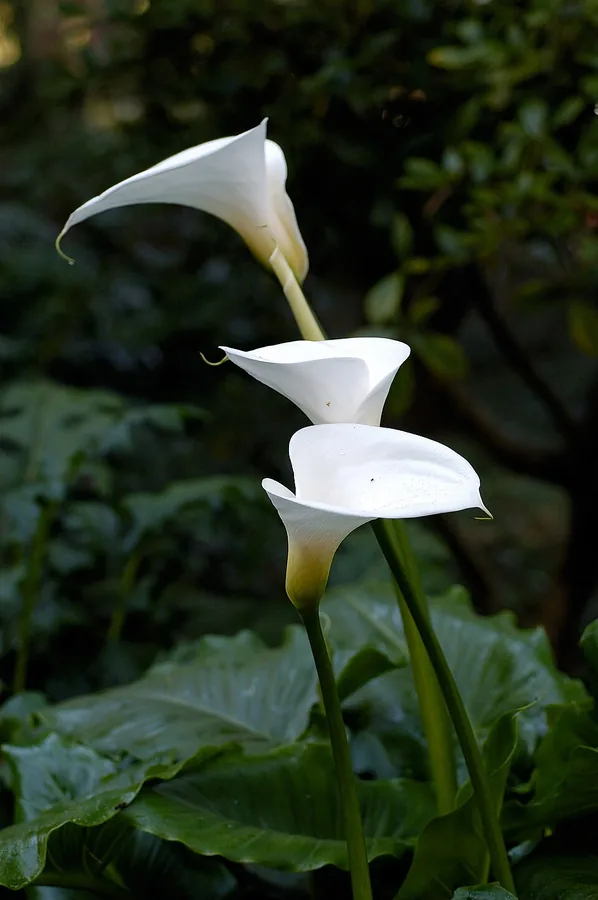
The calla lily carries one of the cleanest shapes in the garden: a single curled spathe wrapped around a slender golden spike. It is not a true lily at all but a member of the arum family, native to southern Africa and grown the world over for cut flowers and bold summer beds. The classic form is pure white, though the wider clan comes in cream, yellow, and deep wine shades.
It grows from a fat underground rhizome and comes back year after year in mild regions. Wet feet suit it better than dry, which sets it apart from most bulbs. It will sit happily in boggy ground or at a pond edge, and it takes standing water up to about a foot deep without complaint, so the usual worry about overwatering barely applies during active growth.
Handsome as it is, the whole plant is toxic to people and animals alike. Every part holds sharp calcium oxalate crystals that burn the mouth on contact, so this is a flower to admire rather than nibble. Site it where pets and small children can't reach the leaves or the sap.
Care
The short version: full sun to part shade, soil kept rich and reliably moist, a balanced feed through the growing months, and rhizomes divided every year or two when the clump gets crowded.
Light
Callas flower best in full sun but take partial shade without much complaint, which helps where summers run hot. The more sun they get, the stronger and more upright the blooms.
Water
This is a plant that likes to stay wet. Keep the soil consistently moist to boggy and water every 2 to 4 days in active growth, never letting it dry out. It even tolerates standing water up to about a foot deep, so erring damp is fine.
Soil
Plant in rich, humusy clay or loam loaded with organic matter. Unlike most bulbs, the calla shrugs off poor drainage and the odd flood, and it handles a wide pH band from 6.0 to 8.0.
Temperature
It runs through a broad range, roughly 10°F to 86°F (-12°C to 30°C), but it is happiest in mild summer warmth. Hard freezes push it into dormancy, so the rhizomes need lifting or heavy mulch where winters bite.
Humidity
Calla lilies like the air on the humid side, which fits their love of damp ground and pond margins. Dry air alone won't sink them as long as the soil stays moist.
Feeding
Feed monthly through spring and summer while the plant is growing hard, using a balanced general-purpose fertilizer. Ease off as the foliage fades and the plant heads toward dormancy.
Pruning
Cut off spent flower stalks and any yellowing or dead leaves to keep the clump tidy. Once the foliage dies down for the season, trim it back as the plant slips into dormancy.
Repotting
Divide and repot every 1 to 2 years, or sooner once the clump crowds itself. Crowded rhizomes filling the pot, fewer flowers, and roots pushing out the drainage holes all signal it's time.
Size & spacing
A mature calla stands 2 to 3 feet (61 to 99 cm) tall and spreads 12 to 24 inches (30 to 61 cm) wide. Set rhizomes about 12 to 18 inches (30 to 46 cm) apart so each clump has room to fill in.
When to plant
Callas wake up with the warmth. In cold-winter areas, start the rhizomes indoors in late winter, then move them outside once the frost has passed. Flowers follow in early summer, with the show peaking through June and July.
Northern hemisphere
Southern hemisphere
Typical months for a temperate climate: start earlier in warm zones, later where spring frosts linger.
- Sow: Start rhizomes indoors in late winter to early spring in cold-winter areas.
- Plant: Plant rhizomes outdoors in spring after frost, 3-4 inches deep and 12-18 inches apart.
- Harvest: Blooms June to July.
Hardiness
USDA hardiness zones: 8–10
Temperature: down to -12°C
Troubleshooting
Most calla trouble starts below the soil or shows up as damaged leaves. Rot from waterlogged ground is the one to watch, while beetles and thrips are more of a nuisance than a threat. Match what you see below and step in early.
Soft, mushy rhizome and collapsing leaves
This is rhizome rot, brought on by soil that stays waterlogged and starved of air. Lift the rhizome and check it: rotted, brown, foul-smelling tissue has to go. Cut soft spots off any rhizome worth saving, let the cuts cure, then replant in better-drained ground.
Fix:
- Lift affected rhizomes and discard rotted ones
- Cut away soft tissue from salvageable rhizomes and let cure
- Replant healthy rhizomes in better-drained, aerated soil
Leaves chewed to lace and flowers torn up
This is the work of Japanese beetles, metallic green-bronze insects that swarm foliage and blooms through summer. Pick them off by hand into a tub of soapy water. Stay on top of it on a plant that's badly hit, since the more you remove early, the fewer arrive to feed.
Fix:
- Handpick beetles into soapy water
- Reduce populations on heavily infested plants
Silvery, stippled patches on the leaves
Tiny banded greenhouse thrips rasp at the leaves and leave a silvered, speckled finish behind, often with black frass dotted underneath. Strip off and bin the worst-hit foliage. Keep the plant well fed and watered, because a vigorous calla shrugs off light thrips damage.
Fix:
- Remove and dispose of heavily infested foliage
- Improve growing conditions to support plant vigor
Toxicity
Treat this plant as off-limits for eating, full stop. Every part of a calla holds insoluble calcium oxalate crystals that drive sharp needles into any mouth that bites them, causing instant burning, drooling, and swelling. It is unsafe for cats, dogs, horses, livestock, rabbits, birds, and people alike, and the sap can irritate bare skin, so wash up after handling and keep it away from pets and children.
Toxic to
Cats · Dogs · Horses · Rabbits · Livestock · Birds · People
Cats Toxic
A cat that bites into any part feels the burn straight away, with pawing at the mouth, heavy drooling, and vomiting. The lips and tongue can swell, and swallowing turns painful.
Dogs Toxic
Chewing the leaves or sap leaves a dog drooling hard and gagging, often with a swollen, sore mouth. Most back off fast once the crystals sting, so they rarely eat enough to do lasting harm.
Horses Toxic
The crystals scald a horse's mouth and tongue, bringing on swelling, drooling, and a clear reluctance to eat. Horses don't vomit, so the pain shows mostly as mouth soreness and a refusal of feed.
Rabbits Toxic
The same calcium oxalate that hurts cats and dogs irritates a rabbit's mouth and gut. Keep callas, cuttings, and dropped leaves well out of reach of any rabbit that grazes nearby.
Livestock Toxic
Cattle, sheep, and goats that graze the foliage get mouth and throat irritation, drooling, and an upset gut. The acrid taste usually puts them off, but hungry animals on thin pasture take the risk.
Birds Toxic
The leaves and sap carry the same irritating crystals for birds, so a pecking parrot or chicken can end up with a sore, swollen mouth. Best to keep the plant away from birds entirely.
People Caution
No part of a calla is edible, and a bite brings instant burning of the lips, tongue, and throat along with drooling and swelling. The sap alone can leave skin itchy and raw, so wash up after handling and keep children well clear.
Keep plant, cut flowers, and sap away from pets and children; wash hands after handling as the sap can cause skin and mouth irritation.
Helpline numbers

United States
ASPCA Animal Poison Control: (888) 426-4435 (fee applies)
Poison Control: (800) 222-1222



Canada
Poison Centres: 1-844-764-7669
Varieties
Most callas you'll meet are selections of the white arum lily, chosen for the size or color of the spathe. These two turn up most often.
White Giant
A large-flowered selection grown for its oversized pure white spathes, the showiest of the classic callas.
Green Goddess
Its spathes open white at the base and wash into green toward the tips, giving each bloom a two-tone look.
How to propagate
Callas are easy to multiply, and dividing an established clump is by far the fastest way to get more flowering plants.
DivisionEasy
Early spring or late summer to early fall · One growing season
The simplest way to make more callas is to split a crowded clump. Do it in early spring or in the cooler stretch from late summer into fall, lifting the rhizomes and pulling them apart by hand. Each healthy piece settles in and fills out over a single growing season.
SeedModerate
When ripe seed is available · Multiple seasons to flowering
Growing from seed takes patience. Sow ripe seed when you can get it, but expect the seedlings to spend several seasons sizing up before they bloom. Division is far quicker if you just want more flowering plants.
Bulbs & cormsEasy
Spring · One growing season
Starting from bought rhizomes is the usual route. Plant them in spring, 3 to 4 inches deep and 12 to 18 inches apart, and they put on growth and flower within their first season.
Myths
The calla lily is a true lily and causes fatal kidney failure in cats like Easter and tiger lilies do.
Despite the name, the calla is not a true lily at all but a member of the arum family. It does not trigger the deadly kidney failure that true lilies cause in cats. What it does carry are insoluble calcium oxalate crystals, which burn the mouth and bring on drooling and vomiting in cats and dogs, painful but rarely life-threatening.