Tree · Sapindaceae
Bloodgood Japanese Maple
Acer palmatum
Plant it for the deep burgundy leaves and scarlet fall color, and a Bloodgood maple anchors a garden for decades.
Partial shade
Every 5–10 days
USDA 5–8
15–20 ft · 4.6–6.1 m
Overview
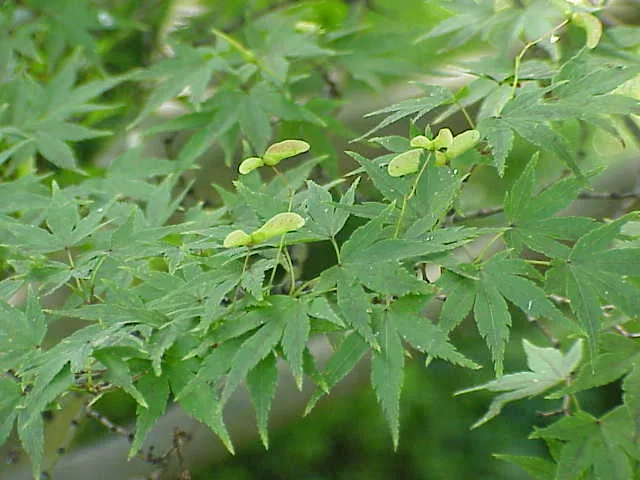
The Bloodgood Japanese maple is a small, graceful tree grown above all for its color. Its leaves open a deep burgundy to blackish-red and hold that tone through summer better than most red cultivars, then flare scarlet before they drop. Reddish-purple flowers appear in April, and by early fall the tree hangs with red samaras, the winged seeds maples are known for.
This is a tree that takes its time. It grows slowly to a mature 15 to 20 feet (180 to 240 inches) tall and nearly as wide, building an upright, rounded canopy that fits a courtyard, a patio corner, or the edge of a bed. Because it is a grafted clone of Acer palmatum, every Bloodgood looks much like the next, which is part of why gardeners trust it.
It earns its reputation as low maintenance, but it isn't a plant-and-forget tree. It wants steady moisture, shelter from harsh afternoon sun and drying wind, and slightly acidic soil that drains well. Get the site right and a Bloodgood asks for little else for the rest of its long life.
Care
The short version: part shade with afternoon protection, soil kept evenly moist but never waterlogged, slightly acidic well-drained ground, mulch over the roots, and very little pruning.
Light
Bloodgood does best in part shade, though it takes full sun to partial sun too. A few hours of sun deepen the red in the leaves, but in hot climates give it afternoon shade to keep the foliage from scorching.
Water
Keep the soil consistently moist but never waterlogged, since this maple is not drought tolerant. Water deeply through dry spells, every 5 to 10 days depending on heat and soil, and mulch over the roots to hold that moisture and keep them cool.
Soil
Plant in moist, organically rich, slightly acidic, well-drained loam. A pH of 5.5 to 6.5 suits it best, and good drainage matters as much as fertility, since soggy roots invite disease.
Temperature
This is a cold-hardy tree, comfortable across USDA zones 5 to 8 and from -20°F to 95°F (-29°C to 35°C). It rides out hard winters with ease; the bigger threat is summer heat paired with dry, windy sites.
Humidity
Ordinary outdoor humidity is all it needs, so there's no number to manage. What matters more is shelter from drying wind, which pulls moisture from the leaves faster than the roots can replace it.
Feeding
Feed once in spring with a balanced slow-release fertilizer or a topdressing of compost. Go easy on the nitrogen, which pushes soft growth that aphids love and does the tree no favors.
Pruning
Keep pruning to a minimum. Remove only dead, damaged, or crossing branches, and do it in late fall to mid winter while the tree is dormant and the cuts heal cleanly.
Repotting
Landscape trees never need repotting, but a container specimen should be moved up every 2 to 3 years. Repot when you see roots circling the pot or pushing through the drainage holes, water running straight through, or growth slowing.
Size & spacing
A mature Bloodgood reaches 15 to 20 feet (180 to 240 inches) tall with a spread of 12 to 20 feet (144 to 240 inches). Give it room to fill out that rounded crown without crowding a wall or a neighbor.
When to plant
A Bloodgood maple is planted, not sown, and the calendar is simple. Set the tree out in spring or fall once hard frost has passed, watch for its reddish-purple flowers in April, and look for ripe red samaras from September into October.
Northern hemisphere
Southern hemisphere
Typical months for a temperate climate: start earlier in warm zones, later where spring frosts linger.
- Plant: Spring or fall, after danger of hard frost has passed
- Harvest: Reddish-purple flowers in April; red samaras ripen September-October
Hardiness
USDA hardiness zones: 5–8
Temperature: down to -29°C
Troubleshooting
A healthy Bloodgood gives little trouble, and most problems trace back to the site rather than the tree. Watch the leaf edges and any one-sided wilting for the earliest clues. Match what you see below, then act before a small issue settles in.
Sudden wilt and dieback on one side of the tree
When a tree wilts and yellows on just one side, suspect verticillium wilt, a soil fungus that clogs the wood from within. Cut into an affected branch and you may find greenish or brownish streaks in the wood. There is no chemical cure, so prune out and destroy the sick branches, improve drainage, and keep the tree strong with steady water and a light hand on fertilizer.
Fix:
- Prune out and destroy affected branches
- Keep the tree vigorous with proper watering and avoid overfertilizing
- Improve drainage; there is no chemical cure for verticillium
Sticky leaves and tiny insects on new growth
Sticky foliage and curled new shoots point to aphids, while small bumps stuck to the bark and stems are scale insects. Both feed on sap and leave behind honeydew that turns into black sooty mold. Knock aphids off with a hard spray of water, treat with horticultural oil or insecticidal soap, and let lady beetles do their share of the work.
Fix:
- Dislodge aphids with a strong spray of water
- Treat with horticultural oil or insecticidal soap
- Encourage natural predators such as lady beetles
Crispy brown leaf edges in the heat of summer
This is leaf scorch, and it shows up when hot sun, drying wind, and dry soil gang up on the tree. The edges and tips brown first, worst on the side that takes the afternoon sun. Water deeply, mulch over the roots to hold that moisture, and give the tree afternoon shade and a break from the wind.
Fix:
- Water deeply and consistently to keep soil evenly moist
- Apply mulch over the root zone to retain moisture and cool roots
- Provide afternoon shade in hot climates
- Shelter the tree from strong drying winds
Toxicity
Good news for pet owners and parents: the Bloodgood Japanese maple is not toxic. Acer palmatum doesn't appear on ASPCA poison lists, and maples in this genus are treated as safe for cats, dogs, and the animals around them. The only thing to discourage is chewing on twigs, which can splinter.
Safe for
People · Cats · Dogs · Horses · Rabbits · Livestock · Birds
Cats Safe
Acer palmatum is not on the ASPCA toxic list, so a curious cat can brush past it without worry. Watch only that a chewed twig doesn't splinter and bother the mouth.
Dogs Safe
The leaves are non-toxic to dogs and a nibble won't poison them. A dog that gnaws a branch could still get a splinter or a mild upset stomach from the wood.
Horses Safe
Japanese maple is not the red maple that harms horses, and its foliage is treated as safe. Even so, it's good practice to keep wilted or fallen maple leaves of any kind out of a horse's reach.
Rabbits Safe
Nothing in the plant is poisonous to rabbits. Keep them from stripping the bark, which harms the tree far more than it harms the rabbit.
Livestock Safe
Cattle, goats, and sheep can graze around the tree without danger from its leaves or stems.
Birds Safe
Birds rest and forage in the branches with no risk, and the tree poses no threat to them.
People Safe
The tree is grown to look at, not to eat, and handling it is harmless. No part is toxic to people.
Although foliage is non-toxic, chewed twigs can splinter and cause choking or digestive upset, so discourage pets from chewing branches.
Varieties
Bloodgood is one named form of the wider Japanese maple. A few close relatives turn up often enough to be worth telling apart.
Bloodgood
An upright tree that holds its deep burgundy to blackish-red leaves through summer better than most red cultivars before turning scarlet in fall and setting red samaras.
Atropurpureum
A seed-grown red-leaf form that varies more in color and shape than the grafted, true-to-type 'Bloodgood'.
var. dissectum (Tamukeyama)
A weeping laceleaf form with finely cut foliage that stays low and mounding instead of growing upright.
How to propagate
Multiplying a Bloodgood is the hard part of growing one, and it's the reason you buy these trees rather than raise them. Both routes below are demanding and slow.
GraftingDemanding
Late winter to early spring (bench grafting) onto seedling rootstock · Several months for the graft union to take; one or more seasons to establish
The only way to keep 'Bloodgood' true to type is to graft it onto Acer palmatum seedling rootstock, which is why every tree you buy started this way. Bench grafting is done from late winter into early spring, and the union takes several months to knit before the young tree spends a season or more settling in. It is demanding work better left to nurseries than tried at home.
Stem cuttingsDemanding
Early summer from softwood growth · Several weeks to months to root, with low success rates
You can try softwood cuttings in early summer, but be ready for disappointment. They take anywhere from several weeks to months to root and most simply fail, so grafting stays the reliable choice for this cultivar.
Myths
Japanese maples must be grown in full, deep shade.
They handle anything from full sun to part shade, and a few hours of sun actually keep the red color rich. What they really need is afternoon shade in hot climates to spare the leaves from scorch.
Japanese maple leaves are poisonous to cats and dogs.
Acer palmatum doesn't appear on any ASPCA toxic-plant list, and maples across the genus Acer are treated as non-toxic to cats and dogs. The only real hazard is a chewed twig that splinters, not the leaves themselves.