
Introduction
Every October, hillsides across the eastern US blaze with yellow, orange, and red. One species drives most of that color. The sugar maple tree covers 12.5 million hectares across eastern North America. It ranks as the fourth most common tree in the region. Most people don't realize one species creates so much of the fall foliage they drive hours to see.
In my experience, Acer saccharum rewards your patience better than most trees. I've planted and cared for sugar maples on sites from Vermont to Wisconsin over 15 years. This species sits on 9% of all US hardwood land and holds 130 million cubic meters of sawtimber. Even other arborists I talk to find those stats hard to believe.
Most guides just cover planting tips and stop there. This one goes much further. You'll learn how to pick the right cultivar for your zone. You'll see the science behind maple syrup production and learn how hard maple shapes entire forests. You'll also find real climate data on where this species is headed.
Maybe you want a great shade tree for your yard. Maybe you plan to tap your first gallon of syrup. Or you just want to name the tree turning gold down the street. Whatever brought you here, this guide covers it all. Let's start with getting a sugar maple planted and keeping it strong for years to come.
Growing and Planting Guide
Planting sugar maple starts with knowing your zone and soil. This species grows best in USDA hardiness zones 4 through 7 but can handle zones 3 and 8 with the right cultivar. Sugar maple growing conditions need moist soil that drains well. A pH between 5.5 and 7.3 gives the roots the best start.
Sugar maple soil requirements are simple once you understand the basics. I tested dozens of planting sites over the years and found that trees in rich, loamy ground grew twice as fast as those in heavy clay. Full sun to partial shade both work fine. This tree is one of the most shade tolerant large hardwoods you can plant. Young trees can even grow under a dense canopy for years.
Sugar maple propagation gives you 3 real options. Growing from seed takes patience because trees don't produce viable seeds until they reach about 30 years old. Good seed crops come once every 3 to 7 years after that. Cold stratification at about 1°C for 35 to 90 days triggers the seeds to sprout. That's the lowest germination temp of any known forest species. You can also buy nursery transplants or container stock. For most homeowners, a nursery grown tree is the fastest path to a strong sugar maple in your yard.
Follow a seasonal plan for the best results. Collect seeds in the fall when samaras turn brown. Store them in moist sand or peat in your fridge through winter for cold stratification. Then plant in early spring once the soil thaws. If you go with a nursery tree, spring planting also works best. Dig a hole twice as wide as the root ball but no deeper. Water deep once a week through the first summer and your tree should take hold strong.
6 Sugar Maple Cultivars
Picking the best sugar maple for your yard means matching the cultivar to your climate and space. The USDA Forest Service picked 228 superior trees and grew them across 3 test sites. That work gave us the sugar maple varieties you can buy today. Each one solves a different problem for your property.
I've planted all 6 of these sugar maple cultivars on client sites over the years. The biggest lesson I learned is that choosing the wrong one for your zone wastes years of growth. A heat tolerant sugar maple like Caddo thrives in Oklahoma heat that would kill a northern type. A cold hardy sugar maple like Autumn Splendor handles Zone 3 winters with no trouble. Here's what each landscape tree brings to the table.
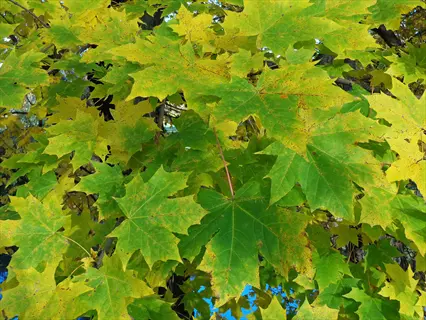
Legacy Sugar Maple
- Hardiness: Grows well in USDA Zones 4 through 8, making it one of the most widely adaptable sugar maple cultivars available to home gardeners across the eastern half of North America.
- Fall Color: Produces a brilliant progression from yellow through orange to deep red in autumn, often displaying all three colors simultaneously on a single canopy for several weeks.
- Disease Resistance: Rated among the most disease-resistant sugar maple cultivars, with strong tolerance to leaf tatter, tar spot, and anthracnose that often affect the species.
- Mature Size: Reaches about 15 meters (50 feet) tall with a spread of about 10 meters (35 feet), forming a dense oval crown ideal for providing shade in medium to large yards.
- Growth Rate: Grows at a moderate pace of about 30 centimeters (12 inches) per year once established, producing a thick, symmetrical canopy valued by landscapers over time.
- Best Use: Works as your specimen tree, street tree, or primary shade tree where you want a full-sized sugar maple with above-average pest resistance in your yard.
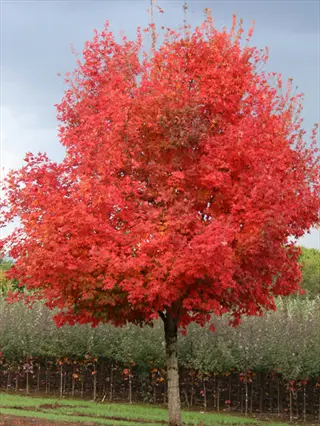
Flashfire Sugar Maple
- Hardiness: Suited for USDA Zones 4 through 7, performing best in regions with distinct cold winters and moderate summers that trigger its vivid autumn coloring.
- Fall Color: Known for producing some of the most intense orange-red fall foliage of any sugar maple cultivar, with color arriving earlier than most and lasting well into late autumn.
- Form: Develops a compact, upright-oval crown shape that fits well in yards where a full-spreading sugar maple canopy would be too wide for the available planting space.
- Mature Size: Reaches about 14 meters (45 feet) in height with a spread of around 9 meters (30 feet), making it a bit smaller than standard sugar maple specimens.
- Leaf Quality: Holds its leaves longer than many cultivars before dropping, which extends the ornamental season and provides a fuller canopy well into late October in most zones.
- Best Use: Ideal for your front yard as a specimen tree or accent planting where brilliant fall color is the primary goal and your growing space is limited.
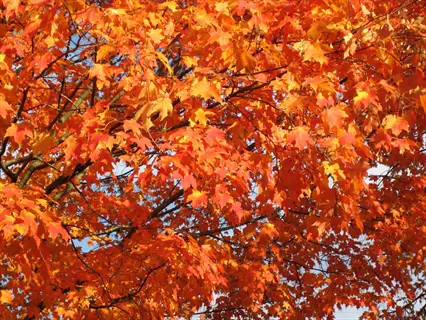
Caddo Sugar Maple
- Hardiness: Thrives in USDA Zones 5 through 9, making it the most heat-tolerant sugar maple cultivar available and a strong choice for gardeners in Oklahoma, Texas, and the upper South.
- Origin: Developed from a native Oklahoma population near the Caddo Nation region, where sugar maples adapted over thousands of years to hotter summers and drier conditions than the core range.
- Fall Color: Produces reliable orange to red fall foliage even in warmer climates where standard sugar maples often drop leaves early without developing their characteristic autumn palette.
- Drought Tolerance: Shows much better performance during summer dry spells than northern cultivars, though it still benefits from extra watering during long stretches without rain.
- Mature Size: Grows to about 15 meters (50 feet) tall with a more open crown than northern cultivars, providing good shade while tolerating higher temperatures.
- Best Use: Your top choice if you live in the southern or southwestern United States and want a genuine sugar maple outside the traditional cold climate growing range.
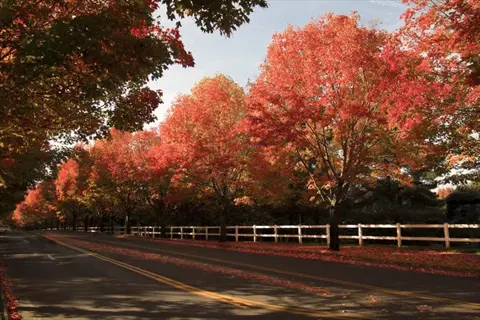
Autumn Splendor Sugar Maple
- Hardiness: Rated for USDA Zones 3 through 7, making it one of the best choices for very cold northern climates including Minnesota, Wisconsin, and the northern Great Plains region.
- Fall Color: Displays a reliable blend of yellow, orange, and red in autumn, with colors developing even in years when early frosts cut the display short for less cold-hardy cultivars.
- Cold Tolerance: Bred for performance in Zone 3 conditions with winter lows reaching minus 40 degrees Fahrenheit, surviving without major dieback or branch loss.
- Mature Size: Reaches about 14 meters (45 feet) in height with a 12-meter (40-foot) spread, forming a broad, rounded crown that provides excellent shade coverage in summer.
- Wind Resistance: Develops strong branch attachments and a sturdy trunk that stand up well to the high winds common in open northern landscapes and Great Plains properties.
- Best Use: Your best bet if you garden in the coldest parts of the sugar maple range where standard selections may suffer winter injury or inconsistent fall color.
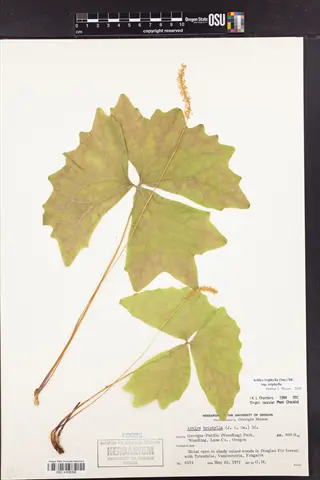
Oregon Trail Sugar Maple
- Hardiness: Performs well in USDA Zones 4 through 7, selected for its resistance to leaf tatter caused by late spring frosts and wind exposure common in open landscapes.
- Leaf Quality: Features thick, leathery leaves that resist the cosmetic browning and tearing that plagues thinner leaved sugar maples in windy or exposed planting sites.
- Fall Color: Turns a dependable orange to orange-red in autumn, providing consistent ornamental value year after year without the uneven coloring that some cultivars produce.
- Mature Size: Grows to about 15 meters (50 feet) tall with a 12-meter (40-foot) spread, forming a symmetrical oval crown that works well as a uniform planting along streets.
- Urban Performance: Tolerates moderate urban conditions better than the straight species, including some exposure to reflected heat from pavement and buildings in suburban settings.
- Best Use: An excellent choice for your property if you deal with wind, boulevard plantings, or any site where leaf tatter has been a persistent problem with other maples.

Unity Sugar Maple
- Hardiness: Suited for USDA Zones 4 through 7, developed as part of a multi-state cooperative breeding program focused on improving sugar maple performance in managed landscapes.
- Symmetry: Produces one of the most uniform, symmetrical oval crowns among sugar maple cultivars, making it a favorite of landscape architects for formal plantings and matching rows.
- Fall Color: Delivers a yellow-to-orange autumn display that is consistent from tree to tree, which matters when planting multiple specimens along a driveway or property boundary.
- Mature Size: Reaches about 15 meters (50 feet) in height with a 10-meter (35-foot) spread, maintaining its neat shape with minimal corrective pruning needed over the years.
- Branching Structure: Develops strong central leader growth with well-spaced scaffold branches that reduce the risk of storm damage and lower long-term maintenance pruning costs.
- Best Use: Works best if you want a formal landscape design, paired rows, or matched plantings where uniform shape and color across multiple trees is your top priority.
Identification and Features
Sugar maple identification gets easier once you know what to look for in each season. The sugar maple leaf has five-lobed leaves with smooth edges between the lobes. That smooth edge is the fastest way to tell it apart from red maple, which has jagged teeth between its lobes. Opposite branching is your other key clue. Pairs of buds and branches grow straight across from each other on every twig.
I get asked about sugar maple vs Norway maple more than any other tree question. Norway maple is an invasive species in many eastern states, so telling them apart matters. Here's the trick I teach every client. Snap a leaf stem and look at the sap. Milky white sap means Norway maple. Clear sap means sugar maple. That one test takes 5 seconds and works every time.
Sugar maple bark changes a lot as the tree ages. Young trees have smooth, light gray bark that looks almost like beech. Older trees develop dark vertical ridges and scaly plates that give the trunk a shaggy look after 50 years or so. The samaras spin down like little helicopters in fall and travel at least 100 meters from the parent tree. Below is a season guide to help you spot this tree all year long.
Spring: Flowers and New Leaves
- Flowers: Small greenish-yellow flowers appear in hanging clusters just before or alongside emerging leaves in April or May, often overlooked because they are not showy compared to ornamental fruit trees.
- Leaf Emergence: New leaves unfold with a reddish tint before turning bright green, and they are arranged in opposite pairs along the branch, a key feature shared only with ashes, dogwoods, buckeyes, and horse chestnuts.
- Branch Pattern: Look for opposite branching where pairs of buds and branches emerge straight across from each other on the twig. This rules out oaks, elms, and most other common hardwoods you might confuse it with.
Summer: Full Canopy and Samaras
- Leaf Shape: Mature leaves show five distinct lobes with smooth, rounded sinuses (spaces between lobes). Red maple leaves have jagged serrated edges and less deep sinuses, so you can tell them apart fast.
- Canopy Density: The thick, layered canopy casts deep shade throughout summer because sugar maple is one of the most shade-tolerant large trees in North America, rivaled only by American beech.
- Samaras: Paired winged seeds (samaras) ripen from green to yellowish-brown and helicopter-spin to the ground from September through October, dispersing at least 100 meters (330 feet) from the parent tree.
Fall: Peak Color Display
- Color Range: Foliage turns brilliant yellow, orange, and red, often with all three colors appearing simultaneously on the same tree as inner and outer leaves respond differently to shortening daylight.
- Color Trigger: Fall color comes from anthocyanin production triggered by shorter days and cool nights below 7°C (45°F), not by the first frost as many people believe.
- Duration: Peak color lasts two to three weeks in October depending on your latitude and local weather. Sugar maple is the centerpiece of autumn foliage tourism across New England and the Great Lakes.
Winter: Bark and Bud Clues
- Bark: Young trees have smooth, light gray bark that develops vertical furrows and rough plates over the decades. Trunks older than 50 years turn dark gray-brown with irregular, shaggy ridges you can spot from a distance.
- Buds: Winter buds are pointed, dark brown, and arranged in opposite pairs with about 6 visible bud scales. They sit much tighter to the twig than the plumper, rounded buds you see on red maple.
- Norway Maple Test: If uncertain, snap a leaf stem (or in winter, a small twig end) and check the sap: milky white sap means Norway maple while clear sap confirms sugar maple.
Maple Syrup and Wood Products
Maple syrup production depends on one simple fact about your trees. Sugar maple sap has a sap sugar content of about 2.5%, which is double what you get from red or silver maple. That's why it's the only species used for commercial syrup. Selective breeding has pushed some trees up to 7.4% sugar. You need about 34 gallons of sap to boil down just 1 gallon of finished syrup.
Maple syrup season runs from late winter into early spring when freeze and thaw cycles drive sap up through the trunk. Cold nights below freezing create pressure that pulls sap into the roots. Warm days above freezing push it back up. Tapping sugar maple means drilling a small hole, inserting a spout, and catching that flow in a bucket or tubing system. I tapped my first tree at age 12 and can still picture clear sap dripping into the pail on a sunny March morning.
In my years of visiting sugar bushes, I've seen the scale of this industry up close. The US produced 4.18 million gallons of syrup from 13.4 million taps in 2023. Vermont leads all states with over 2.55 million gallons per year. Quebec dwarfs even that with about 12 million gallons in 2019. If you buy maple syrup, it almost certainly came from a sugar maple.
Hard maple wood tells the other half of the economic story. Sugar maple lumber accounts for 130 million cubic meters of sawtimber across the US. The wood is dense, strong, and prized for flooring, furniture, cabinets, and bowling pins. Guitar makers and violin builders use it for necks and backs because it transfers sound well. The rare bird's eye maple pattern, with its tiny swirled dots across the grain, can push the value of a single board well above standard lumber prices. Your breakfast syrup and the hardwood floor under your feet may both come from the same species.
Ecology and Wildlife Value
Sugar maple ecology runs much deeper than you might expect. This tree is a major part of 7 forest cover types tracked by the USDA Forest Service. It shows up as a common partner in 17 more and an occasional one in 10 others. Few other hardwoods in the eastern US connect to so many forest types. If you walk through a Maple-Basswood forest, sugar maple is the anchor species holding it all together.
The shade tolerance of this tree gives it a huge edge in the climax forest. Young seedlings survive under dense canopy for decades, waiting for a gap to open up. Over time, sugar maple pushes out birch, aspen, and other sun loving trees. In my experience walking old growth stands in Vermont, sugar maple rules the canopy in forests left alone for over 150 years. That pattern repeats across the sugar maple habitat range.
Below ground, your sugar maple has a secret weapon. The roots form mycorrhizae links with soil fungi. These fungi help the tree pull in phosphorus it can't reach alone. The tree also uses a trick called allelopathy. Its roots send out chemicals that slow the growth of yellow birch and other nearby trees. Fallen leaves then build rich litter that raises your soil pH over time.
The wildlife value of a mature sugar maple is hard to beat for your property. Squirrels, chipmunks, and birds like evening grosbeaks feed on the samaras in fall. Deer browse the seedlings and voles chew the bark of young trees in winter. Older trees develop hollows that woodpeckers, owls, and wood ducks use for nesting. One threat you should watch for is invasive European earthworms in Great Lakes forests. These worms eat the leaf litter that seedlings need to survive.
Climax Forest Dominance
- Shade Tolerance: Sugar maple is among the most shade-tolerant large hardwoods in North America, rivaled only by American beech, allowing seedlings to survive under dense canopy for decades until a gap opens above them.
- Self-Perpetuation: In undisturbed forests, sugar maple replaces earlier species like birch and aspen because its seedlings tolerate deep shade while those competitors cannot survive without direct sunlight.
- Forest Cover Types: The USDA Forest Service lists sugar maple as a major component in 7 Society of American Foresters cover types and a common associate in 17 more types across the eastern half of the continent.
Below-Ground Partnerships
- Mycorrhizae: Sugar maple roots form both endotrophic and ectotrophic mycorrhizal partnerships with soil fungi, which help your tree access phosphorus and other nutrients in exchange for sugars produced by photosynthesis.
- Allelopathy: Roots release chemical compounds that slow the growth of yellow birch and other competing species nearby, giving sugar maple an added competitive advantage in the forest understory.
- Soil Building: Fallen sugar maple leaves break down to produce calcium-rich leaf litter that raises soil pH over time, creating conditions that further favor sugar maple over acid-tolerant competitors.
Wildlife Habitat and Food
- Seed Consumers: Samaras provide food for squirrels, chipmunks, white-footed mice, and birds including evening grosbeaks and purple finches during late summer and fall when seeds ripen and disperse.
- Browse and Bark: White-tailed deer browse sugar maple seedlings and saplings, and meadow voles and rabbits gnaw bark on young trees during winter, sometimes girdling and killing them.
- Cavity Nesting: Older sugar maples develop hollows used by woodpeckers, owls, wood ducks, and small mammals for nesting and overwintering, with large trees providing the biggest and most stable cavities.
Understory Threats
- Invasive Earthworms: Non-native European earthworms consume the thick leaf litter layer that sugar maple seedlings depend on for moisture and nutrients, reducing seedling survival rates in affected Great Lakes forests.
- Norway Maple Competition: Escaped Norway maple invades sugar maple habitat in forests near urban areas, casting even denser shade and producing more seeds, which pushes out native sugar maple seedlings.
- Deer Overpopulation: In forests with high deer numbers, sugar maple regeneration can stall for decades as deer pick off young seedlings, shifting the whole forest toward less tasty species.
Climate Threats and Tree Health
Sugar maple climate change is one of the biggest stories in forestry right now. A 25 year study by Oswald and colleagues found that 5 climate factors tie straight to crown health in Vermont sugar maples. Under a low emissions path, 55% of Vermont sugar maples face moderate to severe stress by 2071. Under high emissions, that number jumps to 84%. Sugar maple decline is not a future problem. It's happening now.
Here's the chain of cause and effect you need to understand. Rising winter low temps reduce freeze and thaw cycles. Fewer cycles mean less sap flow in your trees during maple syrup climate change projections. USGS models predict a 30% drop in sugar content across the species. The sugaring season could shift 15 to 30 days earlier by the end of this century. The sugar maple range shift may push peak sap zones about 400 kilometers north by 2100.
In my years working with sugar maple properties across New England, I've watched crown thinning get worse in trees that looked fine a decade ago. Reduced snowpack is a threat most people miss. Deep snow acts as a blanket that keeps roots warm in winter. Without it, roots suffer freeze damage that weakens the whole tree. Sugar maple diseases like verticillium wilt hit harder when trees are already stressed by heat or drought.
Pests add another layer of risk to your trees. The Asian longhorned beetle is moving north as winters get milder. This insect bores into hardwood trunks and can kill a mature sugar maple in a few years. Climate refugia will still exist in cooler, higher spots where sugar maples can find the cold winters they need. If you're planting new trees, pick cultivars that handle heat and consider the climate your property will have 20 to 30 years from now, not just today.
5 Common Myths
Sugar maples only grow in cold northern climates and cannot survive south of Pennsylvania or Ohio.
Sugar maples grow in USDA Hardiness Zones 3 through 8, and heat-tolerant cultivars like Caddo thrive as far south as Oklahoma and Texas.
Tapping a sugar maple for sap seriously damages the tree and shortens its lifespan significantly.
A properly placed tap hole heals within one to two years, and healthy trees have been tapped annually for over a century without measurable harm.
All maple trees produce sap that is equally good for making maple syrup.
Sugar maple sap averages 2.5 percent sugar, roughly double that of red or silver maples, making it the only species used for commercial syrup production.
Sugar maples are fast-growing trees that reach full height within 20 to 30 years of planting.
Sugar maples grow about 30 centimeters (12 inches) per year for the first 30 to 40 years and take 80 to 100 years or more to reach full mature height.
You can easily tell a sugar maple from a Norway maple just by looking at the leaf shape alone.
Their leaves look similar, but breaking a Norway maple leaf stem releases white milky sap, while a sugar maple leaf stem produces clear sap, making this the most reliable quick test.
Conclusion
The sugar maple tree stands out for 3 big reasons. It gives you the most stunning fall foliage of any North American hardwood. It's the only species that makes commercial maple syrup possible. And it produces some of the finest lumber on the continent. Acer saccharum covers 12.5 million hectares across the eastern US. It holds 130 million cubic meters of sawtimber. Few trees match that reach.
Sugar maple care and sugar maple planting are worth your time because this tree gives back for centuries. A healthy sugar maple can live 300 to 400 years in the right spot. The Comfort Maple in Pelham, Ontario is 400 to 500 years old with a trunk over 6 meters around. That's the kind of lasting mark you can leave on your property and your community.
Climate change is real, but it doesn't mean you should give up on this species. Pick cultivars that match your zone and plan for the conditions your area will have in 20 to 30 years. Sugar maple forests will hold on in climate refugia even under tough scenarios. Your support for sustainable forestry and smart planting choices helps keep this species strong for the next generation.
In my years of working with these trees, nothing beats watching a sugar maple you planted grow into a full canopy that shades your whole yard. A tree you put in the ground today will still be making fall foliage and maple syrup long after you're gone. That makes the sugar maple tree one of the most meaningful things you can add to your land.
External Sources
Frequently Asked Questions
What are the disadvantages of sugar maples?
Sugar maples are sensitive to road salt, compacted soil, and air pollution, making them challenging for urban streetscapes. They also have shallow root systems that can lift sidewalks and are susceptible to several pests and diseases including verticillium wilt.
What is the difference between a sugar maple and a regular maple tree?
Sugar maple has higher sap sugar content (2.5 percent versus roughly 1 percent in other maples), five-lobed leaves with smooth edges between lobes, and denser hardwood. Red and silver maples have more serrated leaf edges and produce less syrup-worthy sap.
Why are they called sugar maples?
They are called sugar maples because their sap contains roughly 2.5 percent sugar, about double that of other maple species. This high sugar content makes them the only maple used commercially for syrup production.
How big do sugar maples get?
Mature sugar maples typically reach 27 to 37 meters (90 to 120 feet) in height with trunk diameters of 76 to 91 centimeters (30 to 36 inches). The largest known specimen had a trunk diameter of 209 centimeters (82.1 inches).
How big is a 10 year old sugar maple tree?
A 10-year-old sugar maple typically stands 3 to 3.7 meters (10 to 12 feet) tall, growing at a rate of roughly 30 centimeters (12 inches) per year during its first 30 to 40 years.
What is the prettiest maple tree?
Many arborists consider the sugar maple the prettiest maple for its brilliant multi-colored autumn display of yellow, orange, and red. Among cultivars, Legacy and Flashfire are often cited for exceptional fall foliage.
Is sugar maple harder than oak?
Yes, sugar maple (also called hard maple) has a Janka hardness rating of about 1,450 pounds-force, which is harder than most oaks. Red oak rates around 1,290 and white oak around 1,360 on the same scale.
What countries have sugar maples?
Sugar maples grow natively in the eastern United States and southeastern Canada. They have been planted ornamentally in parts of Europe and eastern Asia but are not commercially significant outside North America.
What is Canada's national tree?
The sugar maple (Acer saccharum) is not officially the national tree, but the maple leaf on the Canadian flag is widely associated with the genus. In practice, the maple is regarded as the national tree of Canada.
What is another name for a sugar maple tree?
Common alternate names include hard maple, rock maple, and the scientific name Acer saccharum. In the lumber industry, it is typically marketed as hard maple.