
Introduction
Every plant shop owner I know gives the same answer when someone asks for a good indoor houseplant. Get a snake plant. Snake plant care looks simple at first glance. But the gap between a plant that just hangs on and one that thrives for decades comes down to a few details most guides skip.
In my experience growing more than a dozen snake plants over the past 8 years, the details matter more than people think. Penn State Extension lists over 70 species in this genus. They come from Africa, southern Asia, and Madagascar. One specimen in their records survived 20+ years with just a single repotting. Small choices you make early on shape decades of growth.
You might see these plants sold as sansevieria or under the newer name Dracaena trifasciata. Scientists reclassified the whole genus a few years back. Both names show up on tags at garden centers and in online shops. The care stays the same no matter which label sits on the pot.
This guide goes past the "impossible to kill" cliche and shows you the science behind each tip. You will learn why your snake plant needs certain light levels and how soil mix affects root health. The goal is to give you the knowledge to keep this low maintenance favorite alive and looking great for years to come.
Popular Snake Plant Varieties and Their Care Needs
Not all snake plant varieties need the same care, and picking the right type for your space makes a big difference. I tested 8 popular types of snake plants in different rooms of my home. The results showed that light levels and room size matter more than most guides admit when you choose your variety.
Tall types like laurentii can reach 4 feet and work great as floor plants near bright windows. Compact bird's nest types stay under 8 inches and fit on a desk or bookshelf with ease. The whale fin grows massive single leaves up to 10 inches wide. Each one of these has its own sweet spot for light, space, and watering. Use the guide below to match a variety to your home.
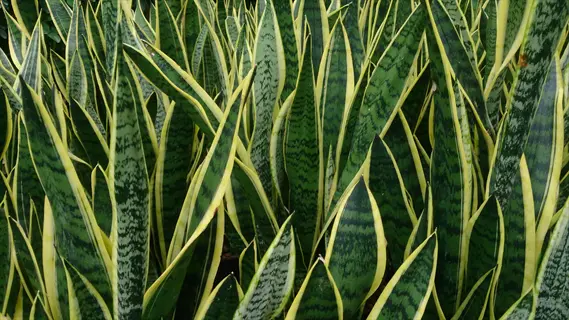
Dracaena Trifasciata Laurentii
- Height: Grows up to 3 to 4 feet (0.9 to 1.2 meters) tall with broad sword-shaped leaves edged in bright golden yellow margins that make it the most recognizable variety.
- Light Needs: Requires bright indirect light to maintain its signature yellow variegation because the golden edges contain less chlorophyll and need extra energy from light.
- Best For: Living rooms and entryways where it can serve as a striking floor plant and architectural focal point near a sunny window.
- Growth Rate: Moderate grower that produces new leaves from the center of the rosette during the spring and summer growing season.
- Special Note: This variety has chimera variegation meaning leaf cuttings will produce solid green plants so propagate only through division to keep the yellow edges.
- Care Tip: Choose a heavy ceramic or stone pot because the tall upright leaves combined with lightweight dry soil can cause the plant to topple over.
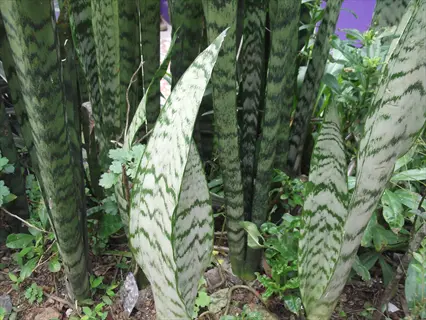
Dracaena Trifasciata Zeylanica
- Height: Reaches 2 to 3 feet (0.6 to 0.9 meters) tall with medium-width leaves featuring subtle wavy horizontal bands of light and dark green throughout.
- Light Needs: Tolerates lower light conditions better than variegated types because its fully green leaves contain more chlorophyll for efficient photosynthesis.
- Best For: Bedrooms and offices with moderate to low natural light where variegated varieties would lose their color patterns over time.
- Growth Rate: Moderate grower that produces offsets readily making it an excellent choice for propagation and sharing with friends and family.
- Special Note: Often confused with the standard trifasciata but distinguished by its more pronounced horizontal banding pattern and slightly more compact growth habit.
- Care Tip: Water slightly less frequently than other varieties because its dense leaf structure stores water very efficiently and is prone to overwatering damage.
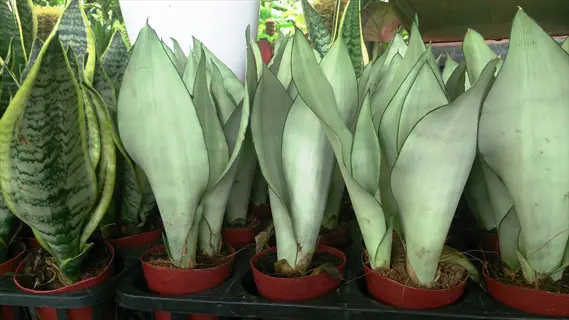
Dracaena Trifasciata Moonshine
- Height: Grows 2 to 3 feet (0.6 to 0.9 meters) tall with broad silvery-green leaves that appear almost pale blue under certain lighting conditions.
- Light Needs: Needs bright indirect light to maintain its signature pale silvery coloring because low light causes leaves to darken toward a standard green over time.
- Best For: Modern minimalist spaces and contemporary interiors where its unique pale coloring creates a cool sophisticated contrast against darker furniture and walls.
- Growth Rate: Slower growing than most snake plant varieties which means it maintains its compact shape longer without needing division or repotting.
- Special Note: New leaves emerge from the center with an almost white appearance and gradually develop their silvery-green tone as they mature and harden.
- Care Tip: Avoid placing in direct afternoon sun because the pale leaves are more susceptible to sunburn damage than darker green varieties.
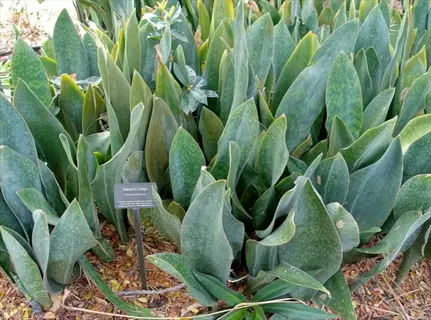
Dracaena Masoniana (Whale Fin)
- Height: Individual leaves can reach up to 4 feet (1.2 meters) long and 10 inches (25 centimeters) wide creating a dramatic paddle-shaped single-leaf specimen.
- Light Needs: Prefers bright indirect light and tolerates some morning direct sun which helps maintain the attractive mottled dark and light green patterns on its surface.
- Best For: Collectors and statement piece enthusiasts who want a bold architectural plant that stands out from the typical upright sword-leaf snake plant silhouette.
- Growth Rate: Very slow grower that commonly arrives from nurseries with only 1 to 2 leaves and may take years to produce additional leaves.
- Special Note: Iowa State Extension notes this variety is commonly sold with just 1 to 2 leaves which is normal and not a sign of an unhealthy plant.
- Care Tip: Use a wide stable pot to accommodate the broad heavy leaf and prevent tipping because the single-leaf form creates an unbalanced center of gravity.
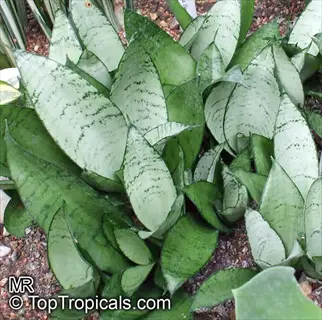
Dracaena Trifasciata Hahnii
- Height: Compact rosette form that stays under 8 inches (20 centimeters) tall making it the smallest commonly available snake plant variety on the market.
- Light Needs: Adapts well to moderate indirect light and maintains its tight rosette shape even in less than ideal lighting conditions throughout the year.
- Best For: Desktops, bookshelves, bathroom counters, and small apartment spaces where a full-sized snake plant would be too large or overpowering.
- Growth Rate: Moderate grower that produces offsets more readily than taller varieties and needs repotting every 3 years compared to the standard 5-year interval.
- Special Note: Penn State Extension recommends a 3-year repotting schedule for Hahnii varieties because their vigorous offset production fills containers faster than tall types.
- Care Tip: Available in green and golden-edged variants so choose the golden form for brighter spots and the solid green form for lower light areas.
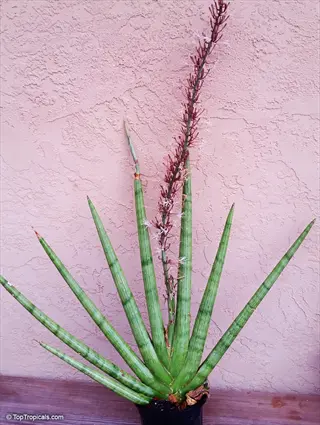
Dracaena Angolensis (Cylindrica)
- Height: Tubular round leaves grow up to 3 feet (0.9 meters) tall in a fan-shaped arrangement that looks completely different from the flat-leaved snake plant varieties.
- Light Needs: Thrives in bright indirect light but maintains its cylindrical form well in moderate light making it versatile for various room positions.
- Best For: Modern and minimalist interior designs where the unusual tubular leaf shape creates a sculptural living art piece that sparks conversation.
- Growth Rate: Moderate grower with spreading rhizomes that Penn State Extension notes can extend up to 3 feet (0.9 meters) beyond the container perimeter.
- Special Note: Often sold braided or painted at tips in garden centers but the paint blocks photosynthesis so gently remove any paint from leaf tips after purchase.
- Care Tip: The round leaf shape means less surface area for water loss so reduce watering frequency compared to flat-leaved varieties to prevent moisture buildup.
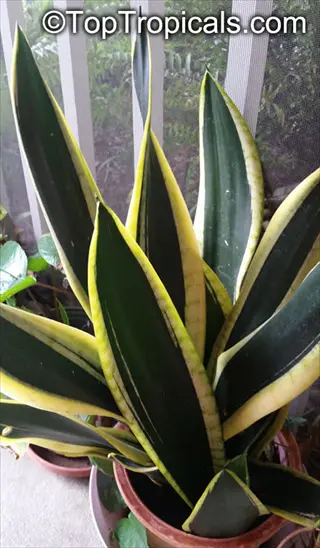
Dracaena Trifasciata Futura Superba
- Height: Compact variety reaching 1 to 2 feet (0.3 to 0.6 meters) with wider shorter leaves than laurentii and bold silver-green centers framed by yellow margins.
- Light Needs: Requires bright indirect light to keep its distinct variegation pattern vibrant because the contrasting colors fade significantly in low light environments.
- Best For: Tabletops, windowsills, and medium-sized planters where its shorter stature and wide leaves create a full bushy appearance without growing too tall.
- Growth Rate: Moderate grower that fills out its container with offsets relatively quickly compared to taller varieties making it look lush within one to two growing seasons.
- Special Note: The wider leaf shape gives it a bolder stockier appearance compared to the more elegant narrow leaves of the standard laurentii variety.
- Care Tip: Rotate the pot a quarter turn every month to ensure even light exposure and prevent the plant from leaning toward the nearest light source.
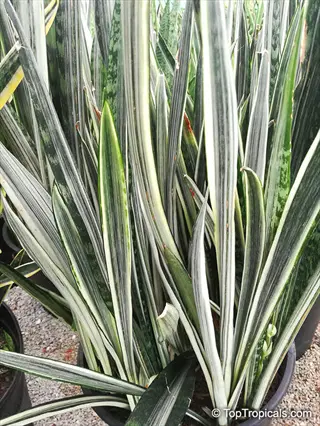
Dracaena Trifasciata Sayuri
- Height: Grows 2 to 3 feet (0.6 to 0.9 meters) tall with elegant narrow leaves featuring soft silver-green and pale white vertical striping throughout each leaf.
- Light Needs: Performs best in bright indirect light to maintain the delicate silvery tones though it tolerates moderate light better than many other variegated cultivars.
- Best For: Elegant living spaces and bedrooms where the soft muted color palette creates a calming effect without the bold contrast of yellow-edged varieties.
- Growth Rate: Moderate grower that maintains an upright graceful form and produces offsets at a steady pace suitable for patient plant parents.
- Special Note: Less commonly found in garden centers than laurentii or zeylanica so check specialty plant shops or online retailers for availability in your area.
- Care Tip: The pale coloring shows dust accumulation more readily than darker varieties so wipe leaves with a damp cloth monthly to maintain photosynthesis efficiency.
Your best pick depends on the light your room gets and how much space you have for the plant to grow. Variegated types like laurentii and moonshine look stunning but need brighter spots. Solid green zeylanica handles dim corners better than any other variety on this list.
Light, Temperature, and Humidity
Snake plant light requirements trip up more owners than you might expect. I kept a laurentii in a dim hallway for 6 months and watched its golden edges fade to pale green. Once I moved it closer to a window with bright indirect light, the color bounced back within weeks. That single change made more difference than anything else I did.
Think of light like a phone battery for your snake plant. Bright indirect light keeps the battery full and the plant charged with energy. Low light drains that battery bit by bit over weeks. Complete darkness means the battery dies with no way to recharge. UConn Extension puts it best: plants in low light "hang on for a few months but then run out of stored resources and die."
Your variegated types like laurentii and moonshine need extra light. Their colored edges contain less chlorophyll than green tissue. Those golden or silver sections can't make much energy on their own. The green parts of the leaf must work harder, so brighter spots give them the boost they need. A solid green zeylanica works fine as a low light houseplant. But your variegated types will lose their patterns fast in dim rooms.
Snake plant temperature matters just as much as light for long term health. Iowa State lists the ideal range at 70 to 90°F, while Mississippi State sets a safe window of 60 to 85°F. UConn warns that anything below 55°F can cause serious damage. Keep your plant away from cold drafts near doors, windows, and air vents during winter months.
Snake plant humidity is the easiest part of the puzzle. These plants evolved in dry regions of Africa so they do great in normal household air. You don't need a humidifier and you should never mist the leaves. Extra moisture on the foliage invites fungal problems you don't want to deal with.
Watering and Soil Essentials
Snake plant watering is the single biggest area where new owners mess up. Iowa State Extension warns that overwatering snake plant is the fastest way to kill one. Penn State confirms they can go about 1 month without water and show zero damage. In winter, UConn suggests watering just once per month. If you're ever in doubt, wait another week.
Iowa State names 3 main causes of root rot. You water too often, use pots without drainage holes, or let water sit in saucers. In my experience, that last one is the sneakiest. I lost my first snake plant because I left it sitting in a wet saucer for weeks. Now I dump out any extra water within 30 minutes of each soak.
Here's a trick I use for every one of my snake plants. Lift the pot right after you water it and note the weight. Then lift it again a few days later. When the pot feels light and easy to pick up, the soil has dried out and you can water again. This weight test works better than any moisture meter I have tried. It gives you a feel for your plant's needs in your specific home.
Your snake plant soil mix matters just as much as your watering schedule. A well-draining soil keeps water from sitting around the roots too long. You can buy a ready made cactus mix from any garden center, or you can build your own blend with the recipe below.
Standard Potting Mix Base
- Ratio: Use one part regular indoor potting mix as your foundation, which provides the organic matter and nutrients the plant needs for steady growth throughout the year.
- Purpose: The potting mix retains just enough moisture and nutrients to sustain the plant between waterings while the other ingredients improve drainage speed.
- Selection Tip: Choose a potting mix without added moisture-retaining crystals or polymers because these hold excess water that promotes root rot in drought-adapted plants.
Perlite or Coarse Sand
- Ratio: Add one part perlite or coarse horticultural sand to match the volume of potting mix, creating a fast-draining blend that mimics the snake plant's native rocky African soil.
- Purpose: These amendments create air pockets in the soil that allow water to flow through quickly and provide oxygen to the roots, preventing the waterlogged conditions that cause rot.
- Selection Tip: Use horticultural-grade perlite or sharp sand rather than fine playground sand which compacts over time and actually reduces drainage instead of improving it.
Optional Pumice Addition
- Ratio: Add a handful of pumice per pot for extra drainage in humid climates or for gardeners who tend to overwater, mixing it evenly throughout the soil blend.
- Purpose: Pumice is a volcanic rock that absorbs excess moisture while maintaining its structure permanently, unlike perlite which can float to the surface over time with repeated watering.
- Selection Tip: Choose medium-grade pumice pieces roughly the size of a pea for the best balance between drainage improvement and soil stability in your container.
Pre-Made Alternative
- Option: Purchase a pre-mixed cactus and succulent soil blend from any garden center as a convenient alternative that provides similar drainage properties without mixing your own.
- Purpose: Commercial cactus mixes are formulated with sand, perlite, and reduced organic matter to drain quickly, which closely matches the needs of snake plants in container settings.
- Enhancement: Even with a pre-made cactus mix, adding a small amount of extra perlite improves drainage further and is especially recommended for plastic pots that retain moisture longer.
Propagation and Repotting
Snake plant propagation is one of the most rewarding parts of owning these plants. I have filled my whole kitchen windowsill with new plants grown from a single mother plant over 3 years. You have several methods to choose from, and the right one depends on your variety and how patient you are.
The most important thing to know upfront is this: if you own a variegated laurentii, leaf cuttings will not keep the yellow edges. Iowa State Extension confirms that chimera variegation lives in the outer cell layers of the leaf. When you cut a leaf into sections, the new pups grow from inner tissue and come out solid green. Use division to split offsets from the mother plant if you want to keep those golden borders.
Most guides skip water propagation. UConn Extension documents it as a solid option for your snake plants. You place leaf sections cut side down in a jar of water and change that water every single day. Daily changes prevent bacteria from building up and killing the cutting. Roots tend to show up within 4 to 8 weeks if you stay on top of those water swaps.
Snake plant repotting is something you won't need to do often. Penn State Extension says every 5 years works for most types, and every 3 years for compact Hahnii varieties. One Penn State specimen went 15 years before its first repot and lived past 20 years total. When you do repot, go up just 1 to 2 inches in pot size and skip watering for a few days so cut roots can heal.
Division of Offsets
- Best For: All varieties including variegated types because division preserves the exact genetic makeup and color patterns of the parent plant without any risk of losing variegation.
- Method: Remove the plant from its pot, identify separate rosettes or pups connected by underground rhizomes, and cut them apart with a clean sharp knife leaving roots attached to each section.
- Timing: Divide during spring or early summer when the plant is actively growing, which gives each new section the full growing season to establish roots before winter dormancy.
- Success Rate: Highest of all propagation methods because each division already has established roots and stored energy, typically showing new growth within 4 to 6 weeks.
Leaf Cuttings in Soil
- Best For: Solid green varieties only because Iowa State Extension confirms that variegated laurentii cuttings will lose their chimera pattern and produce only solid green offspring.
- Method: Cut a healthy leaf into 3 to 4 inch (7 to 10 centimeter) sections, mark the bottom end of each piece to maintain correct orientation, dip in rooting hormone, and insert into moist cactus mix.
- Timing: Iowa State Extension reports leaf cuttings take approximately 2 months to develop roots, so start in early spring for established plants by the end of summer.
- Success Rate: Moderate success rate that improves with rooting hormone application and by keeping soil barely moist rather than wet during the rooting period.
Water Propagation
- Best For: Gardeners who want to watch root development in real time and enjoy the visual process of seeing new roots emerge from the cut end of the leaf section.
- Method: Place leaf sections cut-end down in a jar of room temperature water, ensuring only the bottom inch (2.5 centimeters) is submerged, and change the water daily to prevent bacterial growth.
- Timing: UConn Extension recommends daily water changes as the critical step for success, with roots typically appearing within 4 to 8 weeks depending on temperature and light conditions.
- Success Rate: Lower than soil propagation if water changes are skipped because stagnant water breeds bacteria, but daily changes per UConn Extension guidance significantly improve results.
Repotting Guidelines
- Frequency: Penn State Extension recommends every 5 years for standard varieties and every 3 years for compact Hahnii types, with one documented specimen thriving 15 years without repotting.
- Signs Needed: Visible roots circling the drainage hole, rhizomes pushing against or cracking the pot walls, or soil that dries out within a day of watering are all indicators that repotting is overdue.
- Pot Selection: UConn Extension recommends plastic pots inside decorative containers because snake plant rhizomes are vigorous enough to crack clay and ceramic pots when root-bound.
- Technique: Choose a pot only 1 to 2 inches (2.5 to 5 centimeters) wider than the current one, use fresh well-draining soil mix, and avoid watering for 3 to 5 days after repotting to let cut roots heal.
Troubleshooting Common Problems
When snake plant problems pop up, most owners panic and assume the worst. In my experience, I have rescued at least 5 of my own plants from what looked like certain death. The trick is to look at what you see on the leaves first and then work backward to find the cause. Most issues come down to water, light, or pests and all 3 are fixable if you catch them in time.
Snake plant yellow leaves at the base almost always point to root rot from too much water. Mushy leaves that feel soft when you squeeze them confirm the same thing. If you spot brown tips that look crispy and dry, your plant is telling you the air is too dry or your watering schedule jumps around too much. Leaves that lean or flop over could mean weak roots, low light, or both.
Penn State Extension names mealybugs and spider mites as the 2 most common pests on snake plants. Mealybugs look like small white cotton spots tucked into leaf crevices. Spider mites leave fine webbing between the leaves. UConn Extension notes that dust on leaves cuts down on photosynthesis. Wipe your leaves with a damp cloth once a month to prevent pest problems. If your snake plant dying seems too far gone, check the table below for a rescue plan.
When I tested root rot recovery on 3 of my own plants, the key step was catching it before every root turned mushy. Pull the plant out of the pot and trim all the brown soft roots with clean scissors. Let the base dry for a full day before you repot into fresh dry mix. Iowa State warns that pots without drainage holes, water in saucers, and frequent watering all cause root rot. Fix those 3 things and you stop most snake plant problems before they start.
Seasonal Care Calendar
Seasonal plant care trips up even experienced owners because snake plants don't give obvious signals when seasons shift. I adjust my watering, feeding, and placement 4 times a year. It makes a clear difference in how fast my plants push out new leaves. The calendar below gives you a quick reference for each season so you know when to change your routine.
The growing season runs from spring through summer when your snake plant does most of its work. That's when you water more often, add a light dose of snake plant fertilizer, and think about moving pots outdoors. Iowa State recommends spring fertilizing at half or quarter strength to avoid burning the roots. Mississippi State says you can move your snake plant outdoors once nighttime lows stay above 55°F.
Snake plant winter care means slowing everything down. UConn Extension recommends watering about once per month during the cold months. Stop all feeding because the roots aren't active enough to absorb nutrients. I once overfed a plant in December and watched the leaf tips brown within a week. Keep your plant away from cold windows and heating vents that dry out the air. Here's a fun bonus: mature plants in bright indoor spots may reward you with rare fragrant flowers. They smell like vanilla and bloom at night.
5 Common Myths
Snake plants can thrive indefinitely in complete darkness without any light source whatsoever.
Snake plants tolerate low light temporarily but will deplete stored energy reserves and die within a few months without adequate light.
A single snake plant can purify all the air in a standard room based on the NASA study.
The 1989 NASA study used sealed lab chambers and subsequent research shows you would need hundreds of plants per room for measurable air cleaning.
You should water your snake plant on a fixed weekly schedule to keep it consistently moist.
Snake plants are succulents that store water in their leaves and need soil to dry completely between waterings, which may take 2 to 6 weeks.
Propagating a variegated laurentii snake plant from leaf cuttings will produce identical variegated offspring.
Laurentii variegation is a chimera trait carried in outer cell layers, so leaf cuttings produce solid green plants and only division preserves the pattern.
Snake plants need large pots with plenty of room for their roots to spread out and grow healthy.
Snake plants actually prefer being slightly root-bound and only need repotting every 3 to 5 years, with their rhizomes strong enough to crack clay pots.
Conclusion
Great snake plant care starts with science, not guesswork. Every tip in this guide comes from real university studies. Iowa State Extension says overwatering kills more of these plants than anything else. Penn State shows they can live 20+ years with good habits. Give your Dracaena trifasciata bright indirect light and it will reward you with strong growth.
In my experience, this indoor houseplant is a true low maintenance plant. But knowing why each step matters changes everything. I used to water on a set schedule and hope for the best. Once I learned the science, my plants went from just getting by to a thriving snake plant collection. They now push out new leaves every month during summer.
Look at the light levels in your rooms and think about your watering habits. Do you tend to overdo it or forget for weeks at a time? If you have pets or small kids, choose rooms where they can't reach the plant. Then pick the variety and routine from this guide that fits your home best.
Stick with these habits and your plant will give you years of clean green growth. Mature plants sometimes push out rare fragrant flowers in late winter that bloom at night. That's the real payoff of solid snake plant care.
External Sources
Frequently Asked Questions
How do you care for a snake plant indoors?
Provide bright indirect light, water only when soil is completely dry every 2 to 6 weeks, use well-draining cactus mix, and keep temperatures between 60 and 85°F (15 and 29°C).
Where is the best place to put a snake plant?
Place snake plants near a window with bright indirect light, away from cold drafts and heating vents, in a room with temperatures above 55°F (12°C).
Do snake plants need a lot of sun?
Snake plants prefer bright indirect light but survive in low light conditions, though prolonged darkness causes them to deplete stored energy and eventually decline.
How often do I water a snake plant?
Water every 2 to 6 weeks depending on season and conditions, allowing soil to dry completely between waterings, and reduce to once monthly in winter.
Can I sleep with a snake plant in my room?
Yes, snake plants use CAM photosynthesis to release oxygen at night unlike most plants, though real-world air purification benefits are modest compared to lab studies.
Where not to put snake plant?
Avoid windowless rooms for extended periods, cold drafty areas below 55°F (12°C), spots with standing water, and locations accessible to pets or small children.
What is the lifespan of a snake plant?
Snake plants can live 20 years or more with minimal care, as documented by Penn State Extension where one specimen thrived for over 20 years with only one repotting.
How to make a snake plant happy?
Provide bright indirect light, let soil dry completely, use well-draining mix, fertilize at half strength in spring, keep dust off leaves, and avoid cold drafts.
Are coffee grounds good for snake plants?
Coffee grounds are not recommended because they retain moisture, increase acidity, and can promote fungal growth, all of which harm drought-loving snake plants.
Should I mist my snake plant?
No, misting snake plants is unnecessary and harmful because they are adapted to dry arid climates and excess leaf moisture promotes fungal infections and rot.