
Introduction
The silver maple tree stirs up strong feelings in the tree world. Some folks love it for the fast shade it throws across a yard in just a few years. Others hate the weak branches and messy seeds that cover the lawn each spring. So which side has it right?
I've grown Acer saccharinum on my own land for over 15 years now. In my experience, the truth sits right in the middle. This tree is the fastest growing maple in North America. It's also the first maple to bloom on the whole continent, pushing out flowers as early as February.
Think of silver maple as the marathon runner of shade trees. It covers ground faster than almost any native shade tree you can plant. But it needs the right course to run well. USDA data shows it thrives across varied climate zones as a tough native species.
This guide uses USDA Forest Service data to sort fact from fiction. You'll get real growth numbers, care tips that work, wildlife facts most people miss, and cultivar picks that fix the biggest complaints.
Silver Maple Identification
Silver maple identification gets tricky because people mix it up with red maple all the time. I've seen this mistake at garden centers, on nature walks, and even in tree care manuals. Once you know 4 key features to check, you'll spot Acer saccharinum from across the street.
Start with the silver maple leaves. Each one has five-lobed leaves with deep cuts and measures 4 to 6 inches across. Flip the leaf over and you'll see the silvery white underside that gives this tree its name. Red maple leaves have less pronounced cuts between the lobes.
Silver maple bark changes as the tree ages. Young trees show smooth gray bark that looks a lot like beech. Mature trees grow shaggy strips that curl outward from the trunk like wood shavings. This peeling texture is one of the fastest ways to confirm what you're looking at.
Here's a trick most guides skip for silver maple identification in winter. Snap a small twig and crush it between your fingers. Silver maple twigs give off a faint bad smell that red maple twigs don't have. The buds also look different. Silver maple buds are plump and round while red maple buds come to a sharper point. Silver maple fall color ranges from pale yellow to light orange depending on your soil and local temps.
Leaves and Foliage
- Shape: Five deeply cut lobes with sharp toothed margins and narrow V-shaped sinuses between lobes, each leaf measuring 4 to 6 inches (10 to 15 centimeters) across.
- Underside: Distinctive silvery white color on the lower leaf surface that flashes in the wind, giving the tree its common name of silver maple.
- Fall Color: Variable display ranging from pale yellow to light orange, occasionally showing muted red tones depending on local soil chemistry and fall temperatures.
Bark and Trunk
- Young Trees: Smooth gray bark with small lenticels during the first 10 to 15 years of growth, similar in appearance to red maple and beech bark.
- Mature Trees: Shaggy gray bark that peels in long thin strips curling outward from the trunk, developing deep furrows and a rough plated texture over time.
- Trunk Size: Mature trunks reach 36 to 48 inches (91 to 122 centimeters) in diameter, supporting a broad rounded to oval crown.
Flowers and Seeds
- Bloom Time: First maple to bloom in North America, producing greenish-yellow to reddish flower clusters as early as February, well before any leaves appear on the branches.
- Seed Type: Paired winged samaras (helicopters) that are the largest of any native United States maple species, each wing measuring 1.5 to 2.5 inches (3.8 to 6.4 centimeters) long.
- Seed Schedule: Seeds ripen and release within a two-week window in late spring, germinating immediately upon contact with moist soil without any stratification period.
Twigs and Buds
- Twig Color: Reddish-brown to dark brown twigs with a slightly glossy surface and opposite branching pattern that distinguishes maples from other hardwood genera.
- Bud Shape: Rounded red to reddish-brown buds clustered at twig tips, noticeably plumper and rounder than the pointed buds found on red maple and sugar maple.
- Odor Test: Broken or crushed silver maple twigs produce a faint unpleasant odor that helps confirm identification when leaves are absent during winter months.
Silver Maple Growth and Size
How fast do silver maples grow? The answer depends on how you treat the soil before you plant. USDA data shows a huge gap between prepared and unprepared sites. Trees on prepared ground reached 12.5 feet in just 5 years while trees on raw ground hit only 1.6 feet. That's a 7.6 times difference from site prep alone.
The silver maple growth rate under good conditions runs 3 to 7 feet of annual growth in height. Trunk width adds 0.5 to 1 inch per year at the same time. That makes it the fastest growing maple in North America by a wide margin. No other native maple comes close to that speed.
Silver maple height tops out at 90 to 120 feet when the tree is fully mature. Crown spread can reach over 100 feet across on open grown trees. The National Champion silver maple measured 125 feet tall with a 111 foot crown spread. These are big trees that need real room to grow.
In my experience, silver maples on good soil go from tiny whips to towering shade trees in under a decade. I tested this on my own land and the results matched the USDA numbers above.
Planting and Care Guide
Silver maple care starts with picking the right spot and giving the tree a solid foundation. I learned this the hard way when I first planted one too close to my driveway. The silver maple root system spreads wide, with roots reaching up to 49 feet out from the trunk. Root depth maxes out at about 55 inches in clay soil. That means planting distance from house or driveway should be at least 50 feet to stay safe.
When you learn how to plant silver maple the right way, soil prep makes all the difference. USDA research proved that prepared sites grow trees 7.6 times faster in the first 5 years. Mix 56 grams of slow release 19-5-17 fertilizer into the planting hole. Silver maple soil requirements are broad, with a soil pH range of 4.5 to 7.0 working well for this species.
Pruning silver maple while it's young is the best thing you can do for its future. Iowa State Extension says to promote a single central leader and cut out weak branch forks early. I prune my silver maples every late winter before buds open. This timing lets you see the branch structure and make clean cuts before spring growth kicks in.
For ongoing silver maple care, keep an eye on water during dry spells in the first 3 years. This tree does best with 32 to 60 inches of rain per year and needs at least 120 frost free days in your zone. Check for disease signs each fall and rake up dropped leaves to cut down on fungal problems the next season.
Wildlife and Ecological Value
Most guides skip the silver maple wildlife value, but it's one of the best reasons to plant this tree on your land. In my experience, no other fast growing shade tree pulls in as many species through the year. You'll see birds, mammals, and bugs put this tree to use in every season.
Your silver maple works like a wildlife calendar. It blooms first among all maples in February, giving early bees the nectar they need. Squirrels eat the buds as critical food in late winter. Summer brings moth caterpillars that feed your nesting songbirds. By fall, wood duck nesting kicks off in the large trunk cavities that older trees form. The silver maple ecological importance runs through all 4 seasons.
USDA data ranks silver maple far above other trees on wet sites for wood duck nesting and goldeneye duck nesting. Beavers in Ohio also rank it high as a food tree. This riparian habitat role is key for your local ecosystem. Silver maple leads the floodplain forest on sites that flood over 25% of the time. Its roots hold your stream banks in place, proving its native plant value as a keystone species.
Waterfowl and Cavity Nesters
- Wood Ducks: Silver maple ranks far above all other dominant tree species on wet and mesic sites as nesting habitat for wood ducks, providing large natural cavities in mature trunks.
- Goldeneye Ducks: Common goldeneye ducks also use silver maple cavities for nesting at rates higher than those found in other floodplain tree species.
- Cavity Formation: The soft wood and tendency to develop hollow trunks with age create ideal nesting chambers for owls, woodpeckers, and other cavity-dependent bird species.
Mammals and Furbearers
- Squirrels: Silver maple buds serve as a vital food source during the critical late-winter and early-spring period when other food sources are scarce or depleted.
- Beavers: Silver maple ranks high as beaver food in southeastern Ohio, where beavers harvest both the bark and smaller branches for food storage and dam construction.
- Raccoons and Opossums: Hollow silver maple trunks provide denning sites for raccoons, opossums, and other small mammals throughout the tree's range in eastern North America.
Insects and Pollinators
- Early Pollinators: As the first maple to bloom in North America, silver maple flowers provide critical early-season nectar and pollen for bees and other pollinators emerging from winter dormancy.
- Moth Larvae: Silver maple serves as a larval host plant for multiple moth species, supporting caterpillar populations that in turn feed nesting songbirds during breeding season.
- Aphid Food Webs: Woolly alder aphids and giant bark aphids that feed on silver maple attract ladybugs, lacewings, and parasitic wasps that help control pest populations.
Riparian Ecosystem Services
- Stream Bank Stabilization: The extensive root system holds stream banks together during high water events, reducing erosion along rivers and creeks where silver maple dominates.
- Floodplain Dominance: USDA research shows silver maple is the leading dominant tree on Illinois floodplain sites flooded 25% or more of the time, proving unmatched flood tolerance.
- Seed Dispersal Ecology: Seeds that fall into moving water disperse downstream to colonize new sandbars and floodplain openings, expanding riparian forest coverage over time.
Diseases, Pests, and Fixes
Silver maple diseases and pests can look scary but most of them won't kill your tree. I've dealt with almost every issue on this list over the years. The key is knowing which problems are cosmetic and which ones need fast action. Verticillium wilt is the one you need to watch out for since USDA research calls it the most important stem disease of silver maple.
For silver maple treatment of most leaf issues, good cleanup habits solve the problem. Rake up fallen leaves each fall to break the disease cycle. Prune dead wood in late winter to boost air flow through the canopy. If you spot silver maple pests like cottony maple scale, try letting natural predators do the work first before reaching for sprays.
Anthracnose shows up in wet spring weather as brown blotches on your leaves. It looks bad but trees bounce back by summer on their own. I've seen panic over anthracnose many times and the best silver maple treatment is just to clean up debris and wait. The table below gives you a quick guide for every major problem you might face.
Cultivars and Varieties
You have more silver maple cultivars to pick from than most people realize. The National Arboretum lists 58 named selections for this species. That means you don't have to settle for a plain seedling tree and all the problems that come with it. The right silver maple varieties can fix the biggest complaints about this species.
I've grown several types of silver maple over the years and the best silver maple cultivar for your yard depends on what bothers you most. Want no seeds? Pick Silver Queen. Need a narrow tree for a tight lot? Go with Pyramidale. Want better fall color and stronger branches? Freeman maple crosses like Autumn Blaze, known as Acer x freemanii, give you the best of both worlds.
Silver Queen (Acer saccharinum)
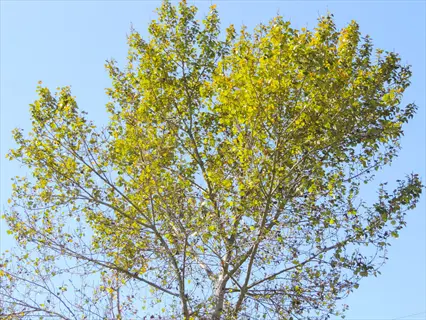
- Form: Upright oval shape with a strong central leader that reduces the wide-spreading branch pattern common in seedling-grown silver maples, reaching 50 to 70 feet (15 to 21 meters) tall.
- Key Benefit: Produces few to no seeds, eliminating the helicopter mess that is the top complaint homeowners have about standard silver maples planted in residential yards.
- Branch Strength: Selected for improved crotch angles and stronger wood attachment compared to seed-grown trees, reducing storm breakage risk in urban and suburban planting sites.
- Growth Rate: Maintains the fast growth speed of the species at 3 to 5 feet (0.9 to 1.5 meters) per year while developing a more structured canopy that requires less corrective pruning.
- Best For: Homeowners who want silver maple shade and growth speed without the annual seed cleanup that drives most negative opinions about this species.
- Availability: Sold at most wholesale nurseries and garden centers across USDA Hardiness Zones 4 through 8 as balled-and-burlapped or container stock.
Laciniatum Wieri (Cutleaf)
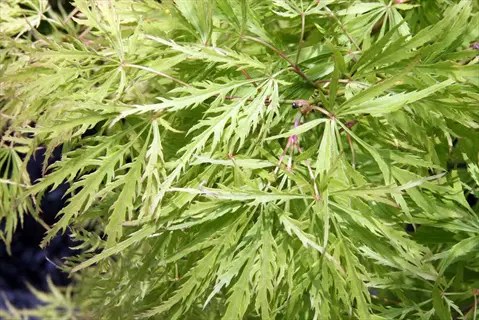
- Form: Graceful weeping habit with thin, deep-cut leaves that have much deeper cuts between lobes than standard silver maple, creating a lacy delicate texture in the canopy.
- Key Benefit: One of the most ornamental silver maple selections, offering an elegant specimen tree look that rivals Japanese maples in leaf detail at a fraction of the cost.
- Mature Size: Reaches 50 to 70 feet (15 to 21 meters) tall with a wide pendulous canopy, making it suitable for large properties where its drooping branches have room to cascade.
- Considerations: The thin cut foliage catches more wind than standard leaves, and the weeping branches can be more prone to ice and storm damage in exposed locations.
- Fall Color: Displays pale yellow fall color that stands out against the fine leaf texture, creating a bright airy canopy before leaves drop in mid to late autumn.
- Best For: Large estates, parks, and open landscapes where the full weeping form can develop without crowding from nearby structures or competing trees.

Pyramidale (Columnar Form)
- Form: Narrow upright columnar shape that grows 40 to 60 feet (12 to 18 meters) tall but only 15 to 25 feet (4.6 to 7.6 meters) wide, a very different silhouette from the typical spreading crown.
- Key Benefit: Solves the space problem for narrow lots, street plantings, and properties where a full-width silver maple would overhang buildings or crowd utility lines.
- Branch Structure: Upright branching angle resists the wide V-crotch formations that cause splitting in standard silver maples during wind and ice storms.
- Growth Rate: A bit slower than seedling-grown silver maples but still fast by tree standards, adding 2 to 4 feet (0.6 to 1.2 meters) of height per year under good growing conditions.
- Root Considerations: Retains the same aggressive surface root system as the species, so planting distance from foundations, sidewalks, and sewer lines remains critical at 50 feet (15 meters).
- Best For: Urban streets, narrow side yards, and property boundaries where a vertical accent tree is needed without the 80-foot (24-meter) crown spread of a standard silver maple.
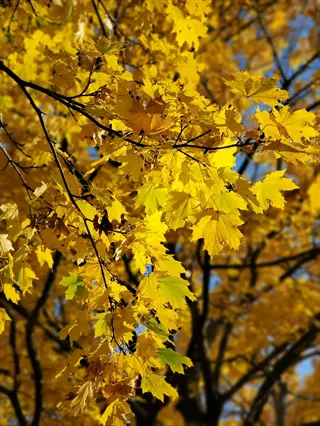
Lutescens (Golden Form)
- Form: Standard spreading shape similar to the species but with distinctive golden-yellow new foliage in spring that turns green through the summer growing season.
- Key Benefit: Adds seasonal color interest that standard silver maple lacks, providing a bright spring display that makes this cultivar stand out as a specimen tree in the landscape.
- Spring Display: New leaves emerge in shades of gold and chartreuse that last several weeks before transitioning, creating a visual effect similar to golden chain tree but on a much larger scale.
- Mature Size: Reaches full species size of 80 to 100 feet (24 to 30 meters) tall with a wide crown to match, requiring the same generous spacing as a standard silver maple tree.
- Hardiness: Performs well across the full species range in USDA Zones 3 through 9, though the golden color shows best in locations receiving full morning sun and some afternoon protection.
- Best For: Large properties and parks where a golden spring accent is desired on a large fast-growing tree that will provide full shade coverage at maturity.
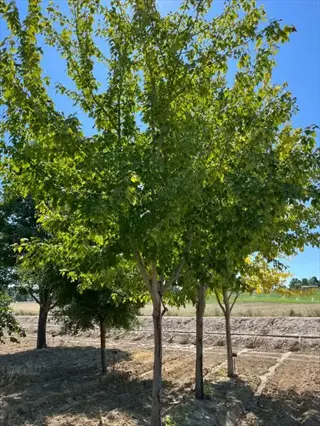
Born's Gracious (Compact Form)
- Form: More compact rounded crown than the typical species with better branch attachment angles, reaching 50 to 60 feet (15 to 18 meters) tall at maturity with a tighter canopy spread.
- Key Benefit: Improved structural integrity compared to seed-grown silver maples, with stronger crotch angles that reduce the splitting and storm damage that gives the species a bad reputation.
- Branch Habit: Dense branching pattern creates heavier shade than standard silver maple while maintaining good air circulation through the interior canopy for disease resistance.
- Maintenance Level: Requires less corrective pruning than seedling silver maples because the improved branch angles develop the strong central leader that arborists recommend on their own.
- Fall Color: Produces a more reliable yellow fall color display than seed-grown trees, with some golden-orange tones appearing in years with cool nights and warm days during early autumn.
- Best For: Suburban yards and medium-sized properties where a full-sized tree with better storm resistance is needed without sacrificing the fast growth that makes silver maple appealing.
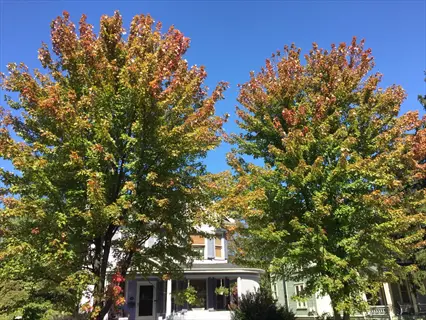
Autumn Blaze (Freeman Maple Hybrid)
- Parentage: A cross between silver maple (Acer saccharinum) and red maple (Acer rubrum) creating Freeman maple (Acer x freemanii), combining the best traits of both parent species.
- Key Benefit: Delivers brilliant orange-red fall color that silver maple alone cannot provide, while maintaining faster growth than pure red maple at 3 to 5 feet (0.9 to 1.5 meters) per year.
- Branch Strength: Inherits stronger wood and tighter branch angles from the red maple parent, cutting the storm damage risk that is the primary complaint about silver maple.
- Mature Size: Reaches 50 to 60 feet (15 to 18 meters) tall with a 40 to 50 foot (12 to 15 meter) spread, smaller than pure silver maple but still providing substantial shade coverage.
- Root System: Retains somewhat aggressive roots from the silver maple parent, so keeping 30 to 40 feet (9 to 12 meters) of distance from foundations is still recommended.
- Best For: Homeowners who want the fast growth of silver maple with the fall color and branch strength of red maple, making this the most popular compromise cultivar on the market.
Each of these silver maple cultivars solves a real problem that stops people from planting this species. Match your biggest concern to the right pick and you'll get the fast shade you want without the headaches.
5 Common Myths
Silver maples only live 30 to 50 years, making them a poor long-term investment for your property.
USDA Forest Service data documents silver maples living 130 years or more, with old-growth specimens reaching 160 to 198 years on Theodore Roosevelt Island in Washington D.C.
Silver maple sap cannot produce maple syrup because the sugar content is too low to be useful.
Silver maple sap does produce maple syrup rated satisfactory in quality, though it has the lowest sugar content of five maple species tested and requires more sap per gallon of syrup.
Silver maples are classified as an invasive species by the USDA and should not be planted.
The USDA Plants Database officially classifies silver maple as noninvasive and native across 31 states and 3 Canadian provinces, making it a legitimate native species choice.
You cannot grow a silver maple from cuttings because the wood is too soft and cuttings will just rot.
July softwood cuttings achieve 100 percent rooting success, October softwood cuttings reach 92 percent, and hardwood cuttings stored for two months still root at 84 percent.
Silver maple roots always destroy foundations and sewer lines regardless of how far away the tree is planted.
Root damage is primarily a spacing issue, as the longest documented horizontal root extension is 49 feet (14.9 meters), so planting 50 feet or more from structures significantly reduces risk.
Conclusion
The silver maple tree gets a bad name based on old stories and poor planting choices. But the USDA data tells a very different story. This native shade tree grows 3 to 7 feet per year and thrives across 31 states as a native species. It also gives wood ducks some of the best nesting spots of any tree in its range.
Silver maple planting comes down to smart choices on your part. Put it 50 feet from your house and prep the soil before you plant. Prune for a strong leader while it's young. If messy seeds or weak wood bother you, silver maple cultivars like Silver Queen and Autumn Blaze fix those exact issues.
Climate resilience matters more now than ever when you pick a tree. USDA research proves silver maple handles varied conditions with ease. As more people turn to native species for their yards, this tree fits right in.
I've spent years working with silver maples on my own land. In my experience, the bad press isn't fair to this species at all. Plant the right cultivar in the right spot with good care. Your silver maple will give you fast shade and decades of value.
External Sources
Frequently Asked Questions
What are the downsides of silver maples?
Silver maples have weak wood prone to storm breakage, shallow aggressive roots that can damage sidewalks and pipes, and produce heavy seed crops that create yard mess.
What is special about silver maple trees?
Silver maples are the first maple to bloom in North America, produce the largest seeds of any native maple, and rank as top nesting trees for wood ducks.
What's the difference between a maple tree and a silver maple tree?
Silver maple has deeply cut five-lobed leaves with a silvery white underside, peeling gray bark, and faster growth than most other maple species.
How big do silver maple trees get?
Silver maples reach 90 to 120 feet (27 to 37 meters) tall with trunk diameters of 36 to 48 inches (91 to 122 centimeters) at maturity.
Why do people dislike silver maples?
People dislike silver maples for their brittle branches that break in storms, roots that invade pipes and lift sidewalks, and prolific seed drop.
How tall is a 10 year old silver maple?
A 10-year-old silver maple typically stands 30 to 50 feet (9 to 15 meters) tall depending on soil quality and site preparation.
What is the lifespan of a silver maple tree?
Silver maples typically live 130 years or more, with old-growth specimens documented at 160 to 198 years on Theodore Roosevelt Island.
Where is the best place to plant a silver maple tree?
Plant silver maples in full sun with moist soil at least 50 feet from foundations, at a soil pH of 4.5 to 7.0 in USDA Zones 3 through 9.
How much is a silver maple worth today?
Silver maple wood sells as soft maple lumber for furniture, veneer, and pallets, while standing timber value depends on diameter, health, and local markets.
What is the prettiest maple tree?
Beauty is subjective, but Japanese maple and sugar maple are often considered the prettiest for their fall color, while silver maple offers elegant silvery foliage.