
Introduction
The schefflera plant sits at the top of most lists for good reason. Its glossy leaflets fan out from a central stem like the ribs of an open umbrella, which is how it earned the common name umbrella tree. With 602 known species in the genus, this tropical foliage plant offers far more variety than most people realize.
I grew my first schefflera over 12 years ago in a dim apartment corner where nothing else would survive. That plant still sits in my living room today, now over 6 feet tall and thriving on minimal effort. Two species dominate the indoor houseplant scene: *S. actinophylla*, the larger variety that reaches 8 to 10 feet indoors, and *S. arboricola*, the compact dwarf type that tops out around 4 to 6 feet.
You might spot the name Heptapleurum arboricola on newer plant tags at your nursery. Botanists gave the dwarf umbrella tree a new genus name a few years back. Most growers still call it schefflera, and both labels point to the same tough plant. NC State rates it as low maintenance, and it does best at 65 to 75°F in a typical home.
This guide walks you through picking a variety, watering, light needs, and pest control. You will also learn how to prune and propagate your plant at home. Each leaflet fans out like fingers on an open hand, and your care plan should cover just as much ground.
8 Popular Schefflera Varieties
Your local garden center might stock just 2 or 3 schefflera varieties. The genus has far more to offer once you know where to look. S. actinophylla towers at 8 to 10 feet in your home. The dwarf umbrella tree form of schefflera arboricola stays a compact 4 to 6 feet in a pot on your floor.
I have grown 6 of the 8 varieties on this list over the past decade in my own home. Gold Capella brings golden splashes to your room without extra care from you. The schefflera Amate fights spider mites on its own, so it's perfect if you hate dealing with pests. These 8 picks give you options for every room size and skill level.
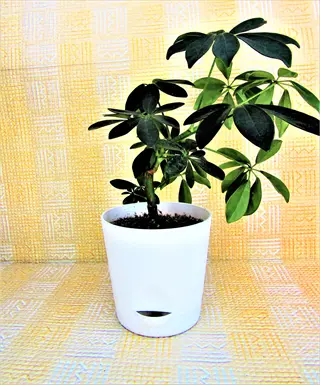
Schefflera Actinophylla
- Height: Grows 8-10 feet (2.4-3 m) indoors and up to 50 feet (15 m) in its native habitat across Australia and New Guinea, making it the largest common schefflera species.
- Leaves: Each mature leaf produces 7 to 12 large leaflets that can reach up to 12 inches (30 cm) long, giving the plant its dramatic umbrella-like canopy.
- Light: Performs best in bright indirect light near an east or west facing window, but tolerates medium light conditions for extended periods without major growth loss.
- Growth Rate: Considered a medium grower that adds noticeable height each year, requiring regular pruning to keep it manageable in rooms with standard ceiling heights.
- Note: Classified as invasive in Central and South Florida by UF/IFAS, so outdoor planting should be avoided in tropical regions where seeds spread through birds.
- Best For: Plant owners with spacious rooms or high ceilings who want a bold tropical statement piece that fills vertical space quickly.
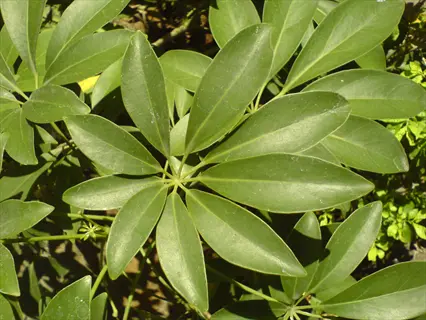
Schefflera Arboricola
- Height: Reaches 4-6 feet (1.2-1.8 m) in containers and 10-25 feet (3-7.6 m) outdoors in tropical climates, earning it the name dwarf umbrella tree.
- Leaves: Produces 7-9 glossy green leaflets per leaf, each measuring 2-4.5 inches (5-11.4 cm) long, thicker and more compact than its larger cousin.
- Light: Adapts well to bright indirect light through lower light conditions, though variegated forms need more light to maintain their color patterns.
- Growth Rate: Medium growth rate with a bushy habit that responds well to pruning, making it one of the easiest schefflera species to shape.
- Hardiness: Grows outdoors in USDA Zones 9b through 12b and tolerates both drought and mild salt exposure according to NC State Extension.
- Best For: Apartments, offices, and smaller living spaces where a compact tropical plant with dense foliage is preferred over a towering specimen.
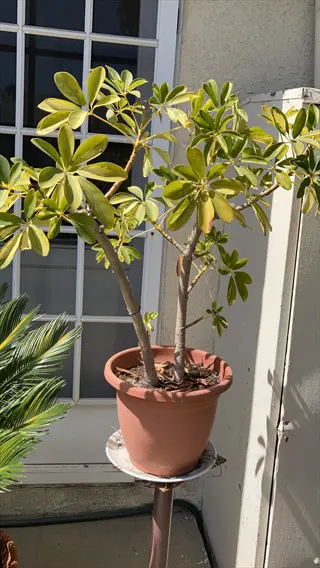
Gold Capella
- Appearance: Features striking golden-yellow splashes across deep green leaflets, creating a bright contrast that adds visual warmth to any room.
- Height: Grows 4-6 feet (1.2-1.8 m) indoors as a cultivar of S. arboricola, maintaining the same compact growth habit as its parent species.
- Light: Requires brighter indirect light than solid green varieties to preserve its variegation, and will revert to all green in low light settings.
- Watering: Follows the same top inch dryness check as standard arboricola, though a bit less water may be needed due to reduced chlorophyll in the leaves.
- Availability: One of the most common variegated schefflera cultivars on the market, found at most garden centers and online plant retailers throughout the year.
- Best For: Growers who want a pop of golden color in their indoor garden without sacrificing the reliable low-maintenance care of a standard arboricola.
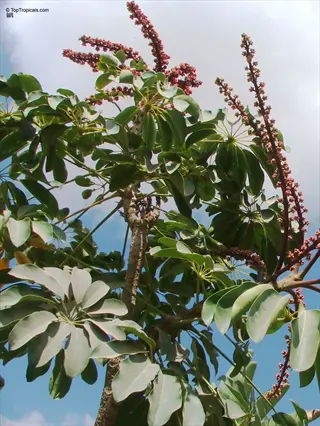
Schefflera Amate
- Appearance: Displays large, glossy dark green leaves with a polished look and an upright growth habit that gives it a refined tropical look.
- Resistance: Clemson Extension notes the Amate cultivar is resistant to Alternaria leaf spot and spider mites, two of the most common schefflera problems.
- Height: Reaches 8-10 feet (2.4-3 m) indoors like the standard actinophylla, but its disease resistance means it stays healthier with less intervention.
- Light: Tolerates lower light better than many other large schefflera varieties, making it a strong choice for offices and interior spaces away from windows.
- Care Level: Among the easiest schefflera cultivars to maintain because its built-in pest resistance reduces the need for treatments and inspections.
- Best For: Beginners or busy plant owners who want an impressive large specimen without the typical pest management challenges of other schefflera types.
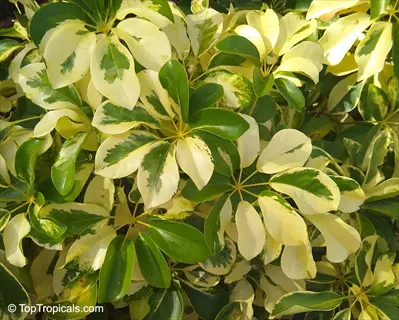
Trinette
- Appearance: Shows cream to white margins surrounding green leaf centers, producing a softer and lighter variegation pattern than Gold Capella.
- Height: Stays in the 3-5 feet (0.9-1.5 m) range indoors, making it one of the more compact variegated selections within the arboricola group.
- Light: Needs bright indirect light to maintain its white and cream markings, and placing it too far from a window causes gradual loss of the pale edges.
- Growth Habit: Tends to branch well on its own with a bushy shape, so you need less pruning to keep it full and rounded.
- Temperature: Prefers the standard 65-75°F (18-24°C) range and should be kept away from cold drafts below 50°F (10°C).
- Best For: Collectors who appreciate subtle variegation and want a smaller schefflera that fits on a tabletop or plant stand in a well-lit room.
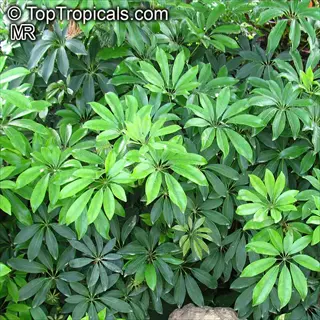
Schefflera Compacta
- Appearance: Features smaller leaflets packed tight on shorter stems, creating a dense and rounded growth form that looks full even without pruning.
- Height: Stays under 3 feet (0.9 m) indoors in most cases, making it the best option for desks, shelves, and narrow windowsills.
- Light: Does well in medium to bright indirect light and handles lower light better than variegated cultivars because all its foliage is green.
- Watering: Smaller root system means the pot dries out a bit faster, so check soil moisture every 5-7 days during the active growing season.
- Maintenance: Seldom needs pruning due to its compact shape, and its smaller leaf surface area means less dust buildup than larger varieties.
- Best For: Small apartments, office desks, and anyone who wants a miniature version of the classic umbrella tree without giving up floor or shelf space.
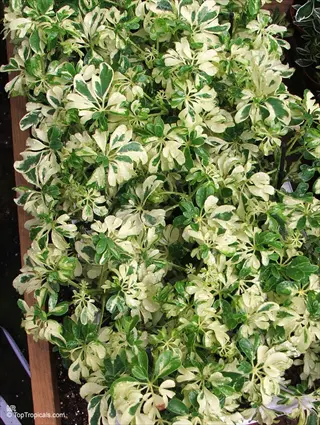
Schefflera Dazzle
- Appearance: Showcases bold cream and green variegation with more defined color separation than other cultivars, giving each leaf a graphic almost painted look.
- Height: Grows 3-5 feet (0.9-1.5 m) indoors as an arboricola cultivar, maintaining a medium size that works well as a floor plant or elevated display piece.
- Light: Demands the brightest indirect light of all listed cultivars to keep its high contrast variegation vivid. Too little light dulls the cream portions fast.
- Sensitivity: More sensitive to overwatering than solid green varieties because its reduced chlorophyll means slower energy production and water uptake.
- Availability: Harder to find than Gold Capella or Trinette, and often sourced through special nurseries or online tropical plant sellers.
- Best For: Experienced plant enthusiasts looking for a striking focal plant who can provide consistent bright light and careful watering.
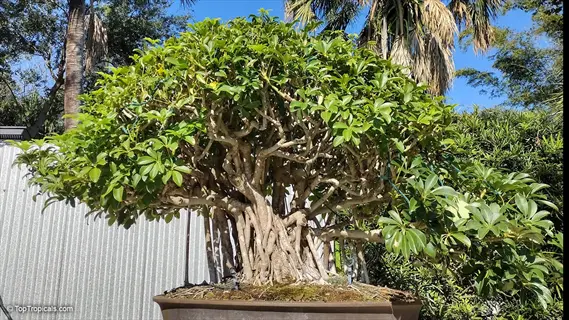
Hawaiian Umbrella (Bonsai)
- Appearance: A dwarf form of S. arboricola bred for bonsai work, featuring tiny leaflets and a thick exposed root system known as a banyan style.
- Height: Trained to 6-16 inches (15-40 cm) in a low profile bonsai pot, although the untrained plant could grow several feet tall over many years.
- Training: Responds great to wiring, root pruning, and canopy trimming, making it one of the most recommended indoor bonsai trees for all skill levels.
- Light: Needs bright indirect light or supplemental grow lights to keep internodes short and foliage dense, which is critical for maintaining the bonsai shape.
- Watering: Small bonsai pots dry out faster than standard containers, so daily soil checks and careful watering are key to preventing root damage.
- Best For: Bonsai beginners who want a forgiving tropical species that tolerates indoor conditions and develops an impressive trunk structure within a few years.
In my experience, you get the best results when you match your variety to your space and light. If your room gets bright filtered light, you can grow any cultivar on this list. A darker corner works fine too, but stick with solid green types like Compacta or Amate for the strongest growth in your home.
Ideal Light and Temperature
Getting your schefflera light requirements right is the single biggest factor for strong growth. Think of it like sitting under a shaded patio on a sunny day. You get lots of brightness around you, but no harsh rays hitting you head on. That's bright indirect light, and your schefflera wants the same thing.
I lost my first variegated Trinette because I placed it in a dim hallway with almost no light. Solid green types handle low light tolerance much better. Variegated leaves need more brightness to hold their color patterns. Move your plant near an east or west facing window for the best growth.
The schefflera temperature range for indoor growth falls between 65 and 75°F during the day. Clemson Extension warns that temps below 50°F cause dead spots on the leaves. Keep your plant away from cold drafts near doors and windows during winter, and never let it sit next to an air vent that blows cold air.
When I tested moving my schefflera closer to a south window in winter, the extra light kept it growing through the cold months. In my experience, you should shift your plant a few feet closer to the nearest window once fall arrives. Growth slows in winter no matter what, but this small move helps your plant hold onto its leaves until spring.
Watering and Soil Needs
Schefflera watering mistakes cause more plant deaths than any other care problem. Clemson Extension puts it best: too much or too little water and pests are the main issues you will face. I killed my second schefflera by overwatering it in a pot with no drainage hole, and the root rot took hold in just 2 weeks.
Your best tool here is a moisture meter or your own finger pressed into the top inch of soil. If it still feels damp, wait another day before you add water. You want well-draining soil that lets extra moisture flow out fast so your roots never sit in a puddle.
Ideal Soil Mix Recipe
- Base: Combine 2 parts standard indoor potting soil with 1 part perlite and 1 part orchid bark to create a well-draining mix that holds enough moisture without becoming waterlogged.
- Drainage: Always use a container with at least one drainage hole at the bottom, and avoid letting the pot sit in a saucer of standing water for more than 30 minutes.
- Alternative: If orchid bark is unavailable, substitute with coarse sand or pumice to achieve similar drainage while keeping the root zone aerated and free of compaction.
Top Watering Method
- Process: Pour water slowly and evenly across the entire soil surface until it flows freely from the drainage hole, ensuring all roots receive moisture from top to bottom.
- Timing: Check the top 1-2 inches (2.5-5 cm) of soil with your finger before watering; if it still feels damp, wait another day or two and check again.
- Benefit: Top watering flushes accumulated mineral salts downward through the soil, which helps prevent the white crusty buildup that can harm roots over time.
Bottom Watering Method
- Process: Place the pot in a tray or basin filled with 1-2 inches (2.5-5 cm) of room-temperature water and allow the soil to absorb moisture upward for 20-30 minutes.
- Benefit: Encourages roots to grow downward toward the water source, resulting in a deeper and more resilient root system that handles occasional missed waterings better.
- When to Use: Bottom watering works best when the soil has become very dry and compacted, as top watering may run straight through without being absorbed by the root zone.
Water Quality Matters
- Best Choice: Use filtered water, collected rainwater, or water left to sit overnight so chlorine can off-gas before you pour it on the soil surface.
- Avoid: Very hard tap water with high calcium content can build up on the soil surface and inside the pot, eventually blocking drainage and coating roots in mineral deposits.
- Signs of Buildup: White crusty residue on the soil surface or along the rim of the pot signals mineral accumulation that should be flushed with a thorough top watering.
In my experience, the biggest overwatering trap is sticking to a rigid schedule. Your plant drinks more in summer and less in winter. I water my schefflera every 7 to 10 days from spring through fall and drop to every 14 to 21 days once the cold months start. Let your soil guide you, not your calendar.
Propagation Methods
Schefflera propagation is one of the easiest ways to grow your collection without spending a dime. You can propagate umbrella plant clones through stem cuttings, air layering, or seed. I've used all 3 methods over the years, and stem cuttings give you the fastest results with the least fuss.
Spring and early summer are your best windows to take cuttings because the plant pushes out new growth during warm months. You want to cut just below a leaf node where the root cells are most active. A dab of rooting hormone on the cut end speeds things up, but it's not required if you're patient.
Stem Cutting in Soil
- Step 1: Select a healthy stem with at least two leaf nodes and use clean, sharp pruning shears to cut a 4-6 inch (10-15 cm) section at a 45-degree angle just below a node.
- Step 2: Remove the lower leaves to expose at least one bare node, dip the cut end in rooting hormone powder, and insert it 1-2 inches (2.5-5 cm) deep into moist perlite or a 50/50 peat-perlite mix.
- Step 3: Cover the pot with a clear plastic bag to maintain high humidity around 80%, and place it in bright indirect light at 70-75°F (21-24°C).
- Timeline: Roots tend to appear within 4-6 weeks. Give the cutting a light tug after this period, and any resistance means root growth has begun.
Stem Cutting in Water
- Step 1: Take the same 4-6 inch (10-15 cm) stem cutting described above, remove lower leaves, and place the cut end in a clear glass or jar filled with room-temperature water.
- Step 2: Ensure at least one node is submerged below the water line while all remaining leaves stay above it to prevent rotting foliage from contaminating the water.
- Step 3: Change the water every 3-5 days to keep it fresh and oxygenated, and position the jar in bright indirect light away from direct sun that could overheat the water.
- Timeline: Visible root growth tends to appear within 3-5 weeks. Transplant into soil once roots reach 2-3 inches (5-7.5 cm) long for the best survival rate.
Air Layering
- Step 1: Choose a healthy stem section on the parent plant and make a thin upward cut about one third through the stem, then prop the wound open with a small piece of toothpick.
- Step 2: Wrap the wounded area with a generous handful of damp sphagnum moss and secure it firm with plastic wrap, making sure the moss stays moist and in full contact with the cut.
- Step 3: Check the moss every 5-7 days by peeling back the plastic to add water if it has dried out, and watch for white roots growing through the moss within 6-8 weeks.
- Step 4: Once a strong root ball has formed inside the moss, cut the stem below the new root system and pot it in a standard well-draining schefflera soil mix.
Propagation from Seed
- Source: Schefflera seeds are available from special tropical plant seed suppliers, since indoor plants seldom flower or produce viable seeds on their own.
- Process: Soak seeds in warm water for 12 hours, then sow them 0.25 inches (0.6 cm) deep in a warm, moist seed-starting mix and cover with a humidity dome.
- Conditions: Maintain a steady soil temperature of 75-80°F (24-27°C) using a seedling heat mat, as germination depends on warmth above all else.
- Timeline: Germination can take 2-8 weeks based on seed freshness and conditions. Seedlings grow at a crawl in their first year before picking up to normal growth rates.
Pest and Disease Solutions
Schefflera pests show up when you least expect them, but you can spot trouble early if you know what to look for. Sticky leaves point to scale insects or mealybugs feeding on your plant's sap. Fine webbing on the undersides of leaves means spider mites have moved in. I check my plants every time I water, and that habit alone has saved me from major infestations more than once.
Clemson Extension confirms that diseases are seldom a problem for schefflera in the home. Your real battle is with bugs, not fungus. A bottle of neem oil and some insecticidal soap are the 2 best weapons you can keep on your shelf. Catch pests early and you can fix the problem in a few treatments. Wait too long and you might lose the plant to an alternaria leaf spot outbreak or a stubborn mealybug colony.
Pruning, Repotting and Bonsai
Schefflera pruning is the fastest way to turn a tall, leggy plant into a full, bushy showpiece. Every cut you make above a leaf node tells your plant to sprout 2 or more new branches from that spot. I prune my largest schefflera twice a year, and the bushy growth it puts out after each trim makes the effort worth it.
Repotting schefflera keeps your plant fed and happy as its roots fill the pot. The repotting frequency for most plants is every 1 to 2 years. Use a pot just 1 to 2 inches wider than the old one, and fresh soil does the rest. If you want to take your skills further, schefflera bonsai is one of the most forgiving bonsai projects you can start indoors.
Pruning for Shape and Fullness
- When: Prune during spring or early summer when the plant is actively growing and can heal cuts quickly while redirecting energy into new branches.
- Technique: Cut just above a leaf node using clean sharp shears; two or more new stems typically sprout from below the cut, creating a bushier silhouette over time.
- Limit: Never remove more than 30% of the plant in a single session, as cutting too much foliage at once can stress the plant and slow its recovery.
Repotting Schedule and Steps
- Frequency: Repot every 1-2 years for actively growing plants, or every 2-3 years if you want to keep the plant at its current size by limiting root expansion.
- Pot Size: Move up to a container only 1-2 inches (2.5-5 cm) wider in diameter; a pot that is too large holds excess moisture and increases the risk of root rot.
- Process: Gently remove the plant from its old pot, loosen circling roots with your fingers, and place it in the new container with fresh well-draining soil mix.
Bonsai Training Basics
- Species: The Hawaiian umbrella tree, a dwarf form of S. arboricola, is one of the most recommended tropical bonsai species because it tolerates indoor conditions and develops a thick trunk.
- Wiring: Apply aluminum bonsai wire to young flexible branches to guide their direction, checking every 4-6 weeks to prevent the wire from cutting into expanding bark.
- Root Pruning: During repotting every 1-2 years, trim up to one third of the root mass to keep the tree proportional to its low profile bonsai pot.
Seasonal Maintenance Calendar
- Spring: Begin monthly fertilizing with a balanced liquid fertilizer, prune leggy growth to encourage branching, and check if roots are circling the pot for repotting.
- Summer: Increase watering frequency as higher temperatures dry soil faster, rotate the pot every two weeks for even light exposure, and watch for spider mites in dry conditions.
- Fall and Winter: Reduce watering as growth slows, stop fertilizing until spring returns, and move the plant away from cold drafts near windows or exterior doors.
I started my first hawaiian umbrella bonsai 4 years ago. The trunk thickened up faster than I expected. In my experience, this dwarf schefflera forgives mistakes that would kill other bonsai types. You can wire branches, trim roots, and shape the canopy with confidence as long as you follow the basics.
5 Common Myths
Schefflera needs direct sunlight to grow well and will die without several hours of full sun each day.
Schefflera prefers bright indirect light and can actually suffer leaf burn when exposed to prolonged direct afternoon sun.
All schefflera plants purify your indoor air enough to replace a mechanical air filter in your home.
While lab studies show schefflera removes benzene at 94 percent efficiency, real-world tests confirm you would need 10-1,000 plants per square meter to match standard air exchange.
Schefflera is completely safe around cats, dogs, and small children because it is only a houseplant.
Schefflera contains insoluble calcium oxalate crystals that cause oral pain, drooling, and vomiting in pets, and may trigger contact dermatitis in sensitive humans.
You should water your schefflera on a strict weekly schedule regardless of the season or indoor conditions.
Watering frequency depends on light, temperature, humidity, and season; always check that the top 1-2 inches (2.5-5 cm) of soil are dry before adding water.
Schefflera arboricola and schefflera actinophylla are the same plant and can be treated identically in every situation.
S. arboricola grows 4-6 feet (1.2-1.8 m) indoors with smaller leaves while S. actinophylla reaches 8-10 feet (2.4-3 m) and is classified as invasive in parts of Florida.
Conclusion
Schefflera plant care comes down to a few basics that anyone can master with a little practice. Give your umbrella tree bright indirect light, water when the top inch of soil dries out, and keep your room between 65 and 75°F. I've followed this same routine for over a decade, and my oldest plant still puts out new leaves every spring.
With 602 species in the genus and dozens of schefflera varieties to choose from, you can find the perfect fit for your space. A tall Amate works great as a floor plant in a bright living room. A compact bonsai Hawaiian umbrella fits on a desk near your window. Match your light and your room size to the right variety and you set yourself up for long term success with this indoor houseplant.
Keep in mind that schefflera contains calcium oxalate crystals in its sap. These crystals irritate the mouths of pets and small children. Set your plant up high if you have curious cats or dogs at home. Florida growers should also note that S. actinophylla is invasive in the central and southern parts of the state.
Your schefflera can live 25 or more years indoors when you give it the right conditions. Feed it once a month during spring and summer, repot every 1 to 2 years, and prune when it gets leggy. In my experience, this is one of the most rewarding plants you can own because it gives back so much for so little effort on your part.
External Sources
Frequently Asked Questions
Is Schefflera a good indoor plant?
Yes, schefflera is an excellent indoor plant because it tolerates a range of light conditions, requires minimal watering, and adapts well to typical home temperatures between 65 and 75°F (18-24°C).
How do you take care of a schefflera plant?
Care for a schefflera plant by providing bright indirect light, watering when the top 1-2 inches (2.5-5 cm) of soil dry out, maintaining humidity around 40-60 percent, and fertilizing monthly during spring and summer.
Does Schefflera like sun or shade?
Schefflera prefers bright indirect light but tolerates medium light and partial shade, making it flexible for most indoor locations near east or west facing windows.
How often do you water a Schefflera plant?
Water a schefflera roughly every 7-10 days in spring and summer and every 14-21 days in winter, always checking that the top 1-2 inches (2.5-5 cm) of soil are dry before watering again.
Is Schefflera an air purifier?
Schefflera was included in the 1989 NASA clean air study and removed 94 percent of benzene in lab tests, but real-world results require far more plants than a typical home would hold.
How long can a Schefflera live?
With consistent care a schefflera can live 25 or more years indoors, and specimens grown outdoors in tropical climates may survive even longer.
Is Schefflera low maintenance?
Yes, schefflera is considered low maintenance because it tolerates occasional missed waterings, adapts to varied light levels, and rarely suffers from diseases in a home setting.
Do you water Schefflera from top or bottom?
Both methods work, but top watering ensures the entire root zone gets moisture while bottom watering through an immersion method encourages deeper root growth.
Do Schefflera like to be misted?
Schefflera appreciates occasional misting to boost humidity, but a pebble tray or room humidifier provides more consistent moisture without promoting fungal issues on the leaves.
What is the luckiest plant inside the house?
Several plants are considered lucky in different traditions, including money tree, jade plant, lucky bamboo, and schefflera, which is sometimes called the money tree in parts of Asia.