
Introduction
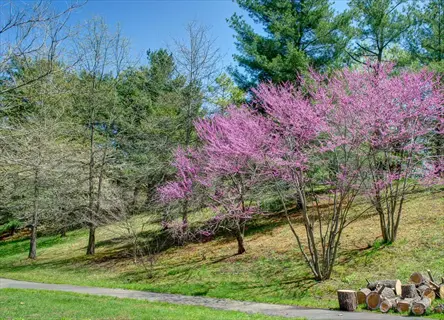
Every spring, the redbud tree puts on one of nature's most stunning shows. Bare branches burst with magenta pink blooms weeks before most other trees wake up. While your lawn still looks brown and your garden beds sit empty, this small tree lights up the whole yard with color.
I planted my first eastern redbud about 8 years ago in a tight front yard. It's now one of the best choices I ever made for that space. This native tree grows across 25 US states and thrives in USDA Zones 4 through 9. It's small enough for a front yard yet tough enough to resprout from its roots after fire burns it down.
This spring flowering tree does far more than just look pretty. Cercis canadensis feeds 7 or more bee groups in early spring. Honey bees, bumble bees, mason bees, and sweat bees all visit the flowers. These pollinators wake up hungry from winter, and the redbud gives them nectar when almost nothing else blooms yet.
This guide walks you through growing a healthy redbud from start to finish. You'll learn the best planting methods, seasonal care tips, top cultivar picks, and how to handle common pests and diseases.
8 Best Redbud Tree Varieties
You can find redbud varieties today that go far beyond the classic pink blooms most people picture. I've grown 4 of these redbud cultivars in my own yard over the years. Some give you deep purple leaves that rival a Japanese maple. Others offer a weeping form perfect for small patios.
Each variety below earned its spot through real garden results and standout traits you can count on. If you need a dwarf redbud like Ace of Hearts for a tight space, it's on this list. Want a bold Forest Pansy redbud for your front yard? That's here too. The Lavender Twist weeping redbud even fits in a large container.
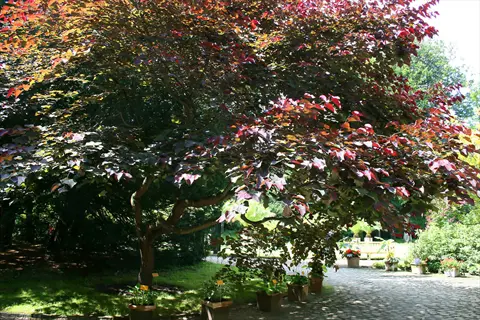
Forest Pansy Redbud
- Mature Size: Reaches 20 to 30 feet (6 to 9 meters) tall with a 25 to 35 foot (7.6 to 10.7 meter) spread, forming a broad vase-shaped canopy ideal for front yards.
- Foliage Color: New leaves emerge deep scarlet-purple and shift to a rich maroon-green through summer, providing months of dramatic color contrast.
- Bloom Display: Produces abundant magenta-pink flowers along bare branches in early spring before leaves appear, creating a striking two-tone effect against the dark bark.
- Best Use: Works as a standalone specimen tree or focal point in mixed borders where its purple foliage provides contrast against green-leaved shrubs and perennials.
- Growing Conditions: Thrives in full sun to partial shade in USDA Zones 5 through 9, preferring moist well-drained soil with a slightly alkaline pH.
- Special Notes: Considered one of the most popular redbud cultivars worldwide due to its exceptional foliage color that rivals Japanese maples for ornamental impact.
Lavender Twist Weeping Redbud
- Mature Size: Grows to only 5 to 10 feet (1.5 to 3 meters) tall with graceful cascading branches that create an umbrella-like canopy spreading 6 to 8 feet (1.8 to 2.4 meters) wide.
- Growth Form: Features a distinctive weeping habit with branches that arch downward to the ground, also sold under the cultivar name Covey after the person who found it.
- Bloom Display: Lavender-pink flowers cover every inch of the cascading branches in early spring, creating a waterfall effect of color that lasts about one month.
- Best Use: Perfect for small gardens, patio areas, and entryway plantings where its compact weeping form adds elegance without overwhelming limited space.
- Growing Conditions: Hardy in USDA Zones 5 through 9 and performs best in morning sun with afternoon shade protection, even more so in warmer southern climates.
- Special Notes: Must be grafted onto straight rootstock, which creates a visible graft union on the trunk that should remain above the soil line during planting.
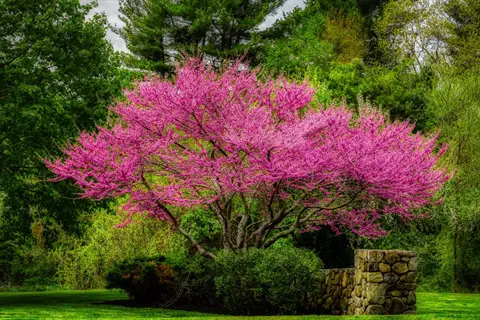
Ace of Hearts Redbud
- Mature Size: A compact cultivar reaching 12 to 15 feet (3.7 to 4.6 meters) tall and wide, making it one of the best choices for smaller residential landscapes.
- Foliage Feature: Produces dense heart-shaped leaves that are much smaller than the species type, giving the canopy a fine-textured and refined appearance throughout summer.
- Bloom Display: Covered in rosy-pink flowers in early spring that appear before the foliage, providing full coverage on a frame small enough for foundation plantings.
- Best Use: Ideal as a front yard specimen, near patios, or along driveways where a full-size redbud would be too large but you still want spring flower impact.
- Growing Conditions: Adapts well to USDA Zones 5 through 9 in full sun to partial shade and tolerates a range of soil types including clay if drainage is adequate.
- Special Notes: Developed by noted plantsman Ted Klein, this cultivar keeps a rounded form on its own with minimal pruning needed to keep its compact shape.
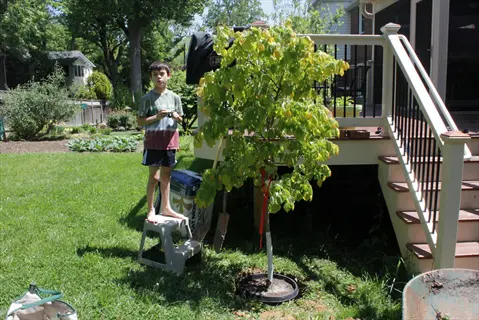
The Rising Sun Redbud
- Mature Size: Reaches 20 to 25 feet (6 to 7.6 meters) tall with a 20 to 25 foot (6 to 7.6 meter) spread, forming a rounded canopy of ever changing leaf colors.
- Foliage Color: New leaves emerge peach and apricot-orange, then shift through gold, chartreuse, and then deep green as they mature, producing a gradient effect on the tree.
- Bloom Display: Lavender-pink spring flowers provide a beautiful contrast against the warm-toned emerging foliage, making early spring the most colorful season for this cultivar.
- Best Use: Plant as a specimen tree where morning or afternoon light can illuminate the translucent new foliage, maximizing the multicolored effect throughout the growing season.
- Growing Conditions: Hardy in USDA Zones 5 through 9 and benefits from some afternoon shade in hot climates to prevent leaf scorch on the delicate new growth.
- Special Notes: One of the most talked-about newer redbud introductions, offering four-season color interest that changes week by week from spring through fall frost.
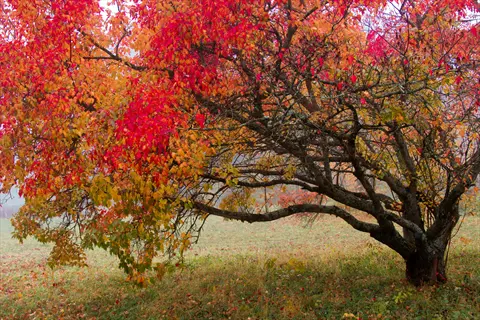
Hearts of Gold Redbud
- Mature Size: Grows 15 to 20 feet (4.6 to 6 meters) tall and 15 to 20 feet (4.6 to 6 meters) wide, maintaining a manageable size for most residential yard settings.
- Foliage Color: Leaves emerge bright gold in spring, hold their chartreuse-gold color through much of summer, then turn warm yellow in fall before dropping for winter.
- Bloom Display: Pink-purple flowers appear before the golden foliage in early spring, and the contrast between pink blooms and emerging gold leaves is stunning.
- Best Use: Excellent for brightening shaded garden areas where golden foliage can illuminate darker corners under larger canopy trees or along north-facing foundations.
- Growing Conditions: Performs well in USDA Zones 5 through 9 but needs partial shade in zones 7 and above to prevent the golden leaves from scorching in intense heat.
- Special Notes: Found as a natural branch sport by horticulturists, this cultivar adds a warm gold color you won't find in many other small ornamental trees.

Flame Thrower Redbud
- Mature Size: Reaches 20 to 25 feet (6 to 7.6 meters) tall with a 20 to 25 foot (6 to 7.6 meter) spread at maturity, similar in stature to the standard eastern redbud.
- Foliage Color: New growth emerges in shades of scarlet and burgundy-red, fading through purple to deep green, creating a flame-like gradient across the canopy.
- Bloom Display: Magenta-pink flowers appear on bare wood in early spring, followed right away by the dramatic red new growth that extends the colorful display for weeks.
- Best Use: Use as a focal point specimen tree where its nonstop red new growth throughout the season provides color without relying on flowers alone.
- Growing Conditions: Hardy in USDA Zones 5 through 9 with standard redbud requirements of well-drained soil and full sun to partial shade for best foliage color.
- Special Notes: Combines the best traits of Forest Pansy's purple foliage with The Rising Sun's color-changing habit, making it one of the most dynamic redbud cultivars available.
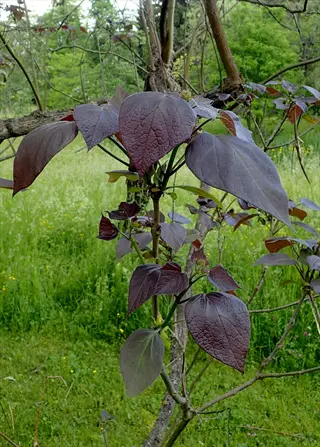
Black Pearl Redbud
- Mature Size: Grows 15 to 20 feet (4.6 to 6 meters) tall with a 15 to 20 foot (4.6 to 6 meter) spread, offering a compact form with the darkest foliage of any redbud.
- Foliage Color: Leaves emerge deep purple-black and hold that intense dark color through the entire growing season without fading to green like many other purple-leaved cultivars.
- Bloom Display: Rich pink-magenta flowers stand out against the near black emerging foliage, creating one of the most dramatic spring color combinations in any landscape.
- Best Use: Plant against light-colored walls, fences, or alongside silver and gold-foliaged plants to maximize the visual impact of its deep purple-black leaves.
- Growing Conditions: Thrives in USDA Zones 5 through 9 and performs best in full sun which intensifies the dark leaf color, though it tolerates partial shade.
- Special Notes: A newer introduction that has gained fast popularity among collectors, offering the darkest sustained foliage color of any redbud cultivar you can buy.
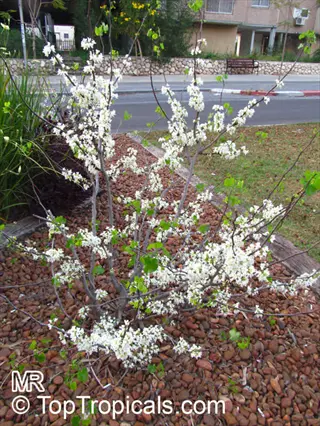
Alba White Redbud
- Mature Size: Reaches 20 to 30 feet (6 to 9 meters) tall with a 25 to 35 foot (7.6 to 10.7 meter) spread, matching the standard species in size with pure white flowers.
- Bloom Display: Produces pristine white flowers along bare branches in early spring, offering a softer alternative to the typical pink-magenta blooms of standard redbud selections.
- Foliage Feature: Green heart-shaped leaves emerge after the white bloom display and turn a clear yellow in fall, providing clean seasonal transitions throughout the year.
- Best Use: Looks great in moon gardens, white-themed borders, or paired with pink-flowered redbud varieties to create a two-tone spring display in larger landscapes.
- Growing Conditions: Hardy in USDA Zones 4 through 9 with the same adaptable soil and light requirements as the species, making it easy to grow anywhere standard redbuds thrive.
- Special Notes: Harder to find than pink cultivars but sought after by gardeners looking for a native flowering tree with an elegant white spring bloom display.
Planting and Soil Needs
Planting redbud tree seedlings the right way takes some thought up front, but it saves you years of problems down the road. I've seen too many gardeners lose their trees because they picked the wrong spot or tried to move a mature specimen. The deep taproot on a redbud makes transplanting large trees almost impossible. Always start with a young container grown tree for the best results.
Your planting success comes down to 3 things: right site, right soil, and right season. Pick a spot with full sun to part shade that gets at least 4 to 6 hours of direct light each day. Redbuds grow on almost any ground that isn't too wet, too dry, or too acidic. They prefer well-drained soil with an alkaline soil pH between 6.0 and 8.0 based on USDA Forest Service data.
Dig your planting hole twice as wide as the root ball but no deeper. Set the top of the root ball level with the surrounding ground. Backfill with the original soil and water deep right after planting. Spring and fall are your best planting windows since the tree can grow roots before summer heat or winter cold hits.
One thing most guides skip is that cold hardiness varies based on where your tree's seeds came from. If you garden in Zone 5 or colder, buy your redbud from a local nursery that sources trees grown from regional seed stock. A tree grown from southern seeds may not survive your winters even if it's listed as hardy to your zone.
Redbud Tree Care Essentials
Good redbud tree care follows the seasons, and once you know the rhythm it becomes simple. I break my own care schedule into 4 parts: spring pruning, summer watering, fall mulching, and winter checks. After the first 2 to 3 years, your redbud turns into a low maintenance tree that needs very little from you.
The biggest mistake I see people make is pruning redbud tree branches in winter. That removes the flower buds for next spring because redbuds bloom on old wood from the prior year. Prune right after the blooms fade instead. Focus on cutting out dead branches, crossing limbs, and any competing leaders. Training a strong central trunk while the tree is young prevents the brittle wood splits that older redbuds get.
Watering redbud trees takes more effort in the first 2 years but gets easier fast. Give young trees a deep soak once a week during summer. Mature redbuds handle drought well but benefit from a good soaking every 2 to 3 weeks during long dry spells. Fertilizing redbud trees is simple too. A balanced slow release fertilizer in early spring works fine if your soil test shows low nutrients. Mulching around the base with 2 to 3 inches of bark keeps roots cool and moist all season.
Spring Care After Bloom
- Pruning Window: Prune right after flowers fade in late spring because redbud blooms on old wood from the prior year and cutting in winter removes future flower buds.
- Structural Training: Remove crossing branches, dead wood, and any competing leaders to build a strong central trunk that resists the brittle wood splitting common in older trees.
- Fertilizer Timing: Apply a balanced slow release fertilizer like 10-10-10 around the drip line in early spring before new growth begins if a soil test reveals nutrient gaps.
Summer Watering Strategy
- Young Trees: Water new redbuds deep once per week during the first 2 growing seasons, providing 1 to 2 inches of water per session to reach the developing roots.
- Established Trees: Mature redbuds handle drought well but benefit from deep soaking every 2 to 3 weeks during long dry spells to prevent leaf scorch and stress.
- Watering Method: Use slow drip lines or soaker hoses at the drip line rather than overhead sprinklers, which waste water and promote fungal leaf diseases.
Fall Mulching and Preparation
- Mulch Application: Apply 2 to 3 inches of organic mulch like shredded bark around the base, keeping mulch 3 to 4 inches away from the trunk to prevent rot.
- Moisture Retention: Fall mulching insulates roots against winter cold and retains soil moisture heading into dormancy, which matters most for trees in USDA Zones 4 and 5.
- Weed Control: Keeping a mulch ring eliminates competition from lawn grass and weeds that steal water and nutrients from the redbud's sparse feeder root system.
Winter Inspection Checklist
- Bark Check: Look at the trunk and main branches for canker lesions or unusual swelling, which may point to Botryosphaeria canker or other fungal infections.
- Structure Review: Look for narrow branch forks with included bark that could split under ice or snow load, and plan corrective pruning for the following spring after bloom.
- Dormant Bud Health: Healthy dormant flower buds should appear plump and reddish along branches. Shriveled or black buds may mean cold damage or disease issues.
Pollinator and Wildlife Value
The wildlife value of a redbud goes far beyond what most people expect. I set up a camera near my redbud one spring and counted over 12 different insect species visiting in a single week. This tree is one of the best pollinator tree picks for any yard. It blooms in early spring when native bees leave dormancy but few other flowers are open yet. That timing makes it a key early spring food source.
Penn State Extension data shows redbud flowers feed 7 bee groups in total. The list includes honey bees, bumble bees, mason bees, cuckoo bees, long-horned bees, mining bees, and sweat bees. The Xerces Society names the redbud as a bee-friendly tree with high value to native bees. Bumble bees and other long-tongued species reach deep into the blooms for the nectar source. Short-tongued native bees grab pollen from open flowers instead.
Butterflies and moths use the redbud as a host plant for their larvae too. Henry's Elfin butterfly lays eggs on the leaves so caterpillars can feed right away. Birds like northern bobwhite and chickadees eat seeds from the pods in fall and winter months. One small tree supports a full chain of wildlife through all 4 seasons.
A 2021 study in Nature looked at 691 wild redbud trees across 23 states. It found 2 major genetic clusters in the population. That means redbuds and their pollinators grew up together over a very long time. When you plant a redbud, you plug into a system that native wildlife already uses.
Redbud Propagation Methods
You can propagate redbud tree stock through 3 main methods: growing from seed, softwood cuttings, or bud grafting. Each one suits a different skill level and goal. I've tried all 3 over the years and seed is the easiest starting point for most home gardeners. Your redbud seedlings won't match the parent tree's exact look, but they'll still give you beautiful spring blooms.
The tricky part about redbud seeds is their combined dormancy. Each seed has a hard coat that blocks water plus an internal dormancy that prevents sprouting. You need to break both barriers to get results. That means scarification first to crack the coat, then seed stratification in cold moist conditions for 5 to 8 weeks. Skip either step and your seeds won't sprout.
Seed Propagation From Pods
- Seed Collection: Harvest brown seed pods from the tree in late fall after they dry on the branch, then pull out the flat kidney-shaped seeds that number 4 to 12 per pod.
- Scarification Step: Nick the hard seed coat with a file or soak seeds in near-boiling water at about 190°F for one minute to break the outer shell that blocks water from getting in.
- Cold Stratification: After scarification, place seeds in moist peat moss inside a sealed bag and put them in the fridge at 35°F to 41°F for 5 to 8 weeks until you're ready to plant.
- Planting Depth: Sow stratified seeds one-quarter inch deep in well-drained potting mix and keep the soil moist until sprouts show up in 2 to 4 weeks.
Softwood Cuttings Method
- Timing Window: Take 4 to 6 inch softwood cuttings in early to mid summer when new growth is still bendy but has started to firm up at the base of the stem.
- Preparation: Strip leaves from the lower half of the cutting, dip the base in rooting hormone powder, and stick it into a moist perlite and peat mix under high humidity.
- Rooting Conditions: Keep bottom heat around 70°F and mist often. Your cuttings should root in 4 to 8 weeks under good conditions with consistent moisture and warmth.
- Success Rate: Softwood cuttings work best for the straight species. Named cultivars may not root true to type, so grafting is the better choice for those.
Bud Grafting for Cultivars
- Why Graft: Named cultivars like Forest Pansy, Lavender Twist, and Rising Sun must be bud grafted onto seedling rootstock to keep their unique foliage color and growth form.
- Rootstock Selection: Use 1 to 2 year old eastern redbud seedlings as rootstock. Make sure they have healthy roots and a trunk at least as thick as a pencil at the graft point.
- Grafting Timing: Do chip budding or T-budding in late summer when bark slips with ease. Insert a single vegetative bud from the cultivar you want into the rootstock cambium layer.
- Aftercare: Wrap the graft union tight with grafting tape, then cut back the rootstock above the graft the next spring after the bud breaks dormancy and starts to grow.
Seed Versus Cultivar Considerations
- Genetic Variation: Seed-grown redbuds produce varied offspring with natural differences in flower color, leaf shape, and growth habit rather than exact copies of the parent tree.
- Timeline Difference: Seed-grown trees may take 5 or more years to make their first flowers. Grafted cultivars often bloom within 2 to 3 years of planting in the landscape.
- Cost Factor: Growing from seed costs almost nothing but takes patience. Grafted cultivars run $40 to $100 each but give you guaranteed traits right from the start.
- Conservation Value: Seed from local wild trees protects regional gene pools. A 2021 Nature study found this matters because the species went through an ancient population bottleneck.
Common Diseases and Pests
Most redbud problems start with poor drainage or a stressed tree. I learned this the hard way when I lost a young redbud to verticillium wilt after planting it in a low spot that held water after rain. If you pick the right site from the start, you'll avoid the most common redbud diseases before they ever get a chance to take hold.
The 2 biggest threats are verticillium wilt and Botryosphaeria canker. Verticillium wilt shows up as sudden wilting on one side of the tree with brown leaf edges. There is no chemical cure for it, so prevention through good drainage is your only real defense. Canker creates sunken dark spots on the bark and kills branches above the infected area. Cut those branches at least 6 inches below the damage and clean your tools between each cut.
Leaf spot diseases cause brown or purple circles on leaves that can merge and make leaves drop early. They look ugly but are mostly cosmetic. Japanese beetles chew leaves down to bare veins in summer, and scale insects leave sticky residue and black mold on bark. Hand pick beetles into soapy water and spray horticultural oil during the dormant season for scale.
Here's something most guides don't mention. Redbuds can resprout from their roots after severe damage from storms or disease. This fire ecology trait means your tree has a built in backup plan even if the top gets destroyed. The wood does get brittle as the tree ages though, so train good structure early to reduce storm damage risk.
5 Common Myths
Redbud trees fix nitrogen in the soil because they belong to the legume family Fabaceae like beans and peas.
Despite being a legume, redbud trees do not form root nodules and do not fix nitrogen, as confirmed by the USDA Forest Service and Penn State Extension research.
Redbud trees only grow well in full sun and will not flower in shaded locations or under larger canopy trees.
Eastern redbud is naturally an understory tree that tolerates partial shade and still blooms well with as little as four to six hours of direct sunlight per day.
All redbud tree varieties produce the same pink flowers, so the only difference between cultivars is their overall tree size.
Redbud cultivars differ widely in flower color (white, pink, magenta), foliage color (green, purple, gold, variegated), and growth form (upright, weeping, compact, dwarf).
Redbud trees have invasive root systems that will damage foundations, sidewalks, and underground plumbing lines nearby.
Redbud trees have non-invasive root systems with a deep taproot and relatively few surface feeder roots, making them safe to plant near structures and walkways.
You should heavily prune a redbud tree every year in winter to encourage more blooms the following spring growing season.
Redbud trees bloom on old wood from the previous year, so winter pruning removes flower buds and reduces spring blooms; prune only after flowering ends in late spring.
Conclusion
The redbud tree earns its place in any yard that needs a small, tough, native flowering tree with real purpose. It grows across 25 US states and supports over 7 bee groups each spring. You can pick from dozens of cultivar options to match your landscape style. Few other trees pack that much value into such a compact frame.
What sets the eastern redbud apart is its timing. Those spring blooms open when almost nothing else is flowering, giving pollinators a meal they can't find anywhere else. If you want to start a pollinator garden or boost the one you already have, this is one of the best trees to anchor it. The bees, butterflies, and birds in your area will find it fast.
Be honest with yourself about the 20 to 30 year lifespan though. I plan to plant a second young redbud tree about 10 to 15 years after my first one so I never lose that spring color. Succession planting like this keeps your yard looking great even after the first tree reaches the end of its life.
Your best move is to pick a redbud cultivar from a local nursery that matches your USDA zone and soil conditions. A tree grown from regional seed stock will handle your winters better and live longer. Get it in the ground this spring or fall and you'll enjoy those spring blooms for years to come.
External Sources
Frequently Asked Questions
What are the pros and cons of redbud trees?
Redbud trees offer stunning spring blooms, pollinator support, and compact size for small yards, but they are short-lived (20 to 30 years), susceptible to canker diseases, and can develop brittle wood as they age.
Where do redbud trees grow best?
Redbud trees grow best in USDA Zones 4 through 9 with well-drained soil, a pH between 6.0 and 8.0, and a location receiving full sun to partial shade.
Why is it called a redbud tree?
The name comes from the reddish-pink flower buds that appear along bare branches in early spring before the leaves emerge.
Why is the redbud tree called a Judas tree?
European relatives of the redbud (Cercis siliquastrum) are called Judas trees based on a legend that Judas Iscariot hanged himself from such a tree, causing white flowers to turn pink with shame.
What are common problems with redbud trees?
Common problems include verticillium wilt, Botryosphaeria canker, leaf spot diseases, Japanese beetles, scale insects, and drought stress on poorly drained sites.
What is the downside of the Eastern redbud tree?
The main downsides are a short lifespan of 20 to 30 years, brittle wood that can split at branch crotches, susceptibility to fungal diseases, and difficulty transplanting mature trees due to a deep taproot.
How messy are redbud trees?
Redbud trees produce spent flower petals in spring and seed pods in fall that drop to the ground, but they are considered moderately tidy compared to many other flowering trees.
What is the average lifespan of a redbud tree?
The average lifespan is 20 to 30 years, though some well-maintained specimens in ideal conditions can reach 50 years or more with a maximum reproductive age of 75 years.
How hard is it to grow a redbud tree?
Redbud trees are relatively easy to grow once established, requiring minimal pruning and average watering, though young trees need consistent moisture and proper site selection.
What is the prettiest redbud tree?
Forest Pansy is widely considered the prettiest redbud for its deep purple-red foliage, while Lavender Twist offers a striking weeping form and The Rising Sun displays multicolored emerging leaves.