
Introduction
The plumeria flower pulls off one of the greatest tricks in the plant world. This tropical flower pumps out waves of sweet perfume every evening, luring sphinx moths in for a visit. But here's the catch: there's zero nectar waiting for them. The moth lands, picks up pollen, and flies off with nothing to show for it. Plumeria is the con artist of the flower world, all fragrance and no reward.
Most people assume this iconic bloom started in Hawaii. That's wrong. This plumeria flower came from the Caribbean and Central America. You might know it by its other name, frangipani. A German botanist brought it to the Hawaiian islands around 1860. Before that, not a single plumeria grew on those shores. Hawaii now imports close to 90% of its lei flowers despite this being the most famous Hawaiian flower on the planet.
I've grown plumeria for over 8 years across 3 different climate zones. What I've learned is that this plant rewards you with stunning blooms and intense fragrance if you give it the right conditions. Each flower cluster can hold 50 to 200 individual blooms that last from May through November in warm climates. The waxy petals come in white, pink, yellow, red, and dozens of color blends that look almost too perfect to be real.
This guide walks you through growing plumeria at home from start to finish. You'll find 7 popular varieties worth a close look and care tips for warm and cold climates. I also cover proven ways to start new plants from cuttings. First time grower or long time collector, there's something here for you.
7 Popular Plumeria Varieties
You can pick from over 368 registered plumeria cultivars right now. That's like standing at a perfume counter with too many bottles. Each variety has its own scent, color, and growth habit. I've grown 12 types of plumeria over the years and learned which ones work best.
These 7 plumeria varieties cover the full range from tall shade trees to compact dwarf plumeria that fits on a balcony. You'll find plumeria colors from pure white to bold pink plumeria stripes. Some plumeria cultivars handle desert heat while others do better in humid coastal air. Use this list to match a variety to your space and growing goals.
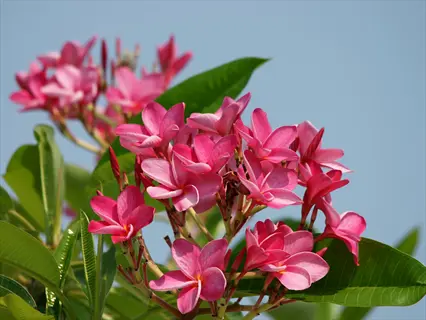
Plumeria Rubra (Common Plumeria)
- Height: Plumeria rubra grows up to 25 feet (7.6 meters) tall in warm climates, forming a spreading canopy with thick succulent branches that store water during dry spells.
- Flowers: Produces clusters of 50 to 200 blooms per branch tip in shades of pink, red, yellow, orange, and multicolored combinations, each flower measuring 2 to 4 inches (5 to 10 centimeters) across.
- Fragrance: Releases a strong sweet scent that intensifies in the evening hours when sphinx moths are active, blending notes of jasmine, citrus, and gardenia.
- Leaves: Deciduous in cooler months, dropping all leaves during winter dormancy but continuing photosynthesis through its green bark and stems.
- Best for: Traditional lei making and landscape focal points in USDA Zones 10 through 12, and the most widely hybridized species with hundreds of named cultivars.
- National status: Serves as the national flower of Nicaragua, reflecting its deep roots in Central American and Caribbean culture where it grows wild.
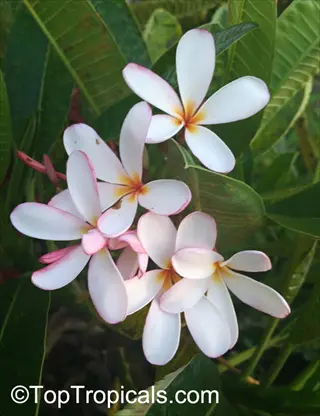
Plumeria Alba (White Frangipani)
- Height: The tallest plumeria species, reaching up to 40 feet (12 meters) in its native Puerto Rico, making it a true shade tree rather than just an ornamental shrub.
- Flowers: Produces pure white flowers with a bright yellow center, smaller than rubra blooms but appearing in dense clusters that cover the canopy from May through November.
- Fragrance: Carries a lighter, more delicate scent than rubra with dominant citrus and honey notes, still strongest in the evening but less overpowering at close range.
- Leaves: Features longer, narrower leaves with a distinctive glossy dark green upper surface and rounded tips that help distinguish it from other species at a glance.
- Best for: Gardeners seeking a taller shade-producing specimen tree in tropical and subtropical landscapes, or collectors wanting the classic white lei flower appearance.
- National status: Recognized as the national flower of Laos, where it holds deep spiritual significance in Buddhist temple gardens and ceremonial plantings.
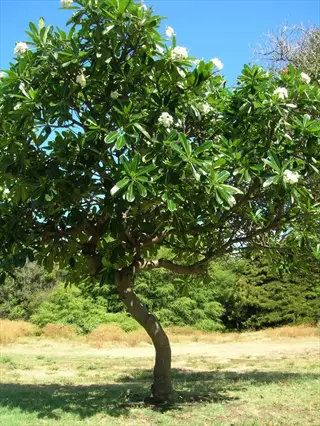
Plumeria Obtusa (Singapore Plumeria)
- Height: Reaches 15 to 25 feet (4.5 to 7.6 meters) tall with a more compact and rounded growth habit than rubra, making it well-suited for smaller tropical landscapes.
- Flowers: Bears rounded white flowers with yellow centers, similar to alba but with thicker petals and a more waxy texture that holds up well in humid conditions.
- Fragrance: Produces a sweet fruity fragrance that is milder than rubra but consistent throughout the day, not just concentrated in the evening hours like other species.
- Leaves: Evergreen in tropical climates, keeping its glossy dark green leaves with rounded, obtuse tips year-round, unlike the deciduous rubra and alba species.
- Best for: Desert and hot climate growers because it tolerates extreme heat better than rubra, and its evergreen habit means no bare-branch dormancy period to manage.
- Climate note: Performs very well in Arizona and similar arid regions according to regional nursery recommendations, preferring bright filtered shade over direct afternoon sun.
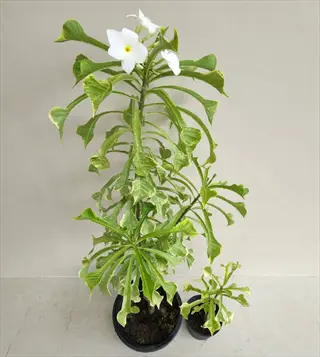
Plumeria Pudica (Bridal Bouquet)
- Height: Grows 8 to 15 feet (2.4 to 4.5 meters) tall with an upright columnar shape that takes up less horizontal space than spreading rubra varieties in the landscape.
- Flowers: Produces pure white flowers shaped like small stars with narrow petals, blooming heavily from spring through fall and sometimes year-round in tropical areas.
- Fragrance: Has little to no fragrance, making it the exception among plumeria species and a practical choice for gardeners who want the look without a strong scent.
- Leaves: Features uniquely shaped fiddle-like or spoon-shaped leaves that set it apart from every other species, and it retains its foliage as an evergreen in warm climates.
- Best for: Privacy screens and hedge plantings due to its upright growth and dense foliage, offering year-round greenery with prolific white blooms as a bonus.
- Maintenance: Requires less pruning than spreading rubra types and naturally maintains a tidy columnar form, reducing the seasonal shaping work other species demand.
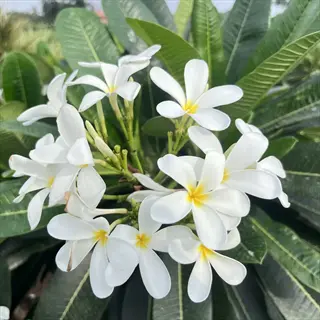
Plumeria Stenophylla (Narrow-Leaf)
- Height: One of the most compact species, staying under 8 feet (2.4 meters) tall, making it an excellent choice for container growing and small garden spaces.
- Flowers: Produces small white flowers with narrow twisted petals that give them a windmill-like appearance, blooming from summer through early fall in moderate quantities.
- Fragrance: Carries a mild sweet scent that is pleasant at close range but does not project as far as rubra or alba, suitable for patios and intimate garden seating areas.
- Leaves: Features very narrow elongated leaves that give the plant a wispy airy texture, a sharp contrast to the broad paddle-shaped leaves of rubra and alba.
- Best for: Container gardening and indoor growing in northern climates where space and ceiling height are limited, fits well on a sunny porch or beside a window.
- Propagation: Responds well to cutting propagation like other species, with 12 to 18 inch (30 to 46 centimeter) cuttings rooting in 60 to 90 days under warm conditions.
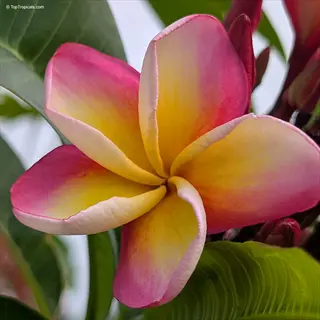
Candy Stripe Plumeria
- Height: Grows 10 to 15 feet (3 to 4.5 meters) as a rubra hybrid, with the classic spreading canopy shape and thick branches that plumeria growers expect from this species.
- Flowers: Features striking pink and white striped petals with a golden yellow center, producing one of the most dramatic and recognizable bloom patterns in the genus.
- Fragrance: Delivers a strong sweet tropical scent with prominent rose and jasmine notes, ranking among the most fragrant cultivars and filling a garden area with perfume by evening.
- Leaves: Deciduous like its rubra parent, dropping leaves during winter dormancy and resuming growth with elongated dark green leaves in spring as temperatures warm.
- Best for: Collectors and gardeners who want a showpiece cultivar with high visual impact, frequently used in lei making for its distinctive striped pattern and strong scent.
- Availability: One of the most widely available named cultivars through specialty nurseries and the Plumeria Society of America, making it accessible to growers across the country.
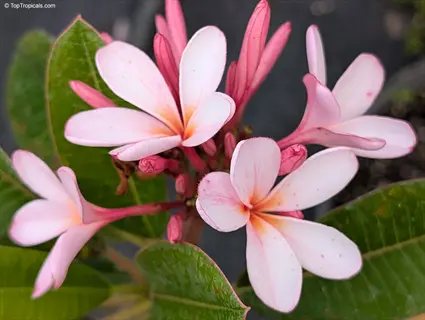
Dwarf Pink Singapore Plumeria
- Height: Stays compact at 4 to 8 feet (1.2 to 2.4 meters) tall, making it the most practical choice for container growing on balconies, patios, and indoor sunrooms.
- Flowers: Bears soft pink flowers with a sweet fragrance, blooming well even on young plants and often producing flowers within the first year from a well-rooted cutting.
- Fragrance: Produces a moderate fruity-floral scent that is less intense than full-sized rubra cultivars but still noticeable in enclosed spaces like sunrooms and covered patios.
- Leaves: Semi-evergreen with rounded obtuse leaf tips inherited from its obtusa parentage, holding foliage longer into the cool season than pure rubra varieties.
- Best for: Beginners and apartment growers because its compact size, early blooming, and semi-evergreen habit make it forgiving and rewarding even with limited growing experience.
- Container tip: Performs best in a well-draining cactus mix with a pot that has drainage holes, needing only a 10 to 14 inch (25 to 36 centimeter) container for several years.
Your best pick depends on your space and climate. Singapore plumeria handles desert heat better than rubra, while the dwarf pink variety fits on a small patio. Growers in USDA Zones 10 through 12 can plant any of these in the ground. Everyone else should stick with containers so you can bring them inside when temps drop.
Growing and Care Essentials
Good plumeria care starts with knowing how to grow plumeria in your climate. These plants thrive in USDA hardiness zones 10B through 11, with zone 9B as a stretch. If you live outside those zones, container growing is your best friend. I kept plumeria alive through Michigan winters by moving pots indoors before the first frost hit.
Your plumeria needs full sun for at least 6 hours a day to push out blooms. Less light means leggy stems and no flowers. Plant it in well-drained soil with a pH between 5.5 and 6.0. A cactus potting mix with extra perlite does the job in containers. For in ground planting, sandy loam works great as long as water drains fast after a rain.
Use a high phosphorus plumeria fertilizer like a 10-30-10 blend every 2 to 3 weeks in the growing season. That middle number drives flower production. I switched from a balanced mix to this ratio and saw double the blooms in one season. Stop feeding in fall when growth slows. The bloom period runs May through November in warm climates.
When your plumeria drops all its leaves in winter, don't panic. Think of it like a bear going into hibernation. The plant isn't dead. Its green stems still carry out photosynthesis even without a single leaf. Cut watering to almost nothing during dormancy and let the soil dry out. Overwatering a sleeping plumeria is the fastest way to kill it with root rot.
Propagation Methods
Plumeria propagation works best when you start with cuttings. I've started over 30 plants this way and the success rate beats seeds every time. Your cutting roots in 60 to 90 days and can bloom within 1 to 3 years. Seeds take 3 or more years to flower and won't match the parent plant's colors due to cross pollination.
When rooting plumeria from cuttings, the key step is callusing cuttings before you plant them. Think of it like forming a scab on a wound. That dry hard layer stops rot from setting in while new roots grow beneath the surface. You can dip the cut end in rooting hormone to speed things up, but I've had plenty root without it.
Plumeria seed propagation is fun if you want surprises. The offspring won't look like the parent because of genetic mixing from pollination. That means you might get a brand new color blend no one has seen before. But you'll wait 3 or more years for your first bloom, so patience is a must.
Taking and Preparing Cuttings
- Cut selection: Choose a healthy branch tip that is 12 to 18 inches (30 to 46 centimeters) long and at least as thick as your thumb, cutting at a 45-degree angle with clean pruning shears.
- Sap removal: Allow the milky white sap to drain completely by standing the cutting upright for 15 to 30 minutes, then wipe the cut end clean with a dry cloth.
- Callusing period: Let the cutting dry in a warm shaded area for 5 to 14 days until a firm callus forms over the cut surface, preventing rot when planted.
Rooting the Cutting
- Rooting medium: Plant the callused cutting 3 to 4 inches (7.6 to 10 centimeters) deep in a mix of perlite and cactus soil, firm the medium around the base for support.
- Moisture balance: Water once after planting and then wait until the soil dries before watering again, as excess moisture causes stem rot before roots form.
- Timeline: Expect root development in 60 to 90 days, indicated by new leaf growth at the top and gentle resistance when you tug on the stem.
Growing from Seed
- Seed collection: Harvest seed pods when they split open after 7 to 9 months on the plant, revealing 20 to 60 winged seeds inside each pod up to 8 inches (20 centimeters) long.
- Germination method: Soak seeds in warm water for 24 hours, then press the seed body into moist soil with the wing sticking up, and keep at 75°F to 85°F (24°C to 29°C).
- Patience required: Seedlings take 3 or more years to produce their first flowers, and the resulting blooms will differ from the parent plant due to genetic variation from cross pollination.
Post-Rooting Care
- Transplanting: Move rooted cuttings or seedlings into a 10 to 14 inch (25 to 36 centimeter) pot with well-draining cactus mix once strong root growth is confirmed.
- First feeding: Begin fertilizing with a diluted high phosphorus formula 4 to 6 weeks after roots establish, using half the recommended strength to avoid burning tender new roots.
- Sun transition: Increase sun exposure over 7 to 10 days, starting with morning sun and adding afternoon light to prevent sunburn on new growth.
In my experience, spring cuttings root faster than fall ones because the plant is already in active growth mode. Give your new plumeria bright indirect light for the first few weeks and resist the urge to overwater. You'll know roots are forming when you see fresh green leaves pushing out from the tip.
Cultural Symbolism Worldwide
You might think plumeria is just a pretty flower, but plumeria symbolism shows up in at least 6 cultures around the world. This bloom took on a new plumeria meaning in every land it reached. In plumeria Hawaiian culture it stands for welcome and aloha. Buddhist monks plant it as a sign of the soul's lasting journey. I walked through temple grounds in Thailand where every path had one of these trees beside it.
If you've ever received a plumeria lei, you felt the aloha spirit in a single gesture. But here's a fact most people miss: Hawaii's flower industry dropped from 83.4 million dollars in 2000 to 43.9 million in 2023. The state now imports close to 90% of its lei flowers. That gap tells you a lot about the economics behind these blooms.
Hawaiian Lei Tradition
- Welcome symbol: Plumeria leis represent aloha, welcome, and respect in Hawaiian culture, offered to visitors, honored guests, and loved ones during celebrations and farewells.
- Ear placement: Wearing a plumeria flower behind the right ear signals that a person is available and looking for a partner, while the left ear means they are taken or married.
- Industry reality: Hawaii now imports nearly 90% of its lei flowers, mostly orchids, with local floriculture revenue dropping from 83.4 million dollars to 43.9 million dollars since 2000.
Buddhist and Hindu Significance
- Buddhist immortality: Plumeria symbolizes immortality in plumeria Buddhist symbolism because the tree keeps producing flowers even after being uprooted, representing the persistence of the soul.
- Temple plantings: Plumeria trees grow around Buddhist and Hindu temples across Southeast Asia, where the fragrant blooms serve as daily offerings to sacred spaces.
- Hindu devotion: In Hindu culture, plumeria flowers represent loyalty and devotion, and people weave them into garlands for wedding ceremonies and religious festivals.
Mayan and Aztec Heritage
- Sacred origins: Plumeria held spiritual significance in ancient Mayan and Aztec civilizations, where the flowers tied to deities, fertility, and the cycle of life and death.
- Ceremonial use: The fragrant blooms played a role in rituals and offerings in pre-Columbian Mesoamerica, long before European explorers wrote about the plant in the 1500s.
- Name origin: The botanical name Plumeria honors Charles Plumier, the French botanist who wrote about the plant during Caribbean trips in the late 1600s.
National Flower Designations
- Nicaragua: Plumeria rubra serves as the national flower of Nicaragua, reflecting the plant's deep cultural roots in its native Central American and Caribbean homeland.
- Laos: Plumeria alba holds the national flower title in Laos, where it ties to Buddhist temple culture and spiritual identity across the country.
- Global reach: From its native Caribbean origins, plumeria now carries official or symbolic cultural status on 4 continents, spanning the Americas, Asia, and the Pacific Islands.
You can help by growing your own plumeria at home. The University of Hawaii now keeps over 30 varieties for local growers. I started my first tree after that trip to Thailand and you should try it too. It changed how I see what flowers mean to people.
Fragrance and Pollination
The plumeria fragrance is one of the most complex scents in the plant world. Think of it like a restaurant that pumps out amazing aromas from the kitchen but has no food on the menu. That's what plumeria does to sphinx moths every single night. The plumeria scent peaks as a nocturnal fragrance that pulls in these night flying moths.
Here's the trick: plumeria has no nectar at all. The sphinx moth lands on the flower, picks up pollen, and then flies off hungry. It visits the next bloom looking for a meal and drops off pollen in the process. Scientists call this deceptive pollination and plumeria is one of the best examples of it in nature. I've watched these moths work my garden at dusk and they never seem to catch on.
Scientists found over 110 chemical compounds in plumeria rubra alone. These include volatile oils and flavonoids that create the scent you smell on a warm evening. Some of these compounds show up in plumeria essential oil products too. The mix of jasmine, rose, and citrus notes shifts from one species to the next.
Your nose will notice a big range across species. P. rubra hits you with a strong jasmine and rose blend at night. P. obtusa gives a milder fruity scent through the whole day. P. pudica has almost no smell at all, which makes it the odd one out in the family. Search for "plumeria no nectar" and you'll see why scientists love studying this plant's tricks. If you want maximum fragrance, stick with rubra and plant it near your patio.
Pests, Diseases, and Fixes
Even the best growers deal with plumeria pests and plumeria diseases at some point. I lost a 5 year old tree to root rot because I watered it too much during winter. That mistake taught me to spot problems early and act fast. The good news is that most plumeria issues are fixable if you catch them before they spread.
Plumeria rust is the most common disease you'll face. It looks like orange powdery spots on the backs of leaves, just like rust forming on a piece of metal. Spider mites, mealybugs, and whiteflies round out the top pest list. A bottle of insecticidal soap handles all 3 of those bugs. Below you'll find each problem with clear signs to look for and the fix that works.
Spider Mites
- Identification: Tiny red or brown dots on leaf undersides, fine webbing between leaves, and stippled yellowing on upper leaf surfaces that spreads from leaf edges inward.
- Treatment: Spray leaves with insecticidal soap or a strong stream of water every 3 to 5 days for 2 weeks, targeting the undersides where mites feed and lay eggs.
- Prevention: Increase humidity around the plant with regular misting since spider mites thrive in hot dry conditions, and avoid placing plumeria near heat reflecting walls.
Mealybugs
- Identification: White cottony masses at leaf joints, branch forks, and along stems, often with sticky honeydew residue and sooty mold growth on nearby surfaces.
- Treatment: Dab clusters with a cotton swab soaked in 70% rubbing alcohol, or apply insecticidal soap spray weekly until all cottony masses vanish from your plant.
- Prevention: Inspect new plants before placing them near your existing plumeria, as mealybugs often hitchhike on nursery stock and spread fast to nearby plants.
Plumeria Rust
- Identification: Orange to yellow powdery spots on the undersides of leaves that match yellow spots on top, causing early leaf drop if you don't treat it in time.
- Treatment: Pull off and trash all affected leaves right away, then apply a fungicide with myclobutanil or copper every 7 to 14 days as the label directs.
- Prevention: Give your plants air flow by spacing them at least 6 feet (1.8 meters) apart and avoid overhead watering that keeps leaves wet for long stretches.
Root Rot
- Identification: Soft mushy stem bases, bad smell from the soil, blackened roots when you unpot the plant, and sudden wilting even though the soil stays moist.
- Treatment: Remove the plant from its pot, cut away all black or soft root tissue with sterile shears, let roots dry for 3 to 5 days, and repot in fresh dry cactus mix.
- Prevention: Use well draining cactus soil with perlite, make sure all pots have drainage holes, and cut watering to near zero during winter dormancy.
Whiteflies
- Identification: Tiny white flying insects that scatter in a cloud when you shake the leaves, leaving sticky honeydew and causing yellowed curling foliage over time.
- Treatment: Apply neem oil spray every 5 to 7 days on both sides of the leaves, or use yellow sticky traps placed near the plant to capture adults before they breed.
- Prevention: Bring ladybugs or lacewings into your garden area, as they feed on whitefly eggs and larvae before the bugs can build up large numbers.
One pest that most guides skip is the longhorn borer beetle. This insect bores into your plumeria stems and kills a branch before you notice the damage. I found one in my rubra last summer by spotting small round holes and sawdust at the base. Cut the infected branch at least 6 inches below the hole and seal the cut with pruning paste.
5 Common Myths
Plumeria is native to Hawaii and has always been part of traditional Hawaiian culture and ceremony.
Plumeria originated in the Caribbean Basin and Central America, and was introduced to Hawaii around 1860 by a German botanist, making it a relatively recent arrival.
Plumeria flowers produce sweet nectar that attracts bees, butterflies, and hummingbirds to your garden.
Plumeria flowers produce little to no nectar. They use deceptive pollination, luring sphinx moths with intense fragrance while offering no food reward in return.
All parts of the plumeria plant are highly poisonous and dangerous to touch or be around.
Only the milky sap from broken stems is irritating to skin and mucous membranes. The flowers are actually considered edible, and no deaths from plumeria exposure have been recorded.
Plumeria trees need constant watering year-round and will die if the soil ever dries out completely.
Plumeria trees are drought-tolerant and naturally drop their leaves during a winter dormancy period. Overwatering during dormancy causes root rot, which is far more dangerous than dry soil.
Growing plumeria from cuttings is unreliable and seed propagation is the better method for beginners.
Cuttings are actually the preferred and more reliable method. A 12 to 18 inch (30 to 46 centimeter) cutting roots in 60 to 90 days and blooms in one to three years, versus three or more years from seed.
Conclusion
The plumeria flower came from the Caribbean and turned into a cultural icon. You can grow this frangipani in USDA Zones 10 through 12 in the ground. If you live outside those zones, containers work great too. I've kept mine alive through cold winters using the plumeria care basics in this guide.
Growing plumeria from cuttings gives you blooms in 1 to 3 years with roots forming in 60 to 90 days. That makes this plant open to growers at every skill level. The 7 plumeria varieties in this guide cover a range from tall shade trees to compact patio plants. Pick the one that fits your space and climate and you're set.
Think of plumeria as a plant that rewards your patience. It drops its leaves in winter like a promise it will come back in spring. Every year that cycle renews with bigger clusters and stronger fragrance. The University of Hawaii now grows over 30 varieties to keep this tradition going.
When you grow a plumeria at home, you join a long line of growers who fell in love with this flower's scent, beauty, and meaning. Your tree supports local Hawaiian flower farming and keeps a cultural tradition going strong. Start with one cutting this spring and watch it turn into the centerpiece of your garden.
External Sources
Frequently Asked Questions
Is plumeria the flower of Hawaiʻi?
Plumeria is not the official state flower of Hawaii. The yellow hibiscus (Hibiscus brackenridgei) holds that title. Plumeria is strongly associated with Hawaiian lei culture but was introduced to the islands by a German botanist around 1860.
What do plumeria flowers symbolize?
Plumeria flowers symbolize new beginnings, devotion, and immortality across many cultures. In Hawaiian tradition they represent welcome and aloha, in Buddhism they signify immortality, and in Hindu culture they are tied to devotion and loyalty.
Is plumeria the same as hibiscus?
Plumeria and hibiscus are entirely different plants. Plumeria belongs to the Apocynaceae family and has waxy five-petaled flowers, while hibiscus is in the Malvaceae family with large papery blooms and a prominent central stamen.
What makes plumerias so special?
Plumerias stand out for their intense evening fragrance, waxy five-petaled blooms in dozens of color combinations, and cultural significance across six or more civilizations. They also use deceptive pollination, producing no nectar while attracting sphinx moths.
Can you touch plumeria?
You can safely touch plumeria flowers and leaves. However, the milky white sap from cut stems or branches can cause skin irritation or dermatitis in sensitive individuals. Wash your hands after pruning or handling broken stems.
Is it illegal to pick hibiscus in Hawaii?
It is generally not illegal to pick hibiscus from private property with the owner's permission or from plants growing wild. However, picking any plants in state or national parks and conservation areas in Hawaii is prohibited by law.
Is plumeria flower toxic?
Plumeria is mildly toxic. The milky sap can irritate skin and mucous membranes. If ingested, it may cause nausea and stomach upset. However, no recorded cases of death from plumeria exposure or ingestion have been documented.
What does the purple flower mean in LGBT?
The purple flower, specifically the lavender, has been associated with the LGBT community since the early 20th century. Lavender represents the blending of pink and blue, symbolizing gender fluidity and queer identity across multiple movements.
What is the English name for plumeria?
The most common English name for plumeria is frangipani. The name comes from a 16th-century Italian nobleman who created a perfume with a similar scent. Other English names include temple tree, graveyard tree, and egg flower.
What are the common problems with plumeria?
Common plumeria problems include plumeria rust (orange powdery spots on leaves), spider mites, mealybugs, whiteflies, root rot from overwatering, failure to bloom from insufficient sunlight, and stem rot during dormancy.