
Introduction
The peperomia plant is one of the best picks you can make for a small indoor space. This genus holds over 1,000 species with leaf shapes and colors you won't find in any other group. Most types stay just 6 to 15 inches tall, so they fit on your desk, shelf, or window ledge with room to spare. The National Garden Bureau named 2022 the Year of the Peperomia, but growers have kept them indoors since the 1930s.
In my experience, peperomia is the plant that turns beginners into collectors. I picked up my first one about 8 years ago after I killed a string of fussy ferns. What drew me in was its link to the Piperaceae family, the same group that gives you black pepper. Think of it like a cousin on the same family tree. They share the same roots but took very different paths through time.
This semi-succulent houseplant hides a rare trick inside its thick leaves. UC Riverside research showed that peperomia runs a hybrid C3 and CAM system inside each leaf. That means it stores water much like a true succulent does. This toughness earned it the name radiator plant because it does well in warm, dry spots near your heating vents. You can find growth forms that cascade, climb, stand erect, or spread flat along a surface.
This guide walks you through 10 popular types, care tips for every season, and ways to grow new plants from your own cuttings. You will also learn how to spot and fix common problems before they get worse. Every species here is a pet safe indoor plant that the ASPCA has checked and cleared, so your cats and dogs can share the room with no risk.
10 Popular Peperomia Varieties
About 40 peperomia varieties show up in stores out of 1,000 plus species in the wild. I tested dozens over the years and these 10 give you the best mix of good looks and easy care at home. You can spot each one by a standout trait. The watermelon peperomia has bold silver stripes while others show tiny turtle shell patterns.
If you own a peperomia but don't know which type it is, check the leaf shape and growth habit first. Upright growers like the baby rubber plant have thick, glossy leaves on stiff stems. Trailing types like string of turtles and ruby cascade send thin vines over the edge of your pot. A few of these look a lot like a ripple peperomia or even a philodendron. The profiles below help you tell each one apart with ease.
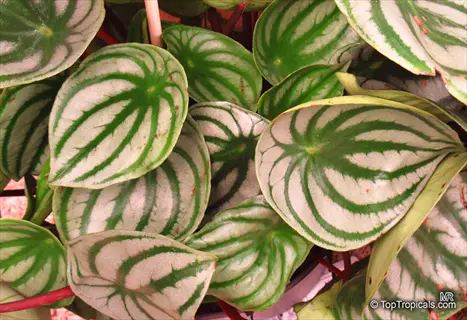
Watermelon Peperomia
- Scientific Name: Peperomia argyreia is native to South America and features round, shield-shaped leaves with striking silver and green stripes that resemble watermelon rind patterns.
- Growth Habit: This compact upright variety typically reaches 8 to 12 inches (20 to 30 centimeters) tall, making it an ideal tabletop or desk plant in small living spaces.
- Light Needs: Provide bright indirect light for the best leaf coloring, as direct sun can scorch the delicate striped patterns and cause fading on the silver markings.
- Watering Tips: Allow the top inch of soil to dry between waterings, roughly every seven to ten days during warmer months and less often during winter dormancy.
- Soil Mix: Use a well-draining mix of two parts peat or coco coir to one part perlite, keeping the soil airy to protect the small, surface level root system from rot.
- Common Issues: Watch for drooping or curling leaves, which often signal underwatering, while mushy stems and yellowing near the base typically indicate too much moisture.
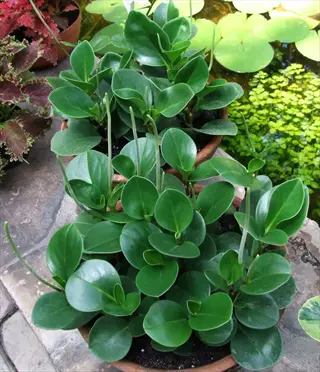
Baby Rubber Plant
- Scientific Name: Peperomia obtusifolia is one of the most widely available varieties, known for thick, glossy, spoon-shaped leaves in solid green or variegated cream and green patterns.
- Growth Habit: This upright grower can reach up to 2 feet (61 centimeters) tall indoors, making it one of the larger peperomia species commonly sold at garden centers.
- Light Needs: Tolerates a wide range of light from low to bright indirect, though variegated forms need more light to maintain their distinctive cream-colored leaf markings.
- Watering Tips: Among the more drought-tolerant peperomia varieties, Baby Rubber Plant stores water in its thick fleshy leaves and stems, so err on the side of underwatering.
- Soil Mix: A standard indoor potting mix amended with perlite or orchid bark provides the drainage this variety needs, with an ideal soil pH between 6.0 and 6.5.
- Common Issues: Leaf drop is the most frequent complaint and usually results from sudden temperature changes, overwatering, or exposure to cold drafts below 50 degrees Fahrenheit (10 degrees Celsius).
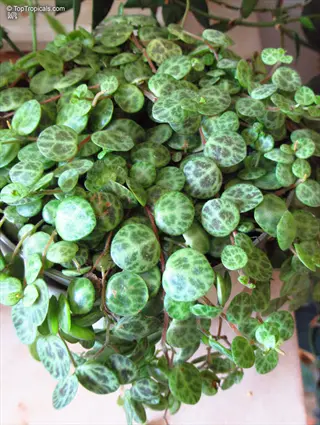
String of Turtles
- Scientific Name: Peperomia prostrata is a miniature trailing variety with tiny round leaves featuring intricate vein patterns that look like tiny turtle shells from above.
- Growth Habit: This delicate trailing species grows slowly and produces thin, thread-like stems that cascade beautifully from hanging baskets or elevated shelves.
- Light Needs: Bright indirect light brings out the strongest leaf patterns, but this species also adapts to moderate light conditions better than many other trailing houseplants.
- Watering Tips: This variety is especially sensitive to overwatering due to its fine root system, so water sparingly and let soil dry thoroughly between each session.
- Soil Mix: Use a very chunky, fast-draining mix with extra perlite, pumice, or orchid bark to prevent moisture from sitting around the delicate hair-like roots.
- Common Issues: String of Turtles is more prone to stem rot than other peperomia types, so avoid getting water directly on the leaves and stems during watering.
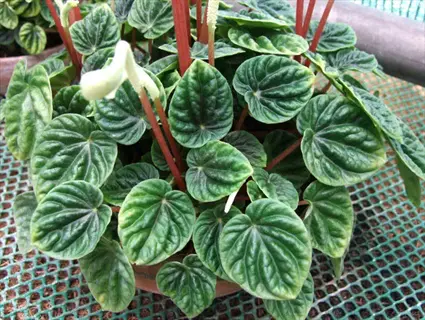
Emerald Ripple Peperomia
- Scientific Name: Peperomia caperata is prized for its deeply textured, rippled leaves that come in shades of dark green, red, silver, and even near-black depending on the cultivar.
- Growth Habit: A compact rosette-forming variety that stays under 8 inches (20 centimeters) tall, it is perfect for terrariums, window ledges, and small tabletop displays.
- Light Needs: Medium to bright indirect light works best, as too little light can cause the rippled texture to flatten and the deep colors to fade to a dull green.
- Watering Tips: This species droops visibly when thirsty, which actually serves as a useful watering indicator, but recovers quickly once the soil is thoroughly moistened.
- Soil Mix: A lightweight mix of potting soil and perlite in a 3:1 ratio keeps the fine surface roots healthy while providing enough moisture retention for consistent growth.
- Common Issues: Ripple peperomia is non-toxic to dogs, cats, and horses according to the ASPCA, making it one of the safest varieties for homes with curious pets.
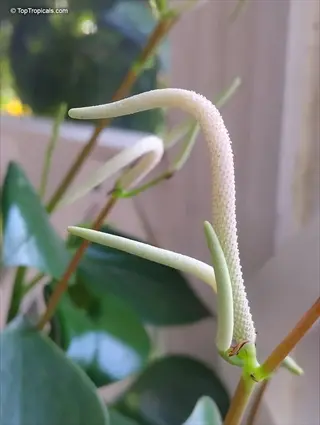
Raindrop Peperomia
- Scientific Name: Peperomia polybotrya features large, pointed heart-shaped leaves with a glossy surface that catches light, often confused with the completely unrelated Pilea peperomioides.
- Growth Habit: This upright species grows to about 12 inches (30 centimeters) tall with a bushy form, and each leaf can reach 3 to 4 inches (7 to 10 centimeters) across.
- Light Needs: Thrives in bright indirect light and tolerates short periods of gentle morning sun, which enhances the natural sheen on its thick, dark green foliage.
- Watering Tips: Water when the top two inches of soil feel dry to the touch, typically every ten to fourteen days depending on temperature and humidity in your home.
- Soil Mix: A well-draining blend of peat moss, perlite, and a small amount of orchid bark mimics the chunky, airy substrate this species grows in naturally as an epiphyte.
- Common Issues: The most common mistake is confusing Raindrop Peperomia with Chinese Money Plant (Pilea peperomioides), which has completely different care needs and belongs to a separate plant family.
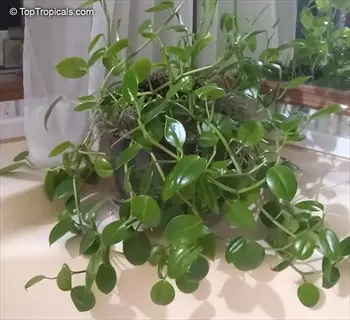
Ruby Cascade Peperomia
- Scientific Name: Peperomia 'Ruby Cascade' is a hybrid trailing variety known for its small, round leaves that display deep green on top and a striking ruby-red color on the undersides.
- Growth Habit: Trailing stems can reach 12 to 18 inches (30 to 46 centimeters) long, creating a lush cascading display from hanging baskets, macrame holders, or high shelves.
- Light Needs: Medium to bright indirect light is ideal, as brighter conditions intensify the red coloring on the undersides of the leaves, which is this variety's signature feature.
- Watering Tips: Allow soil to dry almost completely between waterings, roughly every ten to fourteen days, since the semi-succulent leaves store enough moisture to tolerate brief dry spells.
- Soil Mix: Use a fast-draining succulent or cactus mix blended with perlite at a 1:1 ratio to prevent the trailing stems from sitting in excess moisture at the soil surface.
- Common Issues: If the ruby coloring on leaf undersides fades to plain green, the plant likely needs more indirect light to maintain its vibrant two-toned appearance.
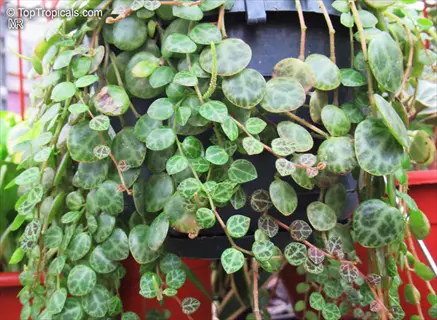
Peperomia Hope
- Scientific Name: Peperomia tetraphylla 'Hope' is a trailing hybrid with pairs of small, round, fleshy leaves growing in clusters along thin trailing stems.
- Growth Habit: This semi-trailing variety reaches about 8 inches (20 centimeters) in length and grows in a compact, mounding form before stems begin to cascade over pot edges.
- Light Needs: Adapts well to moderate light conditions and can tolerate lower light than many other peperomia species, making it suitable for rooms with limited natural sunlight.
- Watering Tips: The thick, coin-shaped leaves store water efficiently, so allow the soil to dry out between waterings and reduce frequency significantly during the cooler winter months.
- Soil Mix: A blend of standard potting soil with added perlite and coco coir works well, creating a balance between moisture retention and the drainage this variety needs.
- Common Issues: Overwatering is the primary concern with this variety, and signs include mushy stems near the soil line and leaves that become translucent or fall off easily when touched.
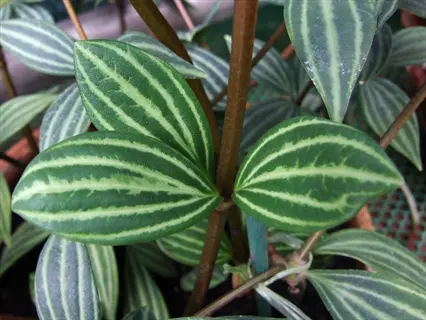
Parallel Peperomia
- Scientific Name: Peperomia tetragona (also called Peperomia puteolata) displays long, lance-shaped leaves with distinctive alternating dark and light green parallel stripes running lengthwise.
- Growth Habit: This upright grower reaches 12 to 18 inches (30 to 46 centimeters) tall with woody-looking stems and a bushy, tree-like appearance that sets it apart from rounder-leaved types.
- Light Needs: Bright indirect light keeps the parallel striping sharp and well-defined, while lower light conditions can cause the stripes to blend together and lose contrast.
- Watering Tips: Water every seven to ten days during the growing season and less frequently in winter, always checking that the top inch of soil has dried before adding more water.
- Soil Mix: A standard well-draining potting mix with perlite added works perfectly, and this species does well in terra-cotta pots because the material draws excess moisture from the soil.
- Common Issues: Leaf drop on this species often signals a watering problem, either too much or too little, so monitor soil moisture carefully rather than following a rigid schedule.
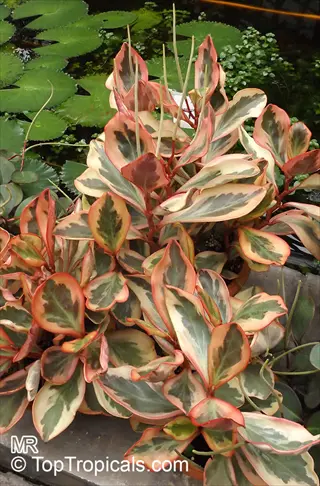
Jelly Peperomia
- Scientific Name: Peperomia clusiifolia 'Jelly' is a striking variegated variety with thick, fleshy leaves edged in pink, cream, and green gradients that give it a candy-like appearance.
- Growth Habit: This upright variety grows to about 10 to 12 inches (25 to 30 centimeters) tall with a bushy form and sturdy stems that support its heavy, colorful foliage.
- Light Needs: Bright indirect light is essential for maintaining the vibrant pink and cream variegation, as insufficient light causes the leaves to revert to plain green over time.
- Watering Tips: Like most peperomia, Jelly prefers to dry out between waterings, roughly every seven to twelve days, and is more tolerant of underwatering than overwatering.
- Soil Mix: A well-draining mix of peat or coco coir with perlite in a 2:1 ratio provides the right balance of moisture and airflow for the root system of this variety.
- Common Issues: The colorful variegation can fade in low light conditions, and new leaves may emerge with less pink coloring if the plant is not receiving enough bright filtered sunlight.
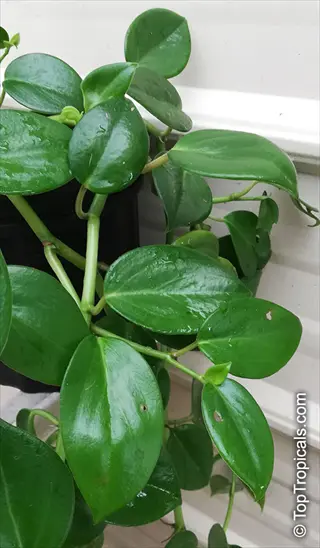
Cupid Peperomia
- Scientific Name: Peperomia scandens 'Variegata' is a trailing variety with heart-shaped leaves in cream and green that is sometimes confused with small-leaved philodendron species.
- Growth Habit: This vining species produces trailing stems up to 3 feet (91 centimeters) long, making it one of the longer-growing peperomia varieties ideal for tall bookshelves or hanging pots.
- Light Needs: Medium to bright indirect light keeps the cream-and-green variegation vivid, while too much direct sun can burn the pale portions of each heart-shaped leaf.
- Watering Tips: Water when the top inch of soil feels dry, approximately every seven to ten days during warmer months, and scale back to every two to three weeks in winter.
- Soil Mix: A light, airy mix with peat moss, perlite, and orchid bark provides the fast drainage this variety needs, as its trailing stems are especially vulnerable to base rot.
- Common Issues: Cupid Peperomia is often mistaken for a philodendron due to similar heart-shaped leaves, but its thicker, more succulent foliage and rat-tail flower spikes confirm it as a true peperomia.
Light, Water, and Soil Needs
Getting your peperomia watering, light, and soil right comes down to one key fact about how these plants grow in nature. Most species start life as epiphytes, which means they cling to tree branches and collect water from brief rain showers. Think of their roots like a flat dish rather than a deep bucket. They spread out near the surface and grab moisture fast, but they never sit in water for long.
Give your plant bright indirect light for 6 to 8 hours each day and it will reward you with strong leaf color and compact growth. An east or north facing window works best in my home, but you can also set it 3 feet back from a south facing window. If you notice stems getting long and leggy, your plant is telling you it needs more light right away.
For your peperomia soil mix, I blend potting soil and succulent mix at a 1:1 ratio with extra perlite tossed in. This well-draining potting mix stops roots from sitting in wet soil that causes rot. You can also try two parts coco coir to one part perlite for a peat free option. Aim for a soil pH of 6.0 to 6.5 for the best nutrient uptake.
In my experience, the best way to check soil is to push your finger in to the second knuckle. If it still feels damp, wait a few more days. Peperomia watering works best on a 7 to 14 day cycle that shifts with the season. Keep peperomia humidity between 40% and 60% so you don't see brown edges on your leaves. During spring and summer, feed with a peperomia fertilizer at half strength once a month and stop when fall arrives.
Seasonal Care Calendar
Your peperomia seasonal care routine changes with the calendar, and getting it right adds years to your plant's life. A healthy peperomia can live 5 to 10 years or even longer when you match your care to what the plant needs each season. I think of each season as having one clear theme that tells you what to focus on during those months.
Spring kicks off the peperomia growing season when your plant wakes up and pushes out new leaves. This is the time to repot if your plant has been in the same pot for about 5 years, start a feeding routine, and take cuttings for new plants. During the peperomia outdoor summer months, you can move pots outside once night temps stay above 60°F. Just keep them in the shade because direct sun will burn the leaves fast.
Fall is your transition window when you bring outdoor plants back inside and cut back on water and food. I always check my plants for pests before I bring them through the door. When I tested this step, it saved me from a mealybug problem that would have spread to my whole collection. Peperomia winter care means you water much less, skip the fertilizer, and keep your plant away from cold window drafts. This peperomia dormancy phase lasts until spring brings warmth back to your home.
Propagation Methods
Peperomia propagation lets you turn one healthy plant into a dozen new ones for free. I grew my whole collection from just 3 starter plants over the past few years using these methods. Spring and early summer give you the best results since your plant pushes new growth fast during those warm months.
The 4 methods below go from the easiest to the most advanced. Water propagation works great if you want to watch roots form in real time. Stem cuttings in soil skip the transplant shock step. Leaf cuttings let you grow a whole new plant from a single leaf, while peperomia division gives you instant full plants from a mature mother. A dip in rooting hormone helps speed things along for soil methods.
Water Propagation
- Best For: Beginners who want to watch roots develop in real time, as this method provides a clear visual indicator of progress and success within two to four weeks.
- How To Start: Cut a healthy stem 4 to 6 inches (10 to 15 centimeters) long just below a leaf node, remove the bottom leaves, and place the cutting in a jar of clean room-temperature water.
- Key Tips: Change the water every three to four days to prevent bacterial growth, keep the jar in bright indirect light, and wait until roots reach about 1 inch (2.5 centimeters) before transplanting to soil.
Stem Cuttings in Soil
- Best For: Intermediate growers who want faster establishment in the final growing medium, since soil-rooted cuttings skip the transplant shock that water-rooted cuttings sometimes experience.
- How To Start: Take a 3 to 5 inch (7 to 13 centimeter) stem cutting with at least two leaf nodes, dip the cut end in rooting hormone, and insert it about 1 inch (2.5 centimeters) deep into moist perlite and peat mix.
- Key Tips: Keep the soil lightly moist but never soggy, provide a clear plastic bag or humidity dome to maintain moisture around the cutting, and expect roots within four to six weeks.
Leaf Cuttings
- Best For: Adventurous growers who want to multiply plants from a single leaf, especially useful for rosette-forming species like Emerald Ripple Peperomia (Peperomia caperata).
- How To Start: Select a healthy mature leaf and cut it with at least a 1-inch (2.5-centimeter) petiole attached, then insert the petiole into moist soil or perlite at a slight angle.
- Key Tips: This method takes the longest to show results, often six to eight weeks before new plantlets emerge at the base of the leaf, so patience and consistent moisture are essential.
Division
- Best For: Mature plants that have developed multiple crowns or growth points, making it the fastest way to create two or more fully established plants from one large specimen.
- How To Start: Remove the parent plant from its pot during spring repotting, gently separate the root ball into sections ensuring each division has roots and foliage, then pot each section individually.
- Key Tips: Water divisions lightly after potting and keep them in a warm spot with moderate indirect light for two to three weeks while the roots recover and establish in their new containers.
Troubleshooting Peperomia Issues
Your peperomia will face a few peperomia problems as it grows. I learned my biggest lesson after losing a watermelon peperomia to root rot that I caught too late. The good news is that most issues give you clear warning signs before real damage sets in.
The table below sorts issues from mild cosmetic fixes to serious infections. If you see peperomia yellow leaves, that often points to too much water or bad drainage. Peperomia drooping can mean your soil is too dry or the roots have started to rot. Peperomia leaf curling shows up when humidity drops too low or pests like mealybugs and spider mites move in. Check the chart and match your plant's signs to the right fix.
When I first spotted mealybugs on my baby rubber plant, I dabbed each one with a cotton swab dipped in rubbing alcohol. That stopped the spread in about a week. Neem oil works well as a follow up spray that keeps new pests from coming back to your plant.
Pet Safety and Placement Tips
If you have pets at home, you'll love that peperomia is peperomia pet safe for your dogs, cats, and horses. The ASPCA peperomia database clears 5 species as non-toxic houseplants by name. These include Baby Rubber Plant, Emerald Ripple, Watermelon, Ivy, and Trailing types. Your furry friends can nibble a leaf and stay safe.
Your peperomia indoor placement should match the plant to the right room in your house. I tested this by moving the same plants around my home for months. Small rosette types fit great in a peperomia terrarium on your desk. Trailing types look best in a peperomia hanging basket near your window. I keep one in my peperomia bathroom where shower steam gives it extra humidity you don't have to add.
Bathroom
- Why It Works: Bathrooms provide naturally higher humidity from showers and baths, creating conditions similar to the tropical forest understory where peperomia species grow in the wild.
- Best Varieties: Emerald Ripple Peperomia and String of Turtles thrive in bathroom humidity levels, though they still need access to indirect light from a window or skylight.
- Placement Tip: Set plants on a shelf or windowsill near a frosted window where they receive filtered light, and avoid placing them directly on surfaces that stay wet after showers.
Living Room or Bedroom
- Why It Works: These rooms typically have the best natural light from larger windows, making them ideal for varieties that need bright indirect light to maintain strong leaf coloring and patterns.
- Best Varieties: Watermelon Peperomia and Baby Rubber Plant do well on side tables or shelves near east or north-facing windows where they get consistent gentle light throughout the day.
- Placement Tip: Keep peperomia at least 3 feet (91 centimeters) from south or west-facing windows to avoid direct afternoon sun, which can scorch leaves and fade variegation.
Home Office or Desk
- Why It Works: Compact peperomia varieties stay small enough to fit on desks and bookshelves without outgrowing their space, and their low-maintenance care makes them ideal for busy workspaces.
- Best Varieties: Raindrop Peperomia and Jelly Peperomia work well as tabletop plants, staying under 12 inches (30 centimeters) tall and adding visual interest without blocking monitor views.
- Placement Tip: If your desk lacks natural light, peperomia tolerates fluorescent office lighting or a small grow light for supplementation, positioned 12 inches (30 centimeters) above the plant.
Kitchen
- Why It Works: Kitchens often have moderate humidity from cooking and dishwashing, plus countertop or windowsill spots that provide the bright indirect light peperomia varieties prefer.
- Best Varieties: Baby Rubber Plant and Parallel Peperomia tolerate the temperature fluctuations common in kitchens better than more sensitive trailing species like String of Turtles.
- Placement Tip: Keep peperomia away from the stove and oven where heat spikes can stress the plant, and avoid placing them near cold drafts from exterior doors or poorly insulated windows.
5 Common Myths
Peperomia plants need constant watering because they are tropical plants that come from humid rainforests.
Peperomia have semi-succulent leaves that store water, so they prefer their soil to dry out between waterings and are prone to root rot from overwatering.
All peperomia species need the exact same care routine for light, water, and humidity levels.
Different peperomia species have varying needs; for example, trailing types like String of Turtles are more sensitive to overwatering than upright varieties like Baby Rubber Plant.
Peperomia flowers are attractive and should be left on the plant to enjoy throughout the blooming season.
Peperomia flower spikes are small and insignificant, resembling a rat's tail, and removing them redirects the plant's energy toward healthier foliage growth.
Peperomia plants need large pots with plenty of room for their root systems to grow and expand.
Peperomia have minimal root systems and actually prefer being slightly root-bound in smaller pots, so repotting only needs to happen every three to five years.
Peperomia are true succulents and should be treated with the same watering and soil as cacti and desert plants.
Peperomia are semi-succulent with a unique hybrid C3 and CAM photosynthesis, so they need more humidity and slightly more frequent watering than true desert succulents.
Conclusion
Good peperomia care comes down to a few simple rules. Give your peperomia plant bright indirect light, let the soil dry between waterings, and use a chunky mix that drains fast. Stick to these steps and your plant can thrive for 5 to 10 years or longer. About 40 common types out of 1,000 plus species work great as houseplants in your home.
In my experience, this low maintenance houseplant fits into any home, no matter how tight your space is. Every species in this guide is a pet safe indoor plant cleared by the ASPCA. I started with one baby rubber plant and now I have 12 types across my home. You don't have to pick between your pets and your plants.
The hybrid C3 and CAM system inside each leaf stores water for you. That's why your peperomia still looks great when you skip a watering or two. No other common houseplant gives you that kind of toughness with so many leaf shapes.
Start your peperomia collection with one easy type like a Baby Rubber Plant or a Watermelon. Watch how well it does in your space for a month or two. Once that first plant thrives, you'll want to try a trailing type or a bold ripple next. These plants have earned their spot as a top pick for new growers and seasoned fans alike.
External Sources
Frequently Asked Questions
How do I care for a Peperomia plant?
Provide bright indirect light, water every seven to fourteen days when the top inch of soil is dry, use well-draining soil, and keep temperatures between 65 and 75 degrees Fahrenheit (18 to 24 degrees Celsius).
Is Peperomia a good indoor plant?
Peperomia is an excellent indoor plant because it stays compact, tolerates lower light, requires minimal watering, and is non-toxic to pets.
Why is Peperomia called the radiator plant?
Peperomia earned the nickname radiator plant because it thrives in warm, dry conditions similar to those found near old-fashioned radiators.
Is Peperomia an air purifier?
Peperomia may help reduce certain indoor pollutants like formaldehyde, but scientific evidence specific to peperomia air purification is limited.
How to keep Peperomia happy?
Keep Peperomia happy by providing bright indirect light, allowing soil to dry between waterings, maintaining 40 to 60 percent humidity, and feeding with half-strength fertilizer during the growing season.
How often should I water a Peperomia?
Water a Peperomia every seven to fourteen days, letting the top inch or two of soil dry out completely between waterings.
How long do peperomia plants last?
Peperomia plants typically last five to ten years with proper care, and their lifespan can extend indefinitely through propagation.
What are the common problems with peperomia plants?
Common problems include root rot from overwatering, yellowing leaves, drooping stems, pest infestations from mealybugs and spider mites, and leaf curling from low humidity.
Is Peperomia a lucky plant?
In some cultural traditions, peperomia is considered a lucky plant believed to attract positive energy and prosperity to the home.
Do Peperomia like bathrooms?
Many peperomia varieties do well in bathrooms because they enjoy the higher humidity, as long as they receive enough indirect light.