
Introduction
Mondo grass is one of the most misnamed plants at any garden center. Despite the name, it isn't a grass at all. It goes by Ophiopogon japonicus on the plant tag. It belongs to the asparagus family, not the grass family. People also call it monkey grass, which makes things even more confusing.
I think of this plant as the quiet workhorse of shaded gardens. It fills in where lawn turf gives up and asks for almost nothing in return. I started planting it over 8 years ago in spots where fescue and bermuda kept dying under my oak trees. That first patch is still green today. In my experience, no other groundcover has matched that kind of staying power with so little effort.
NC State Extension confirms this evergreen groundcover thrives in USDA zones 6a through 10b. It resists deer, rabbits, salt, black walnut, and heavy shade. It also handles light foot traffic without complaint. Those traits make it one of the best shade groundcover options for homeowners who want a lawn alternative that needs mowing just once a year.
This guide covers what you need to grow it well. You will find real planting tips, a full care calendar, and design ideas that go far beyond what most guides offer.
8 Mondo Grass Varieties
Most guides cover 3 or 4 mondo grass varieties and call it a day. I've grown 6 of these 8 mondo grass cultivars in my own garden and can tell you each one has a distinct look and purpose. Picking the right type for your space matters more than most people realize.
Standard mondo grass is the solid, safe pick for most gardens. The black version, known as Ophiopogon planiscapus Nigrescens, brings dark drama to any bed. Dwarf mondo grass stays low and tight. Variegated mondo grass adds bright streaks to dark corners. These mondo grass varieties range from 2 inch super dwarfs to 12 inch standards.
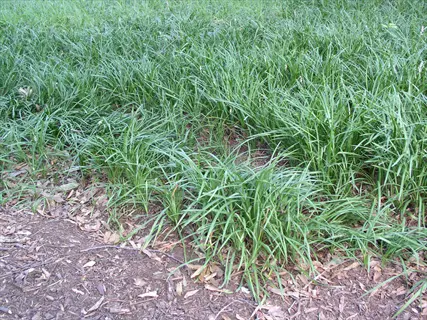
Standard Mondo Grass
- Scientific Name: Ophiopogon japonicus is the most common species, forming dense mats of dark green, grass like foliage that stays evergreen all year in USDA zones 6a through 10b.
- Height and Spread: Standard mondo grass reaches 6 to 12 inches (15 to 30 cm) tall and spreads 6 to 12 inches (15 to 30 cm) wide through underground stolons that form a thick carpet over time.
- Leaf Characteristics: Leaves grow up to 16 inches (41 cm) long, are linear in shape, dark green in shaded conditions, and a bit lighter green when grown in filtered sunlight areas.
- Flowers and Fruit: Pale lilac to white star-shaped flowers appear in summer racemes 2 to 4 inches (5 to 10 centimeters) long, followed by metallic blue berries displayed in fall.
- Best Uses: Ideal as a general-purpose groundcover under trees, along borders, between stepping stones, and as a no-mow lawn alternative in shaded residential areas.
- Planting Spacing: Space plants 4 to 12 inches (10 to 30 centimeters) apart depending on how quickly you want full coverage, with closer spacing filling in faster.
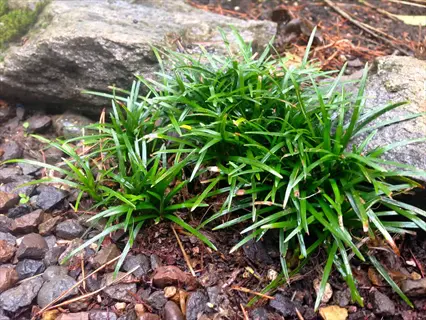
Dwarf Mondo Grass (Nana)
- Scientific Name: Ophiopogon japonicus 'Nana' is a compact cultivar that stays much shorter than the standard species, making it perfect for tight spaces and miniature garden designs.
- Height and Spread: This cultivar reaches just 2 to 4 inches (5 to 10 cm) tall, creating a low, dense mat that hugs the ground.
- Leaf Characteristics: Leaves are shorter and more tightly packed than the standard species, forming neat tufted clumps of fine-textured, dark green foliage year-round.
- Growth Rate: Nana spreads at a slower pace than standard mondo grass. It takes about 2 to 3 years to fill in a planted area when spaced 2 to 4 inches apart.
- Best Uses: Excellent for filling gaps between stepping stones, creating miniature borders, lining Japanese garden pathways, and replacing turf in small shaded patches.
- Care Note: Dwarf mondo grass is slightly more vulnerable to weed competition during establishment because of its small stature, so hand-weeding during the first year is essential.
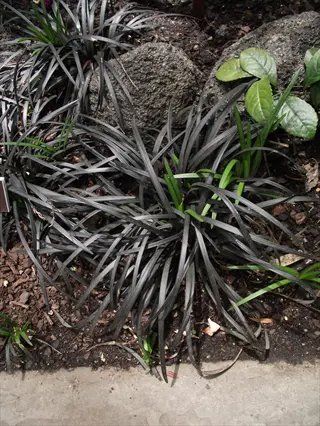
Black Mondo Grass (Nigrescens)
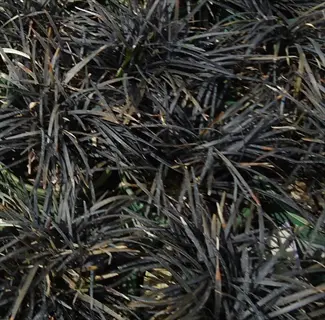
- Scientific Name: Ophiopogon planiscapus 'Nigrescens' is the most striking variety, prized for its dramatic dark purple to near black foliage that contrasts with lighter plants.
- Height and Spread: Black mondo grass grows about 6 inches (15 cm) tall with a clumping habit and spreads at a slower rate than the standard green species.
- Leaf Characteristics: Leaves emerge dark green and mature to deep purple black, creating a year round dramatic accent that gets stronger in color with more light exposure.
- Flowers and Fruit: Pink to lilac bell-shaped flowers bloom in summer, followed by dark berries, making this variety both a foliage and seasonal interest plant.
- Best Uses: Works great as a contrast plant next to silver or golden foliage, in rock gardens, as a specimen border, and in modern minimalist landscape designs.
- Design Tip: Pair black mondo grass with light-colored gravel, pale stepping stones, or silver-leaved companions like lamb's ear for maximum visual contrast in garden beds.
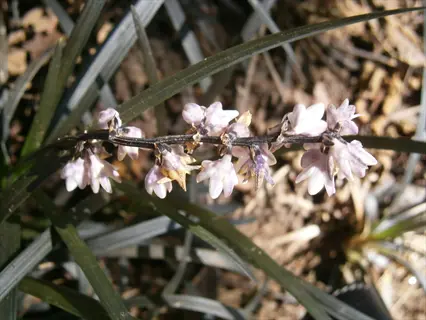
Black Dragon Mondo Grass
- Scientific Name: NC State Extension notes Ophiopogon planiscapus 'Black Dragon' as a selected cultivar, close in relation to Nigrescens but with subtle differences in growth habit.
- Height and Spread: This cultivar grows about 6 inches (15 centimeters) tall with a tighter clumping form that makes it an effective choice for small-scale accent plantings.
- Leaf Characteristics: Foliage is deep dark, almost jet black in ideal growing conditions, with narrower leaves than the standard Nigrescens cultivar.
- Cold Tolerance: Black Dragon performs well in USDA zones 6a through 10b, handling winter temperatures down to about -10°F (-23°C).
- Best Uses: Outstanding as a dramatic border accent, container specimen, or focal point in Japanese-inspired and contemporary garden designs where dark foliage creates visual depth.
- Availability Note: Black Dragon can be harder to find at local garden centers compared to the more common Nigrescens, so specialty nurseries and online retailers may be needed.

Gyoko-ryu (Super Dwarf)
- Scientific Name: Clemson Extension documents Ophiopogon japonicus 'Gyoko-ryu' as the most compact mondo grass cultivar that home gardeners can buy right now.
- Height and Spread: Leaves reach less than 1.5 inches (4 cm) long, making this the smallest mondo grass you can find and ideal for very tight planting areas.
- Leaf Characteristics: Tiny, dense tufts of dark green foliage create an almost moss-like ground texture that stays low and uniform when planted in mass groupings.
- Growth Rate: This super dwarf variety spreads at a snail's pace, so you need patience and close spacing of 1 to 2 inches (2.5 to 5 cm) apart for faster fill in.
- Best Uses: Perfect for filling cracks between pavers, creating miniature fairy gardens, lining bonsai displays, and any application where an ultra-low, fine-textured groundcover is needed.
- Unique Value: No other gardening guide profiles this cultivar right now, making it an overlooked gem for gardeners who want the most compact mondo grass option out there.
Kioto Mondo Grass
- Scientific Name: Clemson Extension lists Ophiopogon japonicus 'Kioto' as a compact cultivar that bridges the gap between standard and super dwarf sizes.
- Height and Spread: This cultivar reaches about 4 inches (10 cm) tall, placing it between the standard species and the tiny Gyoko-ryu in overall stature.
- Leaf Characteristics: Foliage is dark green, fine textured, and a bit more upright than the Nana cultivar, giving planted areas a neat, manicured look all year.
- Growth Habit: Kioto forms tight clumps that spread through stolons over time, filling in at a moderate pace that balances coverage speed with manageable growth.
- Best Uses: Well-suited for Japanese garden borders, pathway edging, formal garden designs, and anywhere a tidy groundcover height of about 4 inches is preferred.
- Availability Note: Like several lesser-known cultivars, Kioto may require ordering from specialty nurseries as most big-box garden centers stock only standard and Nana varieties.
Nippon Mondo Grass
- Scientific Name: Clemson Extension documents Ophiopogon japonicus 'Nippon' as another dwarf selection with a growth profile that differs from the popular Nana.
- Height and Spread: Nippon reaches 2 to 4 inches (5 to 10 cm) tall, making it almost identical in stature to Nana but with subtle textural differences in leaf arrangement.
- Leaf Characteristics: Leaves are short, fine, and packed tight, creating a lush carpet effect that looks great when planted in sweeping masses across shaded areas.
- Growth Rate: Like other dwarf selections, Nippon spreads through stolons at a slow pace and benefits from close planting spacing of 2 to 4 inches (5 to 10 cm) apart.
- Best Uses: Excellent for formal borders, stepping stone fillers, rock garden pockets, and small-scale groundcover applications where a tidy, low profile is essential.
- Comparison to Nana: While very similar to Nana, Nippon may show different leaf density and growth speed based on regional growing conditions and soil quality.
Variegated Mondo Grass
- Scientific Name: Several variegated cultivars exist including Ophiopogon japonicus 'Aureovariegatus', 'Variegatus', and 'Vittatus', which Clemson Extension notes are difficult to distinguish from each other.
- Height and Spread: Variegated selections grow to about the same height as standard mondo grass, reaching 6 to 12 inches (15 to 30 cm) tall.
- Leaf Characteristics: Leaves feature green and white or green and gold striping patterns that add brightness to shaded garden areas that tend to look dark and flat.
- Light Sensitivity: Variegated cultivars may need a bit more filtered light than solid green varieties to keep their striped coloring. Deep shade can cause foliage to revert toward solid green.
- Best Uses: Ideal for brightening shaded borders, adding texture variety to mass plantings of solid green mondo grass, and creating eye-catching container arrangements.
- Design Tip: Mix variegated mondo grass with solid green or black varieties to create layered visual interest in garden borders, using the striped foliage as a transitional accent.
Your best bet is to match the cultivar to the job you need done. Dwarf mondo grass works best between stones and in tight spots. Standard types handle large open areas under trees. Black and variegated mondo grass serve as accent plants that draw the eye to specific garden features.
Planting and Growing Conditions
Learning how to grow mondo grass is simpler than most people expect. Give it 4 things and it will reward you with years of green coverage: shade, moist soil, good drainage, and the right zone. I've planted it in red Georgia clay, sandy coastal soil, and loamy garden beds. It grew in all 3 spots without complaint.
Mondo grass planting works best in spring or early fall when roots can settle in before extreme heat or cold arrives. Arkansas Extension says this plant thrives where Zoysia and St. Augustine grasses fail due to shade. If you have a dark spot under trees where nothing else survives, that's your ideal mondo grass location. The right well-draining soil and proper mondo grass spacing make all the difference in how fast your patch fills in.
Sunlight and Shade Needs
- Optimal Light: Mondo grass performs best in filtered sun to full shade, producing darker green foliage in shadier spots and lighter green leaves when exposed to more sunlight throughout the day.
- Shade Champion: Arkansas Cooperative Extension recommends mondo grass for areas with little to no sunshine all year, including under dense tree canopies, north facing exposures, and narrow alleys.
- Sun Tolerance: While shade loving, standard mondo grass can handle some morning sun in cooler climates, but avoid harsh afternoon sun in southern regions which may scorch leaf tips and cause browning.
Soil Type and Preparation
- Soil Types: NC State Extension confirms mondo grass tolerates clay, loam, and sand soils, giving gardeners lots of room across many different property soil types and conditions.
- Drainage Need: Good drainage is essential despite the need for moist conditions. Amend heavy clay soils with organic matter like compost to improve drainage before mondo grass planting.
- Soil pH Range: Mondo grass prefers a pH between 5.5 and 6.5. A simple soil test kit from any garden center can confirm your soil pH before planting.
USDA Hardiness Zones
- Verified Range: NC State Extension documents mondo grass hardiness from USDA hardiness zones 6a through 10b, covering a wide swath of the United States from the mid Atlantic through the deep South.
- Cold Limits: In zone 6a, mondo grass can survive winter temperatures down to about -10°F (-23°C), though it may show some winter leaf browning.
- Regional Notes: This plant performs strongest in the Southeast where warm humidity and mild winters favor lush growth. Pacific Northwest gardeners benefit from its shade tolerance under tall conifers.
Spacing and Planting Depth
- Standard Spacing: Plant standard mondo grass 4 to 12 inches (10 to 30 cm) apart. Closer mondo grass spacing gives faster coverage but costs more. Wider spacing is budget safe but takes 2 to 3 years to fill in.
- Dwarf Spacing: Dwarf varieties like Nana and Nippon need to be spaced 2 to 4 inches (5 to 10 cm) apart to form a dense, carpet like effect within a fair timeframe.
- Planting Depth: Set the crown of each plant at soil level or just below it. Planting too deep can smother the crown and lead to rot. Going too high lets roots dry out in the open air.
Propagation by Division
- Extension Method: Mondo grass propagation works best through division. Clemson Extension says to divide in spring or early fall, making sure each section has 8 to 10 leaves for the best chance at strong growth.
- Division Timing: Mature mondo grass clumps can be divided every 2 to 3 years. This gives you free plants for expanding your planting area and also brings new life to the original clump.
- After Transplant: Water new divisions right after planting and keep the well-draining soil moist for the first 4 to 6 weeks until new roots take hold in their new location.
In my experience, Southeast gardeners will have the easiest time since warmth and humidity are a perfect match. If you're in the Pacific Northwest, plant under conifers where the canopy blocks harsh rain. Northeast gardeners in zone 6 should mulch well before the first frost to protect roots through winter.
Mondo Grass Care Essentials
Mondo grass care boils down to one simple task per season. Spring means you feed, summer means you water, fall means you divide, and late winter means you mow once. That's the whole list. I've tested this approach in my own garden for years and it keeps every patch looking great.
Clemson Extension expert Robert F. Polomski, PhD puts it best: this low maintenance groundcover needs minimum attention once it takes hold. Mondo grass maintenance is less work than almost any other plant in your yard. The care calendar below covers watering, feeding, and pruning mondo grass.
Spring Care (March to May)
- Feeding: Apply a balanced slow release mondo grass fertilizer such as 10-10-10 in early spring as new growth begins. This provides steady nutrition throughout the active growing season ahead.
- Cleanup: Remove any brown or damaged leaves by hand or with a gentle raking to clear the way for fresh new growth without dead foliage blocking it.
- Mulching: Add a thin layer of organic mulch around plants to hold moisture and block weeds during the first year. Keep mulch away from the crown.
Summer Care (June to August)
- Watering: Keep soil moist during hot summer months, which is the most important part of watering mondo grass. Established plants tolerate some dryness but still prefer regular moisture over dry conditions.
- Bloom Period: Expect pale lilac to white flowers from July through September per Clemson Extension. These flowers are small and often hidden by foliage, followed by blue berries.
- Weed Control: Hand pull any weeds that emerge through the groundcover. Mondo grass is not a true grass, so grass based herbicides won't harm it when applied with care around it.
Fall Care (September to November)
- Division Time: Early fall is a great time to divide crowded clumps. Clemson Extension says to separate sections with 8 to 10 leaves each for the strongest transplant results.
- Water Reduction: Cut back on watering as temperatures cool and growth slows down. Don't let the soil go bone dry before the first frost, though.
- Berry Display: Enjoy the metallic blue berries that appear on standard mondo grass during fall, adding seasonal charm to shaded garden areas.
Winter Care (December to February)
- Annual Mow: Pruning mondo grass is simple. Arkansas Cooperative Extension confirms this plant needs mowing just once per year. Late winter is the ideal time to shear plants back before spring growth.
- Evergreen Perk: Mondo grass stays green through most winters in zones 7 and above. In zone 6, expect some leaf browning that fresh spring growth will replace.
- Scale Control: Clemson Extension recommends treating false oleander scale during late winter with a 2% horticultural oil solution applied after the annual shearing.
When I first started growing this plant, I made the mistake of fussing over it too much. Less is more with mondo grass care. Give it the basics each season and it will reward you with a thick, green carpet that looks better every year.
Mondo Grass vs Liriope
In my years of helping new gardeners, the top question is always mondo grass vs liriope. People want to know if these are even different plants. I get the confusion because they look alike at first glance. Both are sold as monkey grass, so monkey grass identification gets confusing fast.
The difference between mondo grass and liriope comes down to a few clear traits. Mondo grass has narrower leaves, smaller flowers that hide below the foliage, and blue berries. Liriope grows taller with wider leaves, showy flowers above the foliage, and black berries. Is mondo grass the same as liriope? Not at all. Clemson Extension lists 4 key differences between these 2 plants.
One big factor that most guides skip is the invasion risk. UF/IFAS tagged liriope invasive status as a moderate risk in Florida. Mondo grass got no such flag. If you care about local ecosystems, that detail matters a lot.
When I shop for new plants, I always check the leaf width first to tell these 2 apart. Mondo grass leaves are about 1/4 inch wide while liriope leaves run closer to 1/2 inch. That quick check has saved me from buying the wrong plant more than once.
Landscape and Design Ideas
Mondo grass landscaping ideas go far beyond planting a strip along your walkway. I've used it as a mondo grass groundcover under oaks and as mondo grass border edging along my driveway. It also works great as filler between flagstone pavers. NC State Extension confirms it tolerates black walnut, deer, rabbits, salt, and heavy shade.
The best part about using mondo grass under trees and mondo grass between stepping stones is that it pairs well with other shade plants. Below you'll find 6 design ideas with companion plant pairings that no other guide covers. These mondo grass Japanese garden setups and creative uses come from years of hands on testing in my own yard.
Shade Groundcover Under Trees
- Application: Plant mondo grass under trees where traditional lawn grasses fail due to root competition and heavy shade. It fills in bare patches with lush green coverage all year.
- Companion Plants: Pair with hostas for bold leaf contrast, ferns for textural layers, and heuchera for pops of burgundy or lime color among the green carpet.
- Special Advantage: NC State Extension confirms this plant competes well with roots of other plants, making it one of the few groundcovers that thrives under established tree canopies.
Stepping Stone and Pathway Filler
- Application: Plant dwarf or super dwarf varieties between stepping stones and along garden pathways where they soften hard edges and create a finished look.
- Variety Pick: Use Nana or Gyoko-ryu cultivars for the lowest profile between stones. These stay below the stone surface so foot traffic passes over the foliage.
- Care Perk: Unlike traditional turf between pavers that needs frequent edging and mowing, mondo grass between stepping stones needs just one trim per year.
Japanese and Zen Garden Design
- Application: Mondo grass is a staple in a mondo grass Japanese garden design. It provides the lush green carpet that frames rock features, water elements, and gravel patterns.
- Companion Plants: Combine with Japanese maples, bamboo, and moss for an authentic Japanese garden feel. Use black mondo grass as a dark accent near light gravel beds.
- History: People have grown Ophiopogon in East Asian gardens for centuries, making it one of the most fitting plant choices for Japanese inspired landscape designs.
Border Edging and Bed Lining
- Application: Create clean, defined borders along garden beds, driveways, and walkways using mondo grass border edging that stays tidy without frequent trimming each season.
- Variety Pick: Standard mondo grass works well for borders 6 to 12 inches (15 to 30 cm) wide. Dwarf types create thinner, more precise lines for formal garden beds.
- Design Tip: Plant in a single straight row for formal gardens or in staggered double rows for a fuller, more natural border that fills in faster.
Erosion Control on Slopes
- Application: Mondo grass root systems help hold soil on shaded slopes and banks where erosion is a concern, such as along creek sides and gentle hillsides.
- Planting Plan: Space plants 4 to 6 inches (10 to 15 cm) apart on slopes for faster coverage. Mulch between plants during the first year to stop soil from washing away.
- Salt Factor: NC State Extension lists salt resistance as a confirmed trait, making this plant right for slopes near roadways or coastal properties with salt exposure.
Container and Indoor Planting
- Application: Grow mondo grass in containers on shaded patios, covered porches, or indoors as a low light houseplant that adds a grassy texture to your indoor plant collection.
- Container Tips: Use a draining potting mix with perlite to prevent waterlogging. Choose containers with drainage holes since this plant cannot tolerate standing water around roots.
- Indoor Pick: Black mondo grass makes a striking indoor specimen plant. Its dark foliage creates a dramatic contrast against light colored pots and bright interior spaces.
Pests, Diseases, and Solutions
Most guides list mondo grass root rot as the top problem, but that's not what the data shows. Clemson Extension names mondo grass anthracnose as the most common disease. I've seen this fungal issue pop up in my own garden during warm, humid stretches. Other mondo grass problems include mondo grass slugs, false oleander scale, and fern scale insects.
The good news is that mondo grass pests and diseases are all treatable when you catch them fast. I check my patches once a month during the growing season and that's enough to spot trouble before it spreads. The table below lists each problem from most common to least common with the fix for each one.
When I first dealt with mondo grass root rot, I panicked and pulled out a whole patch. Now I know that better drainage solves most root issues without losing plants. A bag of perlite mixed into the soil around the roots does wonders.
5 Common Myths
Mondo grass is a true grass that belongs to the same family as lawn turf and cereal grains.
Mondo grass is not a true grass at all. It belongs to the Asparagaceae (asparagus) family and is more closely related to asparagus than to any lawn grass.
Mondo grass needs full sun to grow well and will die if planted in deep shade areas.
Mondo grass actually thrives in filtered sun to full shade. Arkansas Cooperative Extension recommends it specifically for areas where sun-loving grasses like Zoysia and St. Augustine fail.
Mondo grass and liriope are the same plant, just sold under different common names at garden centers.
Mondo grass (Ophiopogon) and liriope are distinct genera. They differ in leaf width, flower visibility, fruit color (blue versus black), and cold hardiness, according to Clemson Extension.
You need to mow mondo grass every week or two, just like a regular lawn, to keep it looking tidy.
Mondo grass requires mowing only once per year, typically in late winter or early spring, according to Arkansas Cooperative Extension. This minimal mowing is one of its biggest advantages.
All mondo grass varieties look the same and grow to the same height regardless of the cultivar you choose.
Mondo grass cultivars range dramatically from 2-inch (5 centimeter) super dwarfs like Gyoko-ryu to 18-inch (46 centimeter) coarser species like Ophiopogon jaburan, with black, green, and variegated leaf options.
Conclusion
Mondo grass earns its spot as one of the best groundcover options for any shade garden. It handles USDA zones 6a through 10b, shrugs off deer and salt, and needs mowing just once a year. Few low maintenance plants can match that list of strengths. I've watched it turn the worst patches of my yard into some of the best looking areas.
Picking the right variety makes the biggest difference in your results. Dwarf types work best between stones and in tight borders. Standard mondo grass covers large shaded areas under trees. Black and variegated types add drama as accent plants. Match the cultivar to the job and you'll save time and money on your lawn alternative setup.
The growing demand for low maintenance plants and no mow landscapes makes this plant more relevant than ever. You don't need a chemistry degree or a weekend routine to keep it healthy. Feed in spring, water in summer, divide in fall, and mow once in late winter. That's the whole plan for your shade garden groundcover.
In my experience, mondo grass in the right spot with the right variety transforms problem areas into the best looking parts of your garden. Give it a shot in that dark corner where nothing else grows. You might be surprised at how little effort it takes to get a lot of green back.
External Sources
Frequently Asked Questions
What are the disadvantages of mondo grass?
Mondo grass spreads slowly, can be expensive to cover large areas, does not tolerate heavy foot traffic, and may become invasive in certain southern climates.
What is mondo grass used for?
Mondo grass is used as a shade-tolerant groundcover, lawn alternative, border edging, stepping stone filler, and erosion control plant in residential landscapes.
Where is the best place to plant mondo grass?
The best place to plant mondo grass is in a shaded or partially shaded area with moist, well-draining soil, such as under trees, along walkways, or between stepping stones.
Can mondo grass grow in shade?
Yes, mondo grass thrives in shade and is one of the best groundcovers for areas with filtered sun to full shade.
Is mondo grass toxic to dogs?
Pet toxicity data for mondo grass lacks strong authoritative sourcing. Some sources list it as non-toxic while others warn about potential risks, so caution is advised.
What are common Mondo grass problems?
Common problems include anthracnose fungal disease, root rot from overwatering, slug damage, false oleander scale, and yellowing leaves from too much direct sunlight.
How big does Mondo grass get?
Standard mondo grass grows 6 to 12 inches (15 to 30 centimeters) tall, while dwarf varieties reach only 2 to 4 inches (5 to 10 centimeters).
What is another name for mondo grass?
Mondo grass is also called monkey grass, dwarf lilyturf, and snake's beard. Its scientific name is Ophiopogon japonicus.
What is poor man's grass?
Poor man's grass typically refers to low-cost groundcover alternatives to traditional turf, including mondo grass, clover, and creeping thyme.
What are the downsides of dwarf grass?
Dwarf mondo grass is slow to fill in, more expensive per square foot than standard varieties, and vulnerable to being overtaken by weeds before it fully establishes.