
Introduction
Few plants grab your eye like the mandevilla plant does. Bold trumpet-shaped flowers bloom in pink, red, and white from late spring through fall. This tropical vine brings the lush look of a resort patio to any garden or balcony with less fuss than you might expect. The genus holds 179 recognized species. It gets its name from Henry Mandeville, a British diplomat who first brought specimens from Brazil.
I started growing mandevilla about 8 years ago after I spotted one at a local nursery. That first plant hooked me because it bloomed nonstop from June until frost. It asked for very little in return. Since then I've tested dozens of varieties in containers, on trellises, and in garden beds.
What makes this flowering vine stand out is how fast breeders keep improving it. In 2022 a team at the University of Padova mapped the mandevilla genome for the first time. Growers now create compact shrub forms and new colors like bluish purple. You no longer need a big garden or a tall trellis to enjoy this plant.
This guide covers what you need to grow a healthy mandevilla. You'll find a seasonal care calendar and propagation tips. It also has pest fixes and a clear look at the mandevilla versus dipladenia debate. Let's get your tropical vine off to the best start.
8 Popular Mandevilla Varieties
Picking the right mandevilla varieties starts with knowing how much space you have. Some types are climbing mandevilla vines that shoot up 15 feet or more on a trellis. Others are compact mounding mandevilla shrubs that sit neatly in a hanging basket or window box.
Most plants at the garden center are hybrids with M. sanderi as the parent species. I've grown 6 of the 8 varieties on this list in my own garden. I sorted each one below by best use. You'll spot pink mandevilla climbers and red mandevilla picks. White mandevilla options are here too.
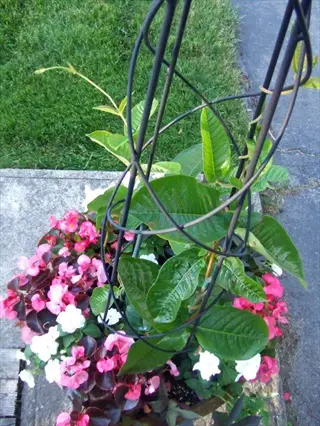
Sun Parasol Giant Pink
- Best For: Large trellises, arbors, and pergolas where a bold vertical display of color is the primary landscaping goal for the growing season.
- Flower Size: Produces enormous trumpet-shaped blooms measuring up to 5 inches (12.7 centimeters) across in vibrant rose-pink with a deeper pink throat.
- Growth Habit: A vigorous climbing vine that reaches 12 to 15 feet (3.7 to 4.6 meters) in height during a single growing season with proper support.
- Care Notes: Requires a sturdy trellis or support structure and benefits from biweekly feeding with high-phosphorus fertilizer during active growth.
- Hardiness: Grows as a perennial in USDA Zones 10 to 11 and should be brought indoors when temperatures drop below 50°F (10°C).
- Standout Feature: Self-cleaning flowers drop spent blooms on their own, which cuts maintenance and keeps the plant looking fresh all season.
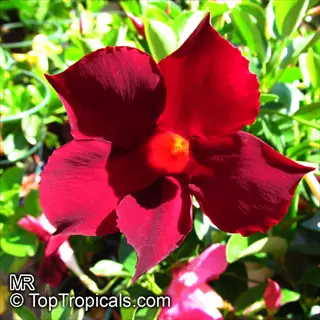
Sun Parasol Giant Crimson
- Best For: Creating a dramatic focal point on a patio wall, mailbox post, or garden entrance where deep red color draws immediate attention.
- Flower Size: Rich crimson-red blooms reach 4 to 5 inches (10.2 to 12.7 centimeters) in diameter with a velvety texture that deepens in full sun.
- Growth Habit: Strong climbing vine growing 10 to 15 feet (3 to 4.6 meters) tall and twining around any vertical support structure offered.
- Care Notes: Thrives in full sun with at least six hours of direct light daily and performs best in well-draining soil with consistent moisture.
- Hardiness: Frost-tender like all mandevilla and performs as a perennial only in USDA Zones 10 and 11 with protection from cold winds.
- Standout Feature: The deep crimson color holds without fading throughout the blooming season, unlike some pink varieties that lighten with age.
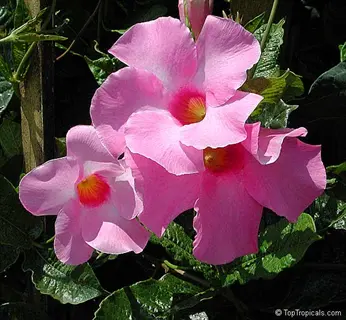
Alice du Pont
- Best For: Classic cottage gardens, large containers on patios, and established garden beds where a tried-and-true performer is valued over novelty.
- Flower Size: Medium-pink flowers reach up to 4 inches (10.2 centimeters) wide and 2 inches (5.1 centimeters) long, appearing in generous clusters.
- Growth Habit: One of the most vigorous climbers, reaching 20 feet (6.1 meters) or more in frost-free climates with large glossy dark green leaves.
- Care Notes: Benefits from regular pruning to control size and shape, and responds well to being trained on trellises, pergolas, or garden arbors.
- Hardiness: Perennial in USDA Zones 10 to 11 and one of the most widely grown mandevilla cultivars available at garden centers nationwide.
- Standout Feature: Considered the benchmark cultivar for mandevilla, offering reliable heavy blooming from late spring through the first frost of fall.
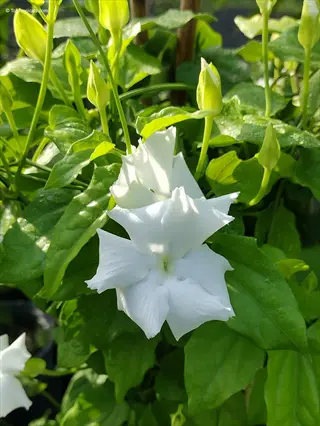
Chilean Jasmine (M. laxa)
- Best For: Gardeners in cooler climates who want a fragrant mandevilla species that can survive mild winters without full indoor overwintering.
- Flower Size: Smaller white flowers about 2 inches (5.1 centimeters) across that grow in clusters and release a strong gardenia-like sweet fragrance.
- Growth Habit: Deciduous vine reaching 15 to 20 feet (4.6 to 6.1 meters) with thinner stems and lighter foliage than most hybrid mandevilla types.
- Care Notes: This species is more cold-tolerant than other mandevilla, with roots surviving temperatures as low as 5°F (-15°C) per Clemson Extension.
- Hardiness: The hardiest mandevilla species available, able to survive outdoors with root mulching in USDA Zones 7b to 8 during mild winters.
- Standout Feature: The only common mandevilla with a strong fragrance, making it ideal for planting near seating areas, porches, and bedroom windows.
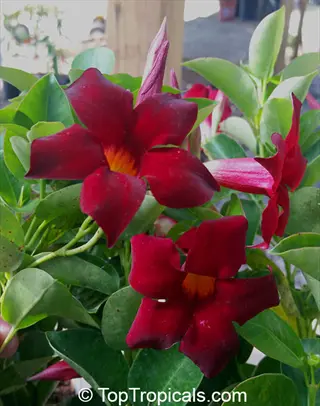
Red Riding Hood
- Best For: Compact spaces, small patios, and balconies where a full-size climbing vine would overwhelm the available growing area and support structures.
- Flower Size: Bright cherry-red blooms measure 2 to 3 inches (5.1 to 7.6 centimeters) across, produced nonstop from early summer through fall.
- Growth Habit: A more compact variety reaching 6 to 8 feet (1.8 to 2.4 meters) with a bushier form that works well on small trellises or obelisks.
- Care Notes: A great fit for container growing due to its moderate size, and it responds well to pinching back growing tips for bushier growth.
- Hardiness: Frost-tender and best grown in containers that can move indoors with ease once nighttime temperatures start dropping in autumn.
- Standout Feature: Compact enough for tabletop trellises and window boxes while still producing the classic trumpet-shaped blooms mandevilla is known for.
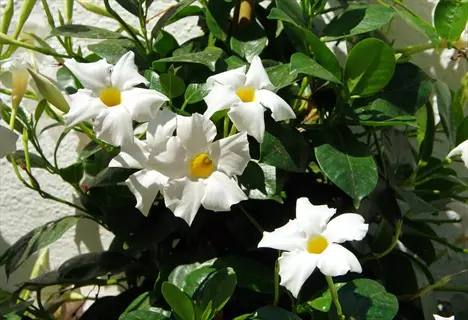
Sun Parasol Giant White
- Best For: Creating an elegant, clean look on white garden structures, arbors, or as a backdrop for colorful companion plantings in mixed containers.
- Flower Size: Large pure white blooms reaching 4 to 5 inches (10.2 to 12.7 centimeters) across with a subtle yellow throat that adds warmth.
- Growth Habit: Vigorous climbing vine growing 10 to 15 feet (3 to 4.6 meters) tall with the same robust growth rate as the pink and crimson varieties.
- Care Notes: White flowers show water spots fast, so watering at the base rather than overhead helps maintain the pristine appearance of blooms.
- Hardiness: Performs as a perennial in USDA Zones 10 and 11, and like other Sun Parasol types, is best overwintered indoors in colder regions.
- Standout Feature: White blooms create stunning evening garden displays as they seem to glow in low light, attracting night-flying moths and pollinators.
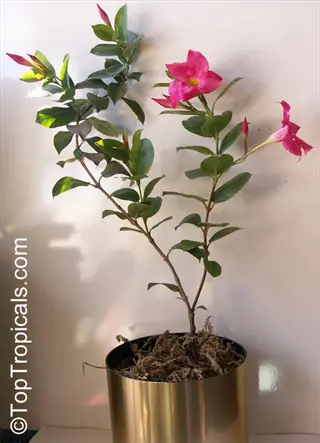
Costa del Sol Pink
- Best For: Hanging baskets, mixed container arrangements, and ground cover applications where a mounding non-climbing growth habit is preferred.
- Flower Size: Medium-sized soft pink flowers measuring 3 to 4 inches (7.6 to 10.2 centimeters) across, blooming without the need for deadheading.
- Growth Habit: A mounding dipladenia type that stays compact at 1 to 2 feet (0.3 to 0.6 meters) tall and spreads outward rather than climbing upward.
- Care Notes: Does not require a trellis or support structure, making it the easiest mandevilla type for beginners who want minimal maintenance.
- Hardiness: Frost-tender and best suited for container growing in all regions, allowing easy transport indoors when cold weather arrives.
- Standout Feature: The bushy mounding habit fills hanging baskets and window boxes with ease, giving you the same showy flowers without any climbing support.
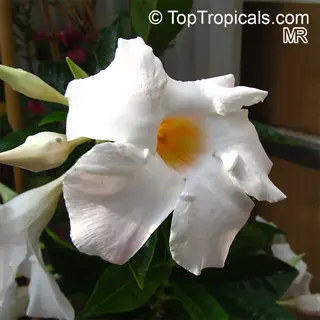
Mandevilla boliviensis
- Best For: Gardeners seeking an elegant species mandevilla with a more refined appearance and moderate growth that does not overwhelm smaller gardens.
- Flower Size: Delicate white flowers with golden-yellow throats measuring 2 to 3 inches (5.1 to 7.6 centimeters) across, appearing in small graceful clusters.
- Growth Habit: A moderate climber reaching 6 to 10 feet (1.8 to 3 meters) with slender stems and narrower leaves than the larger hybrid varieties.
- Care Notes: Prefers bright indirect light or morning sun with afternoon shade in very hot climates, unlike most mandevilla that handle full sun all day.
- Hardiness: Perennial in USDA Zones 10 to 11 and does best with a bit more humidity than hybrid varieties, making it well-suited for bathroom windows.
- Standout Feature: The species parent of many commercial hybrids, giving you a more natural and understated look than the large flowered Sun Parasol types.
The Sun Parasol mandevilla series gives you the widest range of sizes and colors in one product line. Alice du Pont remains the classic go-to climber for large spaces. For small patios or balconies, a mounding type like Costa del Sol Pink keeps things simple without a trellis.
Mandevilla Care Essentials
Good mandevilla care comes down to a few key numbers. Nail the mandevilla light requirements first. Then pick the right mandevilla fertilizer and water on a set schedule. The table below works as a quick reference card you can save to your phone or print for your potting bench.
I keep this chart posted in my garden shed because it saves me from guessing. Your mandevilla wants full sun for at least 6 hours a day and well-draining soil with a pH between 6.0 and 8.0. Mandevilla watering is simple once you know the rule: water deep, then let the top inch dry before you soak it again. Mandevilla pruning in late winter keeps the vine tidy and pushes out new growth for more blooms.
Planting and Propagation
If you want to know how to propagate mandevilla, stem cuttings are the best route for home growers. Mandevilla propagation from seed can work, but the results are a mixed bag. Variable chromosome counts in this genus mean seedlings often look nothing like the parent plant. Mandevilla cuttings give you an exact copy every time.
One big tip before you start: mandevilla will not root in water. I lost 3 cuttings before I learned that lesson. You need a solid rooting medium like perlite or sterile seed mix and a dose of rooting hormone for the best odds. Mandevilla planting in a container takes the right prep too. The guide below walks you through it.
Stem Cuttings in Spring
- When to Cut: Take stem cuttings in late spring when new growth is active and stems are semi-hardwood, not too soft or too woody for rooting success.
- How to Cut: Use clean sharp pruners to cut a 3 to 4 inch (7.6 to 10.2 centimeter) section below a leaf node, removing lower leaves and keeping two upper leaves.
- Rooting Medium: Dip the cut end in powdered rooting hormone and insert into moist perlite, vermiculite, or a sterile seed-starting mix for best drainage.
- Environment: Cover with a clear plastic bag or humidity dome and maintain temperatures of 70 to 75°F (21.1 to 23.9°C) in bright indirect light.
- Timeline: Roots develop within 3 to 4 weeks; tug the cutting after this period to feel for resistance that shows root growth.
Preparing the Planting Site
- Location: Choose a spot receiving at least 6 hours of direct sunlight with protection from strong winds that can damage the twining stems and blooms.
- Soil Prep: Amend heavy garden soil with coarse sand or perlite to improve drainage, aiming for a loose well-draining mix with a pH between 6.0 and 8.0.
- Timing: Wait until nighttime temperatures stay above 60°F (15.5°C) before transplanting mandevilla outdoors in spring.
- Support: Install a trellis, obelisk, or other support structure at planting time so the vine can begin climbing right away without stem damage from later setup.
Container Planting Tips
- Pot Size: Choose a container 2 inches (5.1 centimeters) larger in diameter than the nursery pot, with drainage holes in the bottom to prevent waterlogging.
- Potting Mix: Use a high-quality peat-based potting mix combined with perlite at a ratio of two parts mix to one part perlite for best drainage and airflow.
- Planting Depth: Set the root ball at the same depth as it was in the nursery container, pressing soil firm around the base to remove air pockets.
- First Watering: Water deep until liquid flows from drainage holes, then allow the top inch (2.5 centimeters) of soil to dry before watering again.
Repotting Established Plants
- When to Repot: Move to a larger container when roots circle the bottom of the pot or emerge from drainage holes, which happens every 1 to 2 years in spring.
- New Pot Size: Increase container diameter by 2 inches (5.1 centimeters) at a time; too large a jump in pot size can lead to overwatering and root rot issues.
- Root Care: Loosen circling roots before placing in fresh potting mix to encourage outward growth rather than continued circular root binding patterns.
- After Repotting: Water well and place in bright indirect light for a few days before returning to full sun to reduce transplant stress on the root system.
If your mandevilla cuttings turn black or mushy at the base, the medium is too wet. Cut back on misting and make sure excess water can drain out. A failed cutting does not mean you should give up. Take 2 or 3 cuttings at once so you have backups. Once rooted, move each one into its own mandevilla container to grow on.
Mandevilla vs Dipladenia
The mandevilla vs dipladenia debate trips up a lot of buyers at the garden center. Dipladenia used to be its own genus, but it was folded into Mandevilla years ago. Both names now point to the same group. Stores still label them as if they are different species though.
The real difference comes down to mandevilla growth habit. A climbing mandevilla is a true vine that shoots up 10 to 20 feet on a trellis. A mounding mandevilla stays short at 1 to 2 feet and spreads out like a small shrub. Breeders crossed these two forms, and the 2022 Palumbo study confirmed that most plants in stores are hybrids with M. sanderi as the shared parent.
That crossing is why labels can be wrong. MSU Extension says mislabeling is common at stores. When I first started buying these plants, I brought home a "mandevilla" that never climbed at all. My tip: check the leaf size and stem thickness before you buy. Climbing types have larger leaves and thicker stems. Mounding types show smaller glossy leaves and stay compact from the start.
Use this table as a quick guide the next time you shop. If you want a vine for a trellis, look for a climbing mandevilla tag. If you need something for a basket or window box, grab a mounding type. Both give you the same stunning blooms, just in very different shapes.
Pests, Diseases, and Fixes
Even a healthy vine can run into mandevilla pests and mandevilla diseases now and then. I've battled mandevilla spider mites during dry summer heat. Mandevilla mealybugs showed up on plants I moved indoors for winter. The key is catching these problems early before they spread.
Below you'll find 5 common issues set up as a quick diagnostic guide. Each one shows the symptom you see, the cause behind it, and the fix to use right away. Keep a bottle of insecticidal soap and neem oil on hand because those 2 products solve most problems. Mandevilla yellowing leaves is one of the top searches, so that gets its own entry too.
Spider Mites
- Symptoms: Fine webbing on leaf undersides, tiny yellow or white speckles on upper leaf surfaces, and leaves that appear dusty or faded in color.
- Cause: Dry hot conditions and low humidity create the ideal environment for red spider mites to reproduce fast on stressed mandevilla plants.
- Treatment: Spray both sides of leaves with a strong water stream first, then apply insecticidal soap or neem oil every 5 to 7 days until mites are gone.
- Prevention: Boost humidity around the plant by misting or grouping potted plants together, and do this more during indoor overwintering periods.
Mealybugs and Scale
- Symptoms: White cottony masses in leaf joints for mealybugs, or hard brown bumps along stems for scale insects, both with sticky honeydew residue.
- Cause: These sap-sucking insects thrive on stressed or overwatered mandevilla plants and spread fast in warm indoor settings during winter storage.
- Treatment: Remove insects with a cotton swab dipped in rubbing alcohol, then apply insecticidal soap spray to all plant surfaces that are affected.
- Prevention: Inspect plants before bringing indoors for winter and quarantine new plants for 2 weeks before placing near your current collection.
Anthracnose Leaf Spot
- Symptoms: Dark brown or black spots with defined borders on leaves, sometimes with a yellow halo, leading to leaf drop in severe cases.
- Cause: Caused by Colletotrichum species fungi that thrive in warm wet conditions, and leaves that stay wet for long periods from overhead watering.
- Treatment: Remove and discard affected leaves right away, improve air circulation around the plant, and apply a copper-based fungicide if needed.
- Prevention: Water at the base of the plant rather than overhead, space plants to allow good airflow, and avoid working with wet foliage in humid weather.
Yellowing Leaves
- Symptoms: Older lower leaves turning yellow and dropping off, or new leaves coming in pale yellow-green rather than the deep green you expect.
- Cause: Overwatering is the most common cause, but iron chlorosis from high-pH soil and too little light during indoor growing also trigger yellowing.
- Treatment: Check soil moisture before watering and ensure proper drainage; test soil pH and apply chelated iron if pH is above 7.0 and chlorosis is suspected.
- Prevention: Use a well-draining potting mix with perlite, make sure containers have drainage holes, and give the plant maximum sunlight all year.
Failure to Bloom
- Symptoms: Lots of healthy green foliage but few or no flowers forming, even though the plant looks vigorous and well-established in its pot.
- Cause: Not enough sunlight is the top reason, followed by too much nitrogen fertilizer that pushes leaves over flowers and lack of pruning for new growth.
- Treatment: Move the plant to a spot with at least 6 hours of direct sun, switch to a high-phosphorus 10-20-10 fertilizer, and prune back leggy stems.
- Prevention: Keep the plant in the sunniest spot you have, feed with phosphorus-rich food every 2 weeks through summer, and prune in late winter.
Seasonal Care Calendar
This seasonal care chart takes the guesswork out of knowing what to do with your mandevilla each season. Mandevilla overwintering trips up more growers than any other task. The fall and winter rows below get extra detail. I check this chart at the start of every season in my own garden.
Spring pruning matters most because mandevilla blooms on new growth only. Cut the vine back and you get more branches, more buds, and more flowers by summer. Mandevilla cold tolerance is low, so timing your move indoors in fall can save a plant you've spent years growing. Your vine goes into mandevilla dormancy when winter hits. It needs less water and zero fertilizer during that rest period.
Mandevilla winter care is all about patience. Your vine may drop some leaves, and growth will slow to a crawl. That's normal. Just keep the pot near a bright window and water once every 2 to 3 weeks. Come spring it will push out fresh stems and reward you with another round of blooms.
5 Common Myths
Mandevilla needs shade to avoid burning because it is a tropical plant that cannot handle direct sun exposure.
Mandevilla actually requires at least six hours of direct sunlight daily and produces the most flowers in full sun conditions.
You should water mandevilla every day because tropical plants always need constant moisture to survive and flower well.
Overwatering causes root rot; mandevilla prefers the top inch (2.5 centimeters) of soil to dry between waterings for healthy root growth.
Mandevilla and dipladenia are completely separate plants that belong to different families and require different growing approaches.
Dipladenia is a former genus name now classified under Mandevilla, and both share similar care needs despite different growth habits.
Pruning mandevilla removes flower buds and prevents blooming for the entire season ahead, so you should avoid cutting it back.
Mandevilla blooms on new growth, so pruning encourages fresh stems and actually increases the number of flowers produced each season.
All yellow mandevilla flowers come from the same genus as pink and red varieties sold in garden centers and nurseries.
Plants sold as yellow mandevilla typically belong to different genera such as Urichtes lutea or Pentilinon luteum, not true Mandevilla.
Conclusion
Growing a mandevilla plant well comes down to a few core habits. Give your tropical vine at least 6 hours of full sun each day and feed it a 10-20-10 fertilizer every 2 weeks in summer. Bring it inside before frost and let it rest with less water. Choose a climbing form for trellises or a mounding type for baskets based on your space.
The genus has 179 recognized species and new compact hybrids keep coming to stores. There's a mandevilla for every spot, big or small. Mandevilla care is a long-term investment. Plants that overwinter well come back bigger and bloom more each year. Stem cuttings give you a free way to grow your collection over time.
Use the seasonal care calendar in this guide to stay on track all year. In my experience, spring pruning and the right fertilizer make the biggest difference. My flowering vine rewards me with more blooms every season because I tested this routine over many years.
This plant is forgiving for beginners and rewarding for growers who have been at it for years. Start with one mandevilla this spring and see how fast it wins you over.
External Sources
Frequently Asked Questions
Do mandevilla come back every year?
Mandevilla returns each year in USDA Zones 10 and 11 where it grows as a true perennial. In colder zones, gardeners can overwinter the plant indoors or treat it as an annual.
Is a mandevilla plant indoor or outdoor?
Mandevilla grows best outdoors in warm climates but adapts well to indoor growing near a bright, south-facing window during cooler months.
How do you take care of a mandevilla plant in the winter?
Move the plant indoors before frost, reduce watering, stop fertilizing, and place it in a bright room with temperatures above 50°F (10°C).
How do you care for a potted mandevilla plant?
Use well-draining potting mix, water when the top inch of soil dries out, provide a support structure, and fertilize every two weeks with high-phosphorus fertilizer.
Do mandevilla lose leaves in winter?
Yes, mandevilla often drops some or all leaves during winter dormancy, especially when brought indoors to lower light conditions.
What is the lifespan of a mandevilla?
A well-maintained mandevilla can live for many years, often exceeding a decade when overwintered properly and given adequate care each growing season.
Are mandevillas poisonous to touch?
The milky sap can cause skin irritation in sensitive individuals, so wearing gloves during pruning or handling is recommended.
Do mandevilla grow better in pots?
Mandevilla performs very well in pots because containers allow easy relocation indoors during cold weather and provide the well-draining conditions these plants prefer.
How do I get my mandevilla to bloom after winter?
Gradually increase light exposure, resume regular watering and fertilizing with high-phosphorus food, and prune back leggy growth to encourage fresh flowering stems.
How do I save my mandevilla for next year?
Before the first frost, bring the plant inside, cut it back by a third, reduce watering, and store it in a cool bright location until spring.