

Introduction
About 59 million Americans put out bird feeders each year. A hummingbird feeder is one of the best ways to attract hummingbirds to your yard. But wild bird numbers have dropped by almost a third since 1970 according to the U.S. Fish and Wildlife Service. What you put in your feeder and how you care for it matters now more than ever.
I've set up and tested feeders in my own garden for over 8 years now. Most advice online skips the science and just repeats the same old tips. This hummingbird feeder guide goes further. I combined real research from UC Davis and Penn State Extension with lessons I learned through trial and error at home.
Think of a good feeder like a clean restaurant. The food quality and hygiene determine whether your visitors come back. You'll learn the right nectar recipe and the best cleaning schedule. You'll also find out where to hang your feeder so birds stay safe from windows and predators.
The Audubon Society says feeders should add to native plants, not take their place. This guide covers both sides. You'll learn how to build a yard that helps hummingbirds thrive all year long.
8 Best Hummingbird Feeders
Picking the best hummingbird feeder comes down to one thing above all else. Penn State Extension says ease of cleaning matters most because dirty feeders cause fatal fungal infections. I've tried dozens of types of hummingbird feeders over the years. The 8 styles below cover every setup from a small apartment to a big backyard.
Glass versus plastic is a big debate among birders. Glass hummingbird feeder models don't scratch or stain and they last for years. Plastic feeders are lighter and won't crack in the cold. Look for BPA free plastic if you go that route. Either way, make sure you can take the feeder apart fast for scrubbing.
I sorted each feeder by its best use so you can find your match fast. A saucer hummingbird feeder works great for easy care. A window hummingbird feeder gives you close up views right from your couch. There's a perfect style for every situation below.
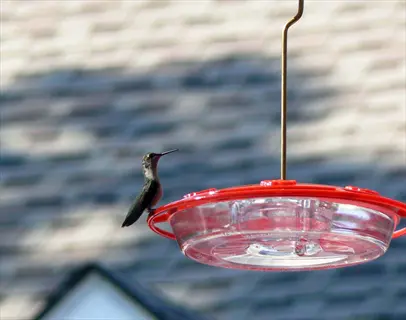
Saucer Style Feeder
- Design: The saucer feeder uses a flat dish shape that holds nectar below the feeding ports, preventing leaks and drips that attract ants and wasps to the feeding station.
- Cleaning: This style disassembles into just two or three pieces, making it the easiest hummingbird feeder to wash thoroughly with hot water and a bottle brush every few days.
- Pest resistance: Because nectar sits below the ports rather than above them, bees and wasps have a much harder time reaching the sugar water compared to bottle-style designs.
- Capacity: Saucer feeders typically hold 8 to 12 ounces (237 to 355 milliliters) of nectar, which is ideal for one or two visiting hummingbirds without wasting excess solution.
- Durability: Most saucer models are made from polycarbonate plastic that resists cracking in sun and cold, and many are dishwasher safe for convenient deep cleaning.
- Best for: First-time hummingbird enthusiasts who want a low-maintenance feeder that is simple to fill, easy to clean, and naturally resistant to insect problems.
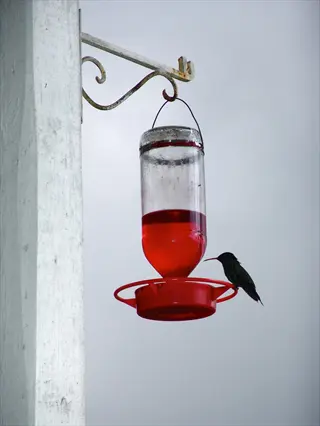
Glass Bottle Feeder
- Design: The classic bottle feeder uses an inverted glass reservoir that creates a vacuum seal, slowly releasing nectar down to the base ports as hummingbirds drink throughout the day.
- Capacity: These feeders hold 16 to 32 ounces (473 to 946 milliliters) of nectar, making them a strong choice for yards with multiple hummingbirds visiting regularly during peak season.
- Cleaning: Glass does not scratch or stain like plastic, so it stays clear and free of buildup over time, though the narrow bottle neck may require a long brush to scrub.
- Visibility: The transparent glass lets you monitor nectar levels and spot cloudiness or discoloration that signals spoilage, helping you know right when to change the sugar water.
- Weather resistance: Glass holds up well in direct sun without warping or releasing chemicals, but it can crack in freezing temperatures if nectar expands inside the reservoir.
- Best for: Experienced birders who want a large-capacity feeder with excellent visibility and long-term durability in moderate climates without harsh winter freezing.
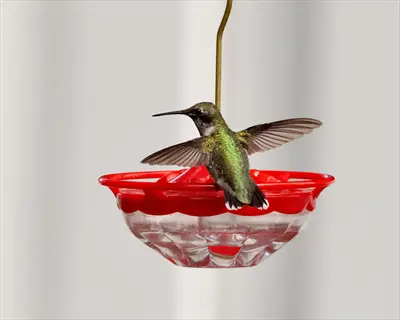
Window Mounted Feeder
- Design: Window feeders attach directly to glass with suction cups, placing hummingbirds just inches away for close up viewing while you watch from inside your home.
- Safety note: The U.S. Fish and Wildlife Service recommends placing feeders either within 3 feet (0.9 meters) or beyond 30 feet (9.1 meters) of windows to reduce collision risk.
- Capacity: Most window models hold 4 to 8 ounces (118 to 237 milliliters), which means you need to refill more frequently but waste less nectar between cleaning sessions.
- Cleaning: The small size and simple construction make window feeders quick to detach, rinse, and reattach, supporting the daily or every-other-day cleaning schedule experts recommend.
- Engagement: These feeders offer an unmatched viewing experience for children and beginners learning to identify species like ruby-throated or Anna's hummingbirds up close.
- Best for: Apartment dwellers, families with young children, or anyone who wants an intimate viewing experience without needing a large yard or garden setup.
Top-Fill Feeder
- Design: Top-fill feeders have a wide opening lid on top that lets you pour in fresh nectar without flipping the feeder upside down, reducing spills and mess during refills.
- Cleaning: The wide mouth opening allows your hand or a sponge to reach right inside the reservoir, making thorough scrubbing faster and more effective than narrow-neck designs.
- Convenience: Refilling takes just seconds by lifting the lid and pouring, which encourages more frequent nectar changes and helps you maintain the every-one-to-three-day cleaning schedule.
- Capacity: Most top-fill models hold 12 to 24 ounces (355 to 710 milliliters) of nectar, offering a good balance between having enough supply and not letting nectar sit too long.
- Leak potential: Some top-fill designs may drip slightly in very hot weather as air pressure changes inside the reservoir, so look for models with good gasket seals around the lid.
- Best for: Busy households and anyone who wants the fastest possible refill and cleaning process to stay on top of regular hummingbird feeder maintenance schedules.
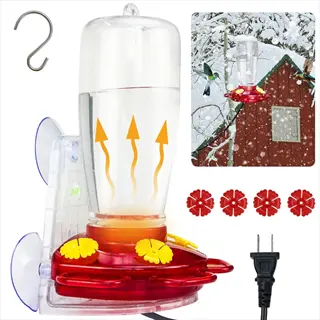
Heated Hummingbird Feeder
- Design: Heated feeders include a built-in warming element or attach to a separate heater base that keeps nectar from freezing during cold weather below 32 degrees Fahrenheit (0 degrees Celsius).
- Purpose: In regions where Anna's Hummingbird stays year-round on the West Coast, a heated feeder provides a reliable food source through winter when natural flowers are scarce.
- Energy use: Most heated feeders use low-wattage elements that cost just pennies per day to operate and plug into a standard outdoor electrical outlet near your feeding station.
- Science note: The National Audubon Society confirms that sugar solution has a lower freezing point than plain water, but temperatures below 27 degrees Fahrenheit (minus 3 Celsius) will still freeze nectar.
- Maintenance: Clean heated feeders with the same frequency as standard models because bacteria and mold grow whenever temperatures rise above freezing during daytime warming cycles.
- Best for: Birders in the Pacific Northwest, coastal California, or the southern United States who host year-round hummingbird species during cold winter months.
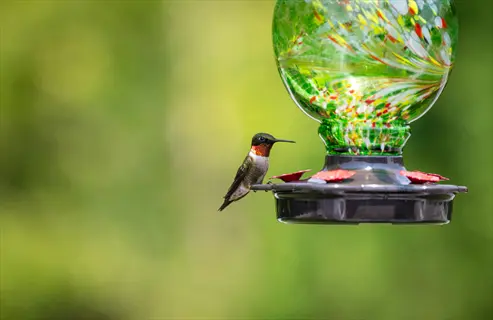
Decorative Glass Feeder
- Design: Decorative feeders feature hand-blown glass, artistic shapes, or colorful painted designs that serve as both a functional hummingbird feeder and an attractive garden ornament.
- Color attraction: Hummingbirds are naturally drawn to red, orange, and pink colors, so decorative feeders with these tones can attract birds without needing any red dye in the nectar.
- Cleaning challenge: Ornate designs with textured surfaces, narrow curves, or sealed decorative elements can be harder to clean thoroughly, potentially trapping mold in hard-to-reach spots.
- Durability: Hand-blown glass feeders can be fragile and may crack in strong winds or freezing temperatures, so bring them indoors during storms and in winter if temperatures drop sharply.
- Capacity: Most decorative models hold 6 to 16 ounces (177 to 473 milliliters) and vary widely in port design, so check that feeding openings are the right size for hummingbird bills.
- Best for: Gardeners who want their hummingbird feeder to double as yard art and are willing to invest extra time in careful cleaning and seasonal storage.
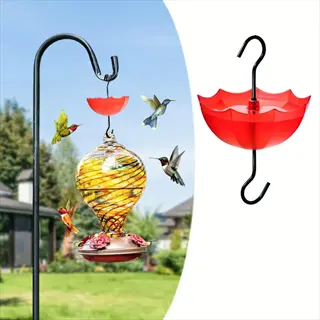
Built-In Ant Moat Feeder
- Design: These feeders include an integrated water-filled moat above the hanging hook that creates a barrier ants cannot cross to reach the nectar ports below the reservoir.
- Effectiveness: A built-in ant moat eliminates the need for petroleum jelly or chemical deterrents on the hanging wire, providing a safe and natural pest control solution for your feeder.
- Maintenance: Refill the moat cup with fresh water every two to three days because it evaporates quickly in warm weather and mosquitoes may breed in standing water left too long.
- Combination benefit: Many feeders with built-in ant moats also include bee guard inserts on the feeding ports, giving you dual pest protection in a single feeder purchase.
- Capacity: These feeders come in saucer and bottle styles ranging from 8 to 24 ounces (237 to 710 milliliters), so you can choose the size that matches your yard traffic.
- Best for: Anyone living in areas with heavy ant populations who wants a reliable built-in pest barrier without adding separate accessories or sticky chemical substances.
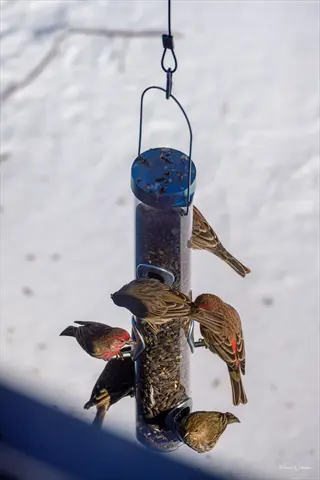
Perch-Equipped Feeder
- Design: Perch feeders include small resting bars or circular perch rings around the feeding ports so hummingbirds can sit while drinking instead of hovering in midair constantly.
- Energy savings: Mississippi State University Extension notes that hummingbirds spend about 80% of their day perching, so feeders with perches match their natural resting behavior.
- Observation benefit: When hummingbirds perch to feed rather than hover, you get longer and steadier viewing opportunities to observe plumage details and identify different visiting species.
- Species preference: Larger species like the rufous hummingbird and smaller species like the calliope hummingbird both use perches with ease, making this design appealing across all regions.
- Cleaning: Perches add small crevices where dripped nectar can collect and grow mold, so scrub around the perch attachments with care each time you wash the feeder with hot water.
- Best for: Birders and photographers who want extended viewing and identification opportunities as hummingbirds rest comfortably at the feeder instead of darting away in seconds.
Homemade Nectar Recipe
The best hummingbird nectar recipe is the same one I've used for years. Mix 1 part refined white sugar with 4 parts water. That's it. Dr. Margaret Brittingham at Penn State says weaker mixes don't attract birds. Stronger mixes can damage their kidneys over time.
Natural flower nectar contains about 35% to 45% sucrose. Your homemade nectar sits around 20% sucrose at the 1:4 ratio. That's close enough to draw birds in without the health risks of a stronger mix. This sugar water hummingbirds love works just as well as any store bought hummingbird food. Penn State says commercial mixes have no real edge over a simple homemade batch.
Here's how I make my homemade nectar every few days in my kitchen. First, boil 4 cups of water to remove chlorine. Then stir in 1 cup of plain white sugar until it dissolves. Let the mix cool down before you fill your feeder. I store extra nectar in the fridge for up to 2 weeks.
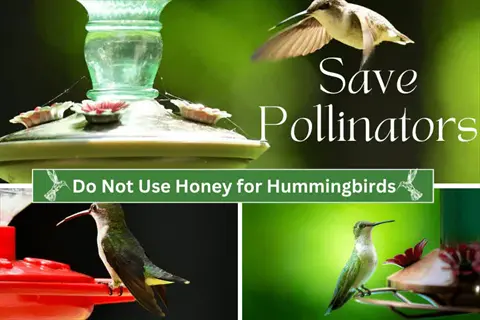
Never use honey in your feeder. It ferments fast in warm water and causes a fatal fungal disease in hummingbirds. Skip raw sugar, brown sugar, and any kind of sweetener that isn't plain white table sugar. Red dye is also a bad idea since the birds come for the feeder color, not the liquid color.
Feeder Cleaning and Care
Knowing how to clean hummingbird feeder parts is the most important thing you can do for your birds. A UC Davis study found that sugar water in feeders holds high levels of harmful bacteria. These germs look nothing like what grows in natural flower nectar. They can make your birds sick fast.
Real flower nectar has good bacteria that make up over 80% of its microbial mix. Feeders grow a different kind of generalist bacteria that spreads fast in warm sugar water. Nectar spoilage happens much quicker in a feeder than in a flower. I've seen clear nectar turn cloudy in under 24 hours on a hot summer day.
Hummingbird feeder cleaning doesn't have to feel like a chore if you keep it simple. Here's my 3 step routine for feeder maintenance. First, dump out old nectar and rinse with hot water. Second, scrub every surface with a bottle brush to break up mold and residue. Third, let all parts air dry before refilling.
The Audubon Society warns against using dish soap because residue can harm birds. For stubborn buildup and mold prevention, soak the parts in a weak vinegar and water mix for about 30 minutes. Then rinse well and air dry. I do this deep clean once a week and it keeps my feeders spotless all season.
Feeder Placement Tips
Good hummingbird feeder placement makes a huge difference in how many birds visit your yard. I moved one feeder just 10 feet to the left into dappled shade and doubled my daily visitors within a week. Where to hang hummingbird feeder setups matters more than most people think.
Picture a circle around your feeder with shade above, flowers close by, and clear flight paths on all sides. That's your goal. The feeder height should sit between 4 and 6 feet off the ground. You also want shade versus sun placement that favors morning light and afternoon cover. The USFWS says windows 15 to 30 feet from a feeder create the worst collision risk for birds.
Cats kill more than 2.5 billion birds each year in the U.S. and Canada. Keep your feeder well away from spots where outdoor cats like to hide or roam. When setting up multiple feeders spacing them at least 10 feet apart is key. This stops the males from guarding one spot and chasing other birds away.
Shade and Sun Balance
- Morning sun: Hang your feeder where it receives gentle morning sunlight and afternoon shade to keep nectar cool and slow bacterial growth during the hottest part of the day.
- Dappled shade: A spot under a tree canopy with filtered light provides the best balance because hummingbirds can see the feeder while nectar stays fresher for longer periods.
- Avoid full sun: Feeders in direct all-day sunlight cause nectar to spoil within hours during summer heat above 90 degrees Fahrenheit (32 degrees Celsius).
Window Safety Distance
- Danger zone: The U.S. Fish and Wildlife Service warns that windows 15 to 30 feet (4.5 to 9 meters) from a feeder create the highest collision risk for hummingbirds flying at speed.
- Safe options: Place feeders either within 3 feet (0.9 meters) of windows where birds cannot build dangerous momentum, or beyond 30 feet (9 meters) where they have time to maneuver.
- Window treatments: If your ideal spot falls in the danger zone, add window decals or screens to help birds see the glass barrier before a collision occurs.
Height and Accessibility
- Recommended height: Hang feeders between 4 and 6 feet (1.2 to 1.8 meters) off the ground where hummingbirds naturally feed and where you can easily reach them for regular cleaning.
- Sturdy mounting: Use a shepherd's hook, tree branch, or deck hook that holds the feeder steady in wind because a swinging feeder spills nectar and makes it harder for birds to feed.
- Your convenience: Choose a location you can access quickly and easily because the easier it is to reach, the more likely you are to maintain the every-few-days cleaning schedule.
Predator Protection
- Cat safety: The USFWS reports that cats kill more than 2.5 billion birds per year in the U.S. and Canada, so keep feeders well away from areas where outdoor cats roam or hide.
- Nearby shelter: Position the feeder within 10 to 15 feet (3 to 4.5 meters) of a tree or shrub so hummingbirds have a quick escape route from hawks and other aerial predators.
- Open sightlines: Avoid placing feeders in tight corners or against walls where predators can ambush from a hidden position and birds have limited escape routes available.
Multiple Feeder Spacing
- Territorial behavior: Male hummingbirds aggressively guard a single food source, so hanging two or more feeders at least 10 feet (3 meters) apart lets multiple birds feed without conflict.
- Line of sight: Place feeders where they cannot be seen from each other so that one dominant male cannot patrol both feeders from a single perching spot nearby.
- More visitors: Multiple feeders spread across your yard attract more individual hummingbirds and increase your chances of spotting different species throughout the feeding season.
Water Sources Nearby
- Daily water needs: Mississippi State University Extension reports that hummingbirds consume up to 8 times their body weight in water each day, so a nearby water feature dramatically improves your feeder location.
- Misting preferred: Hummingbirds avoid deep birdbaths but love gentle misters and low drip fountains where they can fly through the spray to clean their feathers and cool down.
- Simple setup: A solar-powered misting attachment on an existing birdbath or a small drip fountain placed within 10 feet of your feeder creates a complete hummingbird habitat station.
Pest Control for Feeders
Ants and bees found my first feeder within 48 hours of hanging it up. I spent a full summer testing every pest control feeder trick I could find. The methods below are the ones that work best to keep ants off hummingbird feeder setups and stop bees from stealing nectar.
An ant moat hummingbird feeder is the fastest fix for crawling insects. Fill the moat with water and ants can't cross the barrier. To keep bees away hummingbird feeder ports, install bee guards on every opening. Never use petroleum jelly or cooking oil on your feeder pole because it can coat bird feathers and ruin their flight ability.
Ant Prevention Methods
- Ant moat: Install a water-filled ant moat above the hanging hook to create a barrier that crawling ants cannot cross to reach the nectar ports on your hummingbird feeder below.
- Fishing line trick: Hang the feeder from thin monofilament fishing line because ants have difficulty gripping and climbing down the narrow slippery surface to reach the sugar water.
- Location change: If ants find a trail to your feeder, move it to a new location at least 10 feet (3 meters) away because ants follow scent trails that take days to fade completely.
- Avoid petroleum jelly: Never apply petroleum jelly or sticky substances to poles or wires because these can transfer to hummingbird feathers and damage their waterproofing and flight ability.
Bee and Wasp Deterrence
- Saucer feeders: Choose saucer-style feeders where nectar sits below the ports because bees and wasps have short tongues and cannot reach liquid that is more than a quarter inch below the surface.
- Bee guards: Install mesh or slotted bee guard inserts over feeding ports to block insects while still allowing hummingbird bills to pass through and reach the nectar inside the feeder.
- Color adjustment: Paint any yellow feeder parts red because yellow strongly attracts bees and wasps while red is visible to hummingbirds but less attractive to most flying insects.
- Distraction bowl: Place a small open dish of strong 1:1 sugar water about 15 feet (4.5 meters) away from the feeder to lure bees and wasps toward the sweeter easier-to-access source.
Fruit Fly Management
- Clean drips promptly: Wipe up any nectar drips on or around the feeder immediately because even small drops of sugar water attract fruit flies within hours during warm weather.
- Tighten seals: Check that all gaskets and port fittings are seated properly because fruit flies can enter through tiny gaps that also cause slow leaks and sticky buildup on the feeder.
- Reduce fill level: Fill feeders only halfway during peak summer so you change nectar more frequently before it begins to ferment and produce the alcohol smell that attracts fruit flies.
- Natural balance: A few fruit flies near the feeder can actually benefit hummingbirds because insects make up as much as 20% of their diet according to the U.S. Fish and Wildlife Service.
Raccoon and Squirrel Tips
- Nighttime removal: Bring feeders indoors at dusk if raccoons visit your yard because these nocturnal animals are strong enough to pull feeders apart and contaminate remaining nectar.
- Baffle installation: Mount a cone-shaped baffle above or below the feeder on the hanging pole to prevent squirrels from climbing down or up to reach the sugar water reservoir.
- Secure hanging: Use a hook or bracket that supports the feeder firmly because raccoons and squirrels will knock down loosely mounted feeders to access the sweet nectar on the ground.
- Separate feeding stations: Place a dedicated squirrel feeder with nuts at least 20 feet (6 meters) away to redirect their attention and reduce their interest in your hummingbird feeder.
Seasonal Feeding Guide
Knowing when to put out hummingbird feeders gives your birds the best start to the season. In my experience, hanging feeders 2 weeks before the first birds show up works best. That early food matters because the ruby throated hummingbird flies nonstop for 18 to 20 hours across the Gulf of Mexico. After 500 miles of open water, they need a full feeder waiting.
Hummingbird migration is driven by changes in day length and sun angle, not by food or weather. The Audubon Society confirms this fact. You don't need to worry about seasonal feeding keeping birds from heading south. The USFWS tracks 15 regular species across the U.S. and each one follows its own migration clock. Leave your feeder up because it won't delay their trip.
Knowing when to take down hummingbird feeders depends on your region. I keep mine up for 2 weeks after I spot my last visitor of the fall. Stragglers and late migrants still need fuel. If you live on the West Coast, year-round feeding makes sense since Anna's Hummingbird stays all winter. Check the table below to find the best dates for your area.
5 Common Myths
Leaving hummingbird feeders out in fall will prevent birds from migrating south for the winter season.
Migration is triggered by changes in day length and sun angle, not by the availability of nectar or feeders according to the National Audubon Society.
You must add red food coloring to sugar water so that hummingbirds can find and visit your feeder.
Red dye is unnecessary and potentially harmful because hummingbirds are attracted to the red color of the feeder itself, not the liquid inside.
Honey is a healthier and more natural sweetener than white sugar for making hummingbird feeder nectar.
Honey ferments rapidly in warm water and can cause a fatal fungal disease in hummingbirds according to Penn State Extension research.
Commercial pre-made hummingbird nectar mixes are much better for the birds than homemade sugar water solutions.
Penn State Extension confirms that commercial nectar mixes offer no advantage over a simple homemade solution of one part white sugar to four parts water.
Hummingbirds feed only on nectar and sugar water so you do not need to worry about providing insects or protein.
Insects make up as much as 20 percent of a hummingbird diet and are critical during nesting season for feeding chicks according to the U.S. Fish and Wildlife Service.
Conclusion
A good hummingbird feeder setup comes down to a few key basics. Stick with the 1:4 sugar to water ratio for your nectar. Clean your feeder every 1 to 5 days based on the temperature outside. Place it away from windows in the danger zone and pair it with native plants hummingbirds love like bee balm and salvia.
This hummingbird feeder guide showed you how science and simple daily care work together to attract hummingbirds to your yard. UC Davis research found that almost 15% of hummingbird species face threats around the world. Your feeder gives these tiny birds a safe place to refuel between the flowers in your garden.
The Audubon Society says native flowering plants remain the best nectar source for these birds. Your feeder should add to that natural food supply, not take its place. In my garden, I've watched the same ruby throated pair return each spring to a yard filled with both feeders and native blooms. That combo makes all the difference.
Author Paul Baicich put it best when he said the birds don't need the feeders, we do. Watching a hummingbird hover at your window feeder or zip through your garden is one of those small joys that makes your whole day better. Set up your feeder the right way and you'll see why millions of people can't stop watching these birds.
External Sources
Frequently Asked Questions
What is the correct ratio of sugar to water for hummingbirds?
The correct ratio is 1 part refined white sugar to 4 parts water, which closely mimics the sucrose concentration found in natural flower nectar.
What kind of feeder is best for hummingbirds?
Saucer-style feeders are widely considered the best option because they are easy to clean, leak-resistant, and less attractive to bees and wasps.
What is the 5 7 9 rule for bird feeders?
The 5 7 9 rule suggests placing feeders at 5 feet (1.5 meters) high, 7 feet (2.1 meters) from cover, and 9 feet (2.7 meters) from the nearest tree trunk to reduce squirrel access.
Do hummingbirds sleep at night?
Hummingbirds enter a deep sleep state called torpor at night, lowering their body temperature and heart rate to conserve energy until morning.
Why do you have to boil sugar water for hummingbirds?
Boiling the water dissolves sugar completely and removes chlorine, which helps the nectar stay fresh longer in the feeder.
Can I use tap water for sugar water?
Yes, tap water is safe for hummingbird sugar water in most areas, especially after boiling to remove chlorine and other impurities.
Why put a potato in the bird feeder?
A potato half placed near a feeder can attract gnats and fruit flies, which lures hummingbirds by providing a natural insect food source.
Where should you not hang a hummingbird feeder?
Avoid hanging feeders in direct sun, near windows within 15 to 30 feet (4.5 to 9 meters), close to outdoor cat areas, or in heavy wind zones.
Why should I sprinkle coffee grounds around my bird feeder?
Sprinkling coffee grounds around feeders can help deter ants and slugs because many insects avoid the strong scent and texture of used grounds.
What is the 333 rule for birds?
The 333 rule recommends watching birds for 3 minutes, from 3 different angles, within 3 feet (0.9 meters) or less to practice careful observation and identification.

