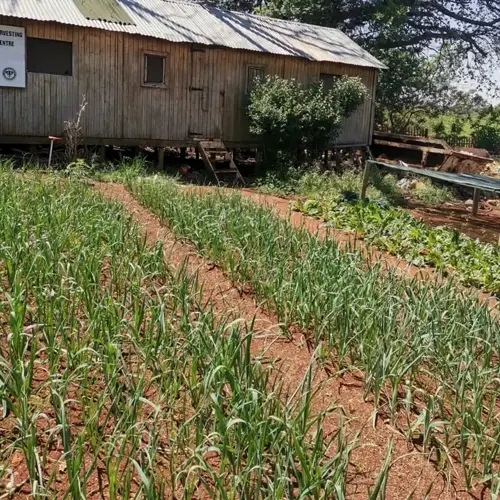

Correct onion watering involves different strategies for each growing stage. You want to give fairly consistent moisture in nitrate about an inch a week for leaf development activate wings of developing bulbs, encourage photosynthetic efficiency, resulting in positive top growth. I collect natural rainwater for my plants in rain gauges, then supplement through irrigation when necessary. My consistent husbandry assures your plants are not stressed, hence stunted, during this "delicate baby" period.
When bulbs begin swelling, cut the watering back to a half inch weekly and let the surface soil dry out those final two inches between waterings, two weeks before you are going to lift your bulbs. This will prevent them from rotting and improve their storage quality. My soil moisture meter helps me time this change.
For your trees, install helpful drip irrigation systems. I love how they moisten the roots without wetting the foliage, a sure recipe for mildew, and it wastes water! I space the emitters 6 inches apart along the rows. You're conserving water, too, and your garden plants will appreciate you for maintaining the soil at optimal moisture levels.
Soil Preparation
- Add compost to improve water retention
- Use 3-inch organic mulch to reduce evaporation
- Test drainage: 1 inch per hour ideal
Monitoring Tools
- Insert finger to second knuckle to test moisture
- Use tensiometers for precise readings
- Observe leaf color: blue-green indicates proper hydration
Problem Solving
- Split bulbs: reduce watering during bulbing
- Thick necks: decrease nitrogen and water
- Shallow roots: water deeply but less frequently
Once planted, apply mulching materials, no more than three inches thick. Straw and grass cuttings help keep the soil temperature and moisture stable, so I replace my mulch each month during the extreme heat of summer. In addition to reducing weed growth, mulching also reduces the need to water plants by approximately 30%.
Yellowing lower leaves and mushy bulbs are signs of overwatering. Curled leaf tips show underwatering. I check in the early morning hours when it's clearer to see the signs of stress. You can negate future irreversible damage with quick fixes.
Time irrigation for very early hours. This will allow the foliage to dry before nightfall, decreasing the chances of disease. Avoid watering in the evening, for that encourages the growth of fungi. My automatic system begins every day at 5 a.m. Your schedule should take advantage of the fact that the night air is cool and the soil cools at that time, allowing for better moisture penetration.
Read the full article: How to Grow Onions Successfully at Home