
Introduction
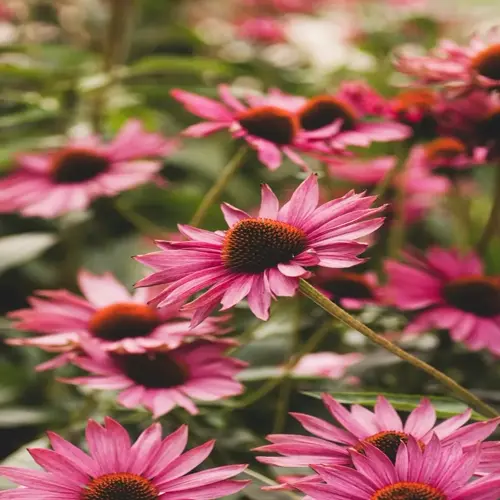
I planted my first echinacea purpurea about 8 years ago in a dry, rocky corner of the yard. Nothing else wanted to grow there. That single purple coneflower survived, then spread into a thick patch that now draws butterflies all summer. It taught me how tough native perennials can be in the right spot.
What struck me most about this herbaceous perennial is how much real science backs it up. More than 3,431 studies on echinacea came out by the end of 2021. That makes it one of the most studied medicinal plants on earth. Few garden flowers can claim that kind of research.
Think of echinacea purpurea as part tough prairie survivor, part pharmacy in a flower bed. It handles drought, poor soil, and deer with ease once established. A major meta-analysis found it cuts common cold risk by 58% and trims cold length by 1.4 days. That dual purpose makes this native plant stand out.
This guide covers picking the best cultivars for your yard and harvesting roots for homemade tinctures. You'll get growing tips and medicinal facts backed by real studies. You'll also learn about the wildlife benefits that make the purple coneflower a must have perennial.
8 Best Echinacea Purpurea Cultivars
You can find over 24 named echinacea cultivars in sizes from 1 to 4 feet tall. Colors range from white and pink to deep red, orange, and even green. I've grown more than a dozen purple coneflower varieties and picked these 8 based on what works best.
Each of these best echinacea cultivar picks fills a clear garden role. Some are top choices for pollinators while others shine as dwarf echinacea options for tight spaces. A few stand out as hybrid coneflower picks for bold color. Others work best as cut flowers for your kitchen table.
Magnus
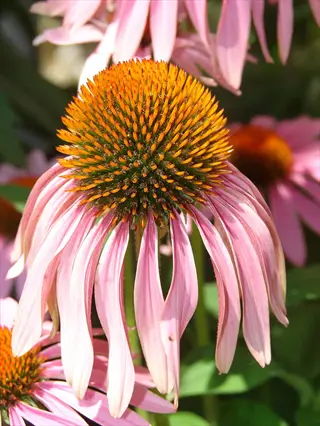
- Height: Grows 3 to 4 feet (90 to 120 centimeters) tall with upright stems that rarely need staking in garden beds.
- Flowers: Produces large rosy-pink blooms up to 6 inches (15 centimeters) across with flat rather than drooping petals.
- Best For: Perennial borders and pollinator gardens where maximum bee and butterfly attraction is the primary goal.
- Hardiness: Thrives in USDA zones 3 through 9 and performs well through heat, humidity, and dry spells.
- Recognition: Won the Perennial Plant Association Plant of the Year award, confirming its exceptional garden performance.
- Pollinator Note: As a selection close to the straight species, Magnus provides superior nectar and pollen access compared to double-flowered hybrids.
White Swan
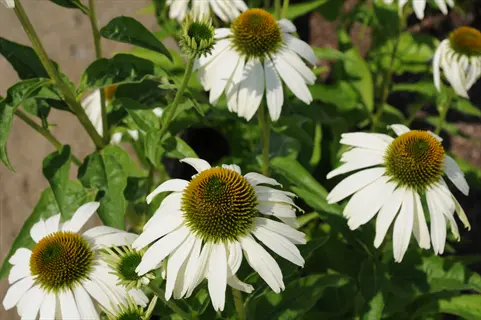
- Height: Reaches 2 to 3 feet (60 to 90 centimeters) with a compact habit that works well in mixed borders and cottage gardens.
- Flowers: Opens pure white petals that droop around a prominent bronze-orange cone, giving you an elegant contrast.
- Best For: Moon gardens and white-themed plantings where the bright blooms catch evening light and stand out against dark foliage.
- Hardiness: Grows well in USDA zones 3 through 9 with good tolerance for lean soils and dry summer conditions.
- Pairing: Looks great next to purple coneflower and black-eyed Susan for a natural prairie meadow look.
- Seed Production: Sets seed with ease and you can use it to create naturalized drifts through self sowing in open garden areas.
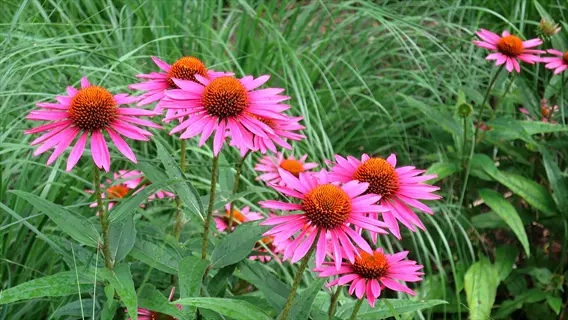
Kim's Knee High
- Height: Stays compact at 18 to 24 inches (45 to 60 centimeters), making it ideal for front-of-border positions and raised beds.
- Flowers: Produces rosy-pink flowers like the species but on much shorter stems, keeping the display at eye level in low plantings.
- Best For: Small gardens, container growing, and edging paths where a shorter coneflower variety is needed without sacrificing bloom size.
- Hardiness: Performs well in USDA zones 3 through 9 and keeps its dwarf habit without taking over limited spaces.
- Wind Resistance: The short stature means you won't see wind damage or stem breakage during summer storms.
- Container Tip: Works well in pots at least 14 inches (35 centimeters) wide with well-drained potting mix and full sun exposure.
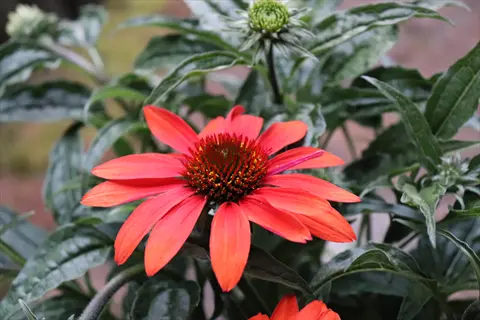
Cheyenne Spirit
- Height: Grows 18 to 30 inches (45 to 75 centimeters) tall, producing a colorful mixed display from a single seed packet or planting.
- Flowers: Blooms in a range of warm tones including red, orange, yellow, cream, pink, and purple, often with multiple colors in one bed.
- Best For: Gardeners who want a vibrant mixed color palette without planting multiple separate cultivars in the same area.
- Recognition: Won the All-America Selections award for its outstanding garden performance, color range, and consistent germination from seed.
- Growth Habit: Develops a well-branched bushy form that fills space quickly and provides continuous color from June through September.
- Seed Starting: One of the most reliable echinacea cultivars to start from seed, with good germination rates after cold stratification.
PowWow Wild Berry
- Height: Compact grower reaching 20 to 24 inches (50 to 60 centimeters) tall with dense branching and heavy flower production.
- Flowers: Deep magenta-rose blooms with an intense color that holds well through the season without fading in summer heat.
- Best For: Mass plantings and smaller garden spaces where a vibrant pop of deep pink color is desired throughout the growing season.
- Bloom Period: One of the longest-blooming echinacea cultivars, flowering from early summer well into fall with minimal deadheading needed.
- First-Year Blooming: Unlike many perennials, PowWow Wild Berry often produces flowers in its first year when started early from seed indoors.
- Disease Resistance: Shows strong resistance to powdery mildew and leaf spot compared to many other coneflower cultivars in humid climates.
Ruby Star
- Height: Grows 30 to 40 inches (75 to 100 centimeters) tall with sturdy stems that support heavy blooms without staking or support.
- Flowers: Deep carmine-red petals that hold flat rather than drooping, creating a bold daisy-like look in your garden.
- Best For: Mid-border positions in perennial beds and cutting gardens where tall, strong-stemmed flowers are valued for arrangements.
- Color Retention: Maintains rich red tones better than many other pink-red coneflowers that tend to fade in prolonged heat and sun.
- Cut Flower Quality: Excellent vase life of 7 to 10 days when cut at the right stage, making it a top choice for home flower arrangements.
- Winter Interest: Dried seed heads persist through winter, adding architectural structure to snow-covered garden beds and feeding songbirds.
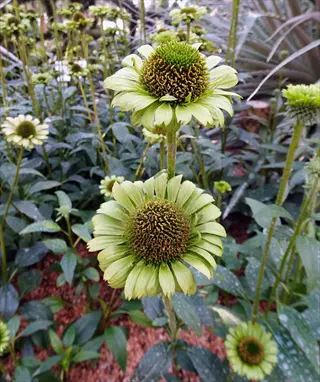
Green Jewel
- Height: Reaches 20 to 24 inches (50 to 60 centimeters) with a tidy, well-branched habit that fits neatly into mixed perennial borders.
- Flowers: Unique soft green petals surround a large dark green cone, creating an unusual and sophisticated color combination in plantings.
- Best For: Gardeners who want something different from standard pink and white coneflowers, adding a cool toned accent to warm garden palettes.
- Design Use: Pairs well with hot colored flowers like red dahlias, orange zinnias, and golden rudbeckia for bold contrast.
- Bloom Duration: Each flower lasts longer than most coneflower varieties because the green pigment holds its color better than pink or white petals.
- Conversation Starter: The unusual green color draws attention and questions from garden visitors who expect the classic purple coneflower look.

Bravado
- Height: Grows 24 to 36 inches (60 to 90 centimeters) tall with thick, sturdy stems and a robust, upright growth habit.
- Flowers: Large rose-pink flowers with slightly drooping petals and a prominent russet-brown cone that attracts a wide range of pollinators.
- Best For: Traditional cottage gardens and mixed perennial borders where a reliable, classic-looking coneflower is desired year after year.
- Dependability: Known as one of the most consistent performers among coneflower cultivars with excellent return rates spring after spring.
- Propagation: Divides with ease every 3 to 4 years in early spring, giving you multiple healthy clumps from one established mother plant.
- Longevity: One of the longer lived echinacea selections, often going strong for 10 or more years in well drained soil without decline.
Native picks like Magnus and Bravado draw more bees and butterflies than double bloom types. If you want pollinators in your yard, go with single flower forms. These give insects easy access to nectar and pollen that double flowers block.
How to Grow Echinacea Purpurea
Learning how to grow echinacea starts with the right spot. This plant wants full sun for at least 6 hours a day and well-drained soil with a pH between 6.0 and 8.0. I've seen it thrive in clay, sand, loam, and even thin rocky ground. It's one of the easiest perennials you'll ever put in the dirt.
Start planting echinacea in spring after the last frost or in early fall to give roots time to set before winter. Space plants 18 to 24 inches apart for good airflow. The growing conditions don't need to be perfect. This plant does well in USDA hardiness zones 3 through 9 and handles poor soil that would kill most flowers.
Summer echinacea care is simple. Water about 1 inch per week until the plant settles in, then back off since it's drought tolerant once established. Skip the heavy fertilizer. Too much food makes stems weak and floppy. A thin layer of compost each spring is all this plant needs to push out strong blooms.
I also grow echinacea in containers on my back patio. Use a pot at least 14 inches wide with drainage holes and a gritty potting mix. Container plants need more water than those in the ground, but the same full sun rule still applies. Afternoon shade can help boost flower color in hot southern zones.
Watch out for a few common problems. Japanese beetles chew on flowers in midsummer, and aster yellows spread by leafhoppers can cause odd green growths on blooms. Pull and trash any plant with aster yellows right away since there's no cure. Cercospora leaf spot shows up in humid weather, but good spacing and airflow keep it in check.
In fall, you can leave the seed heads standing for birds or cut stems back to 4 to 6 inches above the ground in late winter. I prefer to leave them up through the cold months. Goldfinches eat the seeds, and native bees nest inside the hollow stems over winter. That's free wildlife habitat in your yard with zero extra work.
Medicinal Uses and Benefits
The echinacea benefits you hear about range from proven to pure hype. I think of it like a traffic light. Common cold prevention gets a green light from strong research. Other echinacea medicinal uses for skin and joints get a yellow light. Blood sugar and cancer claims flash a red light. That evidence stays in the lab for now.
The best data on immune support comes from a 2007 Lancet meta-analysis. It found that echinacea cut the odds of catching a cold by 58% across 14 studies. That same review showed colds lasted 1.4 fewer days for people who took it. For echinacea dosage, most studies used 300 to 500 milligrams of dried extract 3 times a day during a cold.
Cold Prevention and Duration
- Evidence Level: Strong clinical support from a 2007 Lancet Infectious Diseases meta-analysis of 14 studies showing 58% reduced odds of catching a cold.
- Duration Effect: The same meta-analysis found cold duration decreased by 1.4 days compared to placebo, with statistically significant results across multiple trials.
- Best Form: Fresh pressed Echinacea purpurea juice preparations showed the strongest results, reducing cold incidence by 56% across five separate studies.
- Mechanism: Alkamides and polysaccharides activate macrophages, neutrophils, and natural killer cells, boosting the body's first line of immune defense.
Anti-Inflammatory Properties
- Evidence Level: Moderate support from animal studies showing anti-inflammatory activity comparable to the prescription drug indomethacin at 30 to 100 milligrams per kilogram doses.
- Active Compounds: Alkamides bind to cannabinoid receptor type 2, triggering natural anti-inflammatory pathways without the psychoactive effects associated with other CB2 activators.
- Skin Application: Root extract has shown potential to enhance the epidermal lipid barrier in people with atopic eczema, which affects 2 to 10% of adults.
- Limitation: Most anti-inflammatory evidence comes from animal models and in vitro studies rather than large-scale human clinical trials.
Antiviral Activity
- Evidence Level: Promising lab evidence showing virucidal activity against HSV-1, HSV-2, and influenza strains including H1N1, H5N1, and H7N7.
- Emerging Research: In vitro studies have shown activity against coronaviruses, but no confirmed clinical trial results support using echinacea as a treatment for respiratory viruses.
- Mechanism: Multiple compound classes work together to disrupt viral replication and enhance the immune response against viral infections in cell culture tests.
- Caution: Lab results do not transfer to effectiveness in humans on their own, and more clinical trials are needed before antiviral claims hold weight.
Safety Profile and Side Effects
- General Safety: The NCCIH confirms echinacea purpurea extracts are safe for most adults when used for short periods of up to 10 days.
- Common Side Effects: The most reported echinacea side effects include nausea, stomach discomfort, and possible allergic reactions in sensitive individuals.
- Who Should Avoid: People with Asteraceae family allergies, those taking immunosuppressant medications, and anyone on drugs processed by liver enzymes should talk to a doctor first.
- Children: Some children developed rashes in clinical trials, so you should check with your pediatrician before giving echinacea to kids.
My advice on echinacea safety is to keep it simple. Use it at the first sign of a cold for up to 10 days and then stop. Don't take it all year round. The research supports short bursts, and that's how I've used it in my own home for years.
3 Echinacea Species Compared
Nine echinacea species exist in the wild. Just 3 of those work as medicinal echinacea. Each one brings different compounds to the table. I've grown all 3 in my garden. Purpurea beats the others for most home growers if you want easy results.
Purpurea is the best echinacea for immune support because it has the most clinical data. It packs alkamides and chicoric acid in roots and flowers. The other two lean on echinacoside instead. Echinacea pallida needs well drained soil but grows at a fair pace. The table below shows what sets each echinacea species apart.
If you plan to grow your own at home, purpurea is the clear winner. It adapts to most soils, and you can harvest roots and flowers. It also has the deepest stack of clinical trials behind it.
If you look up echinacea purpurea vs angustifolia, the answer is clear for home gardens. Pick purpurea. It's easier to grow and gives you the fastest path from seed to your first harvest at home.
Wildlife and Pollinator Value
Echinacea purpurea does more for your yard than just look good. In my experience, it feeds and shelters wildlife in every season. I watch my echinacea pollinators change from bees in summer to goldfinches in fall to mason bees in dead stems through winter. No other flower in my native plant garden gives me that kind of action all year.
If you want to build a real butterfly garden or bee garden, plant your echinacea in groups of 5 or more. Clusters act as a landing zone that pollinators can spot from far away. Stick with single flower types like Magnus for the best nectar access. Double bloom cultivars block insects from reaching the pollen they need.
Spring: Early Pollinator Support
- First Visitors: Native mining bees, bumblebee queens, and small carpenter bees visit echinacea foliage as it emerges, seeking early-season shelter and nesting material from old stems.
- Larval Host Role: Silvery Checkerspot butterfly caterpillars feed on young echinacea leaves in late spring, making these plants essential nursery habitat for this declining native species.
- Garden Design Tip: Plant echinacea in clusters of 5 or more to create a visible landing zone that draws pollinators from greater distances across the garden.
Summer: Peak Bloom Activity
- Bee Variety: Over a dozen native bee species visit echinacea flowers during peak bloom, including sweat bees, leaf-cutter bees, and long-horned bees drawn to the abundant pollen and nectar.
- Butterfly Attraction: Painted Ladies, Monarchs, Eastern Tiger Swallowtails, and Great Spangled Fritillaries feed on echinacea nectar during the July through September bloom period.
- Hummingbird Visits: Ruby-throated hummingbirds visit echinacea flowers for nectar, drawn to cultivars with tubular disk florets that match their long bill length.
Fall: Seed-Feeding Birds
- Goldfinch Favorite: American goldfinches perch on dried echinacea seed heads and pick out seeds throughout fall and early winter, making this one of their top food sources.
- Other Seed Eaters: Pine siskins, dark-eyed juncos, and chickadees also feed on echinacea seeds that fall to the ground beneath the dried flower heads during autumn and early winter.
- Gardening Practice: Leave seed heads standing through fall and winter rather than cutting them back, providing critical food for birds that stay through cold months.
Winter: Stem-Nesting Habitat
- Native Bee Nesting: Small native bees including mason bees and leaf-cutter bees spend winter inside the hollow dead stems of echinacea plants, emerging in spring to begin their pollination cycle.
- Beneficial Insect Shelter: Predatory insects like lacewings and parasitic wasps also use standing echinacea stems as winter refuge, providing natural pest control the next growing season.
- Best Practice: Delay cutting back dead echinacea stems until late spring when temps stay above 50°F (10°C) to avoid killing insects that spent the winter inside.
Your echinacea patch acts as bird-friendly plants and pollinator-friendly plants in one spot. It's true wildlife habitat right in your yard. Leave those stems up over winter and you create a year round bee garden with zero extra effort.
Harvesting and Home Preparation
Harvesting echinacea from your own garden is one of the most satisfying parts of growing this plant. I started making my own echinacea tea and echinacea tincture about 5 years ago. Store bought products lose their strength fast, so fresh is always better. Knowing when to harvest echinacea matters a lot for what ends up in your cup.
The big lesson I learned about drying echinacea and storing echinacea is simple. The active compounds break down fast. Research shows chicoric acid drops by 70% after just 60 days even in cool, dark storage at 41°F (5°C). Alkylamides drop 65% in 60 days at room temp with light exposure. That means fresh echinacea extract from your garden beats old store bought products every time.
When and What to Harvest
- Root Harvest Timing: Wait until plants are at least 2 to 3 years old before harvesting roots, and dig in fall after the plant has gone dormant for highest compound concentration.
- Aerial Parts: Harvest flowers and upper leaves during peak bloom in July or August when the plant is actively flowering and compound levels are at their highest.
- Root Quality Standard: High-quality medicinal root contains more than 6 milligrams per gram of alkamides and more than 15 milligrams per gram of cichoric acid.
Drying for Storage
- Temperature: Dry harvested material at 95 to 105°F (35 to 40°C) in a well-ventilated area away from direct sunlight to preserve active compounds.
- Duration: Roots take 3 to 7 days to dry out based on thickness, while flowers and leaves take 2 to 4 days under proper conditions.
- Compound Loss Warning: Chicoric acid decreases by 70% after just 60 days of storage even at cool temperatures, so use dried material as fast as you can.
Making Echinacea Tea
- Proportion: Use 1 to 2 teaspoons of dried root or flower material per 8 ounces (240 milliliters) of boiling water for a standard medicinal-strength cup.
- Steeping Time: Simmer roots for 10 to 15 minutes as a decoction, while flowers and leaves can steep as a regular infusion for 5 to 10 minutes.
- Taste Indicator: A quality echinacea tea produces a tingling or numbing feeling on the tongue caused by alkamides, which confirms active compounds are present.
Making Echinacea Tincture
- Ratio: Use a 1 to 5 ratio of dried plant material to 45% alcohol by volume, filling a clean glass jar and letting it sit for 4 to 6 weeks.
- Shaking Routine: Shake the tincture jar once each day during the soaking period to ensure even extraction of alkamides, polysaccharides, and caffeic acid derivatives.
- Storage: Keep finished tincture in dark glass bottles away from light and heat, where it stays potent for 2 to 3 years when sealed tight.
The tingling you feel on your tongue from good echinacea tea tells you the alkamides are still active. If your dried supply doesn't give that sensation, it's time to harvest a fresh batch from your garden.
5 Common Myths
Echinacea purpurea needs rich, heavily fertilized garden soil to grow well and produce large flowers every season.
Echinacea purpurea actually prefers lean to average soil and too much fertilizer causes leggy, weak growth that falls over and produces fewer blooms.
All echinacea supplements and products are the same regardless of which species or plant part is used in production.
The three medicinal species have different active compound profiles, and root versus aerial parts differ greatly in alkamide and chicoric acid concentrations.
Echinacea purpurea is completely deer proof and no animal will ever bother eating the plants in your garden.
Young echinacea plants are regularly eaten by deer and rabbits, though mature established plants with tough stems are rarely targeted by browsing animals.
You should take echinacea every single day throughout the entire year to keep your immune system strong and prevent illness.
Research supports short-term use during onset of cold symptoms, and most safety data covers periods of up to 10 days rather than continuous daily supplementation.
Echinacea purpurea is an invasive plant that will quickly take over your entire garden bed and crowd out other perennials.
Echinacea purpurea spreads slowly through clump expansion and moderate self-seeding, and is easily managed by deadheading before seeds mature and dividing clumps every few years.
Conclusion
In my experience, echinacea purpurea stands out as a native plant that does it all. Over 3,431 studies back its health claims. A 58% cold prevention boost comes from real clinical trials. You have 24 or more cultivars to pick from. No other purple coneflower gives you this much value in one perennial garden plant.
I started with one plant in a rocky corner of my yard. Now I grow echinacea for tea, tinctures, and the bees that nest in old stems each winter. Bees show up in summer. Birds eat seeds in fall. Bees nest in dead stems through winter. This medicinal herbs perennial gives you year round wildlife value that's hard to match.
No other garden flower gives you beauty, wildlife habitat, and strong research all in one easy package. Wild echinacea purpurea is getting harder to find in nature. Every purple coneflower you plant at home keeps this native plant going strong.
Think about what you want most from your next plant. Is it beauty in your flower bed, help for cold season, or food for bees and birds? Echinacea purpurea gives you all three at once. Put one in a sunny perennial garden spot with good drainage and watch it thrive for years.
External Sources
Frequently Asked Questions
Ist Echinacea purpurea winterhart?
Yes, Echinacea purpurea is fully winter hardy in USDA zones 3 through 9, tolerating temperatures down to minus 40 degrees Fahrenheit (minus 40 degrees Celsius) without special protection.
Welchen Standort braucht die Echinacea?
Echinacea purpurea needs a location with full sun to partial shade and well-drained soil with a pH between 6.0 and 8.0.
Wann schneidet man die Echinacea zurueck?
Cut Echinacea back in late winter or early spring before new growth begins, leaving 4 to 6 inches (10 to 15 centimeters) of stem above ground.
Ist Echinacea einjaehrig oder mehrjaehrig?
Echinacea purpurea is a long-lived herbaceous perennial that returns reliably each year for many seasons when planted in suitable conditions.
Was mag der Sonnenhut nicht?
Echinacea purpurea does not tolerate waterlogged soil, heavy shade, excessive fertilizing, or being crowded by taller plants that block airflow.
Soll man beim Sonnenhut die verbluehten Blueten abschneiden?
Deadheading spent blooms encourages a second flush of flowers, but leaving seed heads in fall provides food for goldfinches and other birds.
Wie viel Wasser braucht eine Echinacea?
Established Echinacea purpurea is drought tolerant and needs about 1 inch (2.5 centimeters) of water per week, with less needed once roots are mature.
Was ist der Unterschied zwischen Sonnenhut und Echinacea?
Sonnenhut is the German common name for both Echinacea and Rudbeckia, but Echinacea has cone-shaped prickly seed heads while Rudbeckia has softer, flatter centers.
Kommt Echinacea jedes Jahr wieder?
Yes, Echinacea purpurea is a reliable perennial that returns each spring and can live for 10 or more years with proper care and occasional division.
Wie schnell vermehrt sich Sonnenhut?
Echinacea purpurea spreads slowly by clump expansion and self-seeding, typically filling a 2 to 3 foot (60 to 90 centimeter) area within 3 years.