
Introduction
The echinacea plant fills your garden with bold color and ranks as one of the top selling herbal supplements on the planet. Most guides cover one side or the other but never both. That gap leaves gardeners without the full picture of what this perennial flower can do for their yard.
I've grown purple coneflower in my own garden for over 8 years across 3 climate zones. What struck me first was how little fuss this plant needs once its roots take hold. Echinacea purpurea grows wild across 27 US states and thrives in USDA Zones 3a through 8b. Odds are good it will work in your yard too.
Think of the coneflower as the Swiss Army knife of your perennial garden. It looks great in a border and survives drought, poor soil, and neglect with ease. The genus holds 8 to 9 native species. Breeders have created dozens of new cultivars in colors from white to deep orange. This guide walks you through planting your first coneflower and building a habitat that feeds bees, butterflies, and songbirds.
You'll find variety picks for every garden size. We cover a season by season care calendar and pest solutions that skip harsh chemicals. We also share companion planting recipes you can copy into your beds. Whether you want a low care showstopper or a pollinator magnet, this guide has you covered.
8 Best Echinacea Varieties
Not all echinacea varieties grow the same way. I've tested over a dozen coneflower cultivars and the best pick depends on your space and zone. Some echinacea purpurea types reach 4 feet tall. Dwarf echinacea options stay under 2 feet for pots and small beds.
Each flower on this list spans 3 to 6 inches across with 7 to 20 petals per bloom. Mix a few of these hybrid coneflower picks together and you can stretch your bloom season to 5 full months from early summer into fall. I grouped them by purpose so you can find the right match fast.
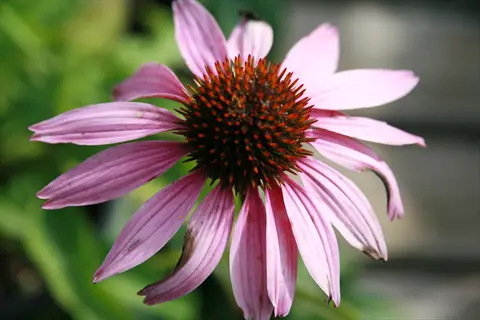
Magnus Purple Coneflower
- Bloom Color: Deep rosy-purple petals with a bronze-orange central cone that darkens as the flower matures through the season.
- Height: Grows 3 to 4 feet (0.9 to 1.2 meters) tall with strong upright stems that seldom flop even in windy garden conditions.
- Best For: Classic perennial borders and cutting gardens where large, long-lasting flowers with a traditional coneflower look are wanted.
- Bloom Period: Flowers from early summer through mid-fall, providing up to four months of continuous color with regular deadheading.
- Hardiness: Performs well in USDA Zones 3 through 8 and tolerates heat, humidity, drought, and poor soil once established in the garden.
- Pollinator Value: Attracts a wide range of bees, butterflies, and hummingbirds, making it one of the top pollinator magnets among coneflowers.
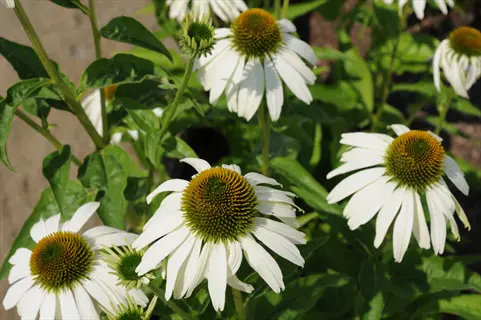
White Swan Echinacea
- Bloom Color: Pure white drooping petals surround a raised golden-green cone, creating a clean and elegant look in any garden setting.
- Height: Reaches 2 to 3 feet (0.6 to 0.9 meters) tall, a bit shorter than purple types, with a compact and tidy growth habit.
- Best For: Moon gardens, white-themed borders, and mixed plantings where a softer color palette balances bolder companion flowers.
- Bloom Period: Flowers from June through September, overlapping with many summer perennials for seamless seasonal color transitions.
- Hardiness: Reliable in USDA Zones 3 through 9 with strong cold tolerance and the same drought resistance as its purple cousins.
- Pollinator Value: White blooms stand out to nocturnal pollinators like moths, adding nighttime ecological value to the garden.
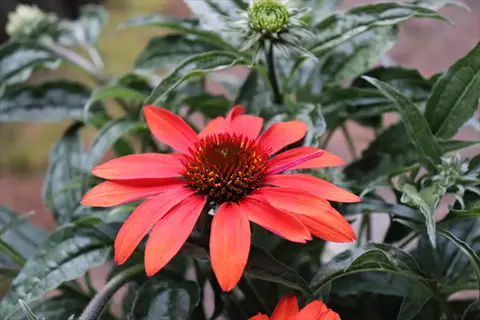
Cheyenne Spirit Mix
- Bloom Color: Produces a rainbow mix of red, orange, yellow, purple, cream, and white flowers from a single seed packet or flat.
- Height: Grows 18 to 24 inches (45.7 to 61 centimeters) tall, making it a compact option for front-of-border placement and containers.
- Best For: Gardeners who want multiple colors without buying separate varieties, and for naturalized meadow plantings with visual variety.
- Bloom Period: Flowers from midsummer through early fall with a strong first-year bloom when started from seed indoors in late winter.
- Hardiness: Hardy in USDA Zones 4 through 9, bred for garden performance with improved branching and flower count per plant.
- Pollinator Value: The color variety attracts a wide range of pollinator species since different insects are drawn to different flower colors.
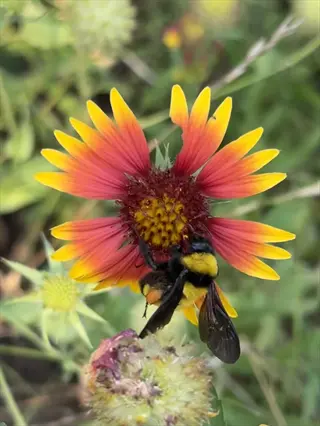
PowWow Wild Berry
- Bloom Color: Intense magenta-pink flowers that hold their rich color throughout the entire bloom cycle without fading in strong sunlight.
- Height: Compact at 18 to 24 inches (45.7 to 61 centimeters) tall with excellent branching that produces more flowers per plant than taller types.
- Best For: Small gardens, container growing, and front-of-border positions where a bold color punch is needed without tall floppy stems.
- Bloom Period: One of the longest-blooming coneflowers, producing flowers from early summer through the first hard frost of autumn.
- Hardiness: Performs well in USDA Zones 3 through 9 and was bred for improved first-year flowering from seed starts.
- Pollinator Value: Heavy flower production means more nectar and pollen available over a longer season, supporting late-season butterfly populations.
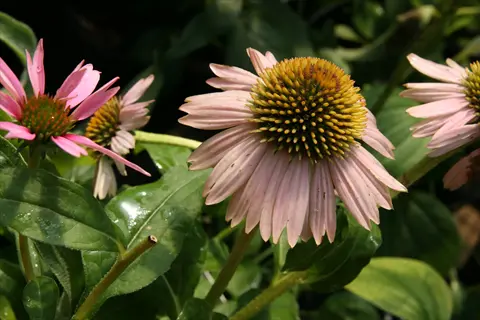
Kim's Knee High Coneflower
- Bloom Color: Classic pink-purple petals with an orange-bronze cone, identical in appearance to standard purple coneflower but on a smaller frame.
- Height: Stays at just 18 to 24 inches (45.7 to 61 centimeters), about half the height of standard echinacea purpurea selections.
- Best For: Container gardens, rock gardens, and small-space landscapes where full-size coneflowers would overwhelm the planting area.
- Bloom Period: Flowers from midsummer through September with a compact form that stays neat without staking or support.
- Hardiness: Rated for USDA Zones 3 through 9 with strong disease resistance and the same drought tolerance as its taller relatives.
- Pollinator Value: Lower flower height makes nectar accessible to ground-dwelling pollinators and shorter-tongued bee species in the garden.
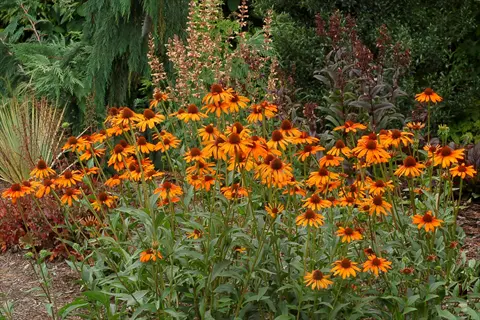
Tiki Torch Echinacea
- Bloom Color: Brilliant orange petals that glow like a flame in afternoon sun, fading to soft peach tones as blooms age on the plant.
- Height: Grows 30 to 36 inches (76.2 to 91.4 centimeters) tall with sturdy stems that hold up well even during heavy summer rainstorms.
- Best For: Hot-color garden schemes and late-summer borders where warm orange tones complement yellow rudbeckia and red salvia companions.
- Bloom Period: Produces flowers from midsummer into fall, with the brightest orange color appearing during the peak heat of July and August.
- Hardiness: Hardy in USDA Zones 4 through 9 as a hybrid cultivar, though it may be shorter-lived than straight species selections.
- Pollinator Value: Orange flowers are a magnet for monarch butterflies and swallowtails migrating through gardens in late summer and early fall.
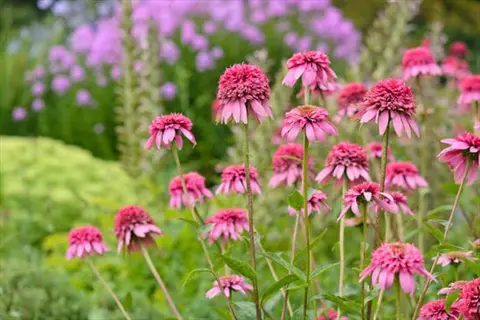
Razzmatazz Double Coneflower
- Bloom Color: Double rosy-pink pompom flowers with no visible cone, creating a look different from traditional single coneflowers.
- Height: Reaches 30 to 36 inches (76.2 to 91.4 centimeters) tall with thick stems supporting the heavy double flower heads without flopping.
- Best For: Cottage gardens and formal borders where a more refined, peony-like flower form is preferred over the rustic single-petal look.
- Bloom Period: Flowers from midsummer through early fall, though double blooms may not rebloom as well as single-flowered types after deadheading.
- Hardiness: Rated for USDA Zones 3 through 8 with moderate vigor, though hybrid doubles sometimes show reduced longevity after three to four years.
- Pollinator Value: The double form reduces pollinator access to nectar compared to singles, so pair with open-faced varieties for balanced wildlife support.
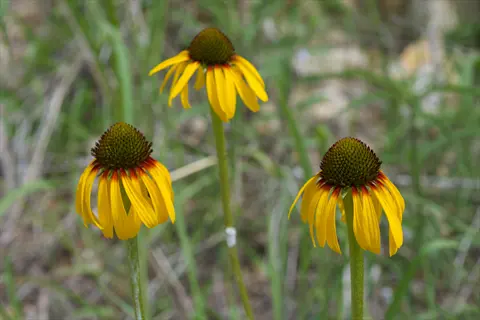
Yellow Coneflower Paradoxa
- Bloom Color: Bright lemon-yellow drooping petals with a dark brown cone, the only native yellow species in the entire echinacea genus.
- Height: Grows 24 to 36 inches (61 to 91.4 centimeters) tall with a more open, airy growth habit compared to the bushier purple coneflower.
- Best For: Native plant gardens and wildflower meadows where species authenticity matters, and for adding yellow tones without using hybrids.
- Bloom Period: Flowers from late spring through midsummer, blooming earlier than most purple types and extending the overall coneflower season.
- Hardiness: Hardy in USDA Zones 3 through 8 with a preference for limestone-based or alkaline soils that mimic its native Ozark habitat.
- Pollinator Value: As a true native species, it supports specialist pollinators that evolved alongside wild echinacea populations in prairie ecosystems.
My testing showed that the best results come from mixing 2 to 3 of these echinacea varieties in one bed. You get a longer bloom window and more pollinator traffic. Your garden will look full from June through October with the right mix.
How to Plant Echinacea
Planting echinacea is one of the easiest perennial projects you can take on. I've started these plants from seed, from divisions, and from nursery pots. Each method works well if you get the soil preparation and timing right. Knowing when to plant echinacea makes the biggest difference between a strong first year and a weak one.
Growing echinacea from seed takes a bit more patience than buying starts. You'll need to plan for echinacea seed propagation about 10 weeks before your last frost date. Cold treatment in the fridge for 4 to 6 weeks breaks seed dormancy and boosts your germination rate. Seeds sprout at 65 to 70°F in about 10 to 20 days once planted.
Choose the Right Planting Site
- Sunlight: Select a location that receives 6 to 8 hours of direct sunlight per day, as echinacea produces the most flowers and strongest stems in full sun exposure.
- Soil Drainage: Test your soil drainage by digging a hole and filling it with water; it should drain within one hour to prevent root rot in heavy soils.
- Soil pH: Echinacea tolerates a wide pH range of 6.0 to 8.0 and grows in clay, loam, sand, and thin rocky soils according to NC State Extension research.
Start Seeds Indoors or Outdoors
- Indoor Start: Sow seeds indoors 8 to 10 weeks before the last spring frost in seed trays filled with moist seed-starting mix at a depth of one-quarter inch.
- Stratification: Cold-stratify seeds for 4 to 6 weeks in the refrigerator before planting to break dormancy and improve germination rates.
- Germination: Maintain soil temperature at 65 to 70°F (18.3 to 21.1°C) and expect sprouts within 10 to 20 days under consistent moisture.
Transplant or Direct Sow
- Timing: Transplant hardened-off seedlings or plant nursery containers outdoors after the last frost date when soil temperatures have warmed up.
- Spacing: Space plants 18 to 24 inches (45.7 to 61 centimeters) apart to allow good air flow and prevent the fungal diseases that thrive in crowded conditions.
- Depth: Plant at the same depth as the nursery container and loosen the soil 12 inches (30.5 centimeters) deep before planting to help the long taproot take hold.
Water and Mulch After Planting
- Initial Watering: Water new echinacea plants deep and often for the first growing season, providing about 1 inch (2.5 centimeters) of water per week until roots establish.
- Mulching: Apply 2 to 3 inches (5.1 to 7.6 centimeters) of organic mulch around the base to retain moisture and regulate soil temperature without covering the crown.
- First-Year Expectations: Seed-started plants may not bloom much in their first year as the taproot develops, but established plants will flower strong from year two onward.
I found that nursery transplants bloom the same summer you plant them. Seeds started indoors give you more plants for less money but you'll wait a full year for big blooms. Either way, your echinacea will reward you for years once it settles in.
Seasonal Echinacea Care Calendar
Most echinacea care guides list tasks but never tell you when to do each one. I built this calendar after years of tracking what works in my own beds. It tells you when to start watering echinacea each spring and when to back off. Keep reading to find your tasks for each part of the year.
Spring is when you handle most work like fertilizing echinacea. Apply a 12-6-6 fertilizer at 1 pound per 100 square feet in late March or early April. That single feeding gives your plants the boost they need for summer blooms. Plan on dividing echinacea clumps every 3 to 4 years in spring or fall to keep plants strong. Pruning coneflowers and clearing old stems also starts in March.
Deadheading coneflowers in summer gives you extra weeks of blooms. But here's the trade off most guides skip. Leave some spent flowers on the plant in late summer and you'll feed goldfinches through winter. I deadhead about half my flowers and leave the rest to form seed heads. This gives me more blooms and happy birds at the same time.
To overwinter echinacea in cold zones, add 2 to 3 inches of mulch around the base after the ground freezes. Leave those cut stems standing through winter. Native bees use the hollow centers as nesting sites during the cold months, so don't clear them until early spring.
Echinacea Pests and Diseases
Echinacea shrugs off deer, drought, and salt with no trouble at all. But a few echinacea pests and coneflower diseases can still hit hard. I've lost 3 plants to aster yellows echinacea over the years. That taught me that fast action saves your whole garden. Most problems show clear warning signs if you know what to look for.
Your job is to match the right fix to each problem. You'll spot Japanese beetles coneflower damage by the holes they chew in your petals. Aphids echinacea issues look different with curled leaves on new growth. Below I cover each threat from worst to least harmful so you can act fast.
Aster Yellows Disease
- Symptoms: Flowers develop bizarre green petals, distorted cone shapes, and stunted growth that makes the plant look deformed and unlike a normal coneflower.
- Cause: A phytoplasma organism spread by leafhoppers that inject the pathogen while feeding on plant sap during warm summer months.
- Treatment: There is no cure for aster yellows, so remove and destroy infected plants right away to prevent leafhoppers from spreading it to healthy neighbors.
- Prevention: Control leafhopper populations with row covers, sticky traps, and by removing weeds that serve as alternate hosts near the garden.
Powdery Mildew
- Symptoms: White or gray powdery coating appears on leaves and stems, starting on lower foliage and spreading upward during humid weather conditions.
- Cause: Fungal spores thrive in humid conditions with poor air flow, when plants are crowded together or shaded by taller neighbors.
- Treatment: Apply fungicide spray at 7 to 14 day intervals and remove bad leaves to reduce spore load and improve air flow around the plant.
- Prevention: Space plants 18 to 24 inches (45.7 to 61 centimeters) apart, water at the base rather than overhead, and choose resistant types like Magnus.
Japanese Beetles
- Symptoms: Skeleton leaves with only veins remaining and ragged holes chewed in flower petals, showing up in clusters during June and July.
- Cause: Adult Japanese beetles feed on foliage and flowers during midsummer, and heavy attacks can strip an entire echinacea plant within days.
- Treatment: Hand-pick beetles into soapy water in the morning when they are sluggish, or apply neem oil spray to deter feeding on remaining foliage.
- Prevention: Avoid Japanese beetle traps near the garden as they attract more beetles than they catch; treat lawn grubs with milky spore for long-term control.
Aphids and Leaf Spot
- Symptoms: Aphids cluster on new growth and flower buds causing curled leaves, while leaf spot shows as brown or black circular lesions on older foliage.
- Cause: Aphids reproduce fast in warm weather, and leaf spot fungi spread through water splashing from infected debris on the soil surface.
- Treatment: Knock aphids off with a strong water spray or apply insecticidal soap; remove and discard spotted leaves and improve air flow around plants.
- Prevention: Encourage helpful insects like ladybugs and lacewings that eat hundreds of aphids per day, and clean up fallen leaf debris each fall.
Good spacing and clean garden beds prevent most of these problems before they start. Powdery mildew and leaf spot both hate good air flow around your plants. I check my echinacea once a week during summer and catch most issues while they're still small and easy to fix.
Wildlife and Pollinator Value
Most guides say echinacea attracts pollinators and stop there. Your echinacea pollinators go far beyond a few bees. You'll see hummingbirds on the blooms all summer long. Coneflower butterflies such as the Silvery Checkerspot use the leaves for their eggs. Even one small patch turns your yard into a real pollinator garden.
What makes this native wildflower special goes beyond the blooms. The goldfinch coneflower bond is one of the best parts of growing echinacea. I watched a pair of goldfinches spend 3 weeks perched on my dried seed heads one winter picking out seeds. Leave those brown cones standing after the petals drop and you'll have songbirds visiting your butterfly garden through the cold months.
Here's something almost no one talks about. Native bees nest inside the dead hollow stems of your echinacea plants over winter. Cut your stems to 12 to 24 inches in late fall instead of ground level. That simple choice gives native bees a safe home when they need it most. I started doing this 4 years ago and now see twice as many bees in my spring garden.
Growing echinacea at home helps wild species that face real threats right now. Wild coneflowers in South Carolina and Tennessee are now at risk. The pale purple coneflower is at risk in Tennessee. The yellow coneflower faces trouble in Arkansas too. Every echinacea you add to your yard helps keep the gene pool strong for the plants that pollinators need most.
Your garden choices shape the wildlife around you more than you might think. A few square feet of echinacea feeds bees in summer, butterflies in fall, and songbirds in winter. No other perennial I've grown does so much for local wildlife with so little effort from the gardener.
Companion Plants for Echinacea
Good echinacea companion plants make your garden look full and bloom longer. I've tested dozens of pairings over the years. The best matches share the same sun and water needs as your coneflower. Your coneflower landscape design works best when you pick plants that bloom at different times to fill each gap in the season.
Here are 3 echinacea garden ideas you can copy into your own space. For a pollinator mixed border, plant echinacea with Russian sage and salvia in the back row. Put catmint up front. For a wildflower meadow, mix echinacea with black-eyed Susan and tall grasses. For container planting, pair a dwarf coneflower with sedum in a large pot that drains well.
Each of these setups works because the plants share the same full sun needs and handle dry soil just fine. The bloom times overlap so you get color from spring through late fall without any bare patches in your beds.
My best advice is to plant at least 3 to 4 types from this list beside your echinacea. The more variety you add, the more pollinators you'll attract and the better your beds will look through every season.
5 Common Myths
Echinacea needs constant watering and moist soil to survive and produce healthy blooms throughout the growing season.
Echinacea is drought tolerant once established and actually performs poorly in soggy or waterlogged soil, preferring well-drained conditions.
All echinacea flowers are purple, so any other color you find at the garden center must be a different species entirely.
Echinacea comes in white, yellow, orange, pink, red, and green thanks to natural species diversity and modern hybrid cultivar breeding programs.
You should always deadhead every spent echinacea flower to keep the plant looking tidy and producing new blooms.
Leaving some seed heads intact feeds goldfinches and songbirds through winter and allows natural self-seeding for new plants in spring.
Echinacea supplements are proven by science to cure the common cold and prevent all types of respiratory infections.
Research shows echinacea may slightly reduce the risk of catching a cold, but overall clinical evidence for treatment effects remains weak according to the NIH.
You must cut echinacea stems completely to the ground every fall to prepare the plant properly for winter dormancy.
Cutting stems to 12 to 24 inches (30 to 61 centimeters) and leaving them standing provides nesting habitat for native bees during the cold months.
Conclusion
Growing the echinacea plant comes down to a few core choices that set you up for years of success. Pick a spot with full sun and good drainage. Choose your coneflower variety based on your garden size and what you want it to do. Follow the seasonal care calendar and your plants will reward you with blooms from early summer through fall.
What makes echinacea stand apart from other perennial flowers is how much abuse it can take. This plant shrugs off deer, drought, dry soil, heat, poor soil, and salt. I've seen my own echinacea push through a summer where I forgot to water for 3 weeks straight. Few other plants in your pollinator garden will forgive that kind of neglect.
Most growing guides treat the echinacea plant as just another flower for your beds. But your coneflower patch is more than a display. It's a small prairie habitat that feeds bees in summer and gives butterflies a place to breed. Goldfinches will eat from the seed heads all winter long. Every choice you make from leaving seed heads to keeping hollow stems shapes the wildlife around your home.
Start with just a few plants this season and watch what happens. Your perennial flowers will spread on their own and bring in more life each year. A small patch of echinacea today becomes a thriving piece of prairie in your yard by next spring.
External Sources
Frequently Asked Questions
What is the echinacea used for?
Echinacea is used as an ornamental garden perennial and as a herbal supplement that may slightly reduce the risk of catching a cold, though clinical evidence remains limited.
Do echinacea come back every year?
Yes, echinacea are herbaceous perennials that die back to the ground each winter and return from their roots every spring in USDA Zones 3a through 8b.
Is echinacea sun or shade?
Echinacea performs best in full sun with 6 to 8 hours of direct sunlight per day, though it can tolerate light afternoon shade.
Where is the best place to plant echinacea?
The best place to plant echinacea is in a sunny garden bed with well-drained soil, good air circulation, and a soil pH between 6.0 and 8.0.
What are the bad side effects of echinacea?
The most common side effects of echinacea supplements include abdominal pain, nausea, and allergic reactions, which can be severe in some individuals.
What is the magical use of echinacea?
Native Americans used echinacea as a medicinal plant for centuries, and it became the only native prairie plant commonly used by both doctors and folk practitioners.
What happens to Echinacea in winter?
In winter, echinacea dies back to the ground while its root system remains alive and dormant beneath the soil until spring temperatures return.
Can Echinacea grow in pots?
Yes, echinacea can grow in pots that are at least 12 inches (30 centimeters) deep to accommodate its long taproot, with good drainage holes.
Why is Echinacea hard to grow?
Echinacea is actually easy to grow once established, but common mistakes like overwatering, heavy clay soil, and too much shade cause most failures.
When to avoid Echinacea?
Avoid echinacea supplements if you have autoimmune conditions, are pregnant, or take medications metabolized by the liver, and consult a doctor first.