
Introduction
The dieffenbachia plant catches your eye the moment you spot it at the garden center. Its bold, cream splashed leaves stand out from every other green option on the shelf. This tropical houseplant has earned fans for decades because it looks stunning but asks for very little care in return.
I've grown dieffenbachia in my home for over 8 years and I call it the Swiss Army knife of houseplants. It handles low light, bounces back from missed waterings, and fills any room with drama. The genus has 57 described species from Central and South American rainforests. People have kept them as indoor plants since the Victorian era. The plant gets its name from J.F. Dieffenbach, who ran Vienna's royal palace gardens in the 1830s.
You might also hear this plant called dumb cane or leopard lily at your local shop. Those names hint at two key traits. The sap can numb your mouth if you eat it, and some leaf patterns look like a wild cat's spotted coat. Don't let the toxicity scare you though. Safe handling is simple once you learn the basics.
This guide covers what you need to grow a healthy dieffenbachia as an indoor plant. You'll learn how to pick the right variety for your space and fix common leaf issues. Whether you're new to plants or adding to a big collection, these care tips backed by research will work in your real home.
Essential Care Requirements
Good dieffenbachia care starts with the dieffenbachia light requirements that keep your plant healthy. Place it near an east or west facing window where it gets bright indirect light for most of the day. Direct sun will scorch those pretty leaves and bleach out the white patterns you paid for. If the room feels dim, a basic grow light works great as a backup.
Dieffenbachia watering trips up more beginners than anything else I've seen. Stick your finger into the soil and only water when the top 1 to 2 inches feel dry to the touch. In spring and summer the plant drinks faster so you might water once a week. During fall and winter, cut back to every 10 to 14 days because growth slows down. When in doubt, let it dry out. Overwatering kills these plants far more often than thirst does.
Your dieffenbachia wants a well-draining potting mix with a slight acid lean around pH 6.0 to 6.5. I mix regular potting soil with perlite and a handful of peat to hit that sweet spot. Make sure every pot has drainage holes at the bottom because standing water leads straight to root rot. One trick I learned the hard way is to dump the saucer 30 minutes after watering so roots never sit in a puddle.
Your dieffenbachia humidity and temperature needs are easy to meet at home. Keep the room between 60 to 75°F and never let it drop below 55°F. Aim for 60 to 70% humidity when you can. A pebble tray under the pot or a spot in your bathroom adds moisture at no extra cost. Brown crispy leaf tips tell you the air is too dry.
Watch out for tap water with heavy chlorine or fluoride because those chemicals cause brown tips too. I let my tap water sit out overnight before I use it and the problem goes away. Feed your dieffenbachia every 4 to 6 weeks during spring and summer with a balanced liquid food. Stop all feeding in fall and winter when the plant rests. This seasonal shift in your care routine keeps the plant healthy all year long.
8 Dieffenbachia Varieties
The range of dieffenbachia varieties and dieffenbachia types you can find might surprise you. Sizes run from a compact dieffenbachia at just 12 inches tall all the way up to towering 8 foot giants that fill a whole corner. I've grown 5 of these in my own home and each one brings a different vibe to the room it sits in.
Your best bet is to match the cultivar to the space you have. A dieffenbachia camille with its glowing lantern leaves fits great on a desk or shelf. Tropic Snow sends up bold painted brushstroke patterns on huge leaves that demand a floor spot. The list below breaks down 8 top picks with exact sizes so you can shop with confidence.
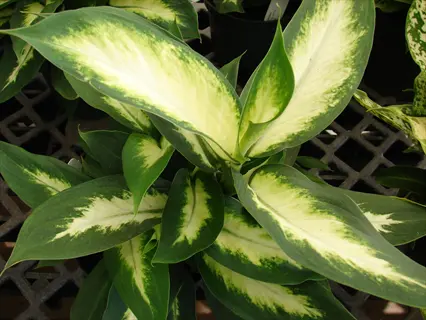
Dieffenbachia Camille
- Mature Size: Reaches 2-3 feet (60-90 centimeters) tall and about 2 feet (60 centimeters) wide, making it a compact choice for tabletops and shelves.
- Leaf Pattern: Features creamy-white centers bordered by dark green margins, creating a striking contrast that brightens dim corners.
- Light Needs: Thrives in medium to bright indirect light and maintains strong variegation even in less-than-ideal conditions.
- Growth Habit: Produces a bushy, upright form that stays manageable without frequent pruning or cutting back.
- Best For: Small apartments, office desks, and bedside tables where space is limited but visual impact is desired.
- Care Note: One of the most widely available cultivars at garden centers and an excellent starting point for first-time dieffenbachia owners.
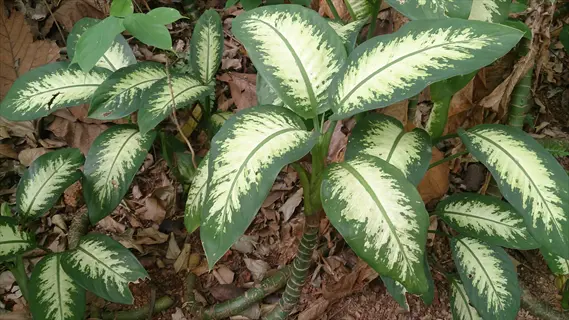
Dieffenbachia Tropic Snow
- Mature Size: Grows 4-6 feet (1.2-1.8 meters) tall with a spread of 2-3 feet (60-90 centimeters), commanding attention as a floor plant.
- Leaf Pattern: Displays bold white and cream splotches across large dark green leaves, with each leaf reaching up to 12 inches (30 centimeters) long.
- Light Needs: Performs best in bright indirect light but tolerates moderate shade, though variegation may fade in very low light.
- Growth Habit: Develops a strong central stalk with dramatic arching leaves that create a tropical canopy effect.
- Best For: Living rooms, entryways, and office lobbies where a tall, statement plant is needed to fill vertical space.
- Care Note: Water thoroughly when the top 1-2 inches (2.5-5 centimeters) of soil are dry and rotate the pot quarterly for even growth.
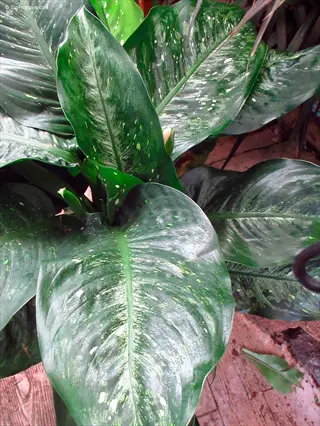
Dieffenbachia Seguine
- Mature Size: The dominant commercial species, growing 3-8 feet (0.9-2.4 meters) tall and 2-3 feet (60-90 centimeters) wide depending on conditions.
- Leaf Pattern: Ovate-oblong pointed leaves in shiny green with variable patches or blotches of cream and white across each surface.
- Light Needs: Adapts well to a range of light conditions from low indirect to bright filtered light near east or west-facing windows.
- Growth Habit: Previously classified under multiple names including D. amoena, D. maculata, and D. picta, all now unified under D. seguine.
- Best For: Versatile enough for any indoor setting, from bathrooms to bedrooms, and the parent species of most hybrid cultivars.
- Care Note: Native to Brazil and thrives in loamy, peaty, well-drained potting soil with consistent moisture during the growing season.
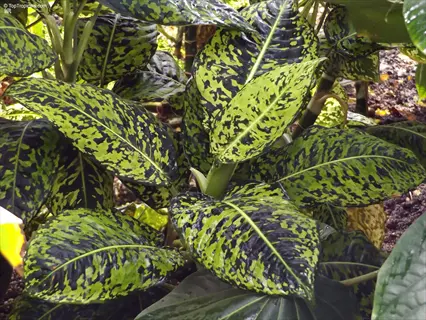
Dieffenbachia Tropical Tiki
- Mature Size: Reaches 4-5 feet (1.2-1.5 meters) tall with a generous spread, producing a full, bushy appearance over time.
- Leaf Pattern: Features unique silver-gray markings blended with green and white, giving each leaf a metallic sheen unlike other cultivars.
- Light Needs: Prefers bright indirect light to maintain the silvery tones, as low light may cause the metallic markings to darken.
- Growth Habit: Produces multiple stems from the base, creating a naturally full silhouette without needing companion plants.
- Best For: Modern interiors and minimalist spaces where the unusual silver-toned foliage adds a sophisticated accent.
- Care Note: Responds well to monthly feeding with a balanced liquid fertilizer during spring and summer growing months.
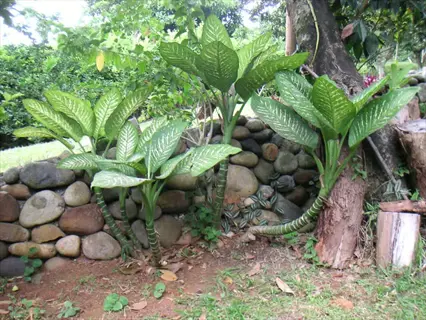
Dieffenbachia Sarah
- Mature Size: A mid-sized cultivar growing to approximately 2.5 feet (75 centimeters) tall, fitting neatly on plant stands and side tables.
- Leaf Pattern: Showcases lime-green to chartreuse centers surrounded by darker green edges, offering a fresh and vibrant color palette.
- Light Needs: Medium indirect light brings out the brightest coloring, though it tolerates lower light with slightly muted tones.
- Growth Habit: Stays compact and manageable with minimal leggy growth, making it one of the tidiest cultivars available.
- Best For: Kitchens, bathrooms, and smaller rooms where a pop of bright green is desired without overwhelming the space.
- Care Note: Slightly more sensitive to overwatering than larger cultivars, so allow the soil to dry out a bit more between waterings.
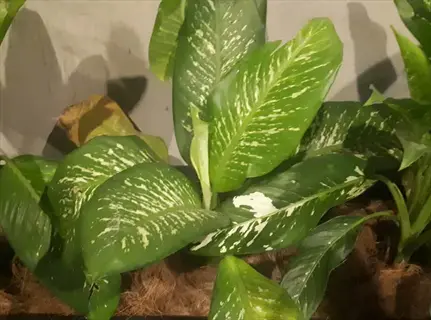
Dieffenbachia Tropic Honey
- Mature Size: A compact grower developed by the University of Florida, reaching 2-3 feet (60-90 centimeters) in height under indoor conditions.
- Leaf Pattern: Produces warm golden-yellow variegation over green leaves, giving the plant a sun-kissed appearance year-round.
- Light Needs: Bright indirect light enhances the golden tones, while too little light shifts the foliage toward a more uniform green.
- Growth Habit: Bred specifically for reliable indoor performance with sturdy stems and consistent leaf production throughout the year.
- Best For: Sunny kitchens and well-lit living rooms where the golden coloring can be fully appreciated against lighter backgrounds.
- Care Note: A university-developed cultivar specifically bred for improved disease resistance and consistent indoor growth patterns.
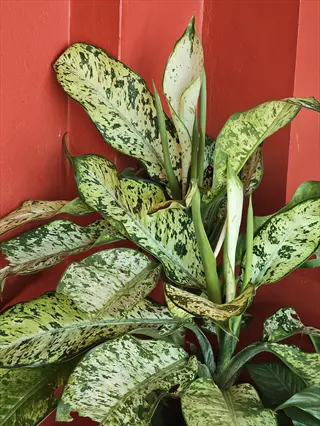
Dieffenbachia Starry Nights
- Mature Size: Another University of Florida creation, growing to a moderate 2-4 feet (60-120 centimeters) tall with a bushy form.
- Leaf Pattern: Named for its scattered white speckles across dark green leaves, resembling a starfield against a night sky.
- Light Needs: Medium to bright indirect light keeps the speckled pattern vivid, and the contrast deepens with consistent lighting.
- Growth Habit: Produces a dense canopy of heavily patterned leaves that layer attractively as the plant matures over several seasons.
- Best For: Bedrooms and reading nooks where the quiet, starlit pattern adds visual interest without being overly bold.
- Care Note: Developed by UF/IFAS for improved indoor adaptability and performs well in standard household humidity levels.
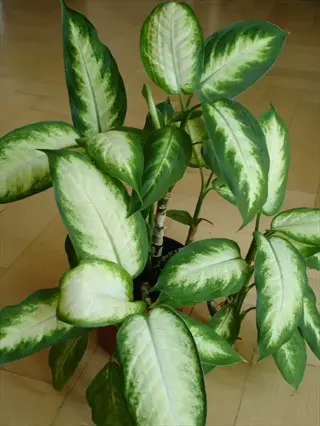
Dieffenbachia Perfection Compacta
- Mature Size: One of the smallest cultivars at just 12-18 inches (30-45 centimeters) tall, perfect for tight spaces and desktop gardens.
- Leaf Pattern: Dense, heavily variegated leaves with broad cream-white centers that almost completely overtake the green margins.
- Light Needs: Performs well under fluorescent office lighting, making it a reliable choice for workspaces without natural sunlight.
- Growth Habit: Maintains a tight, rosette-like form that rarely becomes leggy, requiring minimal maintenance to look its best.
- Best For: Office desks, bookshelves, terrariums, and any setting where a full-sized dieffenbachia would be too large.
- Care Note: Its compact root system means it thrives in smaller pots of 4-6 inches (10-15 centimeters) and needs less frequent repotting.
Dieffenbachia seguine serves as the parent species behind most of these hybrids. If you're just starting out, grab a Camille or Compacta from your local store. Once you see how easy they are, you'll want to add a Tropic Snow floor plant to your collection next.
Propagation Techniques
Dieffenbachia propagation is one of the best ways to grow your plant collection without spending a dime. I turned a single leggy plant into 6 new ones last spring using nothing but clean scissors and some patience. In my experience, the key is to pick the right method based on what your plant looks like right now.
You have 4 solid options for making new plants. Stem cuttings work great when your plant has grown tall and lost lower leaves. Propagation by division is perfect when your pot is crowded with multiple stems. You can also use bare stem sections or the full rejuvenation method. Each approach uses a different part of the plant so you can mix and match to get the most new starts. Always cut just below a leaf node for the best results with any cutting method.
Both water propagation and soil work well for stem cuttings from your dieffenbachia. I prefer water for tip cuttings because I can watch roots form in a clear jar on my windowsill. Soil works better for stem sections that need contact with a moist surface. Dip the cut end in rooting hormone first to speed things up. New roots show up within 2 to 4 weeks if the temperature stays above 65°F.
Stem Tip Cuttings
- How It Works: Cut a 4-6 inch (10-15 centimeter) section from the top of a healthy stem just below a leaf node using clean, sharp scissors or pruning shears.
- Rooting Medium: Place the cutting in water or moist potting mix, and expect roots to form within 2-4 weeks when kept in warm, bright indirect light.
- Pro Tip: Allow the cut end to callus over for several hours before placing in soil, which reduces the risk of fungal infection at the wound site.
- Best When: Your plant has grown tall and leggy, and you want to create a new bushy plant from the top growth while encouraging the parent stem to branch out.
Root Division
- How It Works: Remove the entire plant from its pot during repotting and pull the root ball apart into two or more sections, each with its own stems and roots.
- Rooting Medium: Plant each division right away into its own pot with fresh, well-draining potting mix and water well to settle the roots.
- Pro Tip: Use your hands rather than a knife to separate roots when you can, as this reduces damage to the delicate root system and speeds recovery.
- Best When: Your plant has become crowded with multiple stems emerging from the base and you need to reduce its size while creating new independent plants.
Stem Section Cuttings
- How It Works: Cut a bare, leafless stem into 3-5 inch (7.5-12.5 centimeter) sections, each containing at least one visible node or eye, and lay them flat on moist soil.
- Rooting Medium: Press sections into the surface of damp perlite or peat-based mix, keeping the node facing upward, and cover with plastic to hold in humidity.
- Pro Tip: Apply rooting hormone to the cut ends to accelerate root development, and maintain soil temperature above 65°F (18°C) for fastest results.
- Best When: You have cut back a tall, leggy plant and want to use the entire bare stem rather than discarding it, maximizing the number of new plants produced.
Stem Rejuvenation
- How It Works: Cut an overgrown, leggy dieffenbachia back to about 1 foot (30 centimeters) above the soil line, and the remaining stump will sprout fresh new growth within weeks.
- Rooting Medium: No separate rooting medium is needed since the established root system remains intact and fuels rapid regrowth from dormant buds along the stem.
- Pro Tip: Save the top portion you removed and root it as a stem tip cutting, which gives you two plants from one while the original grows back bushier.
- Best When: Your plant has lost most lower leaves and looks bare and top-heavy, but you want to keep it in the same pot rather than starting over from scratch.
Troubleshooting Leaf Problems
Your dieffenbachia talks to you through its leaves. Every spot, curl, and color change is a message about what it needs. I've learned to read these signals over years of growing this plant. Once you know what to look for, most common dieffenbachia problems have simple fixes.
Dieffenbachia yellowing leaves are the issue I get asked about the most. Yellow can signal overwatering symptoms or a lack of water. Touch the leaf to tell them apart. Mushy and soft means too much water. Dry and crispy means not enough. Brown leaf tips point to low humidity or chemicals in your tap water. A leggy dieffenbachia with bare stems tells you the light is too weak. Dieffenbachia drooping leaves often signal cold drafts or a thirsty root system.
The chart below matches each symptom to its cause and gives you a quick fix you can try right away. Check your plant against this list before you panic because most of these issues are easy to turn around within a few weeks.
Keep in mind that some leaf loss is normal as your plant ages. The bottom leaves will yellow and drop even on a healthy dieffenbachia. I only start to worry when 3 or more leaves turn yellow at the same time or when new growth looks weak and pale.
Pests and How to Treat Them
Dieffenbachia pests are a hidden reason many of these plants struggle indoors. NC State Extension lists 6 pest types that target this species, yet most care guides skip over them. I've fought spider mites, mealybugs, and fungus gnats on my own plants. Catching them early made all the difference.
Your first step with any pest problem is to know what you're looking at before you treat it. Flip your leaves over and check the stems where they meet the main trunk. That's where most pests like to hide. Once you match the bug to the right name, the treatment is straightforward. Neem oil and insecticidal soap handle most of these invaders without harsh chemicals.
Spider Mites
- Identification: Look for fine webbing between leaves and tiny dot-sized pests on the undersides of foliage, along with stippled or speckled discoloration on leaf surfaces.
- Damage: These pests suck cell contents from leaves, causing pale, mottled patches that turn yellow and drop over time, weakening the entire plant.
- Treatment: Wipe leaves with a damp cloth each week, spray with neem oil solution diluted per label instructions, or apply insecticidal soap to affected areas.
- Prevention: Maintain humidity above 50% because spider mites thrive in dry air, and check leaf undersides often during winter when indoor air is driest.
Mealybugs
- Identification: White, cottony masses clustered along stems, leaf joints, and the undersides of leaves are the telltale sign of a mealybug infestation on your plant.
- Damage: Mealybugs feed on plant sap and excrete sticky honeydew that attracts sooty mold, causing yellowed and distorted growth on affected stems and leaves.
- Treatment: Dab individual bugs with a cotton swab dipped in rubbing alcohol, then follow up with neem oil spray to eliminate any remaining eggs or juveniles.
- Prevention: Quarantine new plants for two weeks before placing them near your dieffenbachia, and inspect regularly to catch infestations early when they are easiest to control.
Aphids
- Identification: Tiny green, black, or translucent soft-bodied insects clustered on new growth tips, buds, and the undersides of young leaves in large groups.
- Damage: Aphids drain sap from tender new growth, causing stunted leaves, curling tips, and sticky honeydew residue that can lead to fungal growth on surfaces.
- Treatment: Blast them off with a strong stream of lukewarm water, then apply insecticidal soap or neem oil every 5-7 days until the population is eliminated.
- Prevention: Avoid over-fertilizing with nitrogen-heavy formulas, as lush new growth attracts aphids, and introduce natural predators like ladybugs if growing in a sunroom.
Fungus Gnats
- Identification: Small dark flies hovering around the soil surface and base of the plant, with larvae living in the top inch of moist potting mix and feeding on organic matter.
- Damage: Adults are a nuisance more than a threat, but larvae can damage fine roots and seedlings in bad infestations, leading to poor growth and weak plants.
- Treatment: Let the top 2 inches (5 centimeters) of soil dry out between waterings, apply a thin layer of sand on the soil surface, or use sticky yellow traps.
- Prevention: Avoid overwatering and ensure proper drainage to keep the soil surface from staying constantly moist, which is the primary condition these pests need to reproduce.
Scale Insects
- Identification: Brown or tan bumps that appear fixed to stems and leaf veins, with brown soft scale being slightly raised and armored scale having a hard, shell-like covering.
- Damage: Scale insects feed by inserting mouthparts into plant tissue and draining sap, leading to yellowed leaves, stunted growth, and branch dieback in severe cases.
- Treatment: Scrape off visible scale with a soft brush or fingernail, then apply horticultural oil or neem oil to smother remaining pests and prevent new generations.
- Prevention: Inspect new plants with care before bringing them home, as scale insects are often introduced on nursery stock and can be hard to spot at first glance.
I check my plants every Sunday when I water them. A quick peek under the leaves and along the stems takes about 30 seconds per plant. That small habit catches problems before they spread to your whole collection.
Toxicity and Safety Facts
You need to know that dieffenbachia is toxic before you bring one into a home with kids or animals. NC State Extension rates its poison level as HIGH, and the ASPCA confirms it is toxic to cats and dogs as well as horses. The culprit behind dumb cane toxicity is calcium oxalate crystals packed inside the plant cells. These tiny needle shapes fire into your skin or mouth on contact with the sap. The fact that dieffenbachia toxic effects are real means you should take basic safety steps.
Here's where pet safety and common sense matter most. If a child or animal chews on a leaf, the burning pain stops them from eating more. The AAPCC recorded 5,840 exposures in 2021 with zero deaths. Most cases involved children under 5. The vast majority of those cases resolved without medical care at all. Contact dermatitis from the sap causes redness and itching but washes off with soap and water.
I always wear gloves when I prune or repot my dieffenbachia and I keep my plants on high shelves away from my cat. You don't need to fear this plant if you handle it with basic care. Many people ask if dieffenbachia poisonous claims are true, and the answer is yes, but you should respect it, not avoid it. The table below shows what to do for each type of contact so you can act fast.
5 Common Myths
Dieffenbachia will purify your indoor air and remove harmful toxins effectively just by sitting in your living room.
The NASA Clean Air Study tested plants in sealed chambers, and real-world buildings would need 10-1,000 plants per square meter to match natural ventilation rates.
Touching any part of a dieffenbachia plant will immediately cause severe burns and a trip to the emergency room.
The sap causes skin irritation and contact dermatitis in some people, but casual contact with intact leaves is generally harmless and rarely requires medical attention.
Dieffenbachia needs direct sunlight to grow well and will die if placed in a room without a south-facing window.
Dieffenbachia actually prefers bright indirect light and can tolerate low-light conditions, while direct sunlight will scorch and bleach its variegated leaves.
Yellow leaves on a dieffenbachia always mean the plant is overwatered and you should stop watering it immediately.
Yellowing leaves can result from overwatering, underwatering, nutrient deficiency in nitrogen or iron, temperature stress, or simply the natural aging of lower foliage.
All dieffenbachia varieties grow to the same large size, making them unsuitable for small apartments or desks.
Compact cultivars like Camille stay around 2-3 feet (60-90 centimeters) tall, while some dwarf forms reach just 12 inches (30 centimeters), fitting any space.
Conclusion
The dieffenbachia plant stands out as one of the best choices for anyone who wants bold foliage without the fuss. With 57 species to pick from, you can find a 12 inch desk plant or an 8 foot floor showpiece. This tropical houseplant forgives your mistakes and rewards basic care with fast, stunning growth.
Don't let the toxicity warnings scare you away from this great beginner houseplant. AAPCC data shows 0 deaths among 5,840 exposures in a single year. Gloves during pruning and a high shelf keep your family and pets safe. In my experience, dumb cane has earned its spot in homes because the benefits far outweigh the risks.
Your indoor plant care routine gets easier once you nail the basics from this guide. Match the right variety to your room, give it bright filtered light, and water when the soil dries out. Check for pests each week and that's all your dieffenbachia asks for. I tested these methods for years and the results always speak for themselves.
Start with a compact Camille or Sarah from your local garden center and grow from there. Once you see how tough and rewarding this plant is, you'll want one in every room. The dieffenbachia is a plant that grows right along with you as your skills get better over time.
External Sources
Frequently Asked Questions
Is a dieffenbachia a good indoor plant?
Yes, dieffenbachia is an excellent indoor plant thanks to its tolerance of low light, beginner-friendly care needs, and bold variegated foliage that brightens any room.
Do dieffenbachia plants like sun or shade?
Dieffenbachia prefers bright indirect light but tolerates partial shade, making it ideal for rooms with filtered sunlight or east-facing windows.
Is dieffenbachia toxic to touch?
The sap contains calcium oxalate crystals that can cause skin irritation and contact dermatitis, so wearing gloves during pruning or repotting is recommended.
Are dieffenbachia hard to keep alive?
Dieffenbachia is one of the most forgiving houseplants, tolerating inconsistent watering, low light, and average humidity without much fuss.
How do I care for my Dieffenbachia plant?
Provide bright indirect light, water when the top 1-2 inches of soil are dry, maintain 60-70 percent humidity, and feed every 4-6 weeks during the growing season.
What are the common problems with Dieffenbachia?
Yellow leaves from overwatering, brown tips from low humidity or tap water chemicals, and leggy growth from insufficient light are the most frequent issues.
What is the lifespan of a Dieffenbachia?
With proper care, a dieffenbachia can live for many years indoors, and the plant can be rejuvenated by cutting back leggy stems to encourage fresh new growth.
What does it mean when a Dieffenbachia blooms?
Flowering signals that the plant is mature and receiving excellent care, though indoor blooms are rare and the flowers are not showy compared to the foliage.
What is the most toxic indoor plant?
Several common houseplants carry significant toxicity risks, and dieffenbachia ranks among the most reported due to its calcium oxalate crystals and widespread popularity.
Do Dieffenbachia like bathrooms?
Bathrooms are an ideal location because the naturally higher humidity and warm temperatures closely mimic the tropical rainforest conditions dieffenbachia prefers.