
Introduction
The coreopsis plant is one of the best selling perennials in North America right now. It fills your garden with golden blooms for months and asks for almost nothing in return. The USDA Forest Service calls it a very dependable native perennial. I've grown it in my own beds for years and that claim holds up.
Most people call this flower tickseed. The name comes from the Greek word for bedbug because the small dark seeds look like tiny insects. Florida picked coreopsis as its state wildflower. The National Garden Bureau also named 2018 the Year of the Coreopsis. That kind of fame tells you this native wildflower has earned its spot in American gardens.
I think of coreopsis as the set it and forget it flower in my garden. It thrives on neglect and still gives you months of cheerful blooms from early summer through fall. This drought tolerant perennial handles heat, poor soil, and dry spells better than most plants at the nursery. Bees, butterflies, and songbirds visit the bright flowers all season long.
This guide shows you the best varieties backed by real research from a 3 year trial. You'll get zone specific planting dates and seasonal care tips. These proven methods keep your coreopsis blooming strong for years to come.
8 Best Coreopsis Varieties
Not all coreopsis varieties perform the same in your garden. Mt. Cuba Center tested 94 selections over 3 years and found huge gaps between the best and worst types of coreopsis. Some popular cultivars died within 2 seasons while others bloomed strong for the full trial.
I've grown most of these types of coreopsis in my own beds over the years. You'll find threadleaf coreopsis picks like Zagreb coreopsis and Moonbeam coreopsis here. Native species that most stores skip also made the cut. You'll see coreopsis verticillata here. You'll also find coreopsis grandiflora picks that reward you with big blooms.
Coreopsis palustris Summer Sunshine
- Trial Score: Earned the highest rating of 4.9 out of 5.0 in the Mt. Cuba Center three-year trial, outperforming all 93 other coreopsis selections evaluated during the study.
- Growth Habit: Forms a sturdy, upright clump reaching 24 to 30 inches (61 to 76 centimeters) tall with bright golden-yellow single flowers that bloom from early summer through fall.
- Hardiness: Thrives in USDA Zones 4 through 9 and demonstrates excellent winter survivability even without supplemental mulching or protection during harsh cold snaps.
- Disease Resistance: Showed outstanding resistance to powdery mildew and other fungal diseases throughout the entire three-year evaluation period with no pesticide applications.
- Maintenance: Requires minimal care beyond occasional deadheading and benefits from division every three years to maintain its compact form and heavy flower production.
- Best Use: Ideal for cottage gardens, mixed perennial borders, and pollinator plantings where a tall, reliable, long-blooming golden anchor plant is needed.
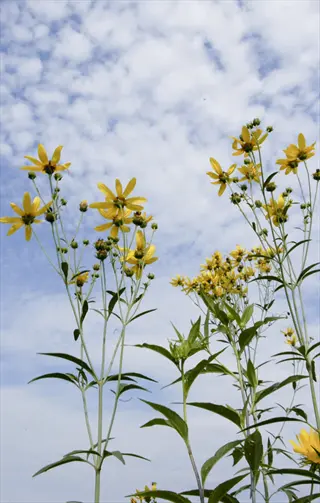
Coreopsis tripteris Gold Standard
- Trial Score: Scored an impressive 4.7 out of 5.0 in the Mt. Cuba Center trial, making it one of the top performers among all tall coreopsis species tested over three years.
- Growth Habit: Grows 4 to 6 feet (1.2 to 1.8 meters) tall with a narrow upright form, producing clusters of small yellow flowers with brown centers at the top of sturdy stems.
- Hardiness: Hardy in USDA Zones 4 through 8 and demonstrates strong cold tolerance with reliable return each spring even after extremely cold winters in the mid-Atlantic region.
- Unique Feature: One of the overlooked native species that Mt. Cuba Center researchers identified as significantly outperforming many commercially popular cultivars sold in nurseries.
- Maintenance: Rarely needs staking despite its tall height, and its narrow profile allows it to fit into mixed borders without crowding neighboring plants in the bed.
- Best Use: Perfect as a back-of-border specimen, meadow planting, or naturalized area where its towering height creates a dramatic vertical accent in late summer.
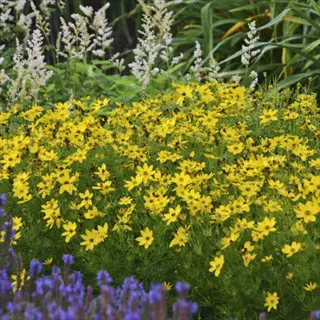
Coreopsis verticillata Zagreb
- Trial Score: Earned a 4.4 out of 5.0 rating at Mt. Cuba Center, making it the highest-scoring widely available cultivar that gardeners can easily find at local nurseries and garden centers.
- Growth Habit: Compact mound of fine, thread-like foliage reaching 12 to 18 inches (30 to 46 centimeters) tall, covered in bright golden-yellow starry flowers from June through September.
- Hardiness: Exceptionally cold hardy in USDA Zones 3 through 9, making it one of the most adaptable coreopsis cultivars for gardeners across a wide range of climates.
- Spread Pattern: Spreads gradually through underground rhizomes to form a dense, weed-suppressing mat that fills gaps between other perennials without becoming aggressively invasive.
- Drought Tolerance: Demonstrates excellent drought resistance once established, performing well even during extended dry spells without supplemental watering after the first growing season.
- Best Use: Excellent as a ground cover, border edging, or mass planting where its fine texture and long bloom season create a golden carpet effect in full sun areas.
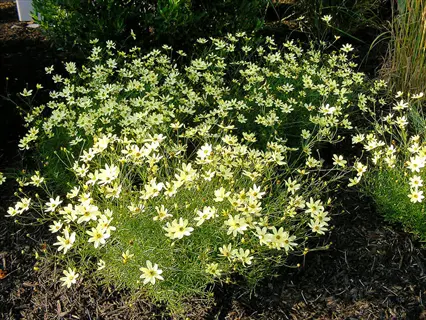
Coreopsis verticillata Moonbeam
- Flower Color: Produces soft, pale lemon-yellow flowers that glow in the garden, offering a gentler color that blends well with pastel planting schemes and cool-toned perennial borders.
- Growth Habit: Forms a delicate, airy mound 18 to 24 inches (46 to 61 centimeters) tall with the same fine threadleaf foliage as Zagreb but with a slightly more open, relaxed form.
- Award: Won the Perennial Plant Association Plant of the Year award, which helped make it one of the most widely sold coreopsis cultivars in nurseries across North America.
- Bloom Season: Flowers continuously from late May through September when regularly deadheaded, providing nearly four full months of soft yellow color in sunny garden beds.
- Companion Value: Pairs beautifully with purple coneflower, blue salvia, and ornamental grasses because its pale yellow flowers create a calming contrast against bolder flower colors.
- Best Use: Works well in cottage gardens, perennial borders, and container plantings where its soft color and fine texture add an elegant, naturalistic quality to the design.
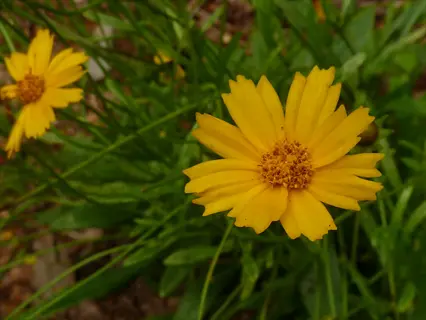
Coreopsis lanceolata Lanceleaf
- Native Range: Native to most of the United States and parts of Canada, making it one of the most widely distributed wildflowers in North America according to the USDA Forest Service.
- Growth Habit: Produces bright yellow daisy-like flowers on wiry stems reaching 12 to 24 inches (30 to 61 centimeters) tall with lance-shaped basal leaves that form a tidy rosette.
- Self-Seeding: Freely self-sows to form large, showy colonies that create golden carpets of flowers in meadows, prairies, and naturalized areas without any gardener intervention needed.
- Hardiness: Hardy in USDA Zones 3 through 8 and tolerates high heat, extended drought, and humidity with very few insect or disease problems throughout the growing season.
- Bloom Timing: Typically does not produce abundant blooms until the second year from seed, so patience is needed when starting new plantings from direct sowing or transplants.
- Best Use: Ideal for wildflower meadows, prairie restorations, roadside plantings, and rain gardens where a tough, self-sustaining native perennial is wanted with minimal upkeep.
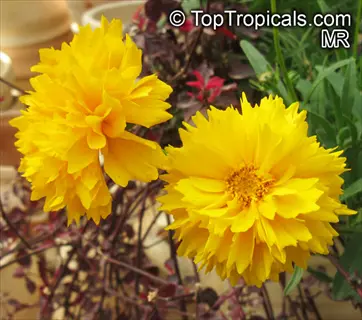
Coreopsis grandiflora Early Sunrise
- Award: Won the All-America Selections award for its outstanding garden performance, making it one of the most recognized and widely available large-flowered coreopsis cultivars.
- Growth Habit: Grows 18 to 24 inches (46 to 61 centimeters) tall with semi-double to double golden-yellow flowers up to 2 inches (5 centimeters) across on strong, upright stems.
- First-Year Bloom: Blooms the first year from seed when started indoors 6 to 8 weeks before the last frost date, giving impatient gardeners faster results than most perennial coreopsis.
- Lifespan Note: Tends to be shorter-lived than threadleaf types, often lasting only two to three seasons before declining, so plan for succession planting to maintain continuous coverage.
- Cut Flower: Makes an excellent cut flower with stems lasting 7 to 10 days in a vase, providing cheerful golden arrangements from your garden throughout the summer months.
- Best Use: Great for annual-style bedding displays, container plantings, and cutting gardens where vibrant, large flowers are desired even if the plant needs replacing after a few seasons.
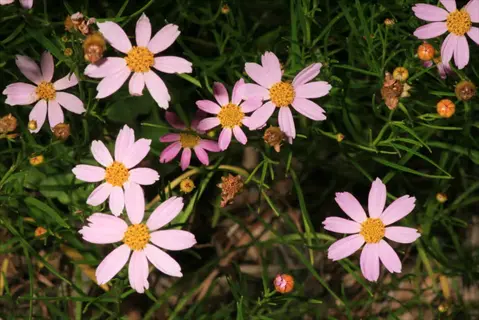
Coreopsis rosea Pink Coreopsis
- Unique Color: One of the only coreopsis species with naturally pink flowers, offering soft rose-pink blooms with yellow centers that stand out from the typical golden-yellow palette.
- Growth Habit: Low-growing and spreading, reaching 12 to 24 inches (30 to 61 centimeters) tall with fine needle-like foliage similar to threadleaf coreopsis varieties in the garden.
- Moisture Tolerance: Unlike most coreopsis species, pink coreopsis tolerates moister soil conditions and even performs well in rain gardens and areas with periodic wet conditions.
- Hardiness: Hardy in USDA Zones 4 through 8, though it is generally considered a less vigorous grower than the yellow-flowered species and may need more attention in the garden.
- Spreading Habit: Spreads through stolons and rhizomes to form a ground-covering mat, making it useful as a living mulch between taller perennials in mixed border plantings.
- Best Use: Perfect for adding color variety to coreopsis collections, rain gardens, and mixed perennial borders where its pink flowers create contrast against yellow-flowering companions.
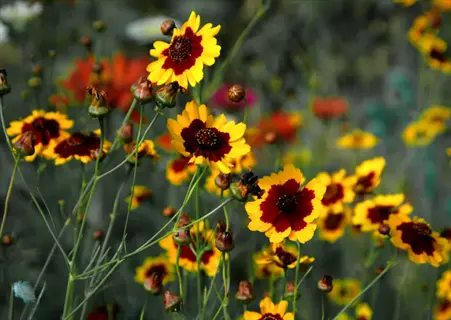
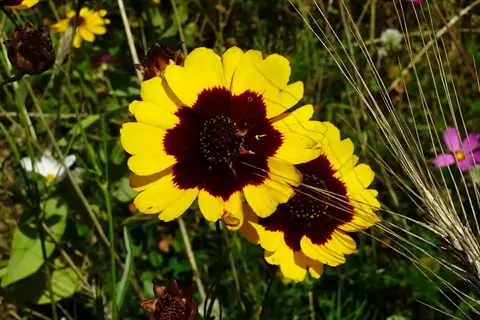
Coreopsis tinctoria Plains Coreopsis
- Plant Type: An annual coreopsis species native to North American prairies, making it ideal for wildflower seed mixes and one-season garden displays that need fast, reliable color.
- Flower Pattern: Produces striking bi-colored flowers with dark red-brown centers and golden-yellow petal tips, creating a distinctive eye-catching pattern unlike solid-colored perennial types.
- Growth Habit: Tall and slender, reaching 24 to 48 inches (61 to 122 centimeters) high with airy branching stems that sway gracefully in the breeze above fine-cut foliage.
- Dyeing History: Has been used traditionally to produce red, orange, and yellow fabric dyes, earning it the species name tinctoria which means used for dyeing in Latin.
- Self-Sowing: Produces abundant seed that readily self-sows in suitable conditions, allowing annual plantings to return year after year without replanting if seed heads are left standing.
- Best Use: Excellent for meadow plantings, wildflower gardens, and naturalized areas where its annual growth habit allows it to fill gaps and provide season-long color with no winter care.
The Mt. Cuba Center trial showed that picking the right variety matters more than any care trick you can use. Short lived hybrids might look great on the store shelf but fade fast in the ground. Stick with trial proven types and your coreopsis will reward you for years instead of just one season.
How to Grow Coreopsis
Learning how to grow coreopsis starts with choosing your method. You can start coreopsis from seed or buy transplants at the nursery. Seeds cost less and give you more plants for your money. I always start a few trays indoors each winter so I have dozens of plants ready for spring.
Coreopsis seeds sprout best when the soil hits 59°F to 70°F (15°C to 21°C). You can expect sprouts in 5 days to 4 weeks based on the temp and seed freshness. Pick a spot with coreopsis full sun, which means at least 6 hours of direct light each day. Your soil should be well-drained soil that doesn't hold water after rain. Space your plants 6 to 12 inches apart to keep good coreopsis spacing and air flow between them.
When to plant coreopsis depends on where you live. The table below shows the best planting window for each USDA zone so you can time it right. Cold zone gardeners should start seeds indoors and move them out after the last frost passes.
Don't worry if your coreopsis looks sparse that first year. Most plants won't produce heavy blooms until year 2 from seed. The wait is worth it because a single plant can fill a large space once it gets going.
Coreopsis Care and Maintenance
Coreopsis care is simple once you learn the basics. NC State Extension rates this plant as a low maintenance perennial with a rapid growth rate. The biggest mistake I see new gardeners make is giving coreopsis too much love. Less water, less food, and less fuss will keep your plants strong.
Deadheading coreopsis and dividing coreopsis are the 2 tasks that matter most for long blooms. You'll also want to know the right way to handle watering coreopsis and coreopsis pruning at each stage. The care list below breaks down every task by season so you can stay on track all year.
Watering and Soil Moisture
- Spring Establishment: Water new transplants deeply once per week for the first four to six weeks until roots are established, then reduce watering to only during extended dry spells lasting two weeks or more.
- Summer Drought: Established coreopsis needs no supplemental watering in most climates because the USDA Forest Service confirms these plants tolerate high heat, extended drought, and humidity naturally.
- Overwatering Risk: Soggy soil and poor drainage cause crown rot and root rot, which are the primary killers of coreopsis plants according to university extension research on common growing failures.
- Container Plants: Coreopsis in pots needs more frequent watering than garden plants because containers dry out faster, so check soil moisture every two to three days during hot summer weather.
Deadheading and Pruning
- Threadleaf Types: Shear threadleaf coreopsis like Zagreb and Moonbeam by one-third when flowering slows in midsummer, and fresh blooms will return within two to three weeks for a second flush.
- Large-Flowered Types: Remove individual spent flower stems on grandiflora and lanceolata types by cutting back to a side bud or leaf junction to encourage new blooms without losing plant shape.
- Late Summer Shearing: A second hard shearing in late August encourages a final round of fall blooms and prevents the plant from putting energy into seed production too early in the season.
- Seed Head Option: Leave the last round of seed heads standing in fall to feed goldfinches and other seed-eating songbirds that rely on coreopsis seeds as a natural food source through autumn.
Dividing and Rejuvenating
- Division Timing: Divide coreopsis clumps every two to three years in early spring just as new growth appears, because NC State Extension confirms this is essential to maintain plant vigor and flower production.
- Division Method: Dig up the entire clump with a garden fork, pull or cut it into sections with at least three to five healthy shoots each, and replant divisions at the same depth in amended soil.
- Lifespan Management: University of Florida research shows most cultivars live only three to four seasons, so regular division is the best strategy to maintain your coreopsis planting long-term.
- Rejuvenation Signs: Plants that develop bare, woody centers with flowers only around the edges are overdue for division and will not recover without being split and replanted in fresh ground.
Fertilizing and Soil Needs
- Less Is More: Avoid heavy fertilizer applications because UF/IFAS research confirms that rich soils cause coreopsis stems to grow tall and leggy, then topple over in wind and rain.
- Soil Preference: Coreopsis performs best in lean, sandy, or rocky soils with a pH range of 5.5 to 7.5 and actually produces more flowers in poor soil than in amended, nutrient-rich garden beds.
- Spring Feeding: If your soil is extremely poor, apply a light top-dressing of compost in early spring, which provides gentle nutrition without the growth surge that liquid fertilizers cause.
- Container Exception: Potted coreopsis may benefit from a half-strength balanced liquid fertilizer once per month during the growing season because nutrients leach from container soil with regular watering.
Coreopsis and Pollinators
Your coreopsis pollinators will show up fast once the first blooms open in early summer. I counted 6 different bee species on a single patch of coreopsis in my garden one morning. This native wildflower serves as a living buffet for bees and butterflies that need food from June through October.
Coreopsis also works great as a deer resistant perennial. Deer leave it alone while pollinators flock to the open flowers. Add a few clumps to any pollinator garden and you'll see your yard come alive with beneficial insects and songbirds all season long. The wildlife list below shows what you can expect to visit.
Bees
- Honeybees, bumblebees, and native sweat bees visit coreopsis flowers for pollen and nectar from early summer through fall.
- Specialist species like Melissodes coreopsis rely on this genus for pollen, and Xerces Society data suggests 17 specialist bee species depend on coreopsis.
- Open daisy-shaped flower heads make pollen easy to access for small native bees that cannot reach nectar in tubular flowers.
- Plant coreopsis in clusters of five or more to create a visible landing zone that draws bees from greater distances across your garden.
Butterflies
- Painted Lady, Monarch, and skipper species feed on nectar from coreopsis flower clusters from summer through early fall.
- Flat-topped flower heads provide a stable landing platform that butterflies prefer over swaying or drooping bloom shapes.
- Planting coreopsis alongside milkweed creates a complete butterfly habitat with both nectar sources and larval host plants.
- Deadhead spent blooms regularly to keep fresh flowers available throughout the season and extend the butterfly feeding window.
Songbirds
- American Goldfinch and other finch species eat seeds from spent coreopsis flower heads from late summer through winter.
- Leave the last flush of seed heads standing in fall instead of cutting them back so birds have a natural food source during cold months.
- Goldfinches are especially attracted to threadleaf coreopsis varieties because the small seeds match their fine bill size perfectly.
- A patch of coreopsis near a bird bath or feeder creates a feeding station that keeps songbirds visiting your garden year-round.
Beneficial Insects
- Ladybugs, lacewings, and hoverflies use coreopsis for nectar and shelter among the foliage from spring through fall.
- These beneficial insects help control garden pests like aphids and spider mites, making coreopsis a natural pest management tool.
- Hoverfly larvae consume up to 400 aphids before reaching adulthood, and adult hoverflies depend on coreopsis pollen for reproduction.
- Avoid spraying insecticides near coreopsis plantings because beneficial insects visiting the flowers are just as vulnerable as pest species.
Companion Plants for Coreopsis
Knowing what to plant with coreopsis can transform your garden design. NC State Extension lists coreopsis as a fit for cottage garden beds and pollinator garden plots. It also works in cutting gardens and rain gardens. The right coreopsis companion plants create color combos that look planned rather than random.
I've tested dozens of pairings over the years and grouped my best finds by garden style below. Each combo lists the plant height and bloom time so you can build a meadow garden or any other style with confidence.
Cottage Garden Combinations
- Purple Coneflower: Plant Echinacea purpurea behind coreopsis for a classic pink-and-yellow pairing where the taller 3 to 4 foot (0.9 to 1.2 meter) coneflowers create a colorful backdrop.
- Blue Salvia: Pair with Salvia nemorosa for a stunning yellow-and-blue contrast that blooms simultaneously from June through August, creating a vibrant color combination in sunny borders.
- Shasta Daisy: Combine white Shasta daisies with golden coreopsis for a bright, cheerful display that attracts butterflies and provides excellent cut flowers for indoor arrangements.
- Catmint: Low-growing Nepeta varieties create a soft purple border in front of taller coreopsis, and both plants share the same love of full sun and well-drained soil conditions.
Pollinator Garden Pairings
- Black-Eyed Susan: Rudbeckia and coreopsis bloom in succession from early summer through fall, ensuring continuous nectar availability for bees and butterflies across the entire growing season.
- Bee Balm: Monarda provides tubular flowers that attract hummingbirds and long-tongued bees while coreopsis serves the short-tongued bees and butterflies that visit open-faced blooms.
- Native Grasses: Ornamental grasses like little bluestem or prairie dropseed provide winter structure and nesting habitat while coreopsis delivers the flower power pollinators need for food.
- Milkweed: Combine Asclepias tuberosa with coreopsis for a powerful Monarch butterfly garden that provides both nectar sources and essential larval host plants in one sunny bed.
Drought-Tolerant Groupings
- Lavender: Both lavender and coreopsis thrive in poor, well-drained soil and full sun, making them natural partners in water-wise gardens that need minimal irrigation after establishment.
- Blanket Flower: Gaillardia and coreopsis are closely related prairie natives that share identical growing requirements and bloom in complementary warm tones of red, orange, and yellow.
- Sedum: Autumn Joy sedum provides late-season color after coreopsis finishes blooming, and both plants tolerate drought and lean soil conditions without any supplemental watering needed.
- Russian Sage: The silvery-blue foliage and lavender flowers of Perovskia create a beautiful textural contrast against the fine-leaved threadleaf coreopsis varieties in sunny, dry borders.
Container Planting Partners
- Trailing Verbena: Use cascading verbena around the base of upright coreopsis in large containers to create a full, colorful display that spills over the pot edges attractively.
- Dwarf Ornamental Grass: Pair compact coreopsis varieties like Nana with small grasses like blue fescue for a textural container arrangement that needs little water in hot weather.
- Sweet Potato Vine: Chartreuse or purple sweet potato vine foliage creates a dramatic color contrast against golden coreopsis blooms while filling the base of larger container plantings.
- Calibrachoa: Million bells in complementary colors provide continuous blooms alongside coreopsis in sunny patio containers that receive at least six hours of direct sunlight daily.
Coreopsis Pests and Diseases
Most coreopsis problems come from too much water rather than bugs. UF/IFAS research lists powdery mildew, crown rot, aphids on coreopsis, and leaf beetles as known issues. The good news is that none of these are serious for healthy plants in the right spot.
I've dealt with coreopsis pests diseases over many growing seasons and the pattern is clear. Fungal diseases like powdery mildew show up when air flow is poor. Crown rot strikes when soil stays wet too long. The table below helps you spot each problem fast and fix it before your plants suffer real damage.
Mt. Cuba Center found that disease was the top reason many popular cultivars failed their 3 year trial. Pick resistant varieties as your first line of defense. Give plants enough room to breathe and most fungal diseases won't stand a chance.
5 Common Myths
Coreopsis attracts ticks to your garden because its common name tickseed suggests a connection to ticks and tick-borne illnesses.
The name tickseed comes from the Greek word koris, meaning bedbug, because the small dark seeds resemble ticks in shape, not because the plant attracts them.
All coreopsis plants are long-lived perennials that will grow in your garden indefinitely without any intervention or replanting needed.
University research shows most coreopsis cultivars live only three to four seasons, and many hybrids marketed as perennials behave as short-lived plants that need replacing.
Coreopsis needs rich, fertile soil and regular fertilizer applications to produce the best flowers and maintain healthy growth throughout the season.
Coreopsis actually performs better in lean, infertile soil because rich soil and excess fertilizer cause leggy, weak stems that flop over and produce fewer blooms.
You should water coreopsis frequently and keep the soil consistently moist to ensure your plants stay hydrated during hot summer weather.
Coreopsis is drought-tolerant once established and prefers dry conditions, while overwatering and soggy soil cause root rot and crown rot that can kill the plant.
Coreopsis is toxic to household pets so you need to keep dogs and cats away from these plants in your yard and garden beds.
North Carolina State University confirms coreopsis is non-toxic to dogs, cats, and horses, making it one of the safest flowering perennials for pet-friendly gardens.
Conclusion
Growing a coreopsis plant doesn't need to feel like a gamble. You now know which varieties passed a 3 year trial of 94 selections at Mt. Cuba Center. That research takes the guesswork out of buying plants at the nursery. I wasted money on flashy hybrids before I learned to trust the trial data instead of the pretty label.
Good coreopsis care comes down to doing less, not more. This drought tolerant perennial wants lean soil, full sun, and very little water once its roots settle in. Divide your clumps every 2 to 3 years and deadhead through summer. Those 2 simple tasks keep your plants blooming strong season after season.
Coreopsis also earns its place as a top native wildflower for any pollinator garden. Bees, butterflies, and goldfinches all depend on it for food. It's safe for pets and deer leave it alone. You can divide one plant into 3 or 4 new ones every spring. Seeds drop and fill in bare spots on their own.
Plant a few clumps this spring and watch what happens. By midsummer you'll see golden flowers swaying in the breeze with butterflies landing on every bloom. That's what a good coreopsis patch does for your yard and it does it year after year with almost no help from you.
External Sources
Frequently Asked Questions
Does coreopsis come back each year?
Most perennial coreopsis species return each year in USDA Zones 3 through 9, though many cultivars are short-lived and last only three to four seasons before needing replacement.
Where is the best place to plant coreopsis?
The best place to plant coreopsis is a spot with full sun exposure and well-drained soil, as these plants struggle in shade and soggy conditions.
What are common problems with coreopsis?
Common problems include powdery mildew, crown rot from wet soil, aphids, leaf beetles, and short lifespan in certain hybrid cultivars.
Is coreopsis a hardy perennial?
Yes, many coreopsis species are hardy perennials that survive winters in USDA Zones 3 through 9, though hardiness varies by species and cultivar.
What is the lifespan of a coreopsis plant?
Most coreopsis cultivars live three to four seasons, though regular division every two to three years and choosing long-lived species can extend their presence in the garden.
Can you grow coreopsis in pots?
Yes, coreopsis grows well in pots with drainage holes, lightweight potting mix, and at least six hours of direct sunlight each day.
Do you cut back coreopsis for winter?
In cold climates, cut coreopsis stems back to a few inches above ground level after the first hard frost, or leave seed heads for birds and winter interest.
Does coreopsis spread?
Coreopsis spreads through underground rhizomes and self-seeding, with threadleaf types spreading more aggressively than clump-forming species.
What kills coreopsis?
Poor drainage, overwatering, heavy clay soil, excessive fertilizer, and crown rot from soggy conditions are the most common causes of coreopsis death.
Do coreopsis bloom all summer?
Many coreopsis varieties bloom from early summer through fall when deadheaded regularly, with some threadleaf types flowering nonstop for four months or longer.