
Introduction
I used to walk right past coral bells at the nursery without a second look. They seemed plain next to the flashy annuals on the end caps. Then a friend handed me a pot of 'Citronelle' as a gift. That one plant changed how I thought about shade gardening forever.
Coral bells are the paint palette of the shade garden. No other perennial gives you colors from near black to bright chartreuse in a single genus. You also get silver, caramel, peach, and ruby red mixed in. This colorful foliage perennial is part of the heuchera group. Close to 50 species are native to North America, and that heritage means these plants do real work for pollinators in your yard.
Not all coral bells perform the same, though. The Mt. Cuba Center ran a 3 year trial of 83 cultivars. Just 10 earned top performer status. That's only 12% of all the varieties they tested. Those numbers show that picking the right cultivar matters more than most people think. A bad pick can leave you with a dead plant by year two.
This guide uses extension research and my own growing experience to help you pick proven varieties for your area. You'll learn what makes this shade garden plant thrive and when to divide it. Whether you're new to heuchera or adding to your group, this advice will save you time and cash at the garden center.
10 Best Coral Bells Varieties
I've tested dozens of coral bells varieties in my own garden over the years. Some looked great in the catalog but died within months. The 10 picks below all proved their worth through real growing seasons, and most have independent trial data to back up their claims.
The Mt. Cuba Center tested 83 heuchera cultivars over 3 years. They rated each one on 11 criteria like vigor, disease resistance, and foliage quality. 'Citronelle' scored the highest at 4.7 out of 5.0. I grouped these coral bells varieties by use case so you can find the best coral bells for shade, sun, heat, or pots fast. If you garden in the South, focus on the heat tolerant coral bells with Heuchera villosa parentage.
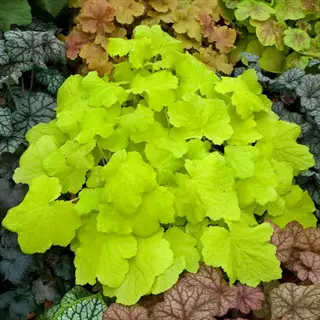
Citronelle
- Trial Rating: Scored the highest rating of 4.7 out of 5.0 in the Mt. Cuba Center 3-year independent trial of 83 cultivars, making it the top-performing coral bells variety tested.
- Foliage: Produces vibrant chartreuse to bright yellow-green leaves that hold their color throughout the growing season without fading or browning in partial shade.
- Size: Grows to a mature height of 10 to 14 inches (25 to 36 centimeters) with a spread of 12 to 16 inches (30 to 41 centimeters) forming a neat mound.
- Best For: Ideal for brightening shaded borders and woodland gardens where the glowing foliage creates a visual focal point against darker plants.
- Hardiness: Thrives in USDA zones 4 through 9 and demonstrates strong vigor, pest resistance, and disease resistance based on independent evaluation data.
- Care Tip: Place in partial shade to maintain the best leaf color, as too much direct sun can wash out the chartreuse tones and cause leaf scorch.
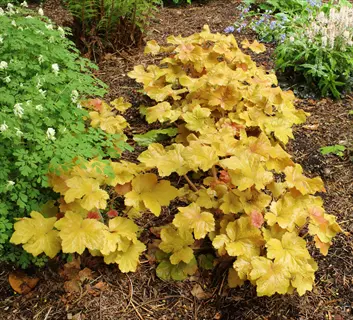
Caramel
- Trial Rating: Earned a top-performer rating in the Mt. Cuba Center trial with outstanding marks for vigor and foliage quality across three consecutive growing seasons.
- Foliage: Features warm caramel to amber leaves with a reddish-purple underside that shifts through peach and gold tones as the seasons change.
- Size: Reaches 8 to 12 inches (20 to 30 centimeters) tall with a spread of 14 to 18 inches (36 to 46 centimeters) forming a full, dense mound.
- Best For: Excellent for Southern gardens because it carries Heuchera villosa parentage, giving it strong heat and humidity tolerance that many other cultivars lack.
- Hardiness: Performs well in USDA zones 4 through 9 with particular strength in warmer zones where other coral bells varieties often struggle and decline.
- Care Tip: Tolerates more sun than most coral bells and develops even richer color in locations with morning sunlight and light afternoon shade.
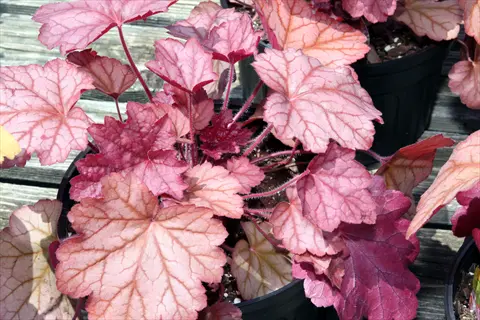
Georgia Peach
- Trial Rating: Performed well in multiple independent evaluations and university extension services across several states recommend it for reliable garden performance.
- Foliage: Displays peach-pink leaves with silver overlay in spring that transition through rose and then to a rich plum color by late fall.
- Size: Grows 12 to 14 inches (30 to 36 centimeters) tall with a spread of 18 to 24 inches (46 to 61 centimeters), making it one of the larger mounding varieties.
- Best For: Bred for Southern gardens with Heuchera villosa in its lineage, making it heat tolerant and well-suited to zones 7 through 9.
- Hardiness: Hardy in USDA zones 4 through 9 with strong resistance to both heat stress and humidity-related diseases that affect less adapted cultivars.
- Care Tip: Provides the most dramatic seasonal color changes of any coral bells, so place it where you can appreciate the shifting tones from spring through fall.
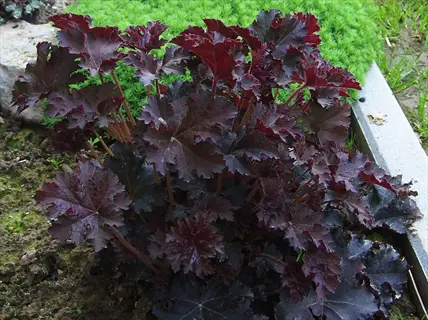
Palace Purple
- History: One of the original dark-leaved coral bells that started the foliage color revolution, selected from a wild Heuchera micrantha population in the 1980s.
- Foliage: Produces deep burgundy to bronze-purple leaves with a subtle metallic sheen that darkens in cooler weather and lighter exposure conditions.
- Size: Reaches 12 to 18 inches (30 to 46 centimeters) tall with a 12 to 18 inch (30 to 46 centimeter) spread and sends up airy flower stalks to 24 inches (61 centimeters).
- Best For: Works well as a reliable, proven performer for gardeners wanting a classic dark foliage accent without the premium price of newer patented varieties.
- Hardiness: Hardy in USDA zones 4 through 9 and easy to find at nurseries and garden centers across North America as an established industry standard.
- Care Tip: Tolerates more direct sun than lighter-colored varieties, and the foliage develops deeper, richer purple tones with increased sun exposure.
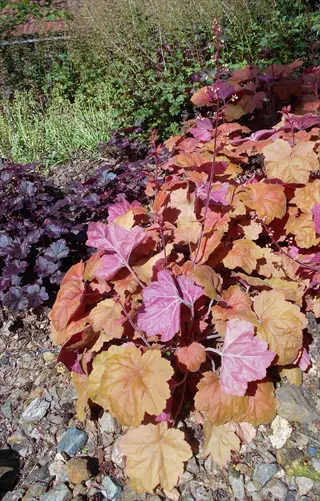
Southern Comfort
- Trial Rating: Earned a top-performer rating at the Mt. Cuba Center trial and is consistently recommended by Clemson and Mississippi State extension agents.
- Foliage: Starts with large cinnamon-peach leaves in spring that shift to burnished copper and then settle into a warm amber tone through summer.
- Size: One of the largest coral bells at 14 to 18 inches (36 to 46 centimeters) tall with a generous spread of 20 to 24 inches (51 to 61 centimeters).
- Best For: Specifically bred for heat tolerance using Heuchera villosa genetics, making it one of the best choices for gardeners in the Deep South and Gulf Coast regions.
- Hardiness: Thrives in USDA zones 4 through 9 and handles hot, humid summers far better than most coral bells varieties available at garden centers.
- Care Tip: The oversized leaves can look dramatic when planted in masses of three to five plants, creating a bold swath of warm tones along shaded pathways.
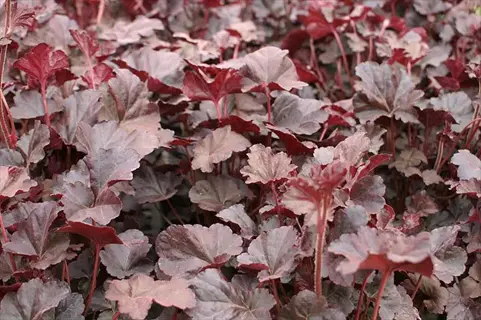
Plum Pudding
- Foliage: Features deep plum-purple leaves with a heavy silver overlay and prominent dark veining that creates one of the most striking foliage patterns available.
- Size: Grows 8 to 10 inches (20 to 25 centimeters) tall with a spread of 16 to 18 inches (41 to 46 centimeters) forming a compact, tidy mounding shape.
- Best For: Excellent as an edging plant along walkways or in mixed perennial borders where the silver-purple combination provides consistent year-round color.
- Bloom: Produces delicate pinkish-white flower spikes in late spring to early summer that rise 16 to 20 inches (41 to 51 centimeters) above the foliage mound.
- Hardiness: Hardy in USDA zones 4 through 9 with good overall performance in most regions, though it benefits from afternoon shade in warmer climates.
- Care Tip: The silver overlay on the leaves is most pronounced in partial shade, and excessive direct sun can diminish the metallic effect and cause leaf scorch.
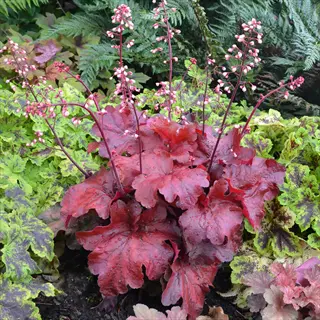
Fire Alarm
- Foliage: Produces vivid red to cherry-red leaves that are among the brightest of any coral bells cultivar, with color that intensifies in cooler temperatures.
- Size: Compact grower reaching 8 to 10 inches (20 to 25 centimeters) tall with a spread of 12 to 14 inches (30 to 36 centimeters), perfect for small spaces.
- Best For: Ideal for adding bold, warm color to shaded containers and small garden beds where its compact size fits without overwhelming surrounding plants.
- Bloom: Sends up cream to pink flower spikes in late spring that create a bold contrast against the bright red foliage for a two-toned display.
- Hardiness: Hardy in USDA zones 4 through 9 and maintains its red leaf color better than older red-leaved cultivars that tend to fade to green in summer.
- Care Tip: Provide morning sun with afternoon shade to maintain the most vibrant red coloring, as too little light will cause the leaves to turn greenish.
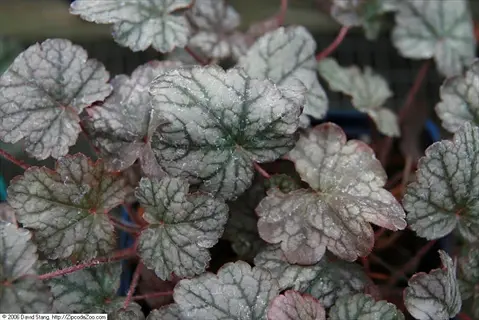
Stainless Steel
- Foliage: Displays striking metallic silver leaves with subtle lavender undertones and delicate dark veining that gives the plant an almost reflective quality.
- Size: Reaches 8 to 10 inches (20 to 25 centimeters) tall with a spread of 14 to 16 inches (36 to 41 centimeters) in a well-formed mounding habit.
- Best For: Perfect for brightening dense shade areas where the silver foliage catches and reflects available light, making dark corners feel less dim.
- Bloom: Produces airy pink flower spikes in late spring that complement the silver foliage without overwhelming the plant's metallic visual appeal.
- Hardiness: Hardy in USDA zones 4 through 9 with strong performance in most regions and good resistance to common foliage diseases.
- Care Tip: Thrives in deeper shade than most coral bells and maintains its silver coloring better in lower light, making it ideal for north-facing gardens.

Ginger Ale
- Foliage: Features golden-amber leaves with a soft apricot glow and subtle silver frosting that creates a warm, inviting tone unlike any other perennial foliage.
- Size: Grows 8 to 12 inches (20 to 30 centimeters) tall with a spread of 16 to 18 inches (41 to 46 centimeters) forming a rounded, low-growing mound.
- Best For: Excellent as a transition plant between darker-leaved and lighter-leaved coral bells in a mixed heuchera border or collection garden display.
- Bloom: Produces pale yellow-cream flower spikes that blend with the warm foliage tones for a unified, soft look in the garden.
- Hardiness: Hardy in USDA zones 4 through 9 and tolerates a wider range of conditions than many specialty-colored cultivars available today.
- Care Tip: Looks best with 4 to 6 hours of filtered morning light, which brings out the warmest amber tones without causing any leaf scorch.
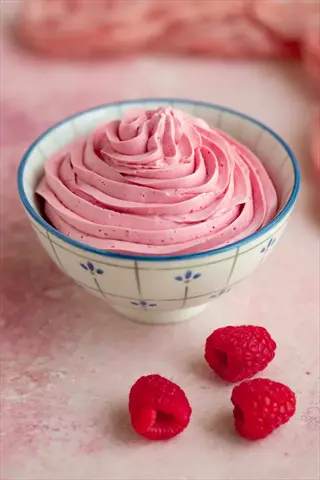
Raspberry Ice
- Foliage: Showcases raspberry-purple leaves with a dramatic silver overlay and contrasting dark veining that makes each leaf look like a hand-painted work of art.
- Size: Reaches 8 to 10 inches (20 to 25 centimeters) tall with a spread of 14 to 18 inches (36 to 46 centimeters), forming a well-proportioned mound.
- Best For: Ideal for containers and border fronts where the detailed leaf patterns can be appreciated up close and the silver overlay catches the light.
- Bloom: Sends up coral-pink flower spikes in late spring to early summer that attract hummingbirds and add a vertical element to the planting.
- Hardiness: Hardy in USDA zones 4 through 9 with consistent performance and foliage color that holds well through the growing season without fading.
- Care Tip: Plant in partial shade with good air circulation to maintain the silver overlay and reduce the risk of powdery mildew on the textured leaf surface.
Clemson Extension warns that many heuchera cultivars sold online can't handle Southern heat. Your best bet is to buy from a local nursery that stocks proven varieties. Look for cultivars with Heuchera villosa parentage when you shop. Those handle heat and humidity far better than the rest.
Growing Conditions by Region
Coral bells care changes a lot based on where you live. A setup that works great in Vermont can kill the same plant in Georgia. I lost 3 coral bells my first year because I treated them all the same way. Your region matters more than most garden guides will tell you.
Most heuchera species prefer dry air and mild summers. That one fact shapes everything about how you grow this partial shade perennial. Heuchera villosa breaks that rule. It thrives in heat and sticky air. If you garden in the South, that detail will save you from a lot of dead plants.
In USDA zones 4-9 across the Northern states and upper Midwest, coral bells can handle more direct sun than you might think. I give mine 4 to 6 hours of full sun up north and the foliage color gets much richer. Cooler nights keep the roots happy even when tops get plenty of light. Heuchera plant care here means mulching for winter frost heave rather than worrying about heat.
Southern gardeners in zones 7 through 9 face a different set of problems. Morning sun with afternoon shade is your best move. Coral bells need that break from harsh afternoon heat down south. Clemson Extension warns that many online cultivars can't take the humidity. Choose cultivars with Heuchera villosa parentage for the south. 'Caramel', 'Southern Comfort', and 'Georgia Peach' all carry that heat tolerant gene.
The Pacific Northwest offers near perfect coral bells conditions. Cool temps, moist air, and filtered forest light match what most species want. Gardeners in this region can grow almost any cultivar with success. The main concern is root rot from too much winter rain, so sharp drainage still matters.
No matter your region, good drainage is the single biggest factor in keeping coral bells alive. Poor drainage causes crown rot faster than any pest or disease. Amend heavy clay soil with compost or plant in raised beds if your ground stays wet after rain.
Planting and Propagation
Knowing how to plant coral bells the right way makes the difference between a plant that thrives and one that dies in its first winter. The biggest mistake I see new growers make is burying the crown too deep. UVM Extension stresses that the crown level with soil surface is critical. Bury it even half an inch too deep and you risk crown rot.
For a coral bells container, pick a pot at least 12 inches wide with good drainage holes. Use a loose potting mix with extra perlite so water flows through fast. Container plants need more water than ground plants, but the roots still can't sit in soggy soil. In cold zones, you can plant the pot into the ground for winter or wrap it with insulation to protect the roots.
Expect a slow start in Year 1 as roots get established. Year 2 and 3 bring the fullest foliage and your best color. By Year 4 the center of the clump turns woody and bare. That's your signal to learn how to divide coral bells. Dig up the whole plant, cut it into sections with at least 3 to 4 growing points each, and replant. I trim up to half the roots on pot bound plants before I put them back in the ground.
Division in Spring or Fall
- When to Divide: Split coral bells every 3 to 4 years in early spring or early fall when the center of the clump becomes woody and bare with growth only around the edges.
- How It Works: Dig the entire plant, shake off excess soil, and use a sharp knife to cut the root mass into sections that each have at least 3 to 4 healthy growing points.
- Success Rate: Division produces identical clones of the parent plant and has the highest success rate of any propagation method, typically above 90%.
Stem Cuttings with Rooting Hormone
- When to Take Cuttings: Take 3 to 4 inch (8 to 10 centimeter) stem cuttings in late spring or early summer when the plant is actively growing and producing new shoots.
- How It Works: Dip the cut end in rooting hormone, insert into a moist mix of perlite and peat, and keep in a humid environment with indirect light for 4 to 6 weeks.
- Success Rate: Stem cuttings produce exact clones but have a moderate success rate of roughly 60% to 70% and require more patience than division.
Seed Starting Indoors
- When to Start: Sow coral bells seeds indoors 8 to 10 weeks before the last frost date, pressing the tiny seeds onto the surface of moist seed-starting mix without covering them.
- How It Works: Seeds need light to germinate, so keep them under grow lights or on a bright windowsill at 65 to 70 degrees Fahrenheit (18 to 21 degrees Celsius) for 2 to 8 weeks.
- Important Note: Seed-grown coral bells will not match the parent plant in color or form because most named cultivars are hybrids that do not come true from seed.
Fall Direct Sowing Outdoors
- When to Sow: Scatter seeds directly on prepared soil in late fall so they experience natural cold stratification through winter and germinate in early spring.
- How It Works: Press seeds lightly onto the soil surface, keep the area moist, and mark the location so you do not accidentally disturb the planting area during spring cleanup.
- Success Rate: Germination rates are variable and depend on winter conditions, but this low-effort method works well for naturalizing coral bells in woodland garden areas.
Division works better than any other method for quick results. I've grown coral bells from seed a few times and got a mixed bag of colors. Division gives you exact copies of the plant you love, and the new sections fill in fast.
Seasonal Care and Maintenance
Good coral bells care follows the seasons. I keep a simple calendar on my potting bench that tells me what each plant needs and when. The table below lays out your full year of tasks so you always know what to do next. Most of the work falls in spring and fall with summer being the easy stretch.
Spring cleanup is where your year starts. Remove dead leaves, give the plant a light dose of balanced fertilizer, and check for frost heave damage. Regular watering during dry spells keeps the foliage looking great. I aim for about 1 inch of water per week during the growing season. In fall, that's when you learn how to divide coral bells if the center of your clump has gone woody.
Coral bells winter care is all about frost heave prevention. The thin roots push up out of the ground during freeze and thaw cycles. A 2 to 3 inch layer of mulch over the crown stops that from happening. Don't cut back the foliage in fall because those leaves insulate the crown all winter. I check my plants every few weeks during cold snaps and press any heaved crowns back into the soil.
Container plants need extra care in winter. You can either bury the whole pot in the ground for the cold months or wrap it with burlap and insulation. I've lost potted coral bells that I left on the patio during a hard freeze. The roots in a pot freeze much faster than roots in the ground.
Landscape Design Ideas
Coral bells landscape design starts with one simple rule. Contrast wins. I learned this after years of planting similar colors next to each other and wondering why my shade garden looked flat. The day I put a deep purple 'Palace Purple' beside a bright chartreuse 'Citronelle', the whole bed came alive.
Think of coral bells as your ground cover paint palette for shade areas. You can use them as border edging, mass them in groups, or tuck them into containers. Pair your coral bells companion plants like hostas, astilbe, and Japanese painted ferns together for a layered look. The foliage does all the heavy lifting here, giving you color from spring through fall without relying on blooms.
Floral designers are also catching on to coral bells. Those same leaves that look stunning in the garden make great additions to cut flower bouquets and table arrangements. I've snipped a few leaves from my garden for centerpieces and they hold up well in water for days.
Shade Garden Color Palette
- Contrast Pairing: Place deep purple varieties like Palace Purple directly next to chartreuse types like Citronelle to create maximum foliage contrast that draws the eye to shaded areas.
- Silver Accent: Add silver-leaved varieties like Stainless Steel between warm-toned hostas and dark green ferns for a cool metallic layer that brightens dim corners.
- Companion Plants: Combine with astilbe for feathery texture, Japanese painted ferns for complementary silver tones, and sweet woodruff as a spreading ground layer beneath.
Pathway and Border Edging
- Layout: Plant coral bells 12 to 18 inches (30 to 46 centimeters) apart along walkways in alternating foliage colors to create a living ribbon of color that defines the garden path.
- Height Planning: Use compact varieties like Fire Alarm or Plum Pudding at the front of borders where their 8 to 10 inch (20 to 25 centimeter) height keeps sightlines clear.
- Year-Round Interest: In USDA zones 6 and warmer, coral bells remain semi-evergreen through winter, providing structure along pathways even when other plants have died back.
Mass Planting for Impact
- Grouping Strategy: Plant groups of 5 to 7 of a single variety for bold, unified color blocks rather than mixing individual plants, which can look scattered and disorganized.
- Scale Planning: A mass planting of 15 to 20 coral bells in 3 color groups creates a dramatic ground-level tapestry that provides as much visual interest as any flowering display.
- Spacing: Set plants 14 to 18 inches (36 to 46 centimeters) apart in mass plantings so the foliage fills in by the second growing season to create a continuous carpet of color.
Container Combinations
- Thriller-Filler-Spiller: Use a coral bells variety as the central thriller, add a complementary filler like small hostas or lamium, and finish with trailing ivy or creeping jenny as a spiller.
- Pot Size: Choose containers at least 12 inches (30 centimeters) wide and deep with drainage holes, and use a well-draining potting mix amended with perlite for extra aeration.
- Compact Varieties: Select compact cultivars from the Little Cuties series or varieties like Fire Alarm that stay under 10 inches (25 centimeters) for the most proportional container display.
Native Roots and Wildlife Value
Most people buy coral bells for the pretty leaves and never think about what the plant does for wildlife. I was the same way until I noticed a hummingbird working the flower spikes in my garden one June morning. That moment changed how I saw this plant. Your coral bells do far more than look good in a pot.
The Heuchera species group includes close to 50 species native to North America and parts of the Russian Far East. This isn't some imported garden novelty. Coral bells have deep roots in this continent's wild places. Adding them to your native plant garden connects you to a heritage that goes back long before garden centers existed.
A bee called Colletes aestivalis needs native Heuchera to live. Your pollinator garden gets a real boost from those tiny bell shaped flowers. Butterflies stop by for nectar too. The blooms are also a top food source that attracts hummingbirds to your yard all season.
There's a catch worth knowing. Fancy hybrids may feed fewer bees than straight native species do. Breeders focus on leaf color, not flower quality for pollinators. For the best wildlife impact, plant a few native Heuchera species next to your showy cultivars.
Coral bells also serve as a deer resistant perennial thanks to tannins in the leaves. Deer and rabbits tend to leave them alone in favor of tastier plants. UVM Extension notes that browsing can still happen during harsh winters when food gets scarce. Still, coral bells rank among the most reliable deer resistant choices you can plant in a shade bed.
5 Common Myths
Coral bells only grow well in deep shade and will burn in any amount of direct sunlight throughout the day.
Most coral bells prefer partial shade with 4 to 6 hours of morning sun, and dark-leaved varieties actually perform better with more direct light.
All coral bells varieties perform equally well regardless of which climate region or USDA hardiness zone you garden in.
Cultivar performance varies dramatically by region, and varieties with Heuchera villosa parentage are specifically needed for hot, humid Southern gardens.
Coral bells are purely ornamental hybrid plants with no real benefit to pollinators or local wildlife in your garden.
Coral bells are native North American perennials that attract hummingbirds, butterflies, and specialist bees like Colletes aestivalis through their bell-shaped flowers.
Coral bells need heavy, frequent watering to stay healthy because their shallow root systems dry out very quickly.
Once established, coral bells are drought tolerant and need roughly 1 inch (2.5 centimeters) of water per week, with overwatering causing more problems than underwatering.
You should cut coral bells foliage all the way back to the ground every fall to prepare the plant for winter dormancy.
Leave the foliage intact through winter because it insulates the crown against freeze-thaw cycles and prevents frost heaving that kills plants.
Conclusion
After years of growing coral bells, I can tell you it comes down to a few smart choices. Pick proven varieties, get the drainage right, and match your cultivar to your climate. Those 3 steps will keep your heuchera thriving for years. Only 12% of cultivars earned top performer status in the Mt. Cuba Center trial, so the variety you pick matters most.
Take an honest look at your shade garden before you shop. How much sun does the spot get? Does water pool there after a storm? What USDA zone do you live in? Answering those questions will guide you to the right coral bells plant for your yard. A $10 cultivar in the right spot will outperform a $25 one planted in the wrong place.
Give your plants time to show you their best work. Year 1 is all about roots getting settled in. Years 2 and 3 bring the fullest foliage and richest colors I've seen in my own beds. By Year 4, you'll know how to grow coral bells well enough to divide them and share with friends for free.
Coral bells also give back to the wildlife in your yard. Every bloom feeds a hummingbird or native bee. Breeders keep pushing this plant forward with showier flowers and tougher genetics. Your shade garden will only get more options as new cultivars hit the market. Start with the proven picks in this guide and grow from there.
External Sources
Frequently Asked Questions
Do coral bells like sun or shade?
Coral bells prefer partial shade with 4 to 6 hours of morning sunlight and afternoon shade, though dark-leaved varieties tolerate more sun.
Where's the best place to plant coral bells?
Plant coral bells in a spot with morning sun, afternoon shade, and well-drained soil rich in organic matter.
What pairs well with coral bells?
Coral bells pair well with hostas, astilbe, Japanese painted ferns, and heuchera varieties in contrasting foliage colors.
Should coral bells be cut back in the fall?
Do not cut coral bells back in fall because the foliage insulates the crown through winter and prevents frost heave damage.
Do coral bells do well in pots?
Coral bells grow well in pots with good drainage, and compact varieties in the Little Cuties series are especially suited for containers.
What are the common problems with heuchera?
The most common heuchera problems are crown rot from poor drainage, frost heaving in winter, powdery mildew, rust, and black vine weevil damage.
Will coral bells survive winter?
Coral bells survive winter in USDA zones 3 through 9, though shallow roots make them vulnerable to frost heaving without proper mulch.
Can coral bells be grown indoors?
Coral bells can be grown indoors short-term but struggle long-term because they need a winter dormancy period to thrive.
What is the prettiest ground cover?
Coral bells rank among the prettiest ground covers thanks to their extraordinary foliage colors ranging from deep purple to chartreuse and silver.
Is October too late to plant?
October is not too late to plant coral bells in most zones as long as you allow 6 weeks before the first hard frost for root establishment.