
Introduction
The catmint plant is one of the hardest working perennials you can grow in any garden. It blooms from late spring through fall and laughs off drought. Deer stay far away while bees and butterflies visit all season long. Few plants check that many boxes while asking so little in return.
In my experience, catmint is the easiest perennial to keep alive. I started growing it about 8 years ago when rabbits kept eating my sunny border bare. One clump of Walker's Low survived that brutal first summer on almost no water. It came back stronger the next spring, and that sold me on the whole Nepeta genus. There are about 250 species in this group from Europe, Asia, and Africa.
Learning how to grow catmint is simple because this drought tolerant perennial thrives on neglect. Give it full sun and decent drainage and it does the rest. You get waves of lavender blue flowers, aromatic leaves that repel pests, and a tidy mound of gray green foliage. It grows well in USDA Zones 3 through 9, so most gardeners can enjoy it.
This guide covers the best varieties, planting steps, and seasonal care. You'll also find companion planting ideas and real science behind catmint's pest control. Think of catmint as the Swiss Army knife of the perennial border. It gives you drought tolerance, pollinator support, and pest resistance all in one plant.
8 Best Catmint Varieties
Picking the right catmint varieties for your garden comes down to size and purpose. I tested over a dozen Nepeta faassenii cultivars in my own beds over the past 5 years. Some grew too tall for borders while others stayed so small they got lost. The 8 below earned their spot through real garden performance.
One big study tested 36 catmint cultivars over 7 years. Walker's Low catmint won the 2007 Perennial Plant of the Year award from those trials. Cat's Meow catmint then took the 2025 National Landscape Perennial of the Year title. You'll find these listed from largest to smallest so you can match each one to your garden space.
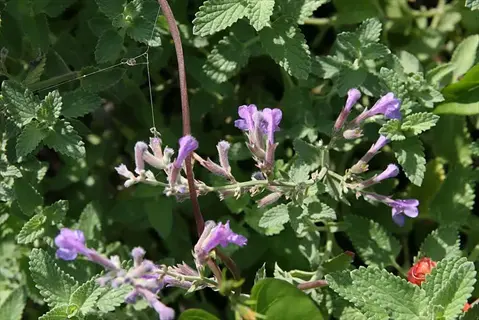
Six Hills Giant
- Mature Size: Six Hills Giant reaches 36 inches (91 centimeters) tall and spreads up to 48 inches (122 centimeters) wide, making it the largest garden catmint you can find at most nurseries.
- Flower Color: Produces dense spikes of rich violet-blue flowers from late spring through midsummer, with a second flush after shearing in most climates.
- Best Use: Ideal for the back of perennial borders, along fences, or as a tall groundcover on slopes where its arching habit softens hard edges.
- Hardiness: Grows well in USDA Zones 3 through 8, handling cold winters and hot summers with equal ease once the root system takes hold.
- Growth Habit: Forms a large, billowy mound that may flop open in the center after heavy rain, so pairing with a peony ring or neighboring plants for support helps.
- Pollinator Value: Its large flower mass attracts a high volume of bees, butterflies, and hummingbirds throughout the entire blooming window each season.
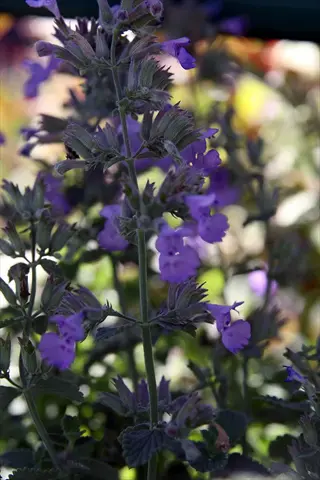
Walker's Low
- Mature Size: Walker's Low grows 24 to 30 inches (61 to 76 centimeters) tall and spreads 24 to 36 inches (61 to 91 centimeters) wide in a graceful mounding form.
- Award History: Named the 2007 Perennial Plant of the Year by the Perennial Plant Association, which recognized its outstanding garden performance across regions.
- Flower Color: Lavender-blue flower spikes appear in late spring and continue through summer, with reliable reblooming after each round of shearing back spent stems.
- Best Use: Perfect for mid-border plantings, pathway edging, mass plantings, and pairing with roses where its soft color complements both warm and cool palettes.
- Growth Habit: A sterile hybrid of Nepeta racemosa and Nepeta nepetella, Walker's Low never self-seeds and spreads only through its clumping root system over time.
- Fun Fact: Despite the name, Walker's Low was not bred for short stature; it was named after a garden called Walker's Low in County Armagh, Ireland.
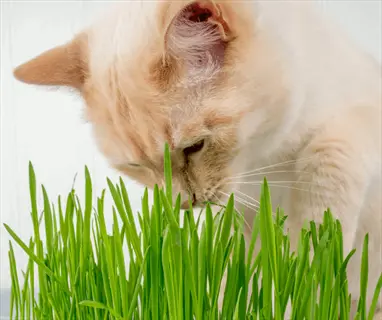
Cat's Meow
- Mature Size: Cat's Meow stays compact at 17 to 20 inches (43 to 51 centimeters) tall and 24 to 30 inches (61 to 76 centimeters) wide with a tidy, rounded habit.
- Award History: Named the 2025 National Landscape Perennial of the Year, recognizing its exceptional performance in commercial and residential landscapes alike.
- Flower Color: Deep blue-purple flower spikes cover the plant from late spring well into fall, providing one of the longest bloom periods of any catmint cultivar available.
- Best Use: Excellent for front-of-border planting, low hedging, container gardens, and small-space gardens where a neat, self-contained mound is needed.
- Growth Habit: Maintains a dense, dome-shaped form without flopping, even in rain, eliminating the need for staking or support structures through the growing season.
- Maintenance: Requires very little intervention beyond a single mid-season shearing; its compact habit means it rarely outgrows its allotted space in the border.
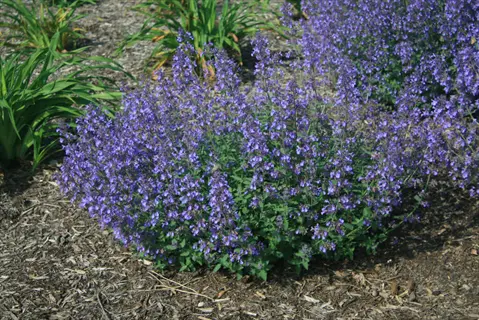
Junior Walker
- Mature Size: Junior Walker reaches 16 to 20 inches (41 to 51 centimeters) tall and 24 to 30 inches (61 to 76 centimeters) wide in a tight, mounding form.
- Parentage: A more compact sport of Walker's Low, Junior Walker retains the same flower color and toughness in a smaller package suited to tighter garden spaces.
- Flower Color: Lavender-blue flower spikes appear profusely from late spring through summer, matching Walker's Low in color intensity despite the smaller overall plant size.
- Best Use: Works well for edging walkways, filling containers, planting in rock gardens, or creating a low border along driveways and curb strips in full sun.
- Hardiness: Hardy in USDA Zones 3 through 8, this cultivar handles cold winters and summer heat without special protection or additional irrigation beyond establishment.
- Sterile Hybrid: Like its parent Walker's Low, Junior Walker is a sterile hybrid that never produces viable seed and spreads only by slow clumping at the roots.
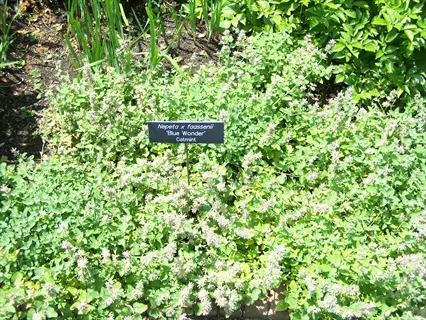
Blue Wonder
- Mature Size: Blue Wonder stays compact at 12 to 15 inches (30 to 38 centimeters) tall and 12 to 18 inches (30 to 46 centimeters) wide, suited to small garden spaces.
- Flower Color: Bright blue flowers show more intense color than many other catmint cultivars, standing out in mixed borders and container plantings during peak bloom.
- Best Use: Ideal for rock gardens, container plantings, front of border edging, and tight spaces where a larger catmint variety would soon outgrow its position.
- Bloom Time: Flowers appear from late spring through midsummer with reliable reblooming after shearing, extending color for several additional weeks into early fall.
- Growth Habit: Forms a dense, low cushion of gray-green aromatic foliage that holds its shape well even without support or regular trimming through the season.
- Drought Tolerance: Extremely drought tolerant once established, Blue Wonder performs well in water-wise gardens, gravel beds, and xeriscaping designs in dry climates.
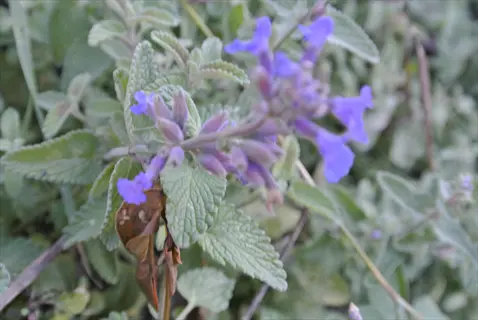
Cat's Pajamas
- Mature Size: Cat's Pajamas grows 14 to 16 inches (36 to 41 centimeters) tall and 18 to 22 inches (46 to 56 centimeters) wide in a neat, upright mound.
- Flower Color: Produces extra dark indigo blue flowers atop dark purple calyxes, giving the plant a bold deep color even after petals drop from individual blooms.
- Best Use: Works great in containers, along walkway edges, in rock gardens, and in mixed perennial borders where its deep color provides a dramatic focal point.
- Foliage: Dark green leaves show deeper color than the gray-green foliage of most catmint cultivars, creating a strong contrast against the deep blue flower spikes.
- Bloom Time: One of the longest-blooming catmints available, with flowers appearing in late spring and continuing nonstop through frost with regular shearing of spent stems.
- Heat Tolerance: Performs well in hot, humid southern climates where other catmint varieties may struggle, maintaining its compact shape without flopping in the summer heat.
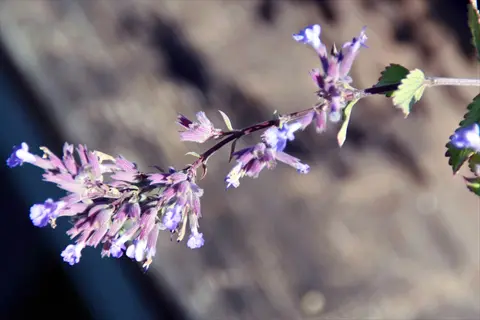
Purrsian Blue
- Mature Size: Purrsian Blue reaches 14 to 18 inches (36 to 46 centimeters) tall and 22 to 28 inches (56 to 71 centimeters) wide with a naturally rounded form.
- Flower Color: Sky-blue to periwinkle flowers blanket the plant from late spring through summer, with the lighter blue offering a softer look than deeper-toned varieties.
- Best Use: Perfect for cottage garden borders, mass plantings, edging along sunny pathways, and mixed containers where its spreading habit fills space with ease.
- Growth Habit: Spreads slightly wider than tall, creating a low mound that serves as an effective living mulch when planted in groups of 3 or 5 together.
- Award: Won the 2021 Award of Garden Merit from trials, confirming strong performance across many garden conditions and climate zones in testing.
- Low Maintenance: Requires only 1 or 2 shearings per season to stay tidy, and its sterile flowers mean zero self seeding and zero weeding of unwanted seedlings.
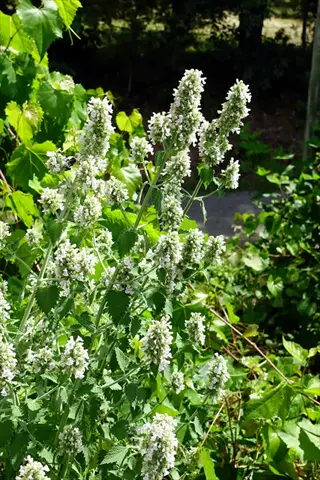
Snowflake
- Mature Size: Snowflake grows 18 to 24 inches (46 to 61 centimeters) tall and 18 to 24 inches (46 to 61 centimeters) wide with an upright, airy habit.
- Flower Color: Pure white flowers set Snowflake apart from every other catmint you can buy, providing a bright contrast in borders full of blue and purple tones.
- Best Use: Ideal for moon gardens, white-themed borders, and evening entertaining areas where the white flowers reflect light and remain visible after sunset.
- Foliage: Gray-green aromatic leaves complement the white flowers and provide textural interest even when the plant is between bloom cycles during the growing season.
- Design Value: Pairs well with blue catmint varieties to create a two tone catmint border, or with dark leaved plants where its brightness creates visual separation.
- Pollinator Support: Attracts the same range of bees, butterflies, and beneficial insects as blue-flowered catmints, proving that pollinators respond to scent rather than color alone.
How to Plant Catmint
Planting catmint the right way saves you headaches down the road. I've put dozens of plants in the ground across different soil types and climates. The biggest lesson I learned is that catmint full sun and well-drained soil catmint care go hand in hand. Get those 2 things right and your plants will take care of the rest on their own.
When to plant catmint depends on your zone. Most gardeners do best with a spring start after the last frost. If you live in USDA Zones 7 through 9, fall planting works just as well. The key is giving roots at least 6 weeks to settle before extreme heat or cold hits your area.
Choosing the Right Location
- Sunlight: Pick a spot that gets at least 6 hours of direct sunlight per day for the fullest flowers and strongest stems through the growing season.
- Southern Gardens: In USDA Zones 7 through 9, choose a location with morning sun and light afternoon shade to prevent leaf scorch during the hottest weeks of summer.
- Soil Drainage: Good drainage is the single most important soil need. Catmint handles clay, loam, sand, or rocky soil as long as water does not pool around the roots.
Preparing the Soil
- Soil Amendment: Mix a 2 inch (5 centimeter) layer of coarse sand or perlite into heavy clay soil before planting to boost drainage and prevent root rot in the first season.
- Soil pH: Catmint handles a wide pH range from 6.0 to 7.5, so most garden soils work without any change beyond fixing drainage in wet spots.
- Avoid Rich Soil: Skip the heavy compost or fertilizer at planting time. Soil that is too fertile produces floppy stems with fewer flowers on each spike.
When to Plant Catmint
- Spring Planting: Plant container grown catmint in mid to late spring after the last frost date in your area, giving roots the full growing season to settle before winter.
- Fall Planting: In USDA Zones 7 through 9, fall planting works just as well. Set plants in the ground at least 6 weeks before the first expected frost so roots can anchor.
- Avoid Summer Planting: Starting catmint during the peak heat of July or August stresses transplants and requires much more watering during the critical first weeks.
Spacing and Planting Depth
- Spacing: Set plants 18 to 24 inches (46 to 61 centimeters) apart for standard varieties, and 12 to 15 inches (30 to 38 centimeters) apart for dwarf cultivars like Blue Wonder.
- Planting Depth: Dig a hole the same depth as the nursery container and twice as wide. Set the root ball so the crown sits at soil level rather than below it.
- Watering In: Water deep right after planting to settle the soil around the roots. Then reduce watering over the first 4 to 6 weeks as roots spread out.
How to grow catmint in wet climates takes one extra step. If you garden in the Pacific Northwest or similar rainy areas, try raised beds or mounded soil. This keeps roots out of standing water during the wet months and prevents the root rot that kills most catmint plants before they get going.
Catmint Care and Pruning
Good catmint care starts with knowing what to do each season. I've grown catmint in 3 different gardens and the number one mistake I see people make is cutting too late in fall. Late catmint pruning pushes tender new growth that gets killed by the first frost. You want to do your hard cuts in early spring and your shearing catmint work in early summer after the first bloom fades.
Catmint watering is simple because this drought tolerant perennial barely needs your help. Once roots settle in after the first season, you only need to water during long dry spells. Give the plant about 1 inch of water per week during drought and skip it the rest of the time. Too much water causes root rot and floppy stems.
When to cut back catmint is the question I get asked the most. NC State Extension says it best: shear flowers off when they begin to fade to trigger a second wave of blooming. The table below gives you a full season calendar so you know what to do and when to keep your catmint looking its best all year.
I found that shearing catmint with hedge shears is faster and better than picking off dead flowers one by one. Grab the whole plant in one hand and cut it back by half with the other. You'll see fresh green growth popping up within a week, and a new round of flowers follows about 2 to 3 weeks after that.
Catmint Companion Plants
The best catmint companion plants share similar water and sun needs so your whole bed thrives together. I group my catmint landscape ideas by garden style because that makes planning easier. You pick the look you want and the plant combos follow. Catmint works as a lavender substitute in humid areas. It also doubles as catmint groundcover that keeps weeds down.
Catmint edging along borders does double duty. Its deer and rabbit resistance protects more tender plants behind it. The flowers pull in bees and butterflies that help your other blooms set fruit and seed. In my experience, catmint with roses is the best combo. The soft blue mounds cover those bare lower rose stems that nobody wants to see.
Cottage Garden Partners
- Roses: Plant catmint 12 to 18 inches (30 to 46 centimeters) in front of hybrid tea roses to cover their bare lower stems with a soft cloud of lavender blue flowers.
- Peonies: Pair early blooming peonies with catmint so that once peony blooms fade in early summer, catmint takes over and fills the color gap through fall.
- Foxglove and Delphiniums: Tall spire shaped flowers behind low mounding catmint creates classic cottage depth, with the vertical forms contrasting the catmint's rounded habit.
Water-Wise Garden Partners
- Lavender: Catmint and lavender share the same sun and drainage needs, and their aromatic foliage creates a strong deer and rabbit barrier around your border.
- Russian Sage: Both plants handle drought and poor soil, and the taller Russian sage rising above catmint produces a layered purple and blue planting with minimal watering.
- Ornamental Grasses: Pair catmint with Karl Foerster feather reed grass or blue oat grass for texture contrast that lasts well into winter after both plants go dormant.
Pollinator Garden Partners
- Salvia: Combining catmint with perennial salvia doubles the number of tubular flowers for bees and hummingbirds through the growing season.
- Echinacea: Purple coneflower blooms a bit later than catmint's first flush, so the 2 together keep pollinators visiting your garden from spring through early fall.
- Black Eyed Susan: The golden yellow daisy flowers of Rudbeckia create a warm cool color contrast against catmint's blue purple spikes for a vibrant pollinator planting.
Edging and Border Partners
- Low Sedum: Plant dwarf catmint varieties alongside creeping sedum for a low maintenance, drought proof edging combo that needs almost no watering after the first year.
- Alliums: Globe shaped allium flowers rising above catmint foliage create a dramatic display in late spring. Both plants share the same need for well drained, sunny conditions.
- Lamb's Ear: The fuzzy silver foliage of lamb's ear pairs with catmint's gray green leaves for a soft textured border that looks great even when neither plant is blooming.
Catmint as Insect Repellent
Most gardeners know catmint is deer resistant and keeps rabbits away. But in my experience, catmint pest control goes deeper than that. The leaves hold an oil called nepetalactone. This oil acts as a catmint mosquito repellent that is at least as effective as DEET at driving bugs away.
Here is what makes nepetalactone special. DEET works by masking your body's scent so mosquitoes can't find you. Nepetalactone goes at it from the other side. It triggers the TRPA1 irritant receptor in insects. That's the same receptor that senses pain. The compound doesn't just hide you from bugs. It makes them feel like they need to flee.
The best part for you is the safety angle. This oil triggers pain in bugs but has zero effect on humans. You can crush catmint leaves and just smell mint while bugs race to leave. The same oils make catmint deer resistant. It works as an aphid repellent too, keeping sap suckers off your roses and veggies.
I plant catmint along the edges of my patio for this exact reason. On summer nights when I brush against the plants walking past, the released oils create a natural bug free zone around my seating area. No sprays, no candles, just a plant doing what it does best.
How to Propagate Catmint
Learning how to propagate catmint gives you free plants from the ones you already own. I've made dozens of new catmint plants using both catmint division and catmint cuttings over the years. Spring division is the fastest way if you have a mature clump. Catmint cuttings take a bit more patience but work great if your plant is still young.
One thing to know before you start is that most popular catmints are sterile hybrids. That means growing catmint from seed won't work with varieties like Walker's Low or Junior Walker. You'll need to use division or cuttings instead. The good news is that both methods are simple and root success rates run above 90% when you time it right.
Division in Spring
- Best Timing: Divide catmint in early spring just as new green growth appears at the base of the plant, before stems are more than 3 inches (8 centimeters) tall.
- How to Divide: Dig up the entire clump with a garden fork, shake off loose soil, then use a sharp spade or knife to split the root mass into 2 to 4 sections.
- Replanting: Plant each division at the same depth it was growing before, in a hole twice the width of the root mass, then water deep to remove air pockets.
- Recovery Time: Divisions start producing new top growth within 2 weeks and will bloom in their first season if you plant them before late spring in most zones.
Stem Cuttings in Summer
- Best Timing: Take 4 to 6 inch (10 to 15 centimeter) stem cuttings from healthy shoots in early to midsummer when the plant is growing strong.
- Preparation: Strip the lower leaves from each cutting, leaving only 2 to 3 pairs of leaves at the tip, then dip the cut end in rooting hormone powder.
- Rooting Medium: Insert cuttings into a pot filled with a half and half mix of perlite and peat, water light, and cover with a clear plastic bag to hold moisture.
- Root Development: Cuttings produce roots in 2 to 3 weeks. Tug gentle to test for resistance, then move rooted cuttings to their own pots to grow on.
Growing from Seed
- Important Note: Most popular garden catmints like Walker's Low and Junior Walker are sterile hybrids that make no viable seed, so catmint from seed only works for species types.
- Seed Starting: Sow Nepeta cataria or Nepeta racemosa seeds indoors 6 to 8 weeks before the last frost. Press them onto the surface of moist seed starting mix without covering.
- Germination: Seeds need light to sprout and show growth in 7 to 14 days at temps between 65°F and 70°F (18°C to 21°C).
- Transplanting: Move seedlings outdoors after hardening off for 1 week once nighttime temps stay above 50°F (10°C) for good.
When to Refresh Mature Plants
- Signs of Decline: A catmint clump that grows a dead or woody center, produces fewer flowers each year, or flops open all the time is ready for spring division.
- Division Frequency: Plan to divide catmint every 3 to 4 years to keep compact growth, strong flowering, and good air flow through the center of each clump.
- Sharing Plants: Each mature catmint clump gives you 3 to 5 viable divisions, making it a great perennial for sharing with neighbors and fellow gardeners.
- Timing for Best Results: Always divide or take cuttings during the active growing season rather than in fall or winter when the plant is dormant.
5 Common Myths
Catmint needs frequent watering and rich, fertile soil to produce a full display of flowers each season.
Catmint is drought tolerant once established and actually produces fewer flowers and floppier stems when given too much water or fertilizer.
All catmint plants will drive neighborhood cats wild and destroy the planting within weeks of going in the ground.
Garden catmint hybrids like Walker's Low contain far less nepetalactone than true catnip, and roughly one-third of cats have no reaction at all.
Catmint only blooms once in early summer and then sits there looking brown and tired for the rest of the year.
Shearing catmint by half after the first bloom triggers a second and even third flush of flowers, extending color from late spring through fall.
Catmint spreads aggressively like other mint family plants and will quickly take over your entire garden bed.
Most popular garden catmints are sterile hybrids that spread slowly by clumping roots and never self-seed, making them easy to manage.
You should deadhead each individual spent catmint flower by hand to keep the plant looking neat and promote reblooming.
The correct method is to shear the entire plant back by about one-half with hedge shears, which is faster and encourages a uniform flush of new growth.
Conclusion
The catmint plant stands out as one of the best perennials you can grow in your garden. It handles drought, blooms for months, repels deer and rabbits, and pulls in bees and butterflies without any fuss. In my years of growing catmint, no other perennial has given me this much return for this little work. Catmint care is about as simple as it gets in the garden world.
The science backs up what gardeners have known for ages. The oil in catmint leaves repels mosquitoes as well as DEET does. At the same time, the flowers draw in pollinators that help your whole garden thrive. That rare combo of pest control and pollinator support makes this catmint perennial a must have in any bed.
Start with a proven variety like Walker's Low or Cat's Meow and give it full sun with well drained soil. That's the whole recipe for success. Shear by half after the first bloom and you'll get a second or even third wave of flowers. Learning how to grow catmint takes about 5 minutes but the results last for years.
If you plant this spring, your catmint will bloom its first summer and come back stronger next year. Fall planting works too if you're in a mild zone. Either way, you'll wonder why you waited so long to add this tough, beautiful perennial to your beds.
External Sources
Frequently Asked Questions
What does catmint do for cats?
Catmint contains nepetalactone, a compound that can trigger a mild euphoric response in some cats, causing them to rub against, roll on, or chew the plant.
Does catmint like sun or shade?
Catmint performs best in full sun with at least six hours of direct sunlight per day, though it tolerates light afternoon shade in hot southern climates.
Does catmint come back every year?
Yes, catmint is a hardy herbaceous perennial that dies back in winter and returns reliably each spring in USDA Zones 3 through 9.
What does catmint do in winter?
Catmint goes dormant in winter, with its above-ground foliage dying back to the crown while the root system survives underground until spring.
Do cats like the smell of catmint?
Many cats are attracted to the scent of catmint because of nepetalactone, though the response is genetic and roughly one-third of cats show no reaction at all.
What is the silent killer of cats?
The phrase silent killer of cats typically refers to chronic kidney disease, which progresses without obvious symptoms until significant damage has occurred.
Does catmint spread a lot?
Garden catmint varieties like Walker's Low spread steadily through clumping roots but are not invasive, and sterile hybrids do not self-seed.
Does catmint repel mosquitoes?
Yes, catmint contains nepetalactone, which activates the insect TRPA1 pain receptor and has been shown to be at least as effective as DEET at repelling mosquitoes.
Is catmint the same as catnip?
Catmint and catnip are related but not the same. Catnip is one specific species, Nepeta cataria, while catmint refers to the broader Nepeta genus of about 250 species.
What is the lifespan of catmint?
A healthy catmint plant typically lives five to ten years, though dividing the clump every three to four years helps maintain its vigor and extend its productive life.