
Introduction
The cast iron plant got its name in Victorian barrooms full of smoke and dim light. NC State Extension says it earned that title by surviving spittoonish conditions that would kill most plants fast. If houseplants had a survival show, this one would win every season.
I've kept Aspidistra elatior in my home for over 8 years. This plant has outlasted every other one I own. It sat in a dark hallway for 3 months during a move and came out looking fine. That grit comes from its native forest floors in southern Japan. There, it learned to live on tiny scraps of light under thick tree cover.
What makes this low maintenance houseplant stand out goes beyond just being tough. You can grow it in clay, loam, sand, or rich organic soil. It handles low humidity, big temperature swings, and missed waterings with ease. As an evergreen perennial, your plant keeps its dark green leaves all year whether you grow it indoors or outside.
This guide shows you 13+ varieties to pick from. You'll also get watering tips, soil mixes, pest fixes, and garden design ideas. All the data comes from university sources plus tips I've learned from years of growing these plants.
8 Cast Iron Plant Varieties
Most guides mention 1 or 2 cast iron plant varieties and stop there. NC State Extension lists over 13 Aspidistra elatior cultivars you can choose from. You'll find names like Asahi, Milky Way, and Hoshi-zora, each with its own unique leaf pattern that sets your plant apart.
The variegated cast iron plant types need one trick that surprises most new growers. UF/IFAS research shows you must use poor soil to keep their colors. If you give your spotted aspidistra or striped types rich, fertile mixes, they fade back to plain green. I learned this when my Milky Way aspidistra lost its spots after I gave it premium potting mix.
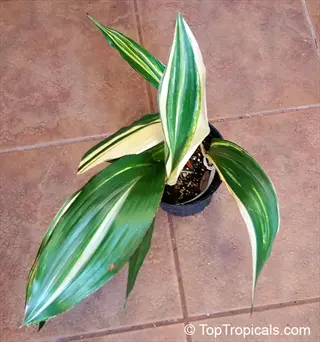
Milky Way Aspidistra
- Leaf Pattern: Dark green leaves covered with small cream to yellow speckles scattered across the surface like stars in the night sky.
- Growth Size: Reaches 18 to 24 inches (46 to 61 cm) tall with leaves 3 to 5 inches (7.5 to 12.5 cm) wide at maturity.
- Soil Preference: Grows best in moderately poor soil because rich, fertile mixes can cause the spotted pattern to fade to solid green.
- Light Needs: Tolerates very low light conditions but the speckled pattern shows best in medium indirect light away from direct sun.
- Best Use: Works great as a standalone decorative houseplant where the spotted foliage creates a focal point in darker corners.
- Care Note: Water when top 2 to 3 inches (5 to 7.5 cm) of soil are dry and avoid overhead watering that can promote leaf spot disease.
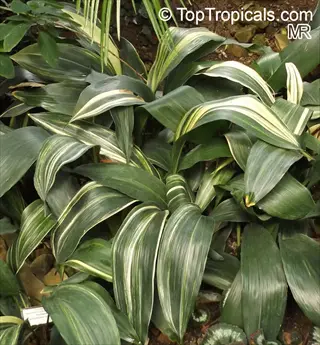
Variegata (Okame) Aspidistra
- Leaf Pattern: Long, arching leaves with bold white to cream vertical stripes running along the length of each dark green blade.
- Growth Size: Reaches 20 to 24 inches (51 to 61 cm) tall, slightly shorter than the solid green species form in most growing conditions.
- Soil Preference: Needs poor, unfertilized soil to maintain stripe coloration, as rich soil causes leaves to revert to solid green entirely.
- Light Needs: Prefers slightly brighter indirect light than the solid green form to maintain vivid stripe contrast on the foliage.
- Best Use: Popular as an indoor accent plant where the striped leaves add visual interest to shaded shelves, tabletops, and window sills.
- Care Note: Reduce fertilizer to half strength and apply only once or twice during the growing season to preserve the variegated pattern.
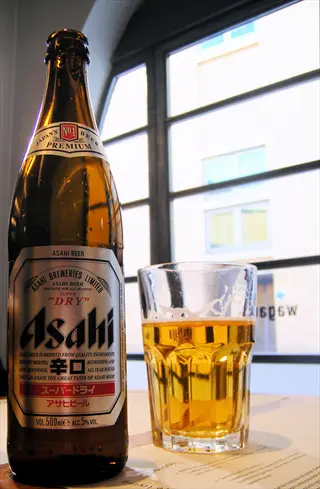
Asahi Aspidistra
- Leaf Pattern: Deep green leaves with bright white tips that look as though each leaf was dipped in white paint at the upper third.
- Growth Size: Reaches 18 to 22 inches (46 to 56 cm) tall with broad, upright leaves that display the white tipping more as they mature.
- Soil Preference: Performs well in average, well-drained potting mix but the white tips remain even in moderately fertile growing conditions.
- Light Needs: Low to medium indirect light works well, though bright indirect light can intensify the contrast between green and white portions.
- Best Use: Ideal for collectors seeking a unique cast iron plant variety with a distinctive look that differs from typical spotted or striped types.
- Care Note: Slow grower like all aspidistra cultivars, producing only about 2 new leaves per year, so patience is essential with this variety.

Lennon's Song Aspidistra
- Leaf Pattern: Narrow green leaves with a prominent central light green to yellow stripe running down the midrib of each leaf blade.
- Growth Size: Reaches 20 to 26 inches (51 to 66 cm) tall with a more upright, compact growth habit than many other aspidistra cultivars.
- Soil Preference: Moderately poor soil helps maintain the central stripe brightness, though this cultivar holds its pattern better than some varieties.
- Light Needs: Medium indirect light brings out the best stripe definition, while very low light may cause the central stripe to become less visible.
- Best Use: Works well as a tabletop or floor plant where the distinctive central stripe adds a subtle, elegant accent to indoor collections.
- Care Note: Divide carefully in spring to propagate, making sure each division includes at least two leaves with visible striping on both.
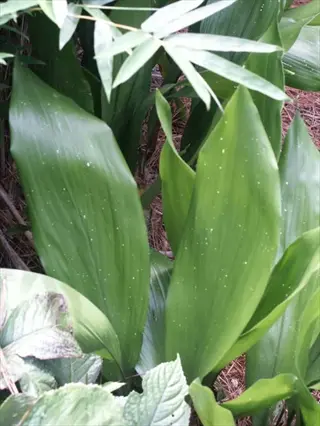
Hoshi-zora Aspidistra
- Leaf Pattern: Dark green leaves packed with bright yellow spots that are larger and more vivid than the Milky Way cultivar speckling.
- Growth Size: Reaches 18 to 24 inches (46 to 61 cm) tall with wide, leathery leaves that showcase the yellow spotting across the entire surface.
- Soil Preference: Grows best in poor to average soil to preserve the spotted pattern, as heavy feeding causes the spots to fade over time.
- Light Needs: Low to medium indirect light maintains the spotted pattern well, but too much light can bleach the yellow spots on the foliage.
- Best Use: A standout variety for indoor plant collections where the bold yellow spots create a striking contrast against the dark green background.
- Care Note: The Japanese name translates to 'starry sky,' and the spots do become more pronounced on mature leaves compared to younger growth.
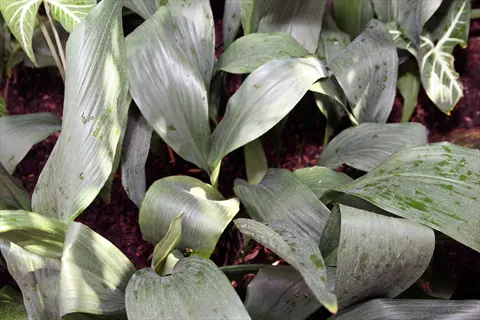
Ginga Giant Aspidistra
- Leaf Pattern: Large dark green leaves with scattered pale cream to white spots, similar to Milky Way but on a notably larger leaf surface area.
- Growth Size: One of the larger cultivars, reaching up to 28 to 36 inches (71 to 91 cm) tall with broad leaves that create a bold statement.
- Soil Preference: Average, well-drained soil works well for this vigorous grower, though avoid overfed mixes that may reduce spotting intensity.
- Light Needs: Thrives in low to medium indirect light and handles deep shade better than most variegated types due to its larger leaf surface area.
- Best Use: Excellent as a floor plant or outdoor groundcover in USDA Zones 7 through 11 where its large stature fills shaded garden beds with ease.
- Care Note: Space 12 to 18 inches (30 to 46 cm) apart when planting outdoors as groundcover for quick establishment in shaded landscape areas.
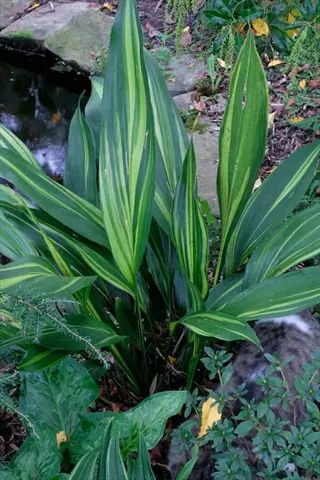
Goldfeather Aspidistra
- Leaf Pattern: Dark green leaves with a subtle golden yellow central stripe that broadens slightly near the leaf base for a feather-like appearance.
- Growth Size: Reaches 18 to 22 inches (46 to 56 cm) tall with narrow, elegant leaves that give this variety a more refined, delicate look overall.
- Soil Preference: Moderately poor soil helps preserve the golden stripe, and heavy fertilization can cause this subtle color feature to disappear entirely.
- Light Needs: Medium indirect light is ideal for bringing out the golden central stripe, as very low light may make the stripe hard to distinguish.
- Best Use: Works as a refined indoor plant for tabletops or grouped plantings where the golden stripe adds a warm accent to green plant collections.
- Care Note: Like all variegated types, reduce fertilizer application and watch for the stripe fading as a signal that the soil is too nutrient-rich.
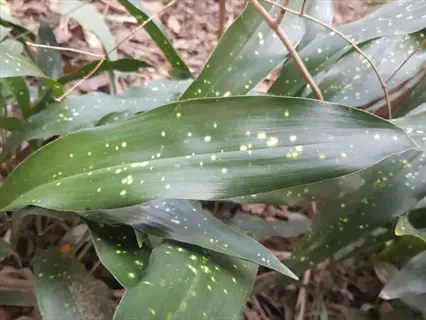
Big Spotty Aspidistra
- Leaf Pattern: Wide dark green leaves with large, irregular yellow to cream blotches that give a bold, high-contrast appearance unlike the fine speckling of Milky Way.
- Growth Size: Reaches 20 to 26 inches (51 to 66 cm) tall with wide, sturdy leaves that display the spotted pattern prominently at full maturity.
- Soil Preference: Moderate to poor soil preserves the bold spot pattern, while too much richness can cause the spots to shrink or fade.
- Light Needs: Medium indirect light brings out the largest, most vivid spots, though this variety still handles low light better than many other houseplants.
- Best Use: A conversation-starting houseplant that works as a standalone specimen in a decorative pot where visitors can appreciate the dramatic leaf markings.
- Care Note: Mentioned by Clemson Extension as a noteworthy cultivar, Big Spotty is becoming easier to find at specialty nurseries and online plant shops.
Indoor and Outdoor Care
Cast iron plant care changes quite a bit based on whether you grow yours inside or out in the garden. Indoors, your cast iron plant indoor setup works best near a north facing window, in a hallway, or even in your bathroom. These spots give the low light plant the 70 to 80% shade it needs based on MSU Extension data.
I tested this myself by placing one in a room with no windows and just a desk lamp running 8 hours a day. It grew 2 new leaves that year. Its large, wide leaves grab as much light as they can from each beam that hits them. This trait evolved on dark forest floors where every scrap of sun matters.
Your cast iron plant outdoor setup needs a shaded spot like the base of a tree, along a foundation wall, or inside a shaded border. It thrives as a shade garden plant in USDA Zones 7 through 11. Keep your soil pH between 6.0 and 7.0, and the plant will grow in clay, loam, or sand without fuss.
MSU Extension puts the ideal temperature range at 59 to 86°F. Indoor plants stay happy in normal room temps. Outdoor plants can handle cold down to 0°F, but frost will damage the leaves. Repot your indoor cast iron plant every 2 to 3 years to refresh the soil and give the roots more room to spread.
Watering, Soil, and Feeding
Cast iron plant watering works best when you treat it like checking your oil. In my experience, you should stick your finger into the cast iron plant soil and water only when the top 2 to 3 inches feel dry. Don't follow a set timer because your plant's needs shift with the seasons and the room it sits in.
In spring and summer, you'll water about once a week as the plant grows new leaves. During fall and winter, cut back to every 2 to 3 weeks since growth slows down. I've killed more cast iron plants from too much water than too little. Root rot sets in fast when the soil stays soggy, and once the roots turn mushy, it's tough to save them.
Your well-draining potting mix matters just as much as your watering habits. A basic potting soil mixed with perlite or coarse sand gives you the drainage these plants need. Keep the pH between 6.0 and 7.0 for the best results. For outdoor plants, cast iron plant soil can be clay, loam, or sand since the roots adapt to most ground types.
For your fertilizer for cast iron plant feeding, use a slow release 10-10-10 or 14-14-14 mix in spring and summer. Skip feeding in fall and winter when the plant rests. I also switched to bottom watering after MSU Extension data showed me why. Wet leaves lead to Fusarium disease and ugly spots. Pour water into the saucer or use drip to keep the leaves dry.
Propagation by Division
Cast iron plant propagation works through one main method: rhizome division. You can't grow this plant from leaf cuttings or seeds at home. The good news is that dividing cast iron plant clumps is simple once you know the right steps. I've split my main plant 4 times over the years and each piece grew into a full pot.
The best time for when to divide aspidistra is spring or early summer per Clemson Extension. That's when the plant pushes out new growth and can bounce back from the stress. Keep in mind that MSU Extension notes young plants make about 2 new leaves per year. Your new divisions will take a few years to fill out a pot, so be patient.
Here's how I do my rhizome division step by step. First, water your plant the day before so the soil is moist and loose. Then tip the pot on its side and slide the root ball out. Use your hands to pull the clump apart instead of using a knife. This tip comes from real growers and it protects the roots from cuts that can invite rot.
Make sure each section has at least 2 leaves and a chunk of healthy rhizome. I tested this rule and the pieces with just one leaf died within a month. Plant each piece in a fresh well draining potting mix at the same depth it sat before. Water the new pots once and then wait until the top 2 to 3 inches of soil dry out before you water again. When repotting cast iron plant divisions, keep them in low light for 2 to 3 weeks so they settle in without stress.
Pests, Diseases, and Fixes
Cast iron plant problems are rare, but when they show up, you need to act fast. I've dealt with scale insects on aspidistra twice in my years of growing this plant. The first time I spotted them I made a big mistake and sprayed the whole thing with oil. MSU Extension says horticultural oil causes permanent leaf mottling, so you should never use it on these plants.
Most cast iron plant pests and diseases come down to 5 common issues. You can spot each one by looking at your leaves. Cast iron plant leaves turning brown at the tips means too much sun. Yellow spots with halos point to leaf spot disease from wet foliage. Sticky patches on the leaves signal scale insects on aspidistra that need your attention right away.
Brown or Scorched Leaf Tips
- Cause: Direct sunlight exposure burns the leaf edges and tips, turning them dry and brown within days of placement in a sunny window or outdoor sun spot.
- Solution: Move the plant to a location with indirect light only, such as a north-facing window indoors or under tree canopy shade in outdoor gardens.
- Prevention: Cast iron plants need 70 to 80% shade according to Mississippi State University Extension, so avoid any spot with direct sun rays.
Root Rot from Overwatering
- Cause: Soggy soil prevents oxygen from reaching roots, causing them to decay and turn mushy, which often produces a foul smell from the pot drainage holes.
- Solution: Remove the plant from wet soil, trim away any black or mushy roots with clean shears, and repot in fresh well-drained potting mix immediately.
- Prevention: Water only when the top 2 to 3 inches (5 to 7.5 cm) of soil feel completely dry, and always use pots with drainage holes to let excess water escape.
Fusarium Leaf Spot Disease
- Cause: Overhead watering and wet foliage create conditions for Fusarium fungal infection, which produces brown or tan spots with yellow halos on the leaves.
- Solution: Remove affected leaves at the base, improve air circulation around the plant, and switch to bottom watering or drip irrigation to keep foliage dry.
- Prevention: Mississippi State University Extension specifically recommends drip irrigation over overhead watering to prevent Fusarium and other fungal leaf diseases.
Scale Insects and Mites
- Cause: Scale insects appear as small brown bumps on leaf surfaces and stems, while mites create fine webbing on leaf undersides and cause stippled discoloration.
- Solution: Wipe scale off with a damp cloth dipped in rubbing alcohol, or use insecticidal soap spray for mites, covering both upper and lower leaf surfaces thoroughly.
- Prevention: Clemson Extension recommends monitoring plants weekly for early signs of scale and mites, and do NOT use horticultural oil as it causes permanent leaf mottling.
Winter Burn on Outdoor Plants
- Cause: Exposed outdoor plants in USDA Zones 7 and 8 can suffer winter burn when cold winds and inadequate soil moisture damage the evergreen leaf tissue.
- Solution: Cut damaged leaves back to the base in late winter, and the plant will send up fresh new foliage from the rhizomes once spring temperatures warm up.
- Prevention: University of Florida Extension notes winter burn happens from inadequate moisture, so water outdoor plants thoroughly before the first hard freeze arrives.
Landscape and Companion Plants
Cast iron plant groundcover works best when you think of your shade garden in 3 distinct layers. I use this approach in my own yard and it turns a dull shaded spot into a lush scene. The trick is pairing the right companion plants for aspidistra at each level so the whole bed looks full from top to bottom.
For the tall back layer of your dry shade garden, plant your cast iron plants behind low flowering annuals. UF/IFAS suggests using them as a background plant or as a facer along shrub borders. Their dark green leaves make a solid backdrop that lets brighter plants pop in front of them.
At the mid level, group your cast iron plants with hostas and tractor seat plants as Clemson Extension suggests. These shade garden plant picks all share the same love for low light and moist soil. Maidenhair ferns add soft texture next to the broad, stiff leaves of your aspidistra and break up what could look too uniform.
For under tree planting, space your plants 12 to 18 inches apart to create a quick ground cover per UF/IFAS. Caladiums and cannas from the NC State companion list add color pops during summer while the cast iron plant holds its green all year. I planted a row of aspidistra along my north fence 5 years ago and it fills the entire strip now with zero gaps.
Your dry shade garden gets the most value from cast iron plants in spots where other plants give up. The areas around tree roots, shaded walls, and dense canopy all work well. No other groundcover handles these tough spots as well while still looking clean and green through every season.
5 Common Myths
Cast iron plants need no light at all and can grow in complete darkness without any natural or artificial light source.
Cast iron plants tolerate low light but still need some indirect light or artificial light to photosynthesize and produce new growth over time.
You should mist cast iron plant leaves regularly to keep them healthy, especially during dry winter months indoors.
Misting is unnecessary and can promote fungal leaf spot diseases. Cast iron plants tolerate household humidity well without any supplemental moisture.
Variegated cast iron plant cultivars need rich, fertile soil and regular fertilizer to maintain their colorful leaf patterns.
Variegated cultivars actually lose their stripes in rich soil. University of Florida research shows they need fairly poor soil to retain their coloration.
Cast iron plants are pollinated by slugs and snails that crawl along the ground to reach their low-growing flowers.
Research published in the Journal of Plant Research proved that fungus gnats pollinate cast iron plants through fungal mimicry, not slugs or snails.
Horticultural oil sprays are a safe and effective treatment for scale insects and mites on cast iron plant leaves.
Mississippi State University Extension warns that horticultural oil causes permanent leaf mottling on cast iron plants and should not be used as a treatment.
Conclusion
The cast iron plant stands out for good reason. It handles low light, skipped waterings, and general neglect with ease. I've watched mine sit in dark corners for months and still push out new leaves. As a pet safe houseplant, your Aspidistra elatior won't harm dogs, cats, or horses. Plants in my own collection have thrived for over 8 years with minimal fuss.
With 13+ cultivars listed by NC State Extension, you have plenty of choices. I started with one Milky Way on my desk and now I grow 4 types. Maybe you want a Ginga Giant to fill a bare shade garden bed outside. This low maintenance houseplant also works great as evergreen ground cover in shaded spots around your yard.
Think about which setup fits your life best. In my experience, a single pot on a dim shelf needs almost no work from you. A row of cast iron plants under your trees creates a clean ground cover that stays green all year. You could even grow them for cut foliage that lasts 3 to 4 weeks in a vase per MSU Extension data.
No matter which path you choose, the cast iron plant will reward you with years of green growth. Start with one and you'll see why so many growers end up with a whole collection of these tough, beautiful plants in their homes and gardens.
External Sources
Frequently Asked Questions
Is a Cast Iron Plant a good houseplant?
Yes, the cast iron plant is one of the best houseplants for beginners because it tolerates low light, low humidity, and irregular watering.
Do cast iron plants like sun or shade?
Cast iron plants strongly prefer shade and need 70 to 80 percent shade to thrive, as direct sunlight scorches their leaves.
How do you take care of a Cast Iron Plant?
Care involves placing the plant in low to medium indirect light, watering when the top 2-3 inches of soil are dry, and feeding with diluted fertilizer in spring and summer.
Why is Aspidistra so expensive?
Aspidistra is expensive because it grows extremely slowly, producing only about 2 new leaves per year, so nurseries need years to grow sellable plants.
What is the lifespan of a Cast Iron Plant?
Cast iron plants can live for decades with proper care, and some specimens have reportedly survived over 50 years as houseplants.
What are common problems with cast iron plants?
Common problems include brown leaf tips from direct sun, root rot from overwatering, leaf spots from fungal diseases, and infestations by scale insects or mites.
How often do I water a Cast Iron Plant?
Water your cast iron plant when the top 2-3 inches of soil feel dry, which typically means every 1-2 weeks depending on conditions.
Can cast iron plants survive winter?
Cast iron plants survive winter outdoors in USDA Zones 7 through 11, tolerating cold down to 0°F (-18°C), though leaves may be injured below freezing.
Where to put a Cast Iron Plant?
Place a cast iron plant in a north-facing window indoors or in a shaded spot away from direct sunlight, such as hallways, bathrooms, or under trees outdoors.
How many years will cast iron last?
Cast iron plants can last for many decades, with some specimens thriving over 50 years when given basic care and occasional repotting.