
Introduction
A bergamot plant that thrives in poor soil and laughs at drought sounds too good to be true. But wild bergamot does all that while feeding hundreds of native bee species at the same time.
I started growing Monarda fistulosa about 8 years ago in the dry clay near my back fence. That first small clump turned into a full pollinator garden within 3 seasons. This native plant grows across 45 of 48 US states and handles USDA Zones 3a through 9b. It even feeds specialist bees like Dufourea monardae that need Monarda pollen to survive.
I want to clear up the name confusion right away. The bergamot plant in your garden is a North American herb in the mint family. It has nothing to do with the bergamot orange that flavors Earl Grey tea. That citrus fruit grows on a tree called Citrus bergamia, and the two plants share no relation at all. Penn State Extension also names wild bergamot as a top pick for bergamot rain garden setups and slope control.
This guide covers the best ways to grow a strong bergamot plant in your own yard. You'll find the best varieties for your region and care tips that save you real time. You'll also learn what makes this native plant so valuable for bees, butterflies, and hummingbirds.
Bergamot Growing Conditions
Most garden plants want rich soil, steady water, and plenty of fuss. Bergamot plant care flips that script. The University of Maryland Extension says it plain: plant in poor, dry soil. Rich soil causes weak stems that can't hold themselves up. I learned this the hard way when I added compost to my bergamot bed and watched the stems flop over within weeks.
If you want to know how to grow bergamot well, the secret is to stop trying so hard. This plant handles bergamot soil requirements that would kill most perennials. Clay, sand, rocks, or loam all work fine. The pH can range from acidic to alkaline and bergamot won't care. It's also bergamot drought tolerant once the roots settle in, so you can skip the watering schedule after the first season.
Bergamot container growing works great if you use a pot at least 24 inches deep to give the roots room. A well draining potting mix without added fertilizer keeps the stems strong. Penn State Extension also ranks bergamot as a top bergamot rain garden plant. It helps with stormwater control and slope stabilization. It handles the wet and dry cycles that kill other perennials in those setups.
Here's a bonus most guides skip. Bergamot can handle black walnut toxicity without any trouble at all. If you have walnut trees on your property, you know how hard it is to grow anything near them. Bergamot shrugs off the juglone those trees release into the soil, which makes it one of the few flowering plants that thrives in those tough spots.
8 Best Bergamot Varieties
Your choice of bergamot varieties can make or break your garden. I've grown 6 of these 8 bergamot cultivars in my own beds. The gaps in mildew resistance and size between them are real.
Mildew resistant bergamot is the top thing buyers look for when shopping for Monarda didyma or bee balm types. Each bergamot species below has a different sweet spot for climate, space, and color. I've matched them to help you find the right fit for your yard.
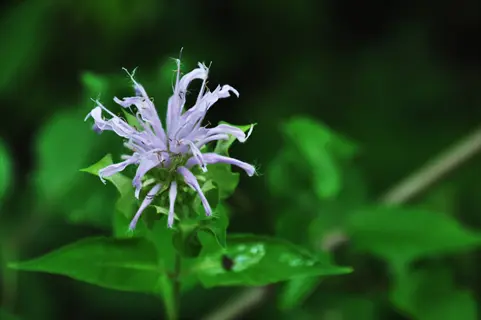
Wild Bergamot (Monarda fistulosa)
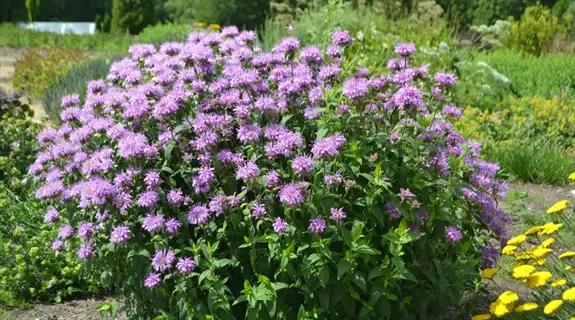
- Native Range: Wild bergamot grows native across 45 of 48 continental US states and most Canadian provinces, making it the most adaptable Monarda species available to gardeners.
- Growth Habit: This species reaches 2 to 4 feet (61 to 122 centimeters) tall with a clump-forming habit that spreads at a slow pace by rhizomes, creating manageable colonies without aggressive takeover.
- Flower Color: Produces lavender to light purple tubular flower heads from June through September that attract specialist bee species found on no other plant genus.
- Mildew Resistance: Shows much better powdery mildew resistance than Monarda didyma varieties, making it the lowest-maintenance choice for humid climates.
- Best Use: Ideal for naturalized meadow plantings, pollinator gardens, rain gardens, and erosion control on slopes where its deep root system holds the soil in place.
- Special Trait: Tolerates black walnut toxicity (juglone), poor soil, drought, and deer browsing, making it the most resilient option for challenging garden sites.
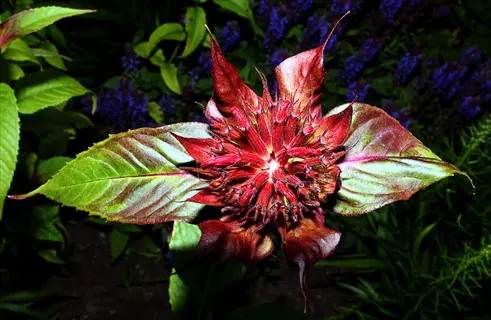
Scarlet Bee Balm (Monarda didyma)
- Flower Impact: Produces vivid scarlet-red tubular flowers that are the strongest hummingbird magnet among all Monarda species, creating dramatic focal points in garden beds.
- Growth Size: Reaches 3 to 4 feet (91 to 122 centimeters) tall with a more aggressive spreading habit than wild bergamot, requiring division every 1 to 2 years to control.
- Moisture Needs: Prefers moist soil at all times unlike drought-tolerant wild bergamot, performing best along streams, pond edges, and in garden beds with regular water.
- Mildew Susceptibility: More prone to powdery mildew than Monarda fistulosa, so select resistant cultivars and ensure good air circulation with 18 to 24 inch (46 to 61 centimeter) spacing.
- Culinary History: Known in history as Oswego tea after the Oswego Nation shared its use with European colonists, who adopted it as a tea substitute during the American Revolution.
- Best Use: Perfect for cottage gardens, hummingbird gardens, and moist woodland edges where its bold red color creates season-long visual drama from July through August.
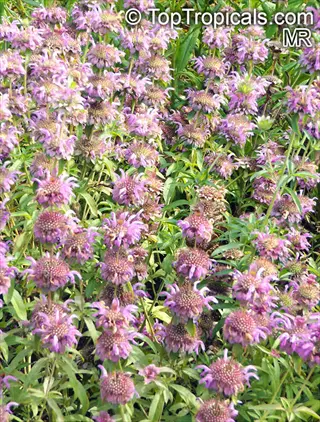
Marshal’s Delight
- Mildew Resistance: Bred for powdery mildew resistance by Agriculture Canada, Marshal's Delight is the top choice for gardeners in humid climates.
- Flower Color: Produces clear bright pink flowers from mid to late summer that stand out against the typical lavender and red tones of other Monarda varieties.
- Plant Size: Grows 3 to 4 feet (91 to 122 centimeters) tall with sturdy stems that resist flopping even without staking, a common problem with varieties grown in rich soil.
- Pollinator Value: Attracts the same range of bees, butterflies, and hummingbirds as other Monarda varieties while maintaining clean, disease-free foliage throughout the growing season.
- Regional Fit: Performs best in the humid eastern United States and southeastern Canada where mildew pressure makes growing other Monarda cultivars frustrating.
- Maintenance Level: Requires less intervention than most Monarda cultivars because disease resistance means no fungicide applications and fewer aesthetic concerns from spotty foliage.
Jacob Cline
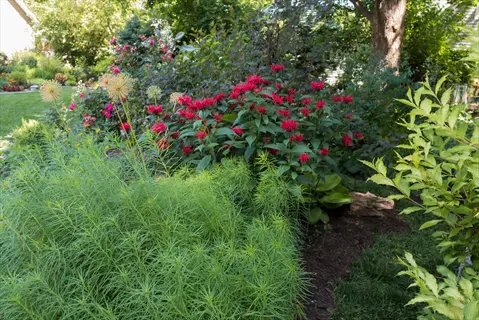
- Flower Size: Produces the largest flower heads among red Monarda cultivars with deep crimson blooms that can reach 4 inches (10 centimeters) across for maximum visual impact.
- Height Advantage: Grows 4 to 5 feet (122 to 152 centimeters) tall, making it the tallest cultivar you can find at most nurseries and an excellent back-of-border statement plant.
- Mildew Performance: Shows better mildew resistance than many other Monarda didyma selections, though not quite matching Marshal's Delight in humid conditions.
- Hummingbird Appeal: The large deep red flowers are among the strongest hummingbird attractors in the perennial garden, drawing ruby-throated hummingbirds from considerable distances.
- Stem Strength: Despite its impressive height, Jacob Cline produces sturdy stems that tolerate moderate wind without staking when grown in lean soil.
- Best Pairing: Combine with shorter lavender wild bergamot in front for a dramatic color contrast that covers both red-loving hummingbirds and purple-preferring butterflies.
Raspberry Wine
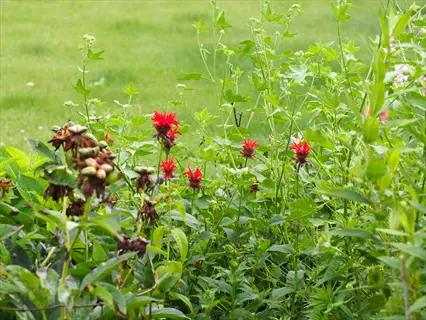
- Unique Color: Produces distinctive wine-red to deep raspberry flowers that fill a color niche between the scarlet reds and soft pinks of other popular Monarda cultivars.
- Compact Form: Reaches 3 to 3.5 feet (91 to 107 centimeters) tall with a more compact habit than Jacob Cline, fitting well in mid-border positions and smaller garden spaces.
- Bloom Season: Flowers from mid-summer through early fall with a generous bloom period that overlaps with both early and late season pollinator activity peaks.
- Disease Tolerance: Displays moderate mildew resistance that improves a great deal when planted with proper air circulation and in full sun positions with morning light.
- Garden Design: The deep wine tone pairs well with silver-foliage plants like lamb's ear and Russian sage, creating sophisticated color combinations in perennial borders.
- Wildlife Support: Supports the same specialist bee species and moth larvae as other Monarda varieties, providing full ecological value alongside its ornamental garden appeal.
Petite Delight
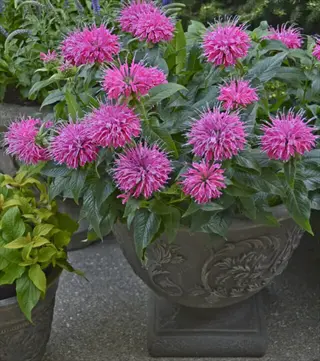
- Compact Size: Grows only 12 to 15 inches (30 to 38 centimeters) tall, making it the best Monarda choice for container gardens, patio pots, and front-of-border plantings.
- Flower Color: Produces lavender-pink flower heads well sized to its compact frame that still attract bees, butterflies, and even small hummingbird moths throughout summer.
- Container Success: Thrives in containers with minimum 12-inch (30 centimeter) diameter pots and well-draining potting mix, bringing pollinator garden value to balconies and patios.
- Mildew Notes: Shows good mildew resistance relative to its size category, though container plants benefit from morning sun and afternoon airflow to keep foliage dry and healthy.
- Space Efficiency: Perfect for urban gardeners and renters who want native pollinator plants but lack traditional garden beds, thriving in raised beds and window boxes alike.
- Overwintering: In containers, protect roots from freezing by moving pots to an unheated garage or wrapping with insulation in USDA Zones 5 and colder during winter dormancy.

Petite Wonder
- Size Profile: Another compact cultivar reaching 10 to 12 inches (25 to 30 centimeters) tall, even smaller than Petite Delight, ideal for the very front of borders and miniature gardens.
- Flower Color: Produces bright pink flowers that add vibrant color to small-space gardens while maintaining the tubular flower shape that pollinators rely on for nectar access.
- Spreading Habit: Spreads at a slower rate than full-sized varieties due to its compact growth, requiring less frequent division and staying contained in small planting areas.
- Rock Garden Use: The dwarf size makes Petite Wonder suitable for rock gardens and gravel plantings where taller Monarda varieties would look out of proportion with the landscape.
- Heat Tolerance: Performs well in hot summer conditions when given adequate morning sun and some afternoon relief, maintaining compact form without stretching or becoming leggy.
- Beginner Friendly: An excellent starter variety for new gardeners interested in native plants because its small size makes it easy to manage and its care requirements are minimal.
Claire Grace (Monarda bradburiana)
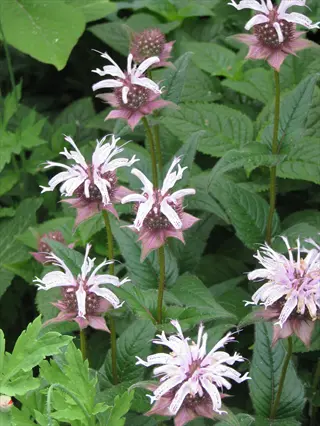
- Unique Species: A Monarda bradburiana cultivar rather than M. fistulosa or M. didyma, Claire Grace offers earlier bloom time starting in late spring before other bergamot varieties flower.
- Plant Dimensions: Grows 2 to 3 feet (61 to 91 centimeters) tall with a well-branched, bushy habit that produces abundant lavender-pink flower heads across the entire plant canopy.
- Season Extension: Blooming 2 to 4 weeks before wild bergamot and bee balm, Claire Grace extends the total Monarda flowering season when planted alongside later-blooming varieties.
- Mildew Resistance: Bradburiana species shows strong natural mildew resistance, often keeping clean foliage through the entire growing season even in humid southeastern climates.
- Ecological Value: Provides early-season nectar at a time when fewer native perennials are blooming, filling a critical gap for pollinators emerging from spring dormancy.
- Best Placement: Plant in full sun to light shade in average to dry soil, combining with later-blooming wild bergamot for a continuous Monarda flower display from May through September.
Planting and Propagation
Growing bergamot from seed is one of the cheapest ways to fill your garden with native flowers. I started my first patch from a $3 seed packet and ended up with over 30 plants within 2 seasons. Bergamot seed starting works best if you plan ahead and follow a seasonal timeline from winter through spring.
The key fact about bergamot germination is that the seeds need light to sprout. You must surface sow them on top of the soil and never cover them. Indoor bergamot propagation starts 6 to 8 weeks before your last frost date. Keep the soil between 60 and 70°F and expect sprouts in 10 to 28 days. Your plants won't bloom until the second year, but that first season builds the strong root system that fuels years of flowers.
Bergamot division gives you a faster path to new plants. Dig up a mature clump in early spring or fall and split it into sections with 3 to 4 healthy shoots each. Set your bergamot plant spacing at 12 to 18 inches between divisions. This method also keeps older clumps from dying out in the center, which happens when you let them grow too long without splitting.
Starting from Seed Indoors
- Timeline: Begin sowing bergamot seeds indoors 6 to 8 weeks before your area's last expected frost date for transplant-ready seedlings by spring.
- Light Requirement: Surface-sow seeds on moist potting mix without covering them because bergamot seeds require light exposure to trigger germination.
- Temperature: Maintain soil temperature between 60 and 70 degrees Fahrenheit (15.5 and 21 degrees Celsius) for optimal germination within 10 to 28 days.
- First Bloom: Expect flowers in the second growing season since first-year plants focus energy on establishing their root system.
Direct Sowing Outdoors
- Timing: Sow seeds outdoors in early spring after the last frost or in late fall for natural cold exposure over winter.
- Spacing: Space seeds or thin seedlings to 12 to 24 inches (30 to 61 centimeters) apart to allow good airflow and prevent powdery mildew.
- Soil Prep: Avoid amending soil with compost or fertilizer because bergamot performs best in lean, poor soil conditions.
- Watering: Keep the soil surface moist during the germination period but reduce watering once seedlings are established.
Division of Established Clumps
- Frequency: Divide bergamot clumps every 1 to 2 years in early spring or fall to maintain plant vigor and control spreading.
- Method: Dig around the entire root mass, separate sections with at least 3 to 4 healthy shoots each, and replant divisions right away.
- Benefit: Division creates free plants for expanding your garden or sharing with neighbors while preventing the center of older clumps from dying out.
- Spacing: Replant divisions 12 to 18 inches (30 to 46 centimeters) apart in their new locations with the crown at soil level.
Saving Seeds for Future Planting
- Harvest Timing: Allow flower heads to dry on the plant until they turn brown and the small tubular seed capsules begin to split open.
- Collection: Cut dried flower heads into a paper bag, shake to release the tiny dark seeds, and remove any chaff or debris.
- Storage: Store cleaned bergamot seeds in a sealed envelope or glass jar in a cool, dry, dark location for up to 2 years of viable germination.
- Viability: Fresh seeds sprout at higher rates than stored seeds, so plan to use saved seeds within the first year for best results.
Seasonal Care and Maintenance
Bergamot seasonal care is one of those rare cases where doing less gives you better results. I've watched new gardeners fuss over their bergamot plants and end up with weaker growth than my neglected patch by the fence. The secret to bergamot pruning and care is knowing when to act and when to walk away.
Bergamot deadheading is your biggest summer task. Snip off faded flower heads and the plant sends up a second flush of blooms later in the season. Bergamot powdery mildew is the main disease risk, but good air flow from proper spacing handles most of it. Wild bergamot resists mildew much better than red bee balm types. Your variety choice matters here.
Bergamot dividing plants every 1 to 2 years keeps your clumps strong and stops the center from dying out. Do this in early spring or fall. For bergamot winter care, leave those dead stems standing at 12 to 24 inches tall. Native bees nest inside the hollow stems all winter long, and goldfinches feed on the dried seed heads. Cutting them down in fall means losing free wildlife habitat.
Pollinator and Wildlife Value
Your bergamot pollinators won't just visit for a quick snack. When I first planted bergamot, I expected a few bees. What I got was a full wildlife support system across all 4 seasons. In summer, bergamot attracts bees of dozens of species to your yard. Some of those rare bees can't survive without Monarda pollen. Your fall and winter seed heads feed goldfinches while hollow stems shelter nesting bees through the cold.
I've sat next to my bergamot patch on a summer morning and counted over 15 different insect species in just one hour. You'll spot bergamot butterflies like the Eastern tiger swallowtail on your flower clusters. Watch for bergamot hummingbirds chasing each other around the red bee balm. The plant also serves bergamot host plant duties for you, feeding hermit sphinx moth caterpillars on its leaves. Few plants in your yard work this hard.
The bergamot deer resistant trait is the cherry on top for your garden. The strong oils in the leaves keep deer and rabbits away from your plants. Your pollinator habitat stays safe without fences or sprays. Here's a look at the wildlife your bergamot will feed and shelter.
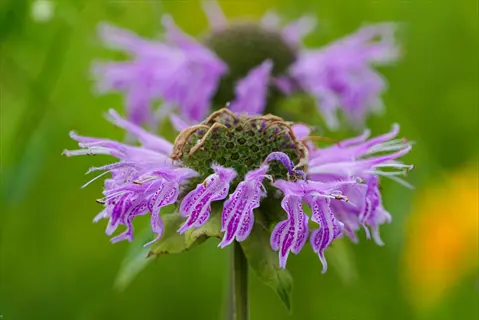
Native Bees and Specialist Pollinators
- Species Supported: Wild bergamot is one of few plants that supports specialist bee species including Dufourea monardae, Perdita gerhardi, and Protandrena abdominalis that depend on Monarda pollen for survival.
- Nesting Habitat: Leave dead bergamot stems standing at 12 to 24 inches (30 to 61 centimeters) tall through winter because the hollow stems serve as critical nesting sites for native bees.
- Foraging Value: The tubular flower structure of bergamot provides nectar for both long-tongued and short-tongued bee species, making it a feeding station for many different bee groups.
- Season Coverage: Bergamot blooms from June through September depending on your region, filling a mid-to-late summer gap when many other wildflowers have finished blooming.
- Conservation Impact: Planting bergamot supports declining native bee populations by providing both food and shelter in a single plant species through the full growing season.
- Garden Placement: Position bergamot in sunny open areas near other native wildflowers to create pollinator paths that guide bees through your garden.
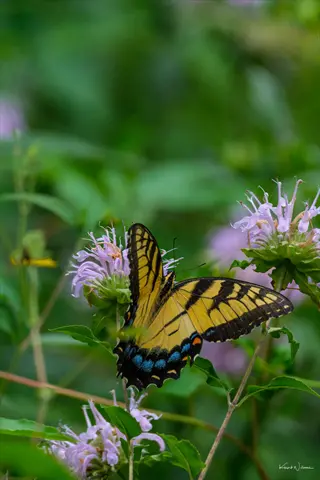
Butterflies and Swallowtails
- Attraction Power: Bergamot flowers attract many butterfly species including Eastern tiger swallowtails that visit for nectar during peak summer bloom periods.
- Flower Design: The flat-topped flower clusters of bergamot provide a stable landing platform for butterflies, making feeding easier than on narrow or drooping flower shapes.
- Color Signal: The lavender to purple flower color of wild bergamot is attractive to butterflies whose vision is tuned to detect purple and ultraviolet light waves.
- Extended Feeding: Bergamot flower heads contain dozens of small tubular florets that open over weeks, giving butterflies a reliable food source through the bloom period.
- Garden Pairing: Combine bergamot with coneflowers and black-eyed Susans to create a continuous butterfly buffet that spans from early summer through fall frost.
- Regional Variation: Scarlet bergamot with its bright red flowers tends to attract more butterflies in eastern regions where swallowtail numbers are highest.
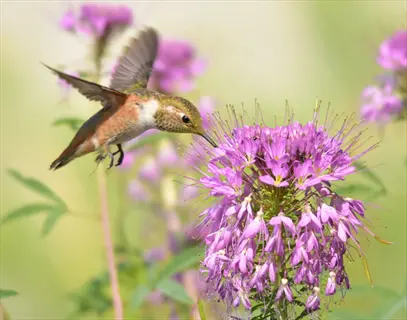
Hummingbirds and Hummingbird Moths
- Primary Attraction: The tubular flowers of bergamot are shaped just right for hummingbird feeding, with flower tubes reaching up to 1.5 inches long to match their bill length.
- Moth Species: The snowberry clearwing moth uses bergamot as both a nectar source and a larval host plant, making bergamot essential for this hummingbird mimic moth's life cycle.
- Color Preference: While ruby-throated hummingbirds prefer red flowers, they visit lavender wild bergamot when it is the top nectar source in mid-summer gardens.
- Feeding Times: Hummingbirds visit bergamot flowers during morning and late afternoon feeding sessions when nectar output is highest in the tubular florets.
- Companion Strategy: Plant red Monarda didyma alongside lavender Monarda fistulosa to bring in more hummingbird visits by offering their preferred color next to rich nectar.
- Territory Behavior: Hummingbirds may defend large bergamot patches as feeding zones, so spacing multiple smaller plantings across your garden brings more hummingbird activity.
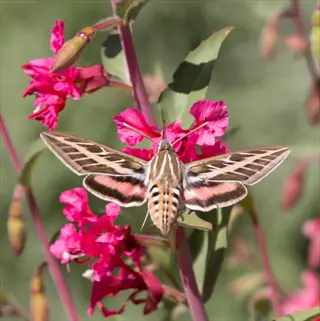
Hermit Sphinx Moth (Host Plant)
- Larval Host: Bergamot serves as a larval host plant for the hermit sphinx moth, meaning female moths lay eggs on bergamot leaves where caterpillars feed and grow.
- Conservation Status: The hermit sphinx moth is uncommon across much of its range, making bergamot plantings an important tool for supporting this declining species.
- Caterpillar Stage: Hermit sphinx moth caterpillars are large green larvae with a horn on the tail end that feed on bergamot leaves for several weeks before going into soil below the plant.
- Adult Moth: Adult hermit sphinx moths are strong fliers that visit bergamot flowers at dusk for nectar, using their long tongue to reach deep into the tubular florets.
- Garden Benefit: Allowing some caterpillar feeding damage on bergamot leaves supports moth numbers without harming the plant since bergamot bounces back fast from moderate leaf loss.
- Identification Tip: Look for hermit sphinx moth caterpillars on bergamot leaves from July through September. They stand apart from tomato hornworms by their preference for mint family plants.
Songbirds and Winter Seed Foragers
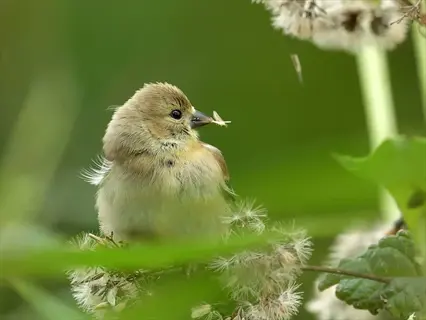
- Goldfinch Feeding: American goldfinches forage on dried bergamot seed heads through fall and winter, making undisturbed flower stalks an important bird feeding station.
- Seed Head Value: Each bergamot flower head produces hundreds of tiny seeds that remain open to birds throughout winter when other food sources become scarce.
- Winter Habitat: Standing dead bergamot stems provide perching sites and wind shelter for overwintering birds, adding structural garden interest even when plants are dormant.
- Best Practice: Resist the urge to cut back bergamot in fall because leaving dried stems and seed heads standing provides months of wildlife feeding and shelter value through winter.
- Spring Cleanup: Wait until late spring when temperatures stay above 50°F before cutting old stems. This allows overwintering insects to emerge.
- Multiple Benefits: The same seed heads that feed goldfinches also allow bergamot to self-sow, creating new plants that expand your pollinator garden with no extra effort.
Deer and Rabbit Resistance
- Proven Resistance: Multiple university extension sources confirm bergamot is both deer resistant and rabbit resistant due to its strong aromatic oils containing thymol and carvacrol.
- Chemical Defense: The same compounds that give bergamot its oregano scent create a taste and smell that deer and rabbits avoid.
- Garden Application: Plant bergamot along the edges of garden beds as a natural border that keeps deer from browsing on more tender plants nearby.
- Regional Reliability: Bergamot's deer resistance holds consistent across its entire native range from USDA Zone 3 through Zone 9, making it reliable regardless of local deer pressure.
- Low Damage: Even during harsh winters when deer browse more, bergamot plants take minimal damage compared to hostas, daylilies, and other popular perennials.
- Companion Protection: Mixing bergamot among less deer resistant flowers may provide some browse deterrence to neighboring plants through scent masking in dense mixed plantings.
Culinary and Medicinal Uses
Your bergamot edible options go far beyond just making tea. I toss fresh bergamot leaves into pasta sauces and salads just like you'd use oregano. The flavor sits between oregano and thyme with a light minty kick. Most gardeners grow it just for the flowers, but bergamot culinary uses are a real surprise.
Bergamot tea is the classic way to enjoy this plant. Steep about 2 tablespoons of fresh leaves in hot water for 5 to 10 minutes and you get a fragrant herbal brew. The bergamot medicinal uses have deep roots too. The Blackfoot tribe used leaf wraps on wounds as an antiseptic. The Oneida people called bergamot Number Six. They honored it as the sixth medicine from the Creator.
Bergamot essential oil packs 45 active compounds in the leaves alone. Bergamot thymol sits at 3.3% and carvacrol at 71.5% per the Ghosh et al. 2020 study. That thymol is the same germ killer found in popular mouthwash brands. But here's a warning you need to hear. Most health studies on bergamot test the bergamot orange, not your garden plant. Don't mix up the two when you read health claims online. And pregnant women should avoid bergamot tea in large amounts due to its effects on the uterus.
Culinary Herb in the Kitchen
- Flavor Profile: Bergamot leaves and flowers taste similar to oregano and thyme with subtle minty notes, making them great in Italian dishes, soups, and meat marinades.
- Fresh Use: Add fresh bergamot leaves to salads, sandwiches, and pasta dishes the same way you would use fresh oregano. Young leaves give you the mildest and most pleasant flavor.
- Tea Preparation: Steep 2 tablespoons of fresh bergamot leaves or 1 tablespoon of dried leaves in hot water for 5 to 10 minutes to create a fragrant herbal tea.
- Edible Flowers: Bergamot flower petals make colorful and flavorful garnishes for desserts, cocktails, and salads, adding both visual interest and a mild herbal taste.
Traditional Native American Medicine
- Historical Significance: Native American tribes documented wide medicinal uses for wild bergamot across at least 21 different tribal nations spanning the entire continent.
- Antiseptic Application: The Blackfoot tribe used bergamot leaf wraps on skin infections and minor wounds, taking advantage of the plant's natural germ fighting compounds.
- Cold and Breathing Remedy: The Oneida, Menominee, Ojibwe, and Winnebago tribes prepared bergamot teas as remedies for colds, coughs, and chest congestion.
- Sacred Status: The Oneida people called bergamot 'Number Six,' recognizing it as the sixth medicine given by the Creator. This reflects its central role in their healing traditions.
Essential Oil Properties
- Chemical Makeup: Research identified 45 distinct compounds in bergamot essential oil, with carvacrol dominating leaf oil at 71.5% and thymol present at 3.3%.
- Germ Fighting Activity: Lab studies confirm bergamot essential oil shows germ killing and antifungal properties tied to its high carvacrol and thymol content.
- Extraction Yield: Bergamot leaves produce a higher essential oil yield at 4.4% compared to flowers at 1.3%, making leaf harvest the most efficient approach for home use.
- Thymol Connection: Thymol found in bergamot is the same compound used as the main active ingredient in several popular mouthwash brands for its germ killing properties.
Safety and Important Distinctions
- Name Confusion: Most published clinical research on 'bergamot' health benefits studies bergamot orange, a different plant with no relation to garden bergamot.
- Pregnancy Warning: Pregnant and nursing women should avoid consuming bergamot in medicinal quantities due to documented effects on the uterus that could pose risks.
- Allergy Consideration: People with known allergies to other mint family plants like basil, oregano, or thyme should introduce bergamot with caution since they share the same plant family.
- Culinary Safety: When used as a cooking herb in normal amounts, bergamot leaves and flowers are safe for most healthy adults.
5 Common Myths
Bergamot plants need rich, heavily amended soil with plenty of compost and fertilizer to grow healthy and produce abundant flowers each season.
Wild bergamot actually performs best in poor, dry soil because rich soil causes weak stems that cannot support their own growth, according to University of Maryland Extension research.
The bergamot plant used in gardens is the same plant that gives Earl Grey tea its distinctive citrus flavor and aroma.
The garden bergamot plant (Monarda fistulosa) is a North American mint-family herb completely unrelated to the bergamot orange (Citrus bergamia) used to flavor Earl Grey tea.
Bergamot plants are invasive and will quickly take over an entire garden bed if left unmanaged for even a single growing season.
Wild bergamot is clump-forming and spreads slowly by rhizomes, making it much less aggressive than other Monarda species like bee balm (Monarda didyma) which spreads more vigorously.
You need to bring bergamot plants indoors or cover them heavily during winter to prevent the cold from killing them.
Wild bergamot is hardy in USDA Zones 3 through 9 and survives winters with temperatures as low as negative 40 degrees Fahrenheit (negative 40 degrees Celsius) without any special protection.
Bergamot plants only attract honeybees and offer little wildlife value beyond basic pollination services in the garden.
Bergamot supports specialist bee species, serves as a larval host for hermit sphinx moths and snowberry clearwing moths, attracts hummingbirds, and provides winter food for goldfinches through its seed heads.
Conclusion
Wild bergamot gives you 3 things that most garden plants can't match at once. You get pollinator support for rare specialist bees and dozens of other species. You get a tough native plant that grows best when you leave it alone in poor soil. And you get a culinary herb with deep roots in Native American healing traditions. That's a lot of value from one bergamot plant.
The facts I keep coming back to after 8 years of growing this plant are simple. The UMD Extension says poor soil makes it stronger. NC State confirms it feeds bees that can't survive on any other flower. Bergamot care is easier than any other plant in your native plant garden. Less effort gives you better results with this one. That's rare in any garden plant.
If you don't have a big yard, that's fine. Bergamot grows well in containers on a patio or balcony. Penn State Extension backs it as a top pick for bergamot rain garden setups and erosion control on slopes. Urban gardeners and apartment growers can still join the native plant movement without a single square foot of garden bed.
Planting wild bergamot connects you to something bigger than your own yard. You're helping rebuild habitat for native bees, moths, and birds right where you live. Many states now offer rebates for native plant gardens. Your bergamot counts. Grab a seed packet or split a clump from a friend and start growing your own bergamot this season.
External Sources
Frequently Asked Questions
What is a bergamot plant good for?
The bergamot plant is valued for attracting pollinators like bees and butterflies, culinary use as an herb with oregano-like flavor, traditional medicinal applications as an antiseptic and cold remedy, and essential oil production rich in antimicrobial compounds.
Is Earl Grey the same as bergamot?
Earl Grey tea is flavored with oil from the bergamot orange (Citrus bergamia), a citrus fruit completely unrelated to the bergamot plant (Monarda fistulosa), which is a North American herb in the mint family.
Is bergamot easy to grow?
Yes, bergamot is one of the easiest native perennials to grow because it tolerates drought, poor soil, clay, partial shade, and is resistant to deer and rabbits, making it perfect for low-maintenance gardens.
Is the bergamot plant edible?
Yes, all parts of the bergamot plant (Monarda) are edible including the flowers, leaves, and stems, with a flavor similar to oregano and thyme that works well in teas, salads, and Italian dishes.
Who should not drink bergamot tea?
Pregnant and nursing women should avoid bergamot tea due to its uterine-stimulating properties, and people taking blood pressure or cholesterol medications should consult their doctor first due to possible interactions.
What is the magical use of bergamot?
In folk traditions, bergamot has been used for protection, prosperity, and clarity rituals, while Native American tribes considered it sacred medicine with the Oneida calling it the sixth medicine given by the Creator.
What was Queen Elizabeth's favorite brand of tea?
Queen Elizabeth II was widely reported to favor Twinings Earl Grey tea, which is flavored with bergamot orange oil from Citrus bergamia rather than the Monarda bergamot plant.
Is bergamot safe to consume?
The bergamot plant (Monarda) is generally safe to consume as a culinary herb or tea, though pregnant women should avoid it due to uterine-stimulating effects, and those with mint allergies should exercise caution.
What foods are high in bergamot?
Foods containing bergamot include herbal teas, Italian dishes seasoned with fresh bergamot leaves, salad garnishes with bergamot flowers, and baked goods flavored with bergamot, though bergamot orange appears in Earl Grey tea and marmalade.
Does bergamot bloom all summer?
Bergamot blooms from June through September depending on the region, with individual flower heads lasting about four weeks, and deadheading spent blooms can encourage a second flush of flowers.