Tree · Rutaceae
Key Lime
Citrus × aurantiifolia
Give it full sun, warmth, and free-draining soil, and this thorny little citrus rewards you with sharp, aromatic limes.
Full sun
Every 5–10 days
USDA 9–11
6–13 ft · 1.8–4 m
Overview
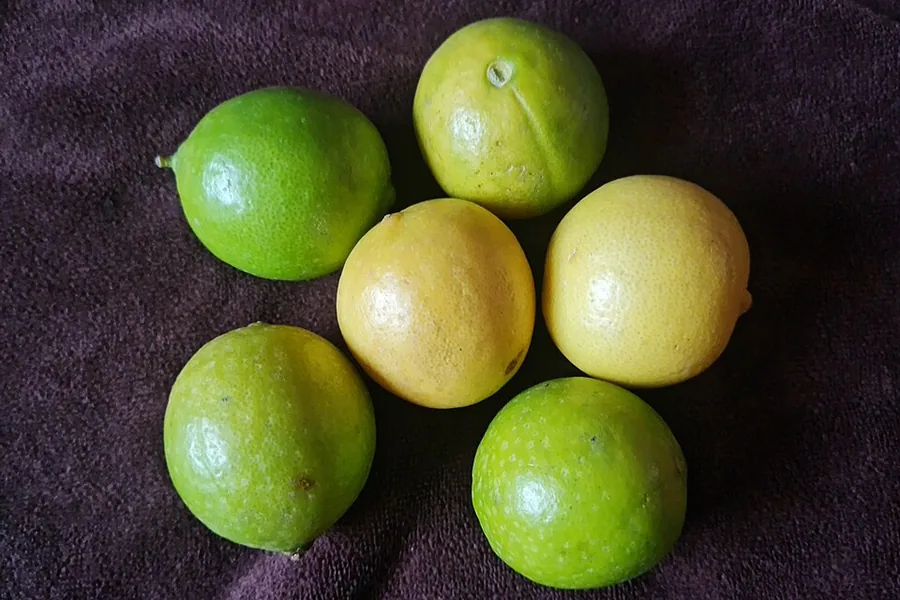
The Key lime is a small, thorny citrus tree grown for its tart, intensely fragrant fruit. It came to the New World by way of the Caribbean and took so well to the Florida Keys that the islands gave it a name. The fruit stays small, barely an inch or two across, and is packed with seeds and aroma, which is exactly what makes it the lime behind a real Key lime pie.
It is an everbearing tree, so it flowers and fruits over a long stretch rather than all at once. The main flush of bloom comes in spring, and the limes ripen through summer and into fall, picked while the skin is still green. Left to itself the tree reaches 6 to 13 feet (1.8 to 4 m) tall, but it takes well to a pot and to pruning, so you can keep it far smaller on a patio or in a bright room.
Key lime is fussier about cold than it is about much else. It wants heat, sun, and soil that drains fast, and it shrugs off a short dry spell better than most citrus. The real worry is disease, since citrus canker and citrus greening have reshaped where and how this tree can be grown.
Care
The short version: full sun and warmth, soil that drains freely, and steady moisture once the tree settles in. Feed it lightly through the growing season, keep it away from frost, and prune only to shape it or hold its size.
Light
Key lime wants full sun, the more the better, to flower well and ripen sweet fruit. It will put up with partial sun, but the harvest thins and the canopy stretches in the shade. Indoors, give it the brightest window you have.
Water
Let the top half of the soil dry out between waterings, which works out to roughly every 5 to 10 days depending on heat and pot size. The tree handles a short drought better than most citrus, yet it sets the heaviest crop with steady moisture. Never leave it standing in waterlogged soil.
Soil
Plant in well-drained loam, silt, or sandy soil, since fast drainage matters more to this tree than anything else. It is easygoing about pH and grows across a wide 6.0 to 8.0 range. Heavy, soggy ground is the one thing it won't forgive.
Temperature
Key lime is the cold-tender end of citrus and is happiest in real warmth, comfortable anywhere from 32°F to 100°F (0°C to 38°C) but damaged by frost at the low end. A hard freeze will kill it, so grow it in the ground only where winters stay mild and move container trees inside before the cold arrives.
Humidity
This tree likes the air on the humid side, around 50% to 80%. Outdoors in a warm climate that takes care of itself. Indoors in dry winter air, group it with other plants or set it on a pebble tray to lift the moisture around it.
Feeding
Feed through the spring and summer growing season with a balanced citrus fertilizer that includes micronutrients, and apply it sparingly rather than heavily. Citrus is prone to minor-nutrient shortages, so a feed made for it beats a generic one. Ease off as growth slows for the year.
Pruning
Key lime needs little pruning. Take out dead, damaged, crossing, or low branches and strip any suckers below the graft, since those grow from the rootstock and not the lime. Beyond that, prune only to hold its size or shape it as a container tree.
Repotting
A container Key lime needs a fresh pot every 2 to 3 years. Move up when you see roots circling the pot or pushing through the drainage holes, water running straight through, or growth stalling. Step up one pot size and refresh the mix rather than drowning it in a giant container.
Size & spacing
Left to grow, the tree reaches 6 to 13 feet (1.8 to 4 m) tall and spreads 5 to 15 feet (1.5 to 4.5 m) wide. Give an in-ground tree room to fill out, or lean on regular pruning to keep a patio specimen compact.
When to plant
Key lime runs on warmth, not a calendar. Plant it outdoors in spring once frost is well behind you, and only in zones 9 to 11 where winters stay mild. The tree blooms heaviest in spring and hands you green-skinned fruit from summer into fall, though an established tree will flower on and off all year.
Northern hemisphere
Southern hemisphere
Typical months for a temperate climate: start earlier in warm zones, later where spring frosts linger.
- Sow: Late winter to early spring from seed in cold climates; often bought as a grafted nursery tree
- Plant: Spring after all danger of frost has passed; zones 9-11 only
- Harvest: Everbearing; main bloom in spring with fruit ripening summer to fall, picked while still green
Hardiness
USDA hardiness zones: 9–11
Temperature: down to -7°C
Troubleshooting
Most Key lime trouble announces itself on the leaves, the twigs, or the fruit, and a few of the worst problems are bacterial diseases with no cure. Learn to tell a fungus you can prune away from a quarantine disease you must report. Match what you see below, then act before it spreads to the rest of the tree.
Corky raised spots ringed in yellow on leaves and fruit
This is citrus canker, a bacterial disease that scabs the leaves, twigs, and fruit and drops foliage off the tree. There is no cure, so bag the infected growth, treat with a copper bactericide, and follow your local quarantine and reporting rules. Buying certified trees and keeping water off the leaves is your best defense.
Fix:
- Remove and bag infected leaves, twigs, and fruit
- Apply copper-based bactericide per label
- Comply with local quarantine and reporting rules; there is no cure
Blotchy mottled leaves and small lopsided fruit that stays green
This is citrus greening, or HLB, the disease that has devastated citrus and the most serious threat your tree faces. It is spread by the Asian citrus psyllid and confirmed by a lab test, and there is no cure once a tree has it. Remove and destroy infected trees, control the psyllids, and report it to your agricultural authority.
Fix:
- No cure; remove and destroy infected trees
- Control Asian citrus psyllid populations
- Report to local agricultural authority
Young shoot tips withering back with blighted blossoms
Lime anthracnose, also called withertip, is a fungus that kills shoot tips and blights the flowers and young growth. Prune the affected twigs back to healthy wood and treat with a copper fungicide. Opening up the canopy for better airflow and clearing out deadwood keeps it from taking hold again.
Fix:
- Prune out affected twigs back to healthy wood
- Apply copper fungicide
- Improve air circulation and remove deadwood
Wilting and dropping leaves while the soil stays soggy
A tree that wilts in wet soil is usually losing its roots to root rot from overwatering or poor drainage. Cut back on water, improve the drainage, and if it is potted, repot it into a fresh well-drained mix and trim away the dark, mushy roots. The fix is to stop the tree from ever sitting in standing water.
Fix:
- Reduce watering and improve drainage
- Repot into fresh well-drained mix and trim rotted roots
Toxicity
The flesh and juice are perfectly fine for people to eat, but the rest of the tree is not a pet snack. The peel, leaves, and seeds carry essential oils and psoralens that upset an animal's stomach and can make skin react to sunlight. Keep cats, dogs, and horses away from the foliage and prunings, and wash your own hands after handling fruit if you're heading into the sun.
Toxic to
Cats · Dogs · Horses · Rabbits · Livestock · Birds
Safe for
People
Cats Mild
A cat that chews the peel or leaves usually drools and then vomits, with diarrhea and a low, dull mood to follow. The oils can also leave the skin touchy in sunlight.
Dogs Mild
Dogs tend to react with an upset stomach, drooling, and a flat, listless mood after a nibble of foliage or rind. Most cases stay mild, but the citrus oils can make skin sensitive to the sun.
Horses Mild
The peel and leaves can give a horse a sour stomach and a sluggish, off feeling. Horses rarely seek out citrus, so trouble is uncommon unless prunings end up in their reach.
Rabbits Caution
The aromatic oils in the rind and foliage don't sit well with a rabbit's gut, so keep all parts of the tree out of the hutch. Treat any trimmings as off-limits rather than a treat.
Livestock Caution
Goats, sheep, and cattle may pick at fallen leaves or fruit, and the citrus oils can leave them with mild digestive upset. It is rarely serious, but there's no reason to let them graze the prunings.
Birds Caution
The essential oils concentrated in the peel and leaves make the foliage a poor choice around birds. A taste of the flesh is far less of a worry than a beakful of rind or leaf.
People Flesh safe
The flesh and juice are a kitchen staple and safe to eat. The catch is the peel oil and sap: handle the fruit or foliage and then step into the sun, and you can end up with a blistering rash called phytophotodermatitis, so wash your hands first.
Lime juice and peel oils combined with sunlight can cause phytophotodermatitis (a blistering skin rash) in people; wash hands and avoid sun exposure after handling fruit or foliage.
Helpline numbers

United States
ASPCA Animal Poison Control: (888) 426-4435 (fee applies)
Poison Control: (800) 222-1222



Canada
Poison Centres: 1-844-764-7669
Varieties
Key lime doesn't come in many forms, but the few that exist are worth telling apart before you buy a tree.
Mexican (West Indian) Key lime
This is the classic Key lime, a thorny tree carrying small 1 to 2 inch fruit that is very seedy and intensely aromatic, the one true to a real Key lime pie.
Thornless Key lime
A nearly spineless selection that fruits much like the original but is far kinder to handle and harvest.
How to propagate
Key lime is unusual among citrus in that its seed comes mostly true to type, so you have real choices here, from a free seedling to a grafted nursery tree.
SeedEasy
Spring · 3-6 years to first fruit
Seed is the easy route with Key lime, since its seed is largely polyembryonic and comes fairly true to type, unlike most citrus. Sow in spring and be patient, because a seedling takes 3 to 6 years to give you its first limes.
GraftingModerate
Spring to summer · 2-3 years to fruit
Budding or grafting onto a rootstock is the nursery's choice, since it brings disease resistance and even, reliable vigor. Done from spring through summer, a grafted tree fruits sooner than a seedling, in about 2 to 3 years.
Stem cuttingsModerate
Spring to summer · 1-2 years
Semi-hardwood cuttings taken in spring or summer will root, putting a tree on its own roots within a year or two. It works, but most growers reach for seed or grafting first.
Air layeringModerate
Warm season · 1-2 years
Air-layering during the warm season gives you a tree on its own roots in about 1 to 2 years. It is a workable option for citrus, just slower and more fiddly than starting from seed.
Myths
A Key lime is just a small Persian lime.
They are two different species. The Key lime is Citrus x aurantiifolia, while the Persian or Tahiti lime is Citrus x latifolia, which grows larger, comes seedless, and shrugs off cold better. They look related, but they are not the same fruit.
Citrus is safe for cats and dogs because people eat it.
What's fine on your plate isn't fine in a pet's. The ASPCA lists lime as toxic to cats and dogs, because the peel, leaves, and seeds hold essential oils and psoralens that bring on stomach upset and can leave skin sensitive to sunlight. The fruit being edible for you says nothing about it being safe for them.
Key limes grown from seed won't resemble the parent tree.
Most fruit trees gamble when grown from seed, but Key lime is the exception. Its seed is largely polyembryonic, so the seedlings come fairly true to type and usually match the tree they came from.