Shrub · Hydrangeaceae
Slender Deutzia
Deutzia gracilis
An easygoing, pet-safe shrub that smothers itself in white spring flowers and asks almost nothing in return.
Full sun
Every 5–10 days
USDA 5–8
2–5 ft · 0.6–1.5 m
Overview
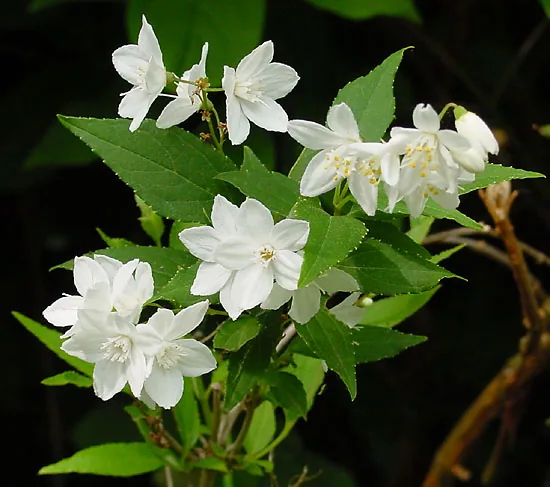
Slender deutzia is a low, graceful shrub from Japan, grown for the cloud of small white flowers that cover its arching stems in spring. It belongs to the hydrangea family and stays compact, reaching only 2 to 5 feet (61 to 152 cm) tall and about as wide. That modest size makes it an easy fit at the front of a border or along a path.
What sets it apart is how little it asks. It shrugs off cold down to -20°F (-29°C), takes clay, loam, or sand, and adapts to soil anywhere from acidic to alkaline. Give it sun and decent drainage and it more or less grows itself, which is why it earns an easy reputation with new gardeners.
The bloom is brief but generous, lasting about 10 to 14 days in mid to late spring before the shrub settles into a quiet green mound for the rest of the year. Some cultivars add a second act with burgundy fall color or bright lime foliage. It's a plant that works hard for a few weeks and then stays out of your way.
Care
The short version: plant it in full sun to part shade in any well-drained soil, water through dry spells, and prune only right after it flowers so you never cut off next spring's buds.
Light
Deutzia flowers best in full sun but takes partial sun or partial shade without complaint. Where summers turn hot, a little afternoon shade keeps the leaves from bleaching, so lean toward some shelter in the warmest regions.
Water
Keep the soil consistently moist but well drained, watering regularly while a young shrub establishes and through any dry spell. Let the surface dry slightly between waterings rather than keeping it soggy. Once settled in, it gets by with a drink every 5 to 10 days in dry weather.
Soil
This shrub is unfussy about soil and takes clay, loam, or sand. It wants moist, well-drained ground above all, and it adapts across a wide pH of 6.0 to 8.0, from acidic to alkaline.
Temperature
Slender deutzia is tough, hardy through USDA zones 5 to 8 and cold to about -20°F (-29°C). It also stands up to summer heat near 100°F (38°C), though the foliage holds up better with some afternoon shade in hot climates.
Humidity
Ordinary outdoor humidity suits it fine, so there's no number to manage. Good air movement matters more than moisture in the air, since crowded, damp foliage is what invites the odd case of leaf spot.
Feeding
Deutzia is a light feeder. A balanced slow-release shrub fertilizer or a layer of compost in early spring is all it needs for the year. Hold back on nitrogen, which pushes soft growth that aphids love.
Pruning
Timing is everything here, because deutzia blooms on old wood. Prune right after flowering, thinning out up to one-third of the oldest stems to keep the habit open and graceful. Never cut in late summer or fall, or you'll trade away next spring's flowers.
Repotting
Deutzia rarely needs repotting and is happiest in the ground. If you do grow one in a container, move it up only when roots circle the pot or push through the drainage holes, or when water runs straight through without soaking in.
Size & spacing
Expect a mounding shrub of 2 to 5 feet (61 to 152 cm) tall and about the same across. Give each plant roughly that much room so the arching stems have space to spread and air can move through.
When to plant
Set deutzia out in spring or fall, when mild weather lets the roots settle before heat or hard frost. It flowers for a short window in mid to late spring, roughly March to May, so plan a spot where you'll catch the show. The one date that matters all year is pruning, which has to wait until the flowers fade.
Northern hemisphere
Southern hemisphere
Typical months for a temperate climate: start earlier in warm zones, later where spring frosts linger.
- Plant: Spring or fall
- Harvest: Mid-to-late spring (March to May), blooming for about 10 to 14 days
Hardiness
USDA hardiness zones: 5–8
Temperature: down to -29°C
Troubleshooting
Deutzia is close to trouble-free, and most of what you'll see is cosmetic rather than serious. A few pests turn up on the new growth in spring, and hot sun can wash out the leaves. Match what you're seeing below and you'll know whether to act or just let it ride.
Sticky shoot tips crowded with tiny soft insects
Those clustered, soft-bodied bugs are aphids, and they crowd onto the freshest spring growth where the sap runs sweetest. They leave behind a sticky honeydew and can curl the new leaves. Blast them off with a hard jet of water, and let lady beetles and lacewings mop up the rest.
Fix:
- Spray colonies off with a strong jet of water
- Apply insecticidal soap or horticultural oil to affected growth if populations are heavy
- Encourage natural predators such as lady beetles and lacewings
Pale winding tunnels traced through the leaves
Those squiggly trails are the work of leaf miner larvae, feeding between the upper and lower skin of the leaf where no spray can reach them. Pick off and bin the worst-marked leaves to knock the numbers back. On a healthy deutzia the damage is mostly skin-deep and rarely worth more than that.
Fix:
- Remove and destroy mined leaves to reduce the population
- Tolerate light damage, which is mostly cosmetic on an otherwise vigorous shrub
Sun-baked leaves bleaching pale or white
When the most exposed leaves wash out to pale or near-white in a hot, bright spell, you're seeing foliage bleaching as the heat breaks down the chlorophyll. It looks worse than it is and the shrub pulls through. In hot-summer regions, give it a spot with afternoon shade and keep the soil evenly moist to take the edge off.
Fix:
- Provide afternoon shade in hot-summer climates
- Keep soil evenly moist to reduce heat stress
Dark spots and blotches scattered on the leaves
Discrete dark spots that show up in damp weather point to leaf spot disease, a fungal nuisance that rarely amounts to much on this shrub. Strip off the marked leaves and thin any crowded stems so air can move through the canopy. Water at the base rather than over the top, and the problem usually fades on its own.
Fix:
- Remove and dispose of affected leaves
- Improve air circulation by thinning crowded stems
- Avoid overhead watering
Toxicity
Good news for anyone with pets or small children: slender deutzia is non-toxic across the board. The ASPCA clears it for dogs, cats, and horses, and NC State Extension reports no toxicity either. You can plant it anywhere a curious nose or hand might reach.
Safe for
People · Cats · Dogs · Horses · Rabbits · Livestock · Birds
Cats None
The ASPCA lists slender deutzia as non-toxic, so a curious cat that nibbles a leaf has nothing to fear.
Dogs None
Safe for dogs as well. A mouthful of leaves won't poison them, though gulping down a lot of any plant can still leave a dog with a mild, passing stomach upset.
Horses None
No toxicity is reported for horses, so a deutzia growing near a paddock is no cause for worry.
Rabbits Safe
Rabbits can browse the shrub without harm, since none of its parts carry a toxin.
Livestock Safe
Grazing cattle, goats, and sheep are in no danger from this plant.
Birds Safe
The shrub poses no poisoning risk to birds that perch in it or peck at its foliage and spent flowers.
People Safe
Slender deutzia isn't toxic to people, so it's a sound pick for gardens where children play. It's grown for its flowers, not for eating, so there's no reason to put any part of it on a plate.
No special handling precautions are needed; the plant is non-toxic.
Varieties
A few named cultivars trade the plain species for brighter foliage or a more compact shape. These are the ones you'll run across most.
Nikko
A dwarf, dense mound only 1 to 2 feet tall that works as a groundcover, with green leaves that deepen to burgundy in fall.
Chardonnay Pearls
A compact pick prized for its lime-yellow foliage and pearl-like buds that open to white flowers.
Pink Minor
A compact form whose pink buds unfurl into white flowers brushed with a blush of pink.
How to propagate
Making more deutzia is simple, whether you root a summer cutting or let a low stem root itself in the ground.
Stem cuttingsEasy
Summer · Several weeks to root; transplantable the following season
The easiest way to make more deutzia is from softwood cuttings taken in summer, which root with little fuss. Give them several weeks to put out roots, then leave them be until the following season, when they're ready to move to a permanent spot.
LayeringEasy
Spring to summer · One growing season or more
Layering takes advantage of the shrub's low, arching stems. Anytime from spring through summer, peg a stem down where it touches the soil and it will root at the contact point. Plan on a full growing season or more before the new plant is rooted well enough to cut free and lift.
Myths
Deutzia is poisonous to pets and has no place in a garden where dogs and cats roam.
The ASPCA lists slender deutzia as non-toxic to dogs, cats, and horses, and NC State Extension reports the same. You can plant it freely around pets and children without worrying about a poisonous nibble.
You can prune deutzia whenever you like to keep it tidy.
Deutzia sets its flowers on old wood, so cutting it back in late summer, fall, or just before bloom strips off the buds for next spring. Prune only right after the flowers fade, and you keep the show coming year after year.