
The company you share will ultimately help determine their success. Some plants compete for nutrients or attract the same pests to your leek bed. Wise companion planting can help eliminate the spread of disease and reduce competition for food. Avoid planting members of certain plant families near your leek beds; doing so will protect your crop while improving yields elsewhere in the garden.
Legume Family
- Beans and peas fix nitrogen making soil too rich
- Excess nitrogen causes lush foliage but weak stems
- Root competition inhibits leek root development
Berry Crops
- Strawberries share fungal diseases like rust
- Attract slugs that damage young leek seedlings
- Spider mites migrate from berries to leek foliage
Allium Relatives
- Onions and garlic concentrate onion maggot populations
- Spread white rot fungus through shared soil
- Create pest breeding grounds when grouped together
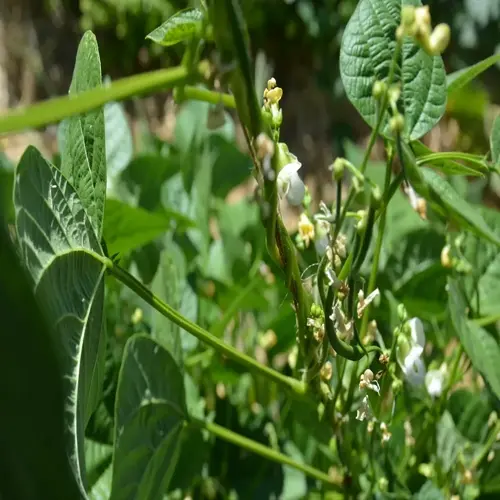
Legumes can create certain problems by fixing nitrogen; beans and peas can render the soil too rich for leeks, resulting in weak, flaccid stems. Another issue is that underground root systems compete for nutrients; therefore, at least ten feet should separate the two crops.
Strawberries threaten leeks with fungal disease. Both can contract rust and botrytis disease. The moisture that strawberries keep in their berries spreads infection rapidly when the strawberries are nearby. Slugs attracted to the strawberry feed off young leeks. Allow eight feet of space between the crops.
Most other alliums attract pests and diseases, with onion maggots being particularly drawn to onions, garlic, and chives. These pests reproduce in colonies if alliums are planted close together, and white rot fungus can remain in the soil for years. It is best to grow different families in previously allium-planted areas.
Choose beneficial companions instead. Carrots repel leek moths effectively. Celery masks the leek scent, confusing pests. Marigolds deter nematodes in nearby soil. These plants support leeks without competing.
Practice crop rotation. Never plant your alliums in the same bed two years in succession, and never return your leeks to the same place for three years. This contrasts the life cycle of certain pests and prevents the build-up of diseases. Ideally, map out your vegetable garden at the end of every growing season.
Read the full article: 10 Essential Steps for Growing Leeks